





NRI PULSE STAFF REPORT
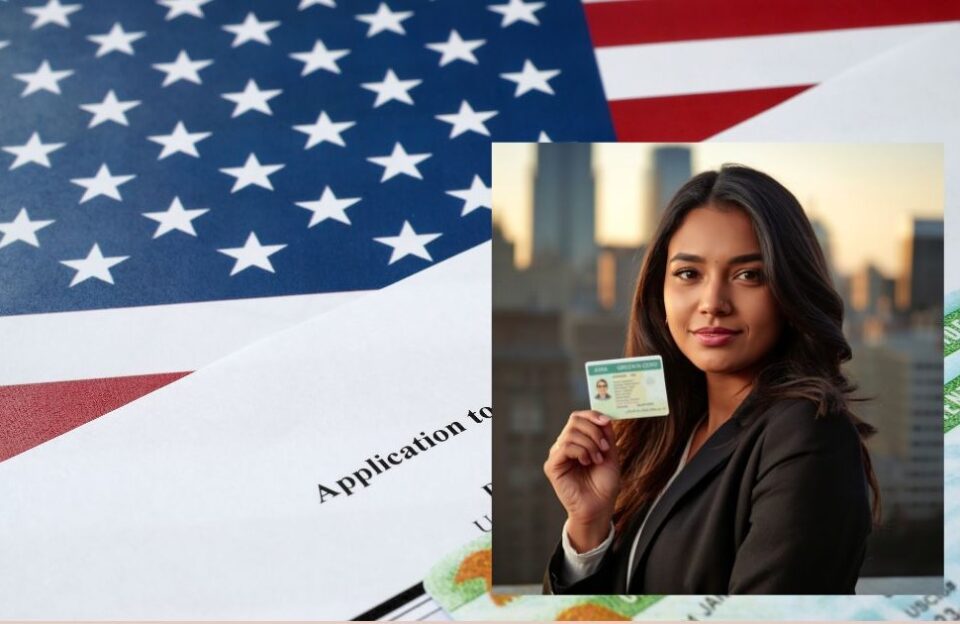
Washington, DC, August 19, 2026— Green card applicants filing for adjustment of status on or after September 18 will face a broader public charge review under new Department of Homeland Security rules that give immigration officers greater discretion to examine an applicant’s finances, health, education, skills and use of certain public benefits.
U.S. Citizenship and Immigration Services on August 18 issued updated policy guidance implementing the change, which rescinds most provisions of the Biden administration’s 2022 public charge regulation. The new rule takes effect September 18, 2026.
The filing date could be particularly important for immigrants who are preparing to submit Form I-485, Application to Register Permanent Residence or Adjust Status.
Applications postmarked or electronically submitted before September 18 will continue to be adjudicated under the 2022 rule, while applications submitted on or after September 18 will be subject to the new framework. USCIS has also said it will publish a revised Form I-485 in connection with the change.
Broader discretion for immigration officers
Under federal immigration law, certain applicants can be found inadmissible if the government determines they are “likely at any time to become a public charge.”
The new policy returns USCIS to a broader, case-by-case assessment based on the “totality of the circumstances.” Rather than relying on the more narrowly defined framework established in 2022, officers will have greater latitude to consider information they believe bears on whether an applicant is likely to become dependent on the government in the future.
The factors officers must consider include an applicant’s age; health; family status; assets, resources and financial status; and education and skills. Where required, officers will also consider the applicant’s Affidavit of Support.
No single factor necessarily determines the outcome. USCIS officers are directed to weigh the positive and negative circumstances together in making a prospective determination about the applicant.
Public benefits could receive greater scrutiny
One of the most consequential changes involves government benefits.
The 2022 rule generally limited consideration to cash assistance for income maintenance, such as Supplemental Security Income and Temporary Assistance for Needy Families, and long-term institutionalization at government expense.
The new rule removes many of those restrictions.
For benefits received on or after September 18, USCIS officers may consider receipt of means-tested public benefits more broadly as one factor in the overall public charge determination. The DHS rule discusses programs including Medicaid, the Children’s Health Insurance Program and WIC, as well as certain refundable tax credits.
However, receiving a public benefit does not automatically make someone inadmissible or result in denial of a green card. Benefit use is one part of the larger totality-of-the-circumstances analysis.
The effective date is also important for people who have previously used benefits. DHS says receipt before September 18 of benefits that were excluded from consideration under the 2022 rule generally will not suddenly be counted against an applicant under the new standard. Continued receipt of applicable benefits on or after September 18, however, may be considered.
Older age or health problems do not automatically mean denial
The inclusion of age and health among the statutory factors does not mean an older applicant or someone with a medical condition will automatically be considered a public charge.
Officers must evaluate those circumstances alongside the applicant’s income, assets, insurance or other resources, family situation, education, employment skills, Affidavit of Support and other relevant evidence.
Similarly, lower income or previous receipt of a government benefit alone does not automatically disqualify an applicant.
Not all immigrants are subject to the rule
The public charge ground of inadmissibility does not apply to every immigrant or every immigration application.
Federal law provides exemptions for several categories, including refugees and asylees seeking adjustment of status and certain other humanitarian immigrants. Applicants should therefore determine whether the public charge provision applies to their particular immigration category before assuming they are affected.
September 18 creates a key dividing line
For immigrants already eligible and preparing to file for adjustment of status, the September 18 effective date could become an important consideration.
An applicant whose properly filed I-485 is pending before that date will generally remain under the 2022 framework, while someone filing on or after September 18 will face the new public charge standard.
That does not mean applicants should rush to file incomplete or inaccurate applications. But those who are already eligible to adjust status and are close to filing may want to discuss the timing with a qualified immigration attorney, particularly if public benefits, health issues or financial circumstances could become relevant to their cases.
The potential impact extends well beyond green card adjudications.
In its economic analysis of the rule, DHS acknowledged that the change could lead immigrants and members of their families to reduce participation in public benefit programs because of concerns about immigration consequences. The department estimated reductions in government transfer payments totaling more than $100 billion over a decade under one of its economic calculations.
The new policy marks another major change in the Trump administration’s immigration enforcement agenda and effectively reverses the Biden-era effort to narrow the circumstances under which the government could deem an immigrant likely to become a public charge.
For thousands of immigrants preparing to apply for permanent residence, however, the most immediate date to watch is September 18, 2026 — when the rules governing how USCIS evaluates their financial and personal circumstances will change.
