





BY SHIKHA DAS SHANKAR*
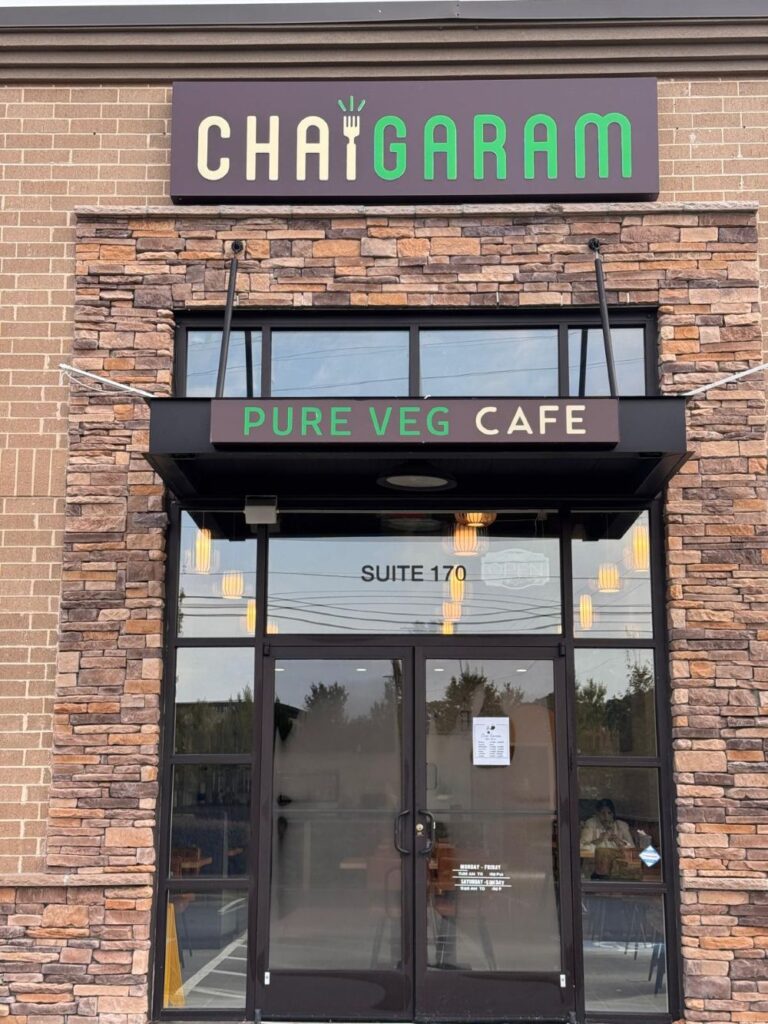
Across the street from the South Asian community’s unofficial town square in Suwanee, Georgia — Patel Plaza, home to names like Rajni, Honest, Sri Rangam and Atithi — opens a fast-casual Indian food spot, Chai Garam.
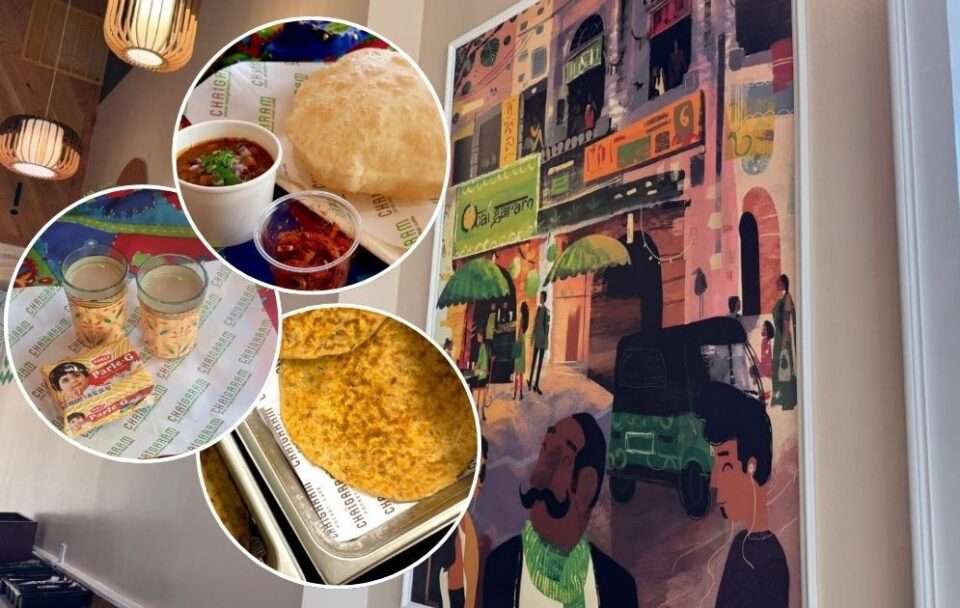
In a space that has already cycled through two restaurant concepts in two years, there is no hesitation for owner Manisha Churiwal over whether this one will work. Nor does the competition lining the road across seem to daunt her. Chai Garam’s soft opening has already seen people coming in throughout the day for fresh-brewed Indian chai, Delhi-inspired street food, lassis made from fresh fruits, and parathas that don’t fit your Corelle plates.
“I’m not scared, because my purpose is very different,” she said. “When you’re doing something in that competitive mode, then you feel competition. I am not in that mode. I am doing something for my passion, for fun. I am not doing charity. I definitely want to make money and walk out good, but my purpose is a little different.”
Honest, she added, is one of her favorite places to eat. Talking about the busy Indian restaurants across the street, Manisha says, “These people are all pro. I am a newbie in this. So I don’t take it as a competition. I think when I meet people, I have a lot to learn.”
A Craving 20 Years in the Making
Manisha opened Chai Garam after decades of running a successful business in the education domain. With three adult kids and more time on her hands, she was at a stage in her life where she could have chosen to slow down. She went the other way, setting her heart on serving the people in the area the best chai-paratha she could.
But opening a café wasn’t always the plan. The idea arose from a longing Manisha had carried for far too long. “I have been living in this area for around 20 years,” she said. “I don’t see any paratha place.”
It wasn’t for lack of restaurants; the area has an Indian restaurant after every block. It was that most of them served some version of the same menu. “There are so many restaurants here, but pretty much you can swap the menu with one another,” she said.
Parathas only started showing up nearby in the last few months, at Suvidha and then at Honest. For Churiwal, that was decades too late. “My craving was not answered,” she said. It was a need that had to be addressed, and she was going to be the one to address it.
Rather than build a concept from nothing, Manisha went looking for a franchise, deliberately. “I don’t want to start my own brand,” she said. “I would want some franchisee, because that gives you initial support.” After vetting a few options, she signed with Chai Garam, a roughly 400-location Indian franchise built on the tea-stall model, and the process moved fast once she committed. A two-week training trip to India gave her a working menu base before she’d start serving customers in Suwanee.
Not a Copy-Paste Job
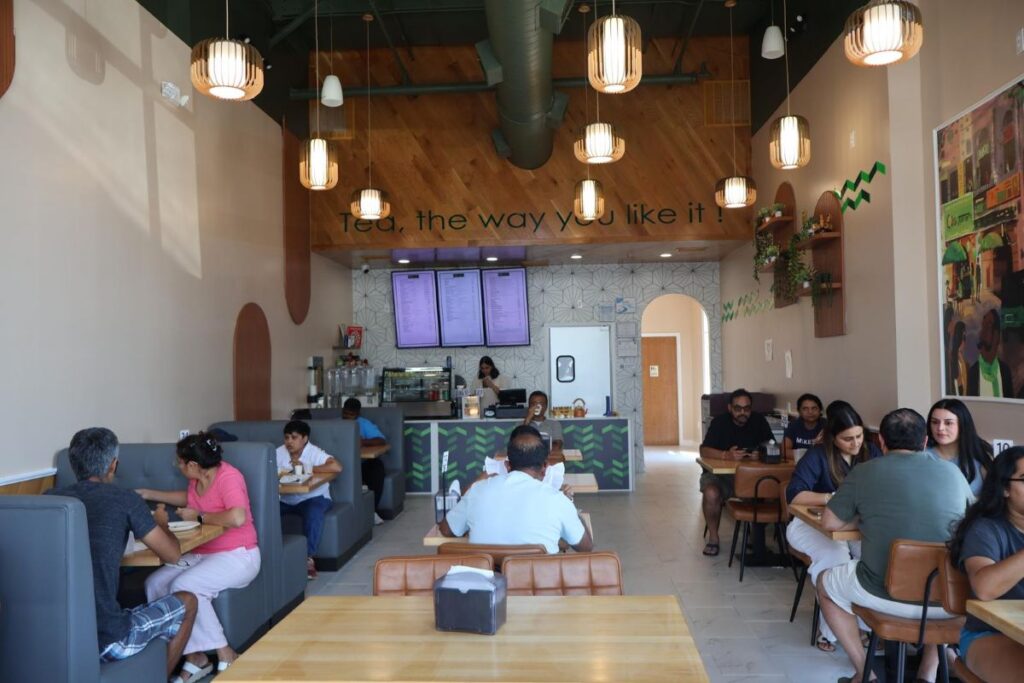
She went ahead with Chai Garam not just for the head start, but for how much room the franchise left her to bring changes and add her creativity. “Flexibility is a key for me,” she said. “If I don’t have flexibility, then I feel like I’m working like a puppet.” Chai Garam’s green branding elements at the front, a franchise requirement, are the same as you’d see in India, but the rest of the decor was done by Manisha. The ceilings are industrial, the lighting warm, and the seating is built for comfort. She added a board games corner meant to make the space somewhere people linger, not just grab a chai and leave.
It’s the menu she took her time to build and tweak. Chai Garam’s menu is deliberately wide — parathas, frankies, Delhi-style chaat, a full lassi corner, a “masala Maggi” section with things like peri peri fries and honey chili potato, plus paneer and Manchurian dishes with real heat.
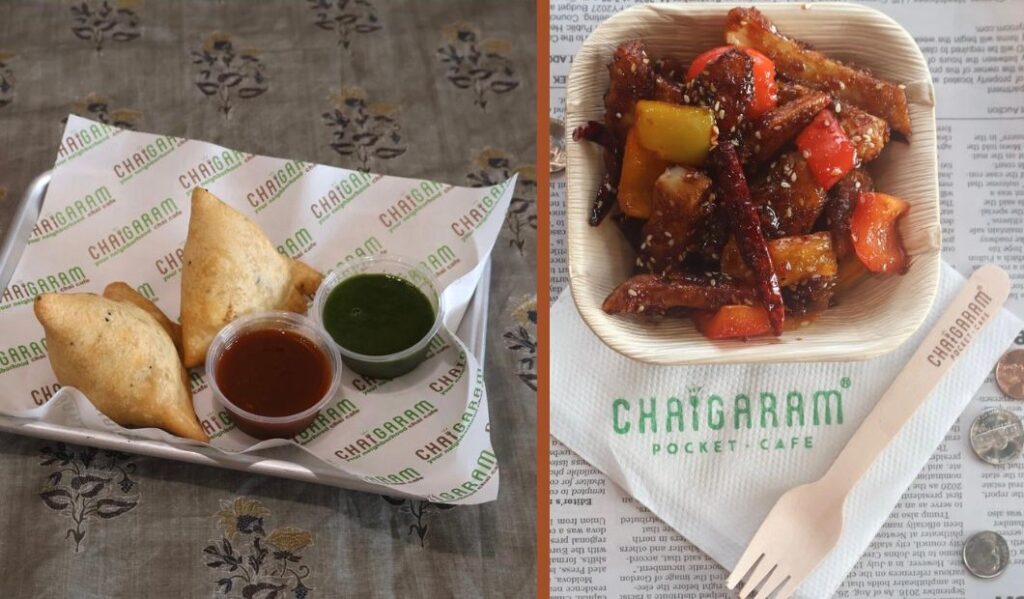
“Our samosas are not frozen samosas, we make it fresh from the dough, from scratch potatoes,” she said. “If you are trying to cut corners, if you cannot eat it, you cannot serve it.” Her menu leans on freshness, making dishes from scratch wherever possible, and adding a few dishes nobody else nearby is doing at all.
She’s also introduced a dish you don’t see on the menu of any restaurants in the area, a dish she says everybody in her friend group is obsessed with: Sattu ka Paratha. She can’t wait to introduce another popular dish called Litti Chokha, a rustic Bihari/Jharkhand staple of roasted wheat dumplings stuffed with spiced sattu, served with fire-roasted mashed eggplant. “Before someone else adds it, why not me?” she said. “I’m from Bihar. I have that authenticity.”
Paratha for the Win
Three weeks into a soft opening and that bet is already showing results. Chai and paratha remain the clear anchor. “If I have to pick two things, it’s chai and paratha,” she said, with Aloo Gobi Paneer paratha the customer favorite so far, and the Mughlai paratha winning people over once they’re talked into trying it. The peri peri fries and honey chili potato have had a strong early response, and the lassi corner is becoming a talking point on its own: “We never get lassis with fresh fruit,” customers have told her, and mango lassi requests have picked up since word got around that hers isn’t the canned pulp version.
“If I’m not exaggerating, everybody who walks in the door has given me a positive response,” she said, pointing to a run of unprompted Google reviews and the interaction she has had with customers.
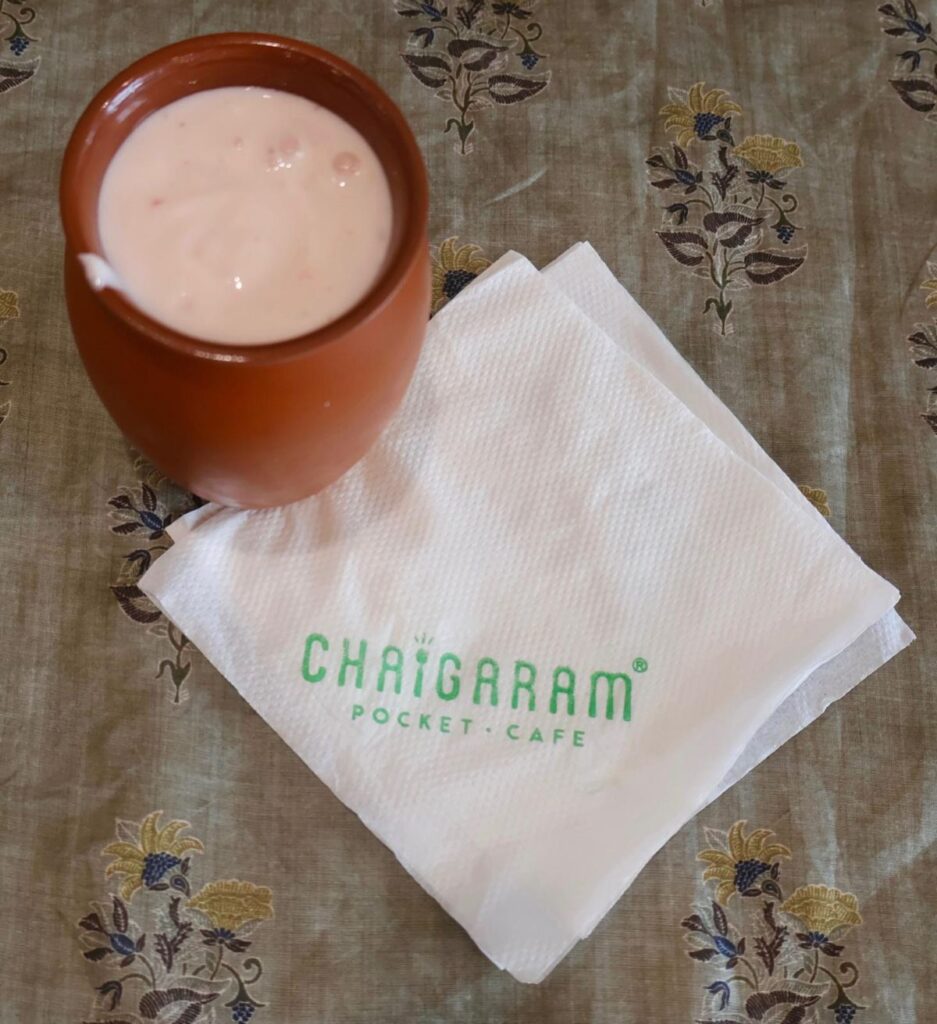
I saw that pull firsthand on a rainy Friday evening, when I stopped in with my own family, in-laws included. The place was quiet when we walked in, but it filled fast. Despite the weather and a full house, service moved quickly, and the food came out fresh and hot. The parathas stood up to the scrutiny of three generations of appetites at once. On our table was the pyaaz ka paratha, its onion finely chopped and the spices massaged well into it, a raita that was as thick as the lassi on the side, and a Delhi-style chole with stuffed bhatura that was packed with flavor. The honey chili potatoes, thick-cut, crispy and well tossed in a sweet and spicy slurry, were the table’s unanimous favorite.
Atlanta’s Indian food scene isn’t short on options, and it’s only getting more crowded as the South Asian population here grows. That makes it harder to stand out on menu alone. But it also means customers who’ve eaten this food their whole lives know the difference between a paratha made fresh and one that isn’t and are increasingly less willing to settle. Manisha’s bet is that quality and flavor, not dodging rivals, are what carry a restaurant through a saturated market like this one.
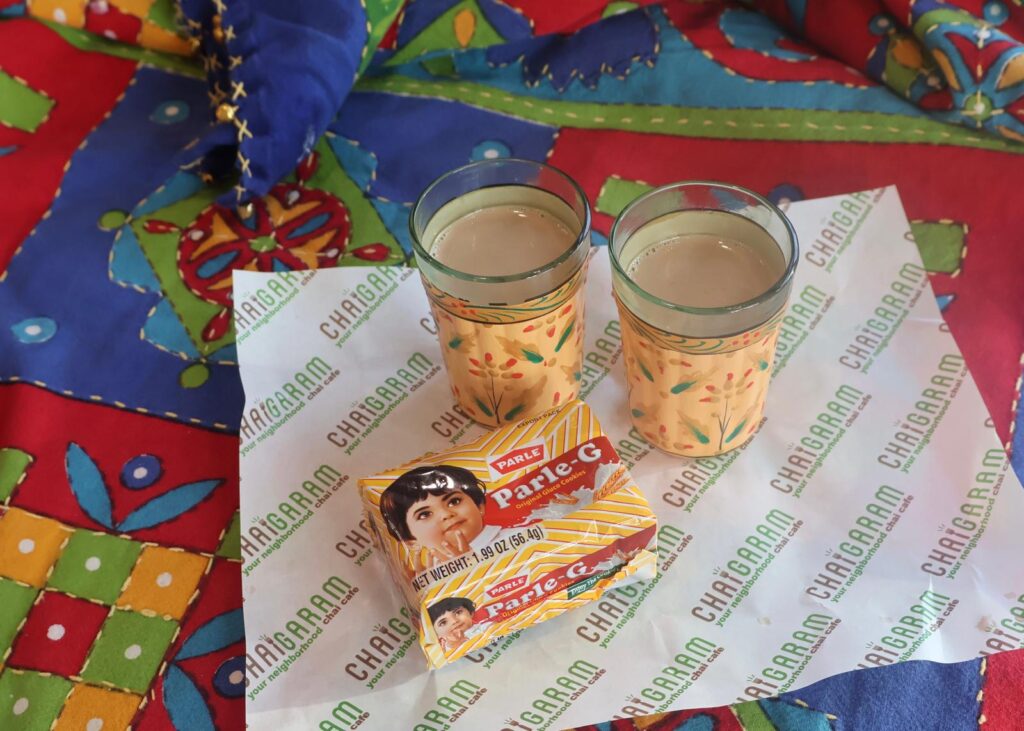
A chai, customers say, the café has gotten right, paired with a vibe that invites people to stay, is a large part of why Chai Garam’s soft launch has gone as well as it has. From a small-town upbringing in Bokaro, Jharkhand, to entering Atlanta’s cutthroat food and beverage market with determination and attention to detail, Manisha’s story is one among many Atlanta women carving out a corner of the culinary business, a road fewer have traveled before.
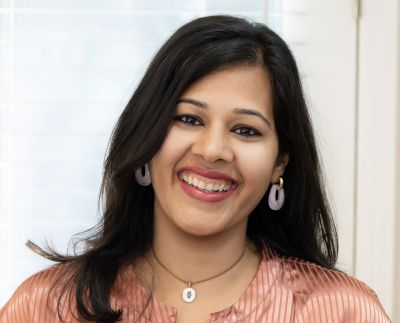
*Shikha Das Shankar is a feature writer for NRI Pulse.
