





BY VEENA RAO*
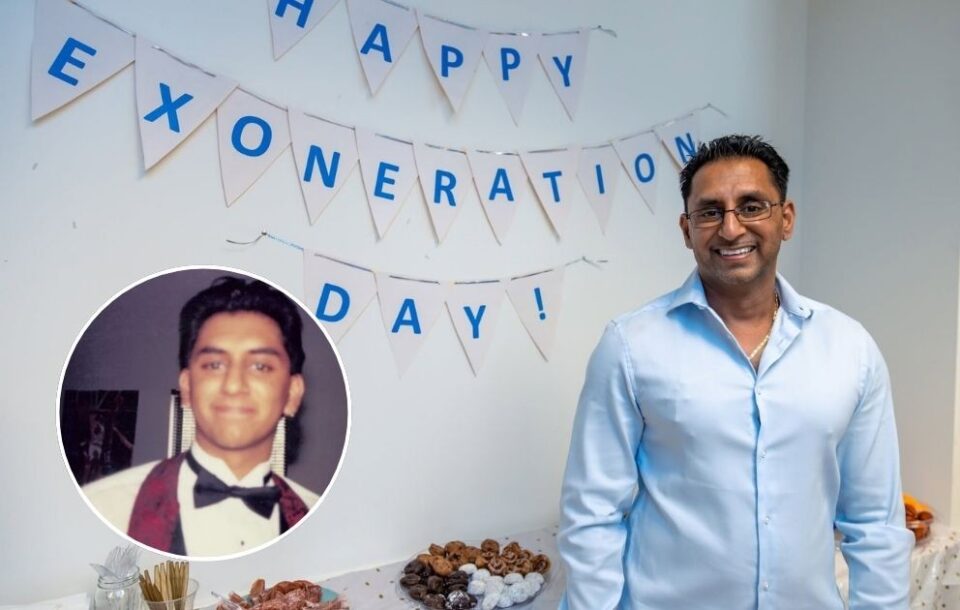
Atlanta, GA, September 18, 2026: For 8,393 days, Sonny Bharadia lived behind bars for a crime he did not commit. He entered prison in his 20s and emerged in his late 40s, after losing nearly 23 years to a life-without-parole sentence that, as he puts it, was meant to ensure he died in prison.
Freedom, when it finally came, was not the beginning he had imagined.
Last month, in an unusually vulnerable Facebook post, Bharadia offered a glimpse into what life after prison has really been like for him.
“In this age of social media, there’s a lot of falseness and not much transparency,” he wrote. “Transparency makes one vulnerable. Well, this is a moment of transparency for me.”
What followed was a deeply personal account of the years he lost and the emotional toll he continues to carry.
“Most people will never understand what being sent to prison for a crime I know I didn’t commit has done to me,” Bharadia wrote. “They may see me today and think I’m free, but they don’t see the prison I still carry inside me.”
He wrote about family members who may never accept him again, difficulty trusting people, anxiety and loneliness, and the realization that walking out of prison had not ended his pain.
“I’m 52 years old, and sometimes I feel like I failed at life,” he wrote. “I look back and see so many years that should have been filled with memories, family, opportunities, and happiness. Instead, my prime years were taken from me.”
The post ended with a haunting acknowledgment: “I may be out of prison, but a part of me is still trying to find its way home.”
It was against that backdrop that Bharadia spoke with NRI Pulse about the complicated reality of rebuilding his life.
“When I got out of prison, I thought, ‘Guess what? I got my freedom. I have everything,’” Bharadia told NRI Pulse in a Zoom interview. “No. I lost my 20s, my 30s, my 40s. I’m 52.”
Bharadia says he struggles with PTSD and with instincts formed during decades in prison. When he was first released, even something as ordinary as someone walking behind him could put him on alert.
“In prison, if somebody walks behind you, you have to watch your back,” he said.
There are other wounds that freedom has not healed: family members who walked away, people who ostracized him, and the toll of insisting on his innocence year after year and feeling that few were listening. From prison, Bharadia says, he wrote to people, including members of the Indian community, hoping someone might take an interest in his case. The letters, he recalls, went unanswered.
“People ostracize you. You keep saying you’re innocent, and it doesn’t matter,” he said.
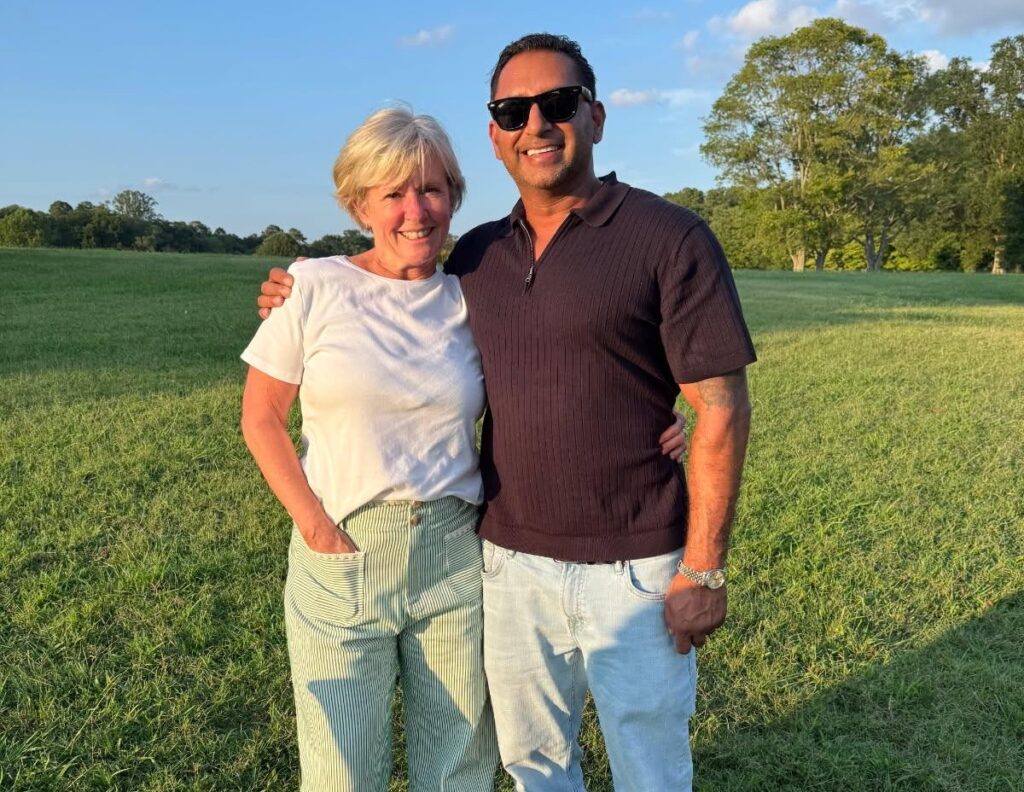
Today, Bharadia is trying to make sense of the life that remains. “I’m not where I feel I want to be in life,” he said. “But I’m also not where I used to be in life.”
Above all, he says, he is grateful for something that once seemed almost impossible. He is free.
“Maybe I have another 20 or 30 years left to live,” Bharadia said. “I just want to try to make a difference while I’m here, in some shape or form.”
Even as Bharadia tries to build a life beyond his wrongful conviction, the legal battle over what happened to him continues.
He has filed a federal civil-rights lawsuit against the Town of Thunderbolt and two former law enforcement officers over the investigation that led to his conviction. The case, originally filed in Atlanta, was transferred this summer to federal court in Savannah and is moving through the discovery process.
Earlier this year came another startling development. In March, nearly 25 years after the crime, investigators found evidence from Bharadia’s case among old files stored in boxes and tubs at the Thunderbolt Police Department.
The materials included the original photo lineup shown to the victim, a 10-page statement from the victim, medical records and what was described as a sealed, untested sexual-assault kit. Christina Cribbs, senior attorney with the Georgia Innocence Project, said some of the material could have been useful to Bharadia’s defense and should have been provided before his 2003 trial.
Bharadia has long challenged the photo lineup, saying his was the only clear photograph among the images shown to the victim. For years, he said, authorities maintained that the lineup and other evidence could not be found.
“The evidence room for this town police department was probably the size of an SUV,” Bharadia said. “You’re telling me that for more than 20 years, they couldn’t find this file?”
The discovery also revived questions Bharadia believed had finally been put to rest. Chatham County District Attorney Shalena Cook-Jones said her office would reconstruct the case and determine whether anyone should be charged, including potentially Bharadia or his former co-defendant Sterling Flint. The Georgia Innocence Project maintains that Bharadia cannot be prosecuted again because the statute of limitations has expired.
For Bharadia, the renewed scrutiny has meant confronting a
case he is still trying to put behind him.
But amid the continuing legal fight and the difficult work of rebuilding his life, an unexpected new chapter has emerged.
Bharadia says he is now in discussions with acclaimed Indian filmmaker Hansal Mehta about bringing his story to the screen.
Bharadia reached out to Mehta on Instagram. The filmmaker responded; the two exchanged numbers, and soon they were speaking by phone.
“He goes, my case has been heavily on his heart,” Bharadia recalled.
Mehta wants to bring the story to an international audience, and Bharadia expects to have input as the project takes shape.
That matters deeply to a man who spent decades insisting that the story being told about him was wrong.
“This is my story,” he said. “You can glean what you can online, but you get the real story coming from me.”
For now, he says, rebuilding a life interrupted for more than two decades remains a work in progress.
“I’m just trying to make the best of what I got,” Bharadia said. “I learned that in prison.”
*Veena Rao is the founder and editor-in-chief of NRI Pulse.
