



NRI PULSE STAFF REPORT
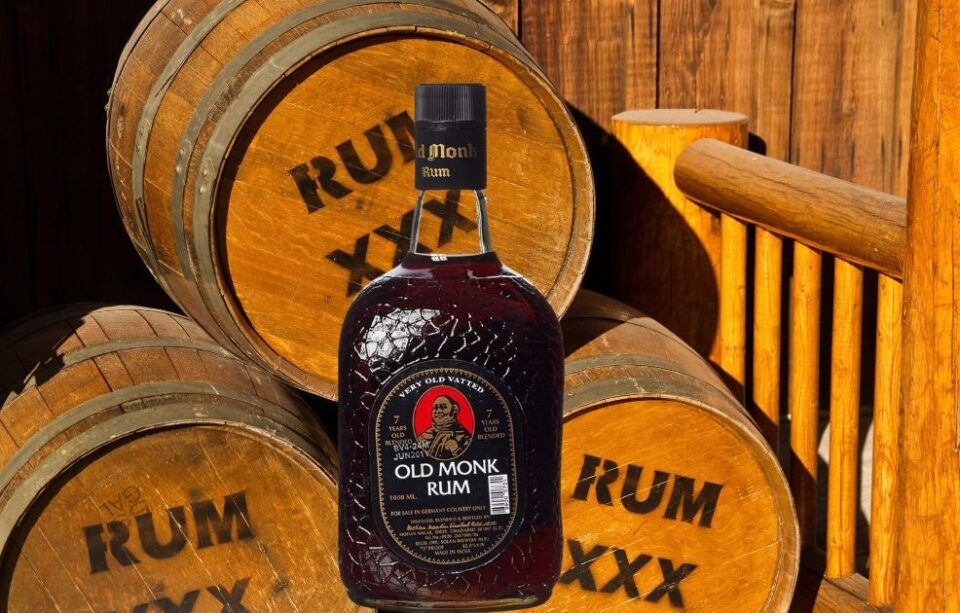
For generations of Indians, Old Monk was more than a bottle of rum.
It was the familiar squat bottle pulled out at college reunions and winter gatherings, poured at Army messes and house parties, packed into suitcases and carried across continents. For many Indians who emigrated to the United States and elsewhere, the dark, sweet spirit became one of those unmistakable tastes of home — a drink wrapped in nostalgia long after India itself was thousands of miles away.
Now, an extraordinary regulatory battle in India is raising a question few Old Monk loyalists ever imagined asking: Is Old Monk actually rum?
The Food Safety and Standards Authority of India (FSSAI) has told the Bombay High Court that Old Monk, in its present formulation, should not be marketed simply as “rum,” arguing that the beverage is made predominantly from neutral, unmatured spirit with added rum flavoring rather than deriving its defining character from the processes associated with rum.
The revelation has struck a nerve precisely because Old Monk occupies an unusual place in Indian popular culture. Introduced in 1954, the brand has survived changing tastes, imported labels and generations of drinkers, developing a cult following that traveled with Indians overseas. In Indian-American homes, its distinctive bottle has long been as recognizable to some immigrants as other beloved brands and foods brought from India.
But the FSSAI investigation paints a very different picture of what is inside one of its best-known variants.
According to an official statement issued by India’s Ministry of Health and Family Welfare, the principal ingredient in Old Monk XXX Rum is neutral, unmatured or unaged spirit, while matured rum spirit accounts for less than 5 percent of the product.
The regulator also found artificial or nature-identical flavoring and said laboratory testing concluded that the added flavor was masking the product’s natural flavor. FSSAI said products made predominantly from neutral alcohol and given their defining character through external flavoring should, at best, be identified as products such as “rum-flavoured spirit” rather than presented as standard rum.
That finding has also put one of Old Monk’s most familiar label claims under scrutiny: “7 Years Old Blended.”
FSSAI says the claim is misleading because Indian alcoholic-beverage regulations require an age statement for a blend to be based on the youngest spirit in the blend. With the bulk of Old Monk XXX consisting of unmatured spirit and less than 5 percent consisting of matured rum spirit, the regulator says the seven-year claim violates existing rules.
The manufacturer has now agreed to remove “7 Years Old Blended” from the label and make the disclosure of added flavor more prominent.
But the dispute has moved beyond the label.
At a Bombay High Court hearing last week, Additional Solicitor General Anil Singh, appearing for FSSAI, argued that the fundamental problem was the product itself being sold as rum.
“What is not permitted is to sell this product as rum,” the regulator’s counsel told the court, according to reports of the proceedings. FSSAI has argued that artificial and nature-identical rum flavoring masks the natural characteristics of the spirit and that calling such a product rum is misleading.
The manufacturer, Mohan Rocky Springwater Pvt. Ltd., which is associated with Old Monk maker Mohan Meakin, has pushed back against FSSAI’s position. Its counsel has argued that the company’s labeling complied with regulations governing blended spirits and that permitted flavoring substances could be used. The company has also argued that its ingredients were disclosed and questioned why Old Monk was being targeted when similar manufacturing practices have been used elsewhere in the industry.
The Bombay High Court has not ruled that Old Monk is “fake rum,” an important distinction amid sensational claims spreading online. The question of how the beverage can legally be classified and marketed remains before the court. The bench has so far declined to grant the manufacturer immediate interim relief, and the case is scheduled to be heard again on September 11.
The controversy also extends well beyond Old Monk.
FSSAI said it tested rum and whisky products from multiple manufacturers and found several products substandard because of externally added artificial or nature-identical flavors. Regulatory action has affected products including McDowell’s No. 1 Rum, Bagpiper Deluxe Whisky, Antiquity Blue Whisky and Royal Challenge Whisky, among others.
The regulator emphasized, however, that the problem does not represent India’s entire alcoholic-beverage industry. It said several manufacturers produce spirits that comply fully with existing standards.
For Old Monk devotees, however, the argument is about more than food regulations and labeling terminology.
The brand’s longevity gave it something marketing departments cannot easily manufacture: memory. It belonged to an India before craft cocktails and premium liquor aisles, and for immigrants, opening a bottle abroad could instantly evoke the friends, winters, college days and conversations left behind.
That helps explain why the FSSAI disclosure has generated disbelief, humor and even a peculiar sense of betrayal on Indian social media.
“Old Monk isn’t rum” may ultimately be a regulatory classification that lawyers and judges settle in court.
But for generations of Indians — including those who carried the Monk with them across oceans — the bigger revelation may be discovering that something they thought they knew all their lives was not quite what the label seemed to say.
