




BY VEENA RAO
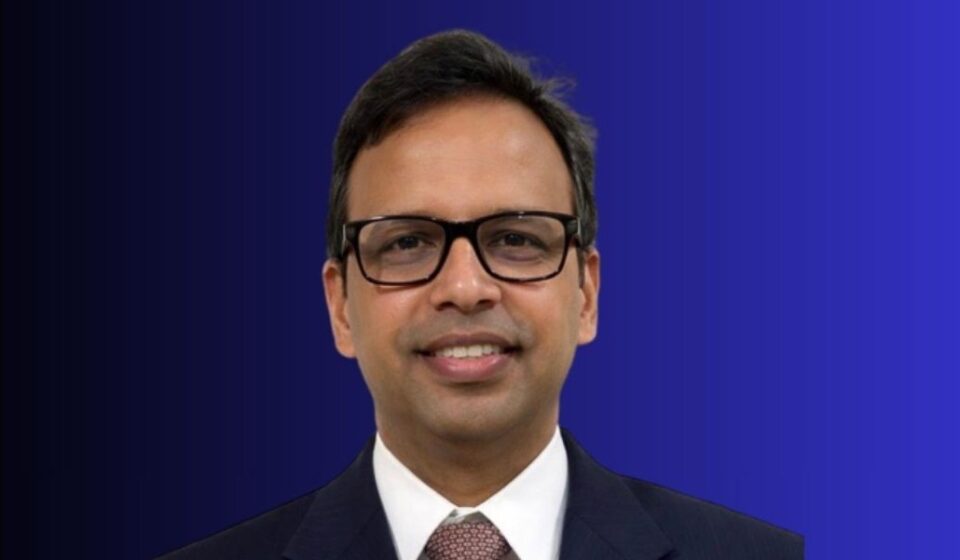
Cumming, GA, August 21, 2026: Vishal Srivastava, a longtime Forsyth County resident and a 25-year veteran of the data and analytics industry, is running for the Forsyth County Board of Education, District 5, challenging incumbent Mike Valdes, who has served on the board for the past four years.
Srivastava says the county’s highly regarded schools cannot afford to become complacent at a time when artificial intelligence is rapidly changing education and the workplace.
In an interview with NRI Pulse, Srivastava spoke about why he is running, his ambition to benchmark Forsyth County Schools against the best education systems in the world, his vision for “AI-native” schools, personalized AI tutors, reducing teachers’ workloads and student mental health.
What motivated you to run for the Forsyth County School Board?
I’ve always wanted to contribute to the community. I’ve been a beneficiary of Forsyth County Schools. I was living in Dunwoody, and I moved to Forsyth County because of the schools. I wanted to contribute my professional capabilities toward making them better.
Forsyth County Schools are the heartbeat of Forsyth County. People move here because they value good education, property values and their overall quality of life.
But I think the school system is under stress from three sides.
First, Forsyth County Schools are the best in Georgia, but that can become a platform for complacency. Being the best in Georgia does not mean you stop looking for ways to improve. Our SAT scores are good because students work extremely hard, but are we giving them the ability to compete at the world level?
Second, national-level politics and divisive issues are coming into the school board. I want to remove the focus from national-level politics and bring it back to academic excellence, classrooms, teachers and students.
The third is AI. It is coming so fast. By the time our students graduate, the curriculum and workplace will have changed. We need to prepare students for complex thinking.
We have to equip our students to lead the AI revolution, not just follow it.
You don’t want Forsyth County Schools simply competing with Gwinnett or Fulton. You want them competing with the best — Singapore, Finland, Switzerland. That is ambitious. What is your vision?
We are already the best in Georgia. I want to start with benchmarking.
There are international standards such as OECD PISA that evaluate education systems around the world. First, I want to benchmark where we are. Then we can identify the gaps and put a plan in place to fill them.
The intention is not to put more pressure on students. The first intention is to change the mindset.
Right now, the mindset is, “We are the best in Georgia, and we don’t have to do anything.” That mindset has to change. We need the mindset of wanting to be among the best in the world.
Benchmarking might actually show us ways to reduce pressure. We could create more specialized pathways. If you are good in math and want to become an engineer, why do you necessarily have to take AP Psychology? There are so many AP courses and this craze to get into Ivy League schools. Students sometimes take courses that may not be relevant to where they want to go.
If we create specialized pathways, students could focus more deeply on the areas in which they excel. If you are good at math, I want you to have the opportunity to compete to win the Olympiad.
It is not that everybody has to do that. The idea is to benchmark ourselves against the best in the world and create the infrastructure and opportunities for students to compete at that level.
You say Forsyth County Schools should move from having an AI policy to becoming “AI-native.” What would an AI-native classroom look like?
When we talk about an AI policy, we are mostly talking about restricting students’ use of AI: You cannot use it for this purpose or that purpose.
When I say AI-native, AI is integrated into the curriculum and classroom. You look at where AI can be used to improve learning and teaching.
Students are not only using these tools; they are using them to give better answers and learn better. AI-native means not just having a policy restricting the use of AI, but integrating AI into the core of teaching and student learning.
You also propose having a personalized AI tutor for every child. What would that look like?
My campaign says, “Don’t lower the bar for anyone; build a better ladder for everyone.”
I have volunteered in schools, primarily with students who were struggling. You see students in eighth grade struggling with basic math concepts. Teachers give them extra time, but they don’t always have enough time to determine exactly where the underlying problem began.
An AI tutor can analyze the way a student solves a problem and identify repetitive mistakes. If an eighth-grade student is struggling with rational numbers, is the problem division, multiplication or addition? Maybe the weakness goes back to a concept from third or fourth grade. AI can identify that missing concept, teach it and take the student to the next level.
My primary focus would be the weakest students first because they need more attention. Bring them to grade level. But the same technology can help an advanced student identify gaps and move to a higher level.
This is not about replacing teachers. Nobody can replace the teacher. Nothing can replace the emotional connection and mentoring teachers provide. But a teacher may have 40 students. If one student is missing a basic concept, the teacher cannot always give that student the individual time required. That is where the AI tutor comes into the picture.
Is any other county or country currently using AI tutors, particularly for weaker students?
AI tutors are something private schools are doing. Gwinnett County has not deployed them fully, although I think they have certain elements of this.
China is one country where you see a lot of deployment. India, I’m sure, is still evaluating it. There are also platforms like Khanmigo. All of those platforms can be explored.
One of the biggest concerns about AI is that people may stop thinking for themselves. We already see that happening when people rely heavily on ChatGPT. What does the future look like if we bring AI into schools?
You are absolutely right. Coding, paperwork — a lot of that is going to go away. But that is exactly why we have to prepare our students differently.
Suppose a teacher says, “Go and write an essay using ChatGPT.” It can give you such a good essay that it may be difficult to distinguish.
But we have to prepare students to critique that essay. We have to give them enough knowledge that they can look at the output coming from AI and say, “This does not make sense.”
They need to understand complex issues and have the intellect and intuitive capability to judge whether something is right or wrong. The curriculum has to change so students develop the ability to judge what is coming from AI, critique it and make it better.
But what about English language skills, writing skills and grammar?
Grammar and those fundamental skills have to be taught the way they are being taught.
Kids need to grasp grammar from the early grades. It has to be ingrained in their minds. Then they can look at whether ChatGPT is giving them the correct answer.
There is no letting up in terms of standards. It is not that students should not learn those concepts.
But once they know the fundamentals, if they are doing a very advanced project, they can use AI to fine-tune their answers and critique the answers coming from ChatGPT. There also have to be guardrails around plagiarism. Students should not simply copy what AI produces.
What skills do you believe today’s students will need to remain valuable in an AI-driven workplace 10 to 15 years from now?
If I take the example of my own industry, IT, people who have just one skill — coding — are getting displaced.
But people who understand the overall complexity of the system, how things interact and how the entire environment integrates are still valuable. They fix the problem when the code written by AI doesn’t work.
In the future, valuable skills will involve understanding complex problems and integrating different disciplines — medicine with physics, for example, or biology with engineering.
Creativity and empathy will also be important. Leadership and intuition are going to be very important. You need to build that intuition about what is right and what is wrong.
So I would say four things are particularly important: understanding complex, cross-disciplinary problems; empathy; creativity; and leadership and intuition.
If intellect becomes commoditized, you need intuition and leadership to make judgment calls, criticize what AI gives you and integrate different disciplines.
AI also comes with dangers involving privacy and information leaks. How would you address those risks at the school level?
I’m an IT guy. When cloud computing first came, most companies did not want to move to the cloud because they worried their data would leak to other companies.
Then data privacy guardrails were put in place, and now everybody is in the cloud. Competing companies use cloud systems, but their data doesn’t get shared.
Similarly, current technologies have a lot of privacy built into them.
From the school perspective, we would need data privacy guardrails so that none of the data is shared outside the school system. You can build an enterprise-grade school system where the information remains within that system.
Even when using AI through APIs, there are guardrails that can protect or mask personalized data.
Teachers are already overworked and overwhelmed. How would you convince them to get trained in AI?
The number one problem I see teachers complain about is paperwork and red tape. They have to document everything and create lesson plans and presentations. That creates additional work.
That is where AI can reduce their load.
If you know your lesson plan well and train an AI tool to understand what you want, it can give you a lesson plan according to your needs. Then you review it and check it.
My wife is a Montessori teacher. She has to send emails with photos and other information. A lot of that work can be automated. Something that takes 30 minutes could take five minutes.
Teachers have a lot of rote work that increases their burden. AI can take some of that away so they can focus on what matters most: teaching and mentoring.
AI is only as good as the user using it. You cannot blindly say, “Create a lesson plan,” and give it to students. You have to read it and make sure it meets your requirements.
There will be an initial training hiccup, but after that I think it can make teachers’ lives much easier.
Let’s talk about the pressure students are under. Earlier this year, a Forsyth County student died by suicide. There is tremendous pressure to perform. How do you address this? Could AI make it worse?
I think we have to keep AI separate from this problem.
There is a tremendous amount of social pressure on kids, and I think social media amplifies it. There is bullying, comparison and pressure over appearance, likes and comments.
Even as adults, we put something on social media and want to know how many people liked it. Imagine the impact on teenagers when their peer group doesn’t like something or leaves nasty comments.
People also say things behind a keyboard that they probably would not say if they were sitting face-to-face with someone.
Getting kids onto social media is creating a lot of social pressure. More than academic pressure, there is social pressure.
Apart from that, I think we have a low counselor-to-student ratio. Counselors are overstretched. If they can flag a case earlier, that could make a difference.
Academic pressure is also real. There is no denying it.
Students need counseling, support and second chances. I think reducing the pressure created by social media and improving the counselor-to-student ratio would help.
