


BY VEENA RAO
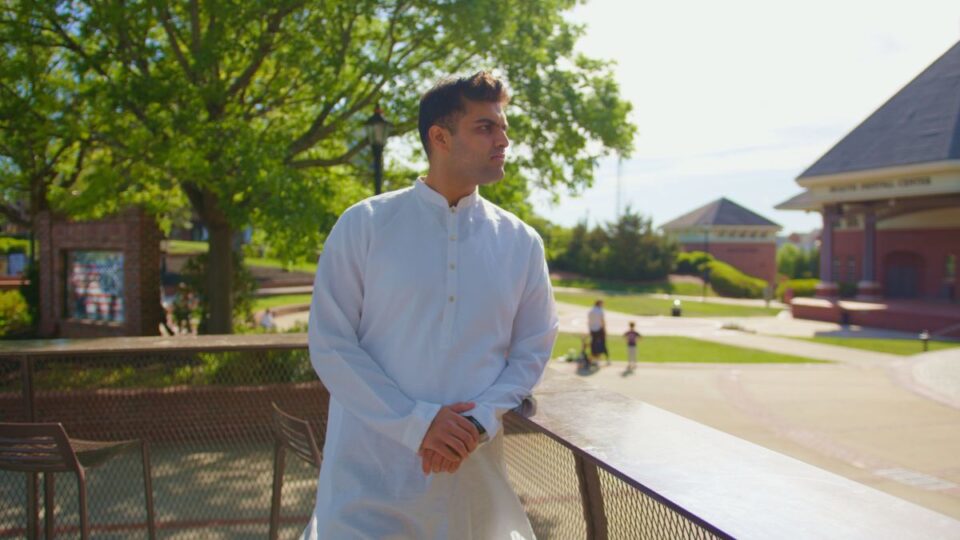
Gwinnett County, GA, September 1, 2026: Republican Aizaz Shaikh is running for Georgia State Senate District 7 against Democratic opponent Ruwa Romman in November.
A longtime Gwinnett County resident, Shaikh served in the U.S. Air Force and works in real estate and as a substitute teacher with Gwinnett County Public Schools.
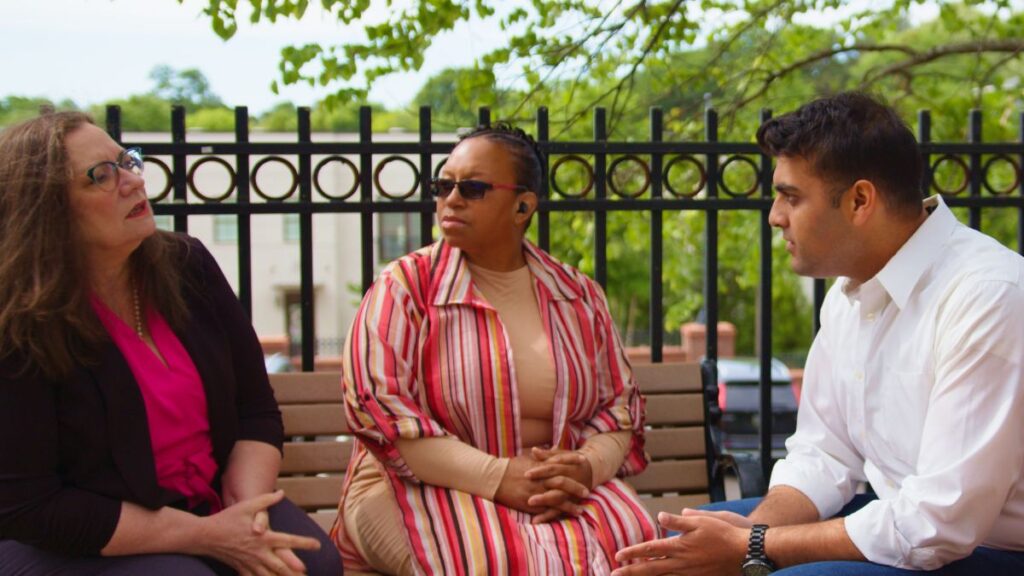
In a Zoom interview with NRI Pulse, Shaikh discussed why he chose the Republican Party, housing affordability, education, gun policy, abortion and hostility toward immigrants and South Asian Americans. He also spoke about his close loss in the June special election and his race against Romman.
Why politics, and why the Georgia Senate now?
I grew up in Gwinnett, and when I was at Georgia Gwinnett College, where I went for my undergrad, I was involved in the student government there and kind of liked being able to help people. The biggest thing was, people knew who I was and they came up to ask me questions.
When I saw the opportunity with the Georgia State Senate, I was like, let me think about this, let me pray on it, let me talk to some of my friends and family. I spoke to some people in the county GOP and decided, let’s go for it.
Why the Republican Party? You’re South Asian and Muslim, and Gwinnett County is very diverse. How do you describe yourself politically?
If you look at the tradition of the Republican Party and the values, it’s focused on family values. It’s also focused on less government. What I mean by that specifically is letting people decide what they want.
There was some recent legislation that unfortunately didn’t go through, but it was to allow county residents to determine whether or not they wanted an increase in sales tax when they would get a decrease in property tax. Unfortunately, that did not pass, but legislation like that is why I wanted to go to the Republican Party, because it gives the control to the people.
Politically, I describe myself definitely on the conservative side, but also as a moderate. I grew up where my parents always taught me, and my mom specifically, that too much of anything is a bad thing.
The example she gave me was water. That’s something we need to survive. But even if we have too much water, that can disrupt our sodium balance within our body. Even too much of that is a bad thing.
Are you saying that too much government is a bad thing?
I think too much of anything is a bad thing. Too much government, not enough government. What I mean is, there always needs to be a balance.
Your website talks about affordability, education and public service. Do you disagree with the Republican Party on any issues?
What I’ve noticed at the state level specifically is it’s more on the implementation of the different things. I think both sides right now agree that affordability is an issue. The disagreement comes in: How do we implement that?
As we’re talking to people in the district, specifically in the county—because my district encompasses just Gwinnett County—one thing is education. What I mean specifically on the affordability side is financial literacy.
If we can tackle affordability at the root cause, and for me that’s educating our youth on money management and the value of a dollar. Psychologically, there have been studies where if somebody’s spending cash, there’s a different psychological feeling compared to swiping a credit card.
Right now, financial literacy is a required part of the curriculum across the state. However, it only encompasses one semester.
When I graduated from Brookwood High School, financial literacy was an elective that I could take. But making that mandatory as part of the curriculum, and also offering after-school programs to help parents get involved in that as well, because it doesn’t stop just at the classroom. It has to transcend into the home as well.
You work in real estate, so you’ve seen the housing affordability problem. What do you believe is actually driving the problem in Gwinnett, and what is the solution?
One thing I noticed after COVID was a huge influx of people moving from other states. Many were able to sell their homes and come here and pay cash, sometimes way above asking, because they were getting more bang for their buck. That caused a huge increase.
Interest rates are also a factor, but that’s more at the federal level. We can only do so much about that at the state level, if anything.
As far as addressing affordability, a lot of my approach stems back to education. When I started in real estate, first-time homebuyers were my bread and butter, and there were a lot of people who didn’t even know they could qualify. Georgia has a lot of down-payment assistance programs available. It may not be their dream home, but it can be a good starter home.
What if you don’t qualify for these programs? What if you’re a middle-income family that still cannot afford a home?
I have been looking into trying to figure out how to address that. That comes down to talking to the experts in the field, specifically on the lending side, and also on the government side.
And that goes back to my initial thing about balance. Government does subsidize a lot of stuff, especially in my county, for example. We have the police department, we have the fire department. That wouldn’t be able to function without government intervention. So that’s where I’m doing more research.
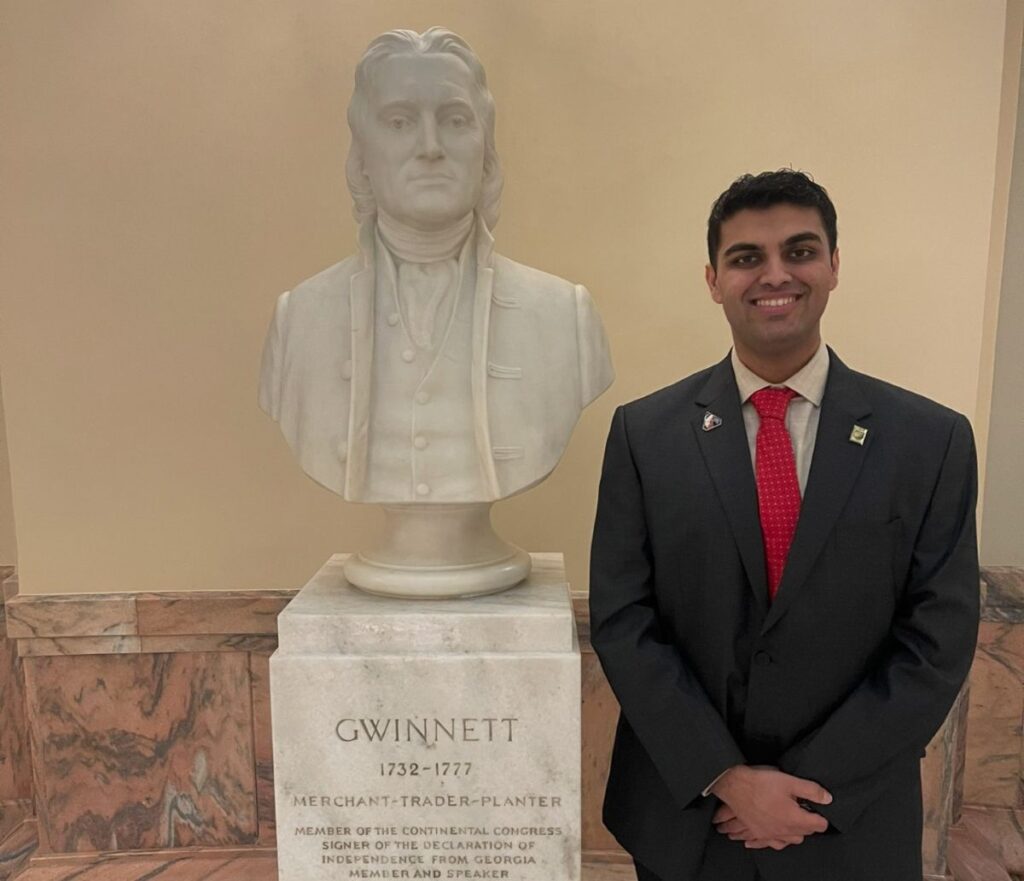
You’re still actively working as a substitute teacher with Gwinnett County Public Schools. What concerns you most about what teachers and students are dealing with today?
What I’ve noticed is you have a lot of teachers that get bogged down with the administrative stuff.
Specifically, special needs. There’s so much paperwork involved because of the Individualized Education Plans and just making sure everything’s in compliance that sometimes the teachers are struggling to actually teach, because if they don’t do the paperwork, their job would be at risk.
Mark Twain has a quote: “I never want to let my schooling interfere with my education.” And I think our education system, as a whole, does have that issue.
What about the pressures students are going through—mental health issues, bullying, social media?
The good thing was there was a cellphone bill passed where now statewide, I believe at least in middle school—and I can’t remember if they instituted it in high school just yet—students are not allowed to have their cellphones from bell to bell.
That, I think, at least in the classroom and in the school setting, will make it easier for teachers to communicate with the students, and also for students to be able to have those personal conversations.
Say they’re getting bullied outside of the school, or somewhere in their social environment, they can feel comfortable enough to come to their teacher, come to the administrator, and tell them, “I’m going through this. How do I best address it?”
What about students’ mental health? Is there anything you can do in terms of creating a change in policy?
With students’ mental health, I think that’s going to be the age-old saying: It takes a village.
I was fortunate to grow up in a large family, and that helped on the mental health side because you always had someone to turn to.
I think right now, if we can tie the parents in—when I was growing up, it used to be that the parent and the teacher were a team. Everybody formed this team to make sure the child could succeed in every aspect, whether that was addressing any mental health concerns, addressing any lack of academic ability, or if they have any interests, making sure they’re guided on the right path, so to speak.
If we can tie the parents into the education, that’ll also help with mental health.
Where are you on gun control?
I’m going back to what I said at the beginning, as far as balance. As someone who was in the Air Force, I do believe that we have a right to carry weapons. However, again, it needs to be moderated.
I do acknowledge that there is a problem. Someone with a mental health issue should not be allowed to just go and get a weapon. But the question becomes: How do we address that without infringing on others’ rights?
The U.S. has been called this great big experiment for a reason. So it’s a constant battle of balancing between security versus freedom. There has to be a balance.
What’s your take on Georgia’s current abortion law? Do you think it needs to be less restrictive?
Abortion is another topic that we need to address the root cause. I would argue most women are going through with abortion because their circumstances leave them no other option, not because they want to. If we can begin rebuilding the family unit and the proverbial “village” it takes to raise a child, it is likely that abortion rates will go down.
How we rebuild the family unit is by giving people back control of their lives and letting them make the decisions on where their taxes go; whether that be lowering property taxes by increasing the local sales tax, the Women, Infants, and Children (WIC) program, or the foster care system.”
You come from a family of immigrants. There is rising hate directed at Indian Americans, South Asians and immigrants.
On this particular issue, I’m going to speak from personal experience. I went to Brookwood High School. I grew up with a diverse group of friends. It was Muslims, Christians, Jewish—they were from all walks of life. Some of them didn’t believe in God. Some of them did. When it comes to that issue, what I have experienced is it really has come down to lack of knowledge. As humans, we’re primed to be scared of the unknown.
Whenever I interacted with the community, specifically people within the party and even the local party, they do have questions. Their prejudice has come from what they have heard.
Many of the people that I’ve been interacting with haven’t had the opportunity to have a civil conversation with anybody in their respective field.
Now, it does make it a little easier for me, given I am on the Republican ballot. I’m a Republican nominee. So it intrigues people. But every time I talk to somebody, Republican or Democrat, or even if they’re in the middle, the resounding response I’ve been getting is, “You seem like a decent person, and I was wrong.”
A lot of the veterans that I speak to, they even acknowledge that when they were deployed overseas, especially in the Middle East, they were mainly Muslims that helped them. If it wasn’t for Muslims, they wouldn’t be alive today.
So it’s just a matter of getting that message out and interacting with the communities.
I think the best way I can describe it is both sides have fear of the unknown, just because of what you hear in the media.
If we can just be a little bit more tolerant and give each other more of a chance, that can help dispel some of it.
But what can you do specifically as a Republican? If you are voted into office, what can you do to counter hate?
This is going to sound weird, but when I started this campaign, the biggest thing I told myself was, when it comes to hate—which I have received—is not engage with it.
I’m sure you’ve heard of the analogy where there are two wolves. There’s a wolf of positivity, a wolf of negativity—in this case, hate—and whichever wolf you feed is the wolf that’s going to grow.
So if we can just focus on the positive aspects and focus on our humanity, on who we are underneath—my cousin has a tagline, “We all bleed red”—if we can focus on that, I think we’ll be better off as a society.
There’s a challenge because there’s so much propaganda that goes on in the media, but that’s where it comes down to grassroots, talking to people, meeting with people.
And if somebody asks a question that might be a little off-putting, just give them the benefit of the doubt. Maybe they’re only asking because they don’t know, rather than thinking it’s automatically because they have a prejudice.
You came within just a few hundred votes of winning the Senate seat in the June special election. What did that result tell you about District 7, what did you learn from it, and what are you doing differently in November?
When I was door-knocking during the early voting period, I realized why it was such a close margin. Because it was a runoff, a lot of people I spoke to said, “Oh, well, we actually already voted.” But they had only voted for the top-ticket races.
The state Senate race was on the second page of the ballot, and a lot of people just left that part blank, so those votes obviously weren’t counted.
In terms of what we’re doing differently, we’re continuing to meet people at doors, listening to their concerns and making notes so the people are properly represented at the Capitol”
Your opponent, Ruwa Romman, has a legislative record. What is the biggest policy difference between the two of you, and why should voters vote for you instead of her?
A lot of the legislators in my district are really good at advocating and bringing light to issues. But what I’ve noticed from speaking to the community is the day-to-day issues are being left off to the side because so much focus has been put on the national stuff.
Affordability has been this huge thing, but nobody’s really talked about how to address it. You have to really look at the issue and look at the data and research it to address the root cause.
I think what we’ve done, just as a society as a whole, is we address the symptoms, and then the problem just keeps coming up over and over again. And with the media that we have, people will just see what’s on the media. Sometimes they will easily forget the root cause has not been resolved.
Going back to that legislation that wasn’t passed, to my recollection, Ruwa voted against it, but I think it was because of party lines. Republicans wanted the referendum on the ballot to give the people of each county an opportunity to vote for themselves whether they wanted an increase in sales tax for a decrease in property tax. But that measure wasn’t passed.
And as far as policy differences, the biggest thing is I’ve been going to the school board meetings, I’ve been talking to teachers, I’ve been talking to students, addressing the issues that are hurting the people locally. We need to leave the national issues up to the federal legislators as best as we can.
Finally, what do you think sets you apart as a candidate?
The biggest thing is, I’m what you would call an outsider. I’ve been engaged in politics, but this is the first time I’m running for elected office. I have held appointed positions in the past.
I grew up in Gwinnett. I was born in DeKalb, and my family moved to Gwinnett a year later. I’ve seen how things have changed here.
I also come from a varied background. We talked about me being an Air Force veteran, a substitute teacher and working in real estate. That gives me insight into different industries and a better understanding of the issues being addressed.
One of the reasons I became a substitute teacher was that I was always interested in education. At one point, I had aspirations to open a school, but I didn’t want to just be a principal without experiencing what it’s like to be in a classroom.
That’s what I believe makes me stand out. Seldom have I gone to a door where there isn’t something I can relate to someone on—whether it’s education, kids, being a small-business owner or going to Georgia Gwinnett College. I had to take out student loans, so I understand that as well.
