





BY VEENA RAO
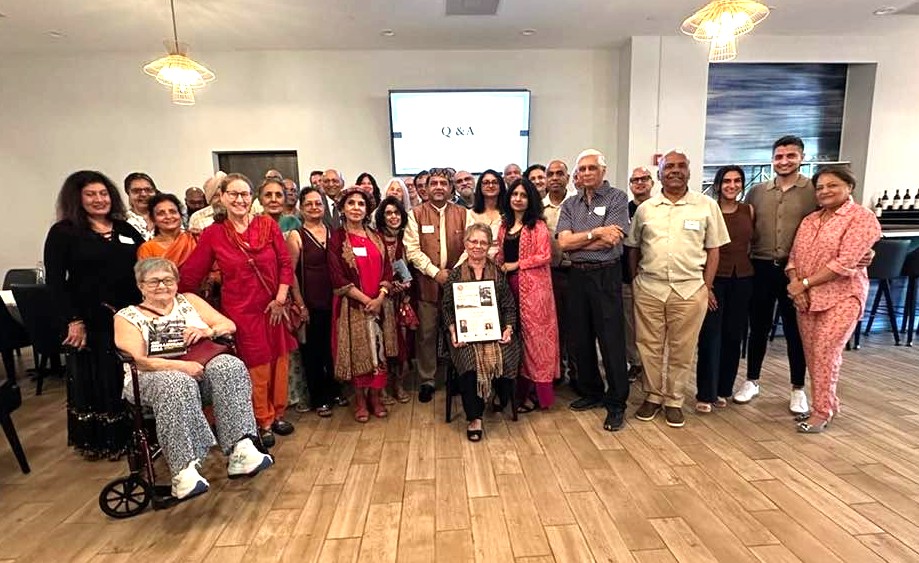
Atlanta, GA, June 19, 2026— The India American Cultural Association (IACA) hosted a luncheon and book launch for anthropologist and author Dr. Joyce Flueckiger’s latest work, On Mullingar Hill: Memory, Movement, and Belonging in a Himalayan Hill Station, at Tabla in Midtown Atlanta on Saturday, June 13.
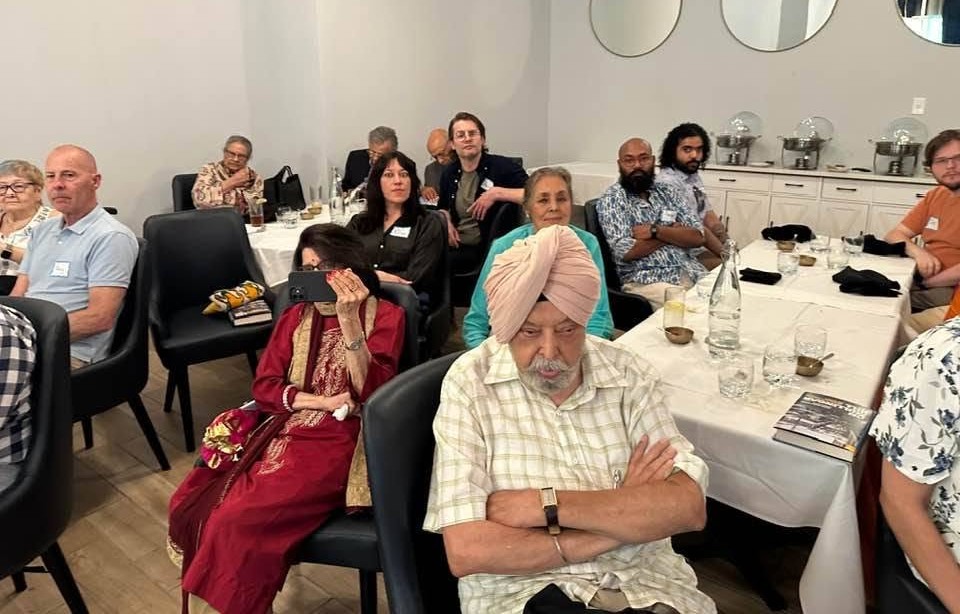
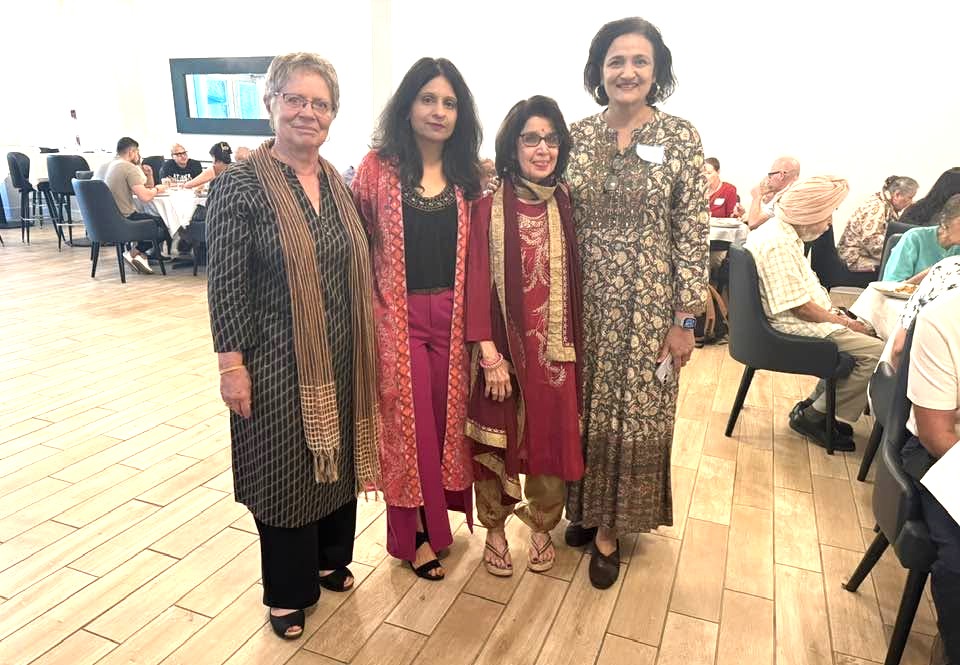
The event brought together scholars, community members, and lovers of Indian history and culture for an afternoon of conversation centered on memory, migration, identity, and belonging.
Flueckiger, Professor Emerita of Religion at Emory University, has deep personal ties to the Himalayan town she writes about. The daughter of American missionaries, she was born in India and spent much of her childhood in Mussoorie, where she attended Woodstock School from the age of six through high school. Those early experiences, she said, shaped both her lifelong relationship with India and the ethnographic perspective that informs her work.
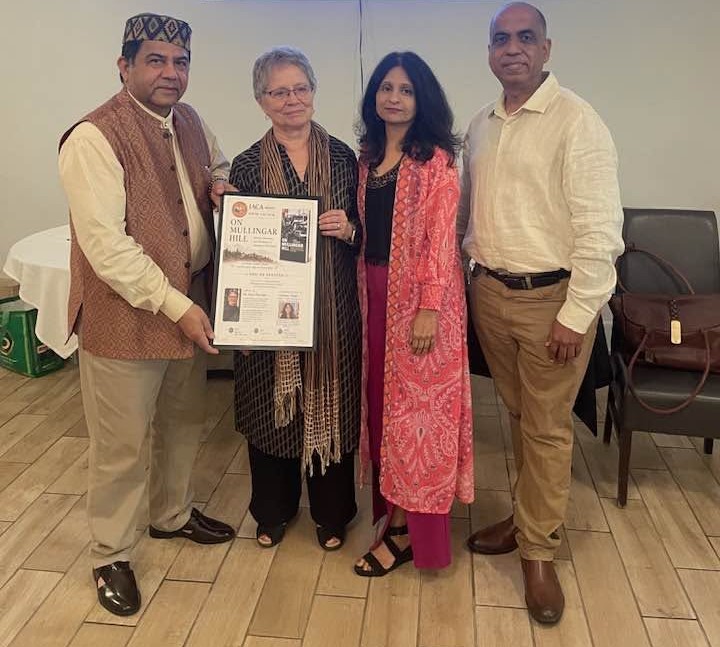
The program was hosted by IACA board member Ani Agnihotri, who welcomed attendees and spoke about the many months of planning that went into organizing the launch.
Agnihotri said the event had been in the works for nearly a year and described the logistical challenges involved, from coordinating the arrival of books printed in India to finding a centrally located venue accessible to attendees from across metro Atlanta.
The program opened with remarks from IACA President Dhananjay Gupta, who highlighted the organization’s long history of serving the Indian-American community in Atlanta.
Gupta noted that IACA, established in 1971, is Atlanta’s oldest Indian organization and was founded by Georgia Tech students. He invited attendees to support IACA and participate in its upcoming events, including the Festival of India, which he said will celebrate its 30th anniversary this year. He also spoke about IACA’s signature programs like the Atlanta Indian Idol and the beauty pageant, noting that several participants in these programs have gone on to achieve success in their careers.
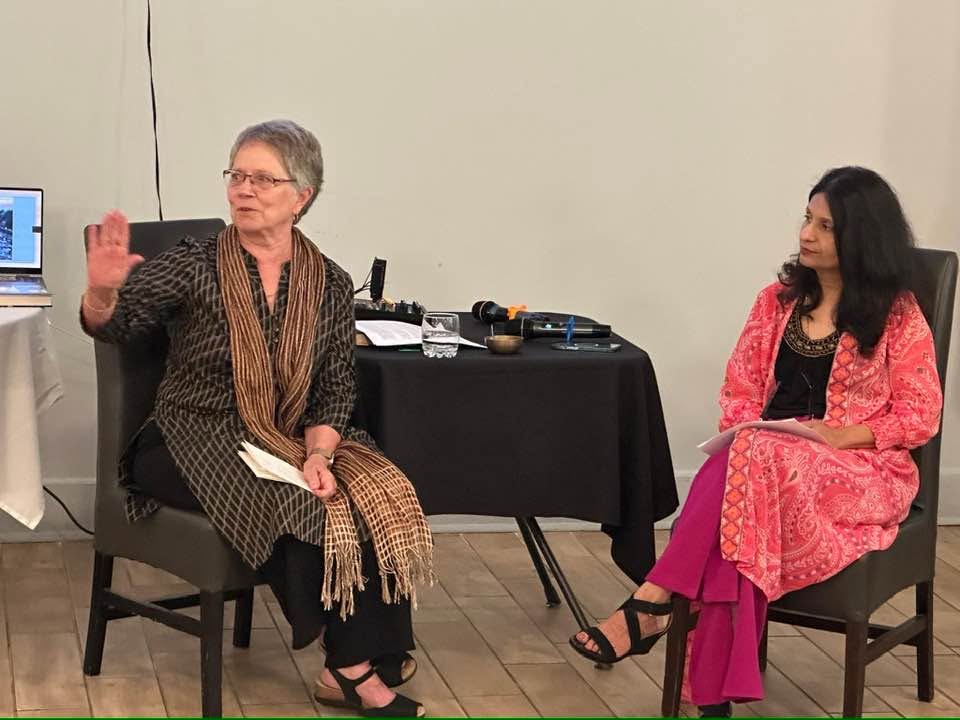
The conversation with Flueckiger was skilfully moderated by NRI Pulse City News Editor Jyothsna Hegde, who guided the audience through the themes and stories at the heart of the book.
Introducing the book, Hegde noted that On Mullingar Hill tells the oral histories and personal narratives of shopkeepers in Landour Bazaar, Mussoorie, whose families helped shape the culture and character of the Himalayan destination. She observed that the book expands the history of India’s hill stations beyond colonial actors and focuses instead on migrants, traders, and families who created the bazaar’s unique local cosmopolitanism.
Flueckiger explained that the idea for the book emerged during a visit to Mussoorie in 2017, when she visited the Mussoorie Heritage Centre.
“The walls were covered with pictures and stories of British colonial actors,” she said. “They’re very important. They did help shape Mussoorie. However, as I was walking up and down the length of the bazaar road and started talking to the shopkeepers, I thought, ‘Where are their stories in the heritage of Mussoorie?'”
Even during that trip, she said, she began asking shopkeepers whether they would be willing to participate if she returned to conduct research.
Discussing her selection process, Flueckiger acknowledged that “selection is very political.”
She said she began with shopkeepers she already knew or whose fathers she had known while growing up in Mussoorie, and then expanded through community networks.
“I tried to maintain a balance between representation of different areas of India, different regions, castes, and gender,” she said. “But I also wanted good stories.”
“Everybody has a story that’s worth listening to, but not everybody is a storyteller,” she added.
One of the people discussed during the conversation was a well-known kirana store owner, Jasvinder Singh or Smarty Singh, as he is known locally, whom Flueckiger described as embodying the spirit of the bazaar. She recounted seeing him direct traffic on steep mountain roads, distribute cold drinks to passersby in honor of a Sikh martyr, and mediate disputes within the community.
When she asked him where he considered his native place to be, he paused before answering that it would have to be Mussoorie because he had lived there for 44 years.
According to Flueckiger, what made Mussoorie home for him was not merely the landscape but the people.
“He said people here — Muslims, somebody else, everybody in the bazaar — all live in harmony,” she said. “They come to each other’s festivals, weddings, funerals.”
A significant portion of the discussion focused on women’s stories and how they differed from those of men.
“The stories couldn’t be more different,” Flueckiger said.
While men often spoke about migration histories, businesses, politics, traffic, and changes in the bazaar, women almost always framed their stories through marriage and family.
One of the women featured prominently in the book is Doma, a Tibetan entrepreneur whom Flueckiger had known since childhood. Flueckiger described Doma as “an unbelievable woman” who began by carrying merchandise on her back and selling goods door-to-door before eventually establishing a permanent shop in the Tibetan market.
When Flueckiger visited Doma in 2019, she learned that the elderly shopkeeper had suffered a stroke and was experiencing memory loss. Although she had initially gone simply to pay her respects, Doma became eager to tell her story. Her recollections moved between memories of Tibet, her marriage, raising children and grandchildren, and the Chinese takeover of Tibet.
The discussion also explored the idea of home, a central theme of the book.
Flueckiger spoke about searching for a Hindi equivalent to the Tamil word uru, which refers not simply to a village but to one’s roots and ancestral place.
She eventually settled on the term mool niwas and found that people’s responses varied widely. Some identified ancestral villages they had never lived in, while others considered Mussoorie home despite having roots elsewhere.
Women’s understandings of home, she said, were often shaped by the concepts of maika and sasural — the natal and marital homes.
“I really loved those terms,” she said, noting that they recognize the possibility of multiple homes and multiple belongings.
Throughout the discussion, Hegde highlighted the accessibility of the book, observing that it succeeds in reaching readers beyond academia.
Flueckiger said she consciously chose to publish the book in India because she wanted it to be available to the very people whose stories it tells.
“I really wanted to write in a style that they could understand,” she said.
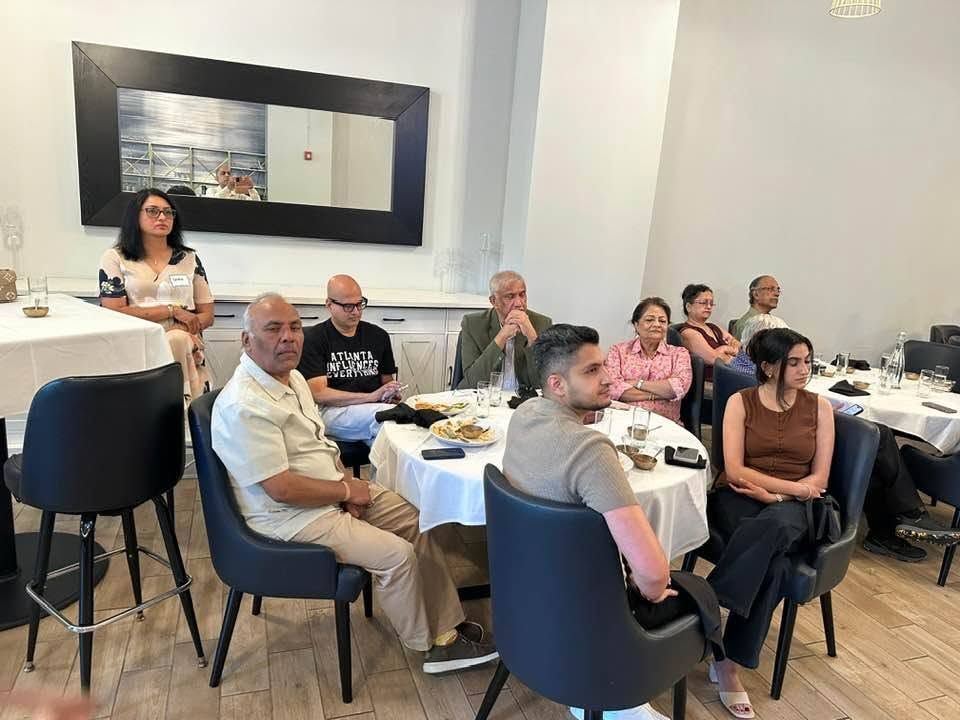
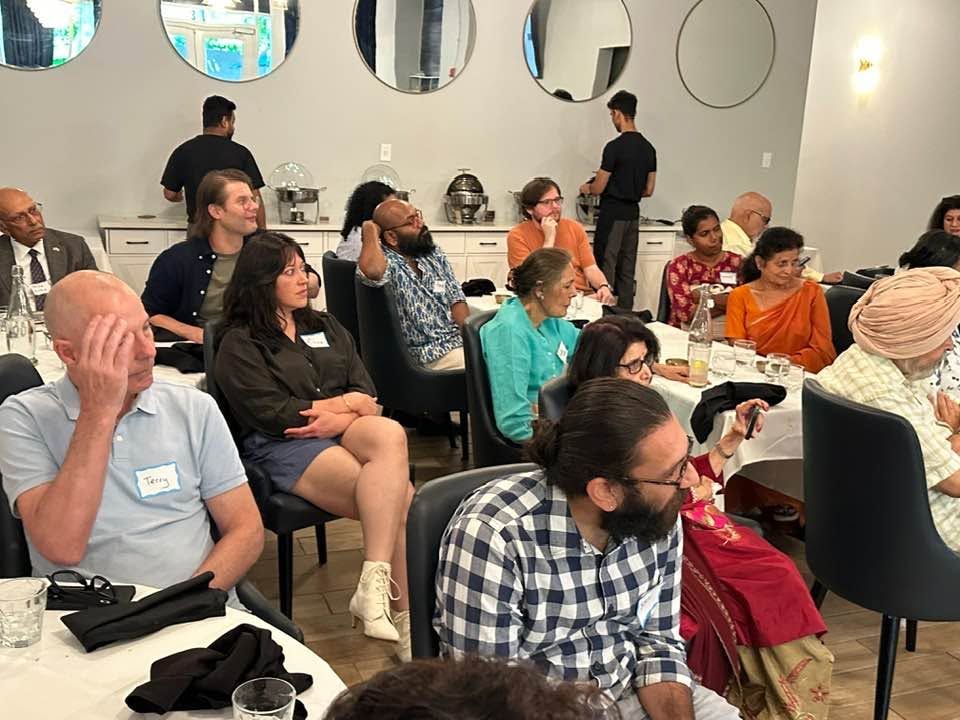
The formal conversation was followed by an audience question-and-answer session.
Audience members asked about Flueckiger’s positionality as a scholar who spent her childhood in India, the challenges of representing oral histories, the role of bias in ethnographic writing, and the dramatic changes Mussoorie has undergone over the decades.
Responding to a question about bias, Flueckiger acknowledged that every researcher brings a particular perspective to their work.
“I don’t consider myself a total outsider, but I’m not a total insider either,” she said.
Asked whether the stories also documented changes in Mussoorie itself, Flueckiger said the transformation of the hill station emerged repeatedly in conversations with shopkeepers. She noted that many lamented the effects of increased traffic, changing tourism patterns, and declining foot traffic in the bazaar.
“It has changed radically,” she said. “You can hardly walk through the bazaar now because of the traffic.”
Flueckiger said one of her principal goals as an anthropologist is to preserve oral histories and unwritten traditions.
“I hope that reading these stories, people might ask people they meet every day in their own bazaars about their lives,” she said. “The beautiful thing is to sit and listen.”
She added that she hopes the book will “expand what counts and who counts in history.”
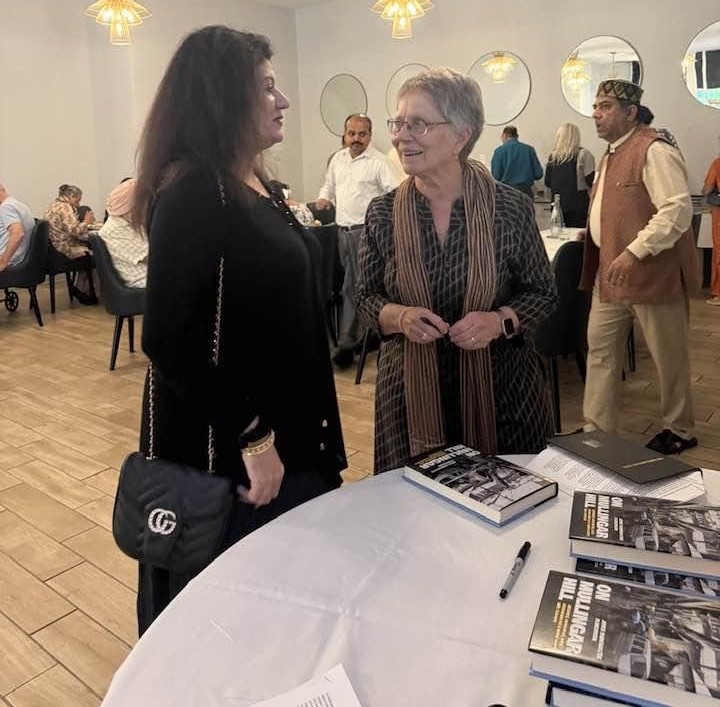
Dr. Joyce Burkhalter Flueckiger is Professor Emerita of Religion at Emory University and a noted anthropologist whose scholarship focuses on religion, gender, ritual, and everyday life in India. She earned her doctorate in South Asian Languages and Literature from the University of Wisconsin-Madison and has conducted extensive ethnographic fieldwork in Chhattisgarh, Hyderabad, Tirupati, and Mussoorie. A Guggenheim Fellow and recipient of numerous academic honors, Flueckiger retired from Emory in 2021 after nearly three decades of teaching and mentorship.
