





BY JYOTHSNA HEGDE
Atlanta, GA, August 14, 2026: There are chefs who create extraordinary food, and then there are those who remind us why food matters in the first place. For Vikas Khanna, food has never been merely about taste. It is memory and identity, struggle and survival, generosity and grace. It is the fragrance of home, the comfort of belonging when the outside world feels unkind, the courage to carry a cuisine across oceans, and ultimately, the responsibility to use success to make room for others.
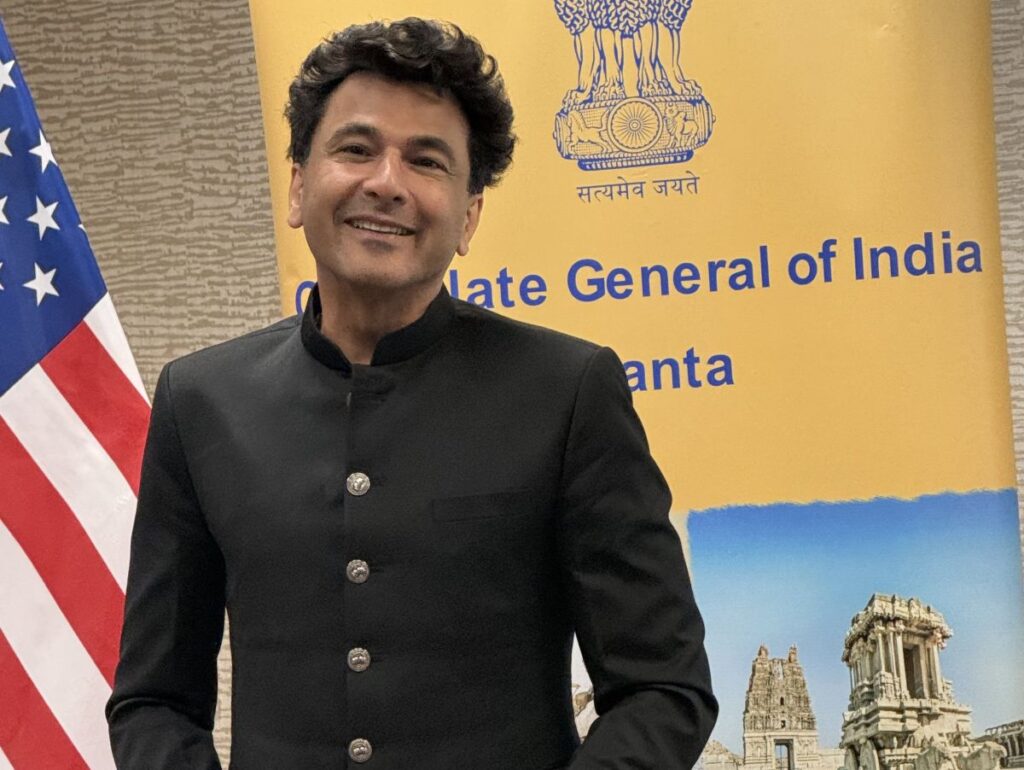
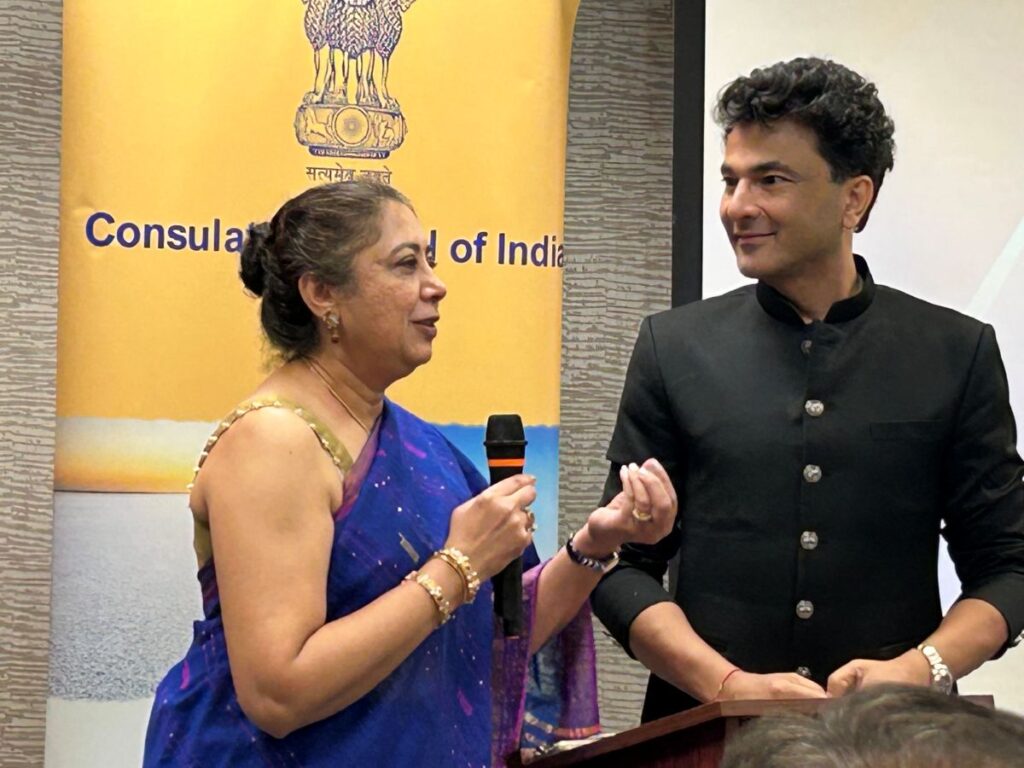
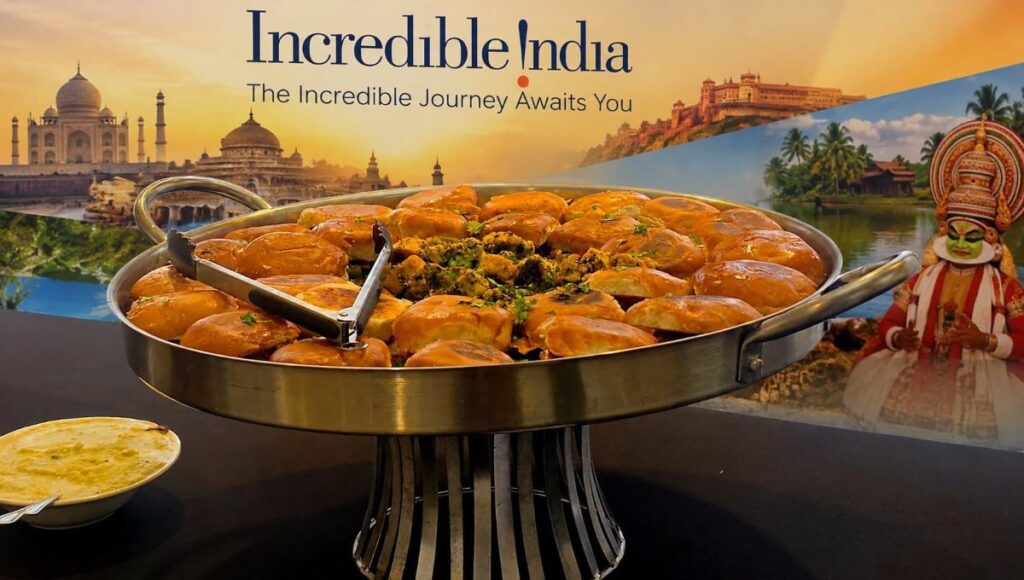
That philosophy came alive at a special Indian Food Tasting
Experience hosted by the Consulate General of India in Atlanta on August 10 at
the Sheraton Perimeter North in Sandy Springs. The afternoon celebrated India’s
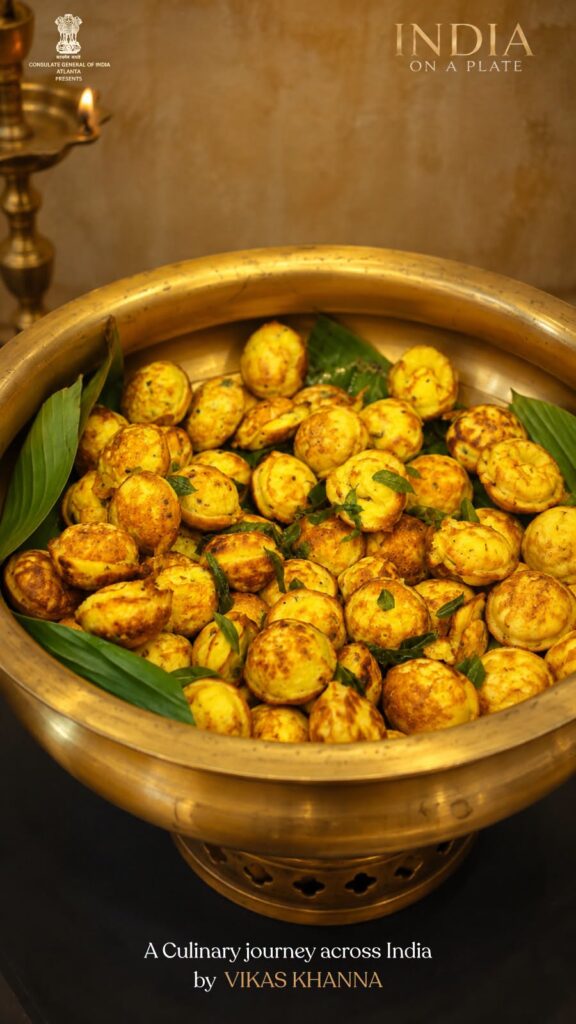
extraordinary culinary diversity through a curated tasting of regional dishes
followed by an intimate conversation with the Michelin-starred chef, author,
filmmaker and restaurateur. The occasion carried added poignancy as one of the
final public events under the leadership of Consul General Hon. Ramesh Babu
Lakshmanan.
Vindali Vartak of Leap to Shine kicked off the afternoon, setting the stage for
an intimate celebration of Indian cuisine, conversation and purpose.
Welcoming Chef Vikas Khanna, Hon. Lakshmanan reflected on food as a bridge
between memory, culture and people, noting that “Food has its own value, it has
its own message,” before inviting Khanna to share the experiences and ideas
that have shaped his remarkable journey.
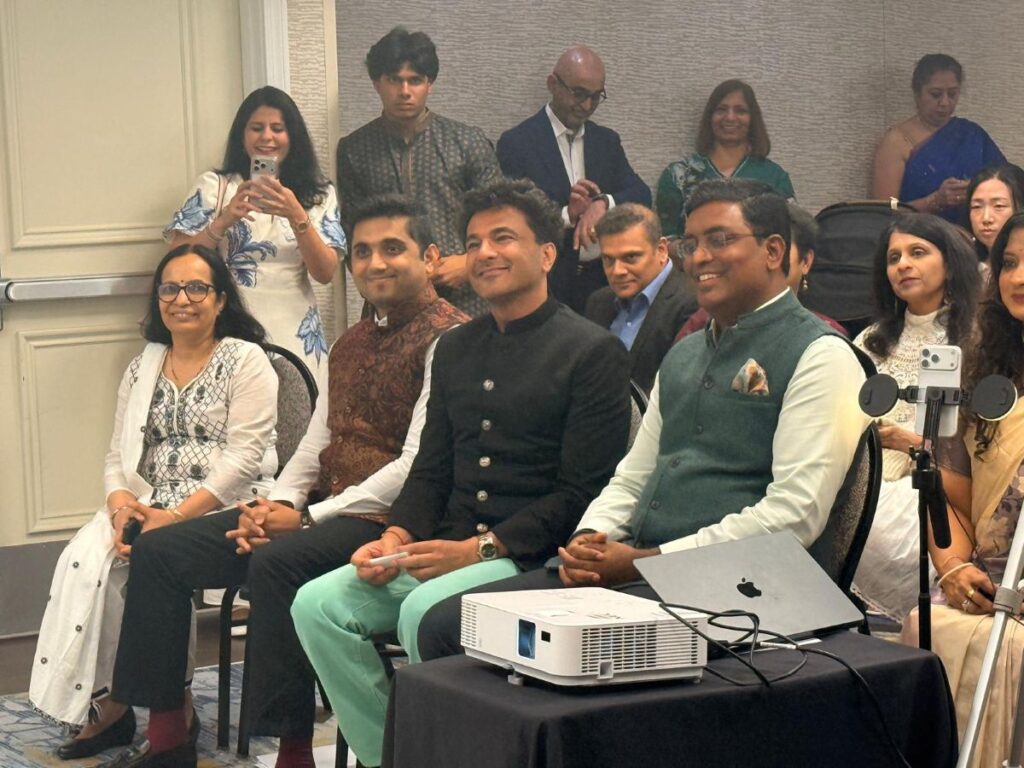
For all the accomplishments attached to Khanna’s name, Michelin recognition, acclaimed restaurants, television, books and films, he seemed far more interested in the experiences that shaped him than in the accolades that followed.
Khanna spoke candidly about being born with clubfoot and growing up with corrective shoes and physical limitations that separated him from other children. Doctors offered his family little encouragement about what he might eventually be able to do, but the women closest to him refused to accept those limitations as the final word. Khanna described himself not as a naturally fearless child, but as someone deeply unsure of himself. “I was a weak and scared and totally paranoid, insecure child,” he said. “These women changed their whole life.”
His grandmother’s kitchen became a refuge. There, amid familiar aromas and everyday rituals, he discovered a world in which he could contribute rather than be measured by what he lacked. He recalled the pride of learning to make a perfectly round roti. “I could make a round bread,” he said with humor. “I noticed that that’s a superpower.” It was a modest achievement, but for a child accustomed to being singled out for his differences, it offered something precious: confidence.
Khanna was equally open about struggling academically in a system that rewarded memorization more easily than imagination. Reflecting on children whose minds work differently, he said, “It’s very difficult for a creative mind to flourish.” He recalled being punished for writing an unconventional school essay about a poor woman feeding her child, rather than producing the standard response expected of him. Decades later, he transformed that memory into a larger argument for allowing children to think independently. “Today I stand here… because I chose to write a different story,” he said, urging adults to create spaces where children can discover their own voices instead of being shamed into abandoning them.
Seen against those beginnings, Khanna’s journey takes on an almost poetic symmetry. The child who struggled physically and academically eventually crossed continents, became an author and filmmaker, and carried Indian cuisine onto some of the world’s most visible culinary stages.
A Fair Chance for Indian Cuisine
When Khanna began cooking in New York around 2000, Indian cuisine occupied a very different place in America’s fine-dining conversation. He remembered trying simply to persuade critics to take an Indian restaurant seriously. “I wanted to be reviewed. I wanted to feel that I’m equal,” he said. “Give me a fair chance.”
That desire became a mission larger than his own career. His Michelin recognition in 2011 marked an extraordinary personal milestone, but Khanna also saw it as part of a broader evolution in how Indian cuisine was perceived in America. He challenged the narrow frameworks through which culinary excellence has historically been measured and spoke passionately about expanding the world’s definition of greatness to include traditions that do not fit neatly within European standards.
The Conversation Opens Up
As the conversation opened to audience questions, Atlanta-based cookbook author Nandita Godbole facilitated the Q&A, which ranged from Indian cuisine’s place in America and the pressures of New York’s restaurant world to creativity, family, philanthropy and Khanna’s work beyond the kitchen.
When asked why Indian food had achieved wider mainstream recognition in Britain than in the United States, Khanna pointed to Britain’s much longer historical encounter with India. “Give them a little break,” he said with a smile. “Give it some time. I feel authenticity wins.”
He believes New York may ultimately be the city that pushes Indian cuisine fully into the mainstream. “If New York City embraces Indian cuisine, I promise you, Indian food will go mainstream,” he said. At the same time, Khanna argued strongly for allowing Indian food to evolve. Recipes, ingredients and traditions have always traveled and changed, he reminded the audience, and chefs need room to interpret them. “Give chefs a little freedom and be a little forgiving,” he urged.
When a young chef sought his advice, Khanna reached for a Punjabi word that seemed to contain his philosophy of food: barkat. He searched for an English equivalent, suggesting blessing, generosity, grace and dignity. Indian food, he said in essence, should retain that spirit. It should not become so preoccupied with perfect presentation that it loses warmth and humanity.
During the Q&A, NRI Pulse entertainment editor Namita Dogra Sudan asked Khanna about his latest movie, prompting one of the afternoon’s most reflective responses. He explained that the story grew from receiving his first Michelin star and later realizing that, in the excitement of the moment, he had failed to thank his grandmother, who died soon afterward. “It made me write a short story of the invisible people who stand behind us while we are enjoying the spotlights,” Khanna said.
He described the film’s central character as a woman chef in New York whose restaurant is closing after two decades. With her professional identity unraveling, she returns to India seeking redemption and eventually travels to Amritsar and the Golden Temple. “The moment we are lost… the first thing you want to do is go back to India,” he said, describing how the soil, dust, chaos and noise of home can somehow comfort and heal those who have left it behind. At its heart, the story is about the people who remain unseen when success finally arrives, those who quietly sacrifice so someone else can stand in the spotlight.
That idea also shaped Khanna’s answer when an audience member asked when he realized he needed to give back. Looking back on the people who had invested in him, encouraged him and helped him through difficult years, he came to view achievement differently. “Whatever I’ve received at this end, it doesn’t even belong to me,” he said. “Most of this has just happened through me.”
It was perhaps the clearest expression of his philosophy. Success, in Khanna’s telling, is not ownership. It is stewardship. That conviction has informed his work in education, nutrition and support for children and people living with disabilities, particularly those whose abilities may not fit conventional definitions of achievement.
If Michelin stars, famous restaurants and prestige disappeared, where would he choose to have one meal purely for happiness? His answer brought him home again. “I would take you to the Golden Temple,” Khanna said. For him, the langar there exists beyond the vocabulary of restaurant critics and culinary rankings. People sit together without distinction of status or wealth, and food becomes an expression of equality and service. “It was beyond taste, beyond everything,” he said.
Later that evening, Khanna proceeded as guest of honor at a
gala dinner organized by Leap to Shine, an initiative that uses educational
technology tailored to underserved children, including those facing barriers of
language, internet access and infrastructure, to create more equitable
opportunities for learning.
In a warm personal moment, Khanna recognized this journalist from our 2019 NRI
Pulse interview, a gracious gesture that made the Atlanta gathering especially
memorable.
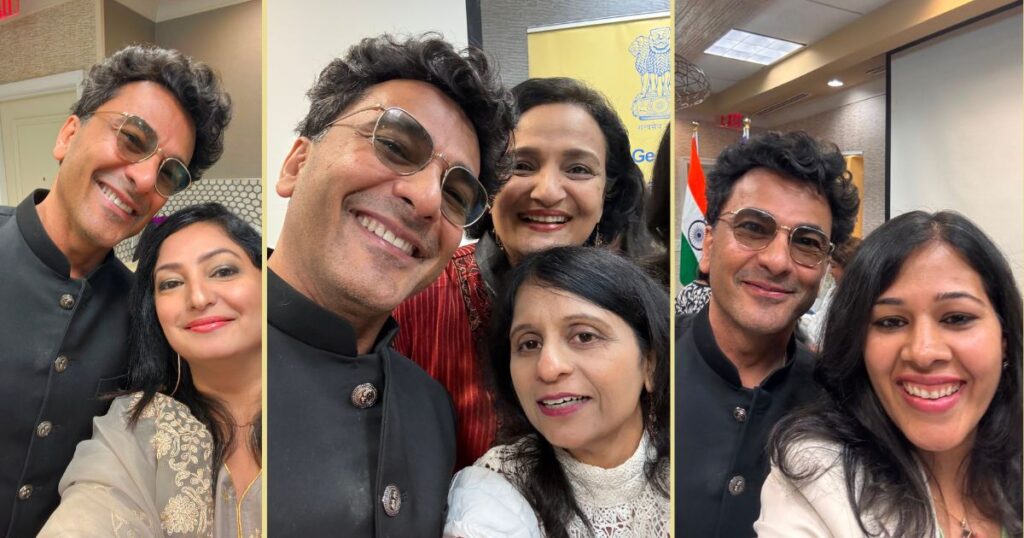
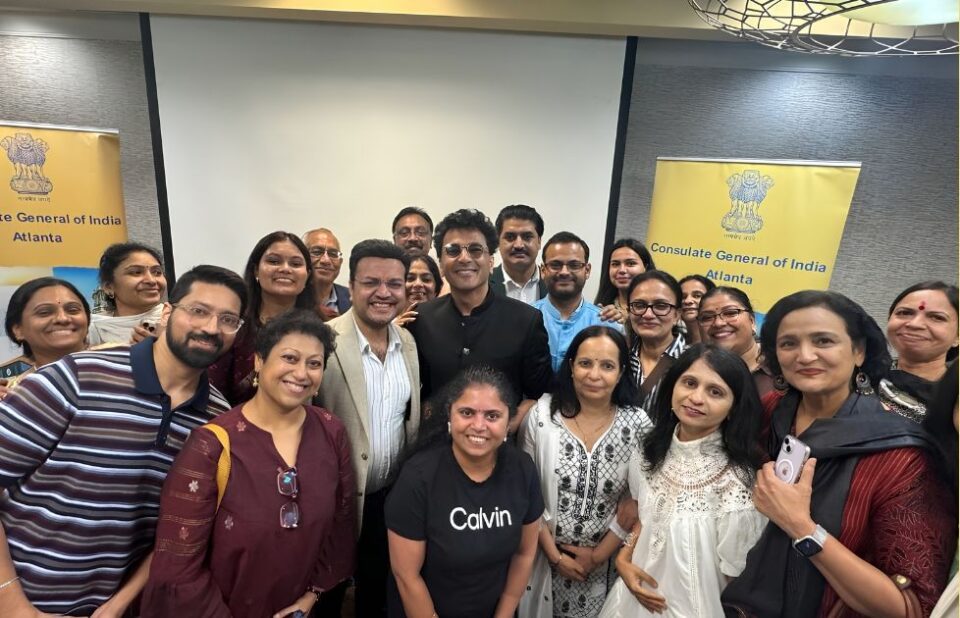
For all the depth of the formal conversation, one of the clearest glimpses of Khanna’s character came after it ended. Throughout the afternoon, he answered questions patiently, whether they concerned Michelin recognition, regional cuisine, restaurant economics, filmmaking, philanthropy or family. His responses were thoughtful, often humorous and sometimes disarmingly vulnerable. Afterward, he stayed, posed for pictures with everyone who wanted one, exchanged words with guests and offered each person his attention without appearing hurried. It was a small gesture beside the scale of his international acclaim, but one entirely consistent with everything he had said about generosity.
Perhaps the most inspiring part of Vikas Khanna’s journey is not simply the distance between Amritsar and Manhattan, between childhood braces and global stages, or between rejection and Michelin recognition. It is that the experiences that once made him feel different eventually became the source of his empathy, his creativity and his sense of purpose.
For one intimate afternoon in Atlanta, Khanna reminded his audience that food can nourish far more than hunger. It can preserve memory, restore dignity, carry identity across oceans and transform what we receive into something we offer forward. Perhaps that is the real meaning of barkat: not merely abundance on the table, but the grace to recognize what has been given to us and the generosity to pass it on.
