




BY VEENA RAO*
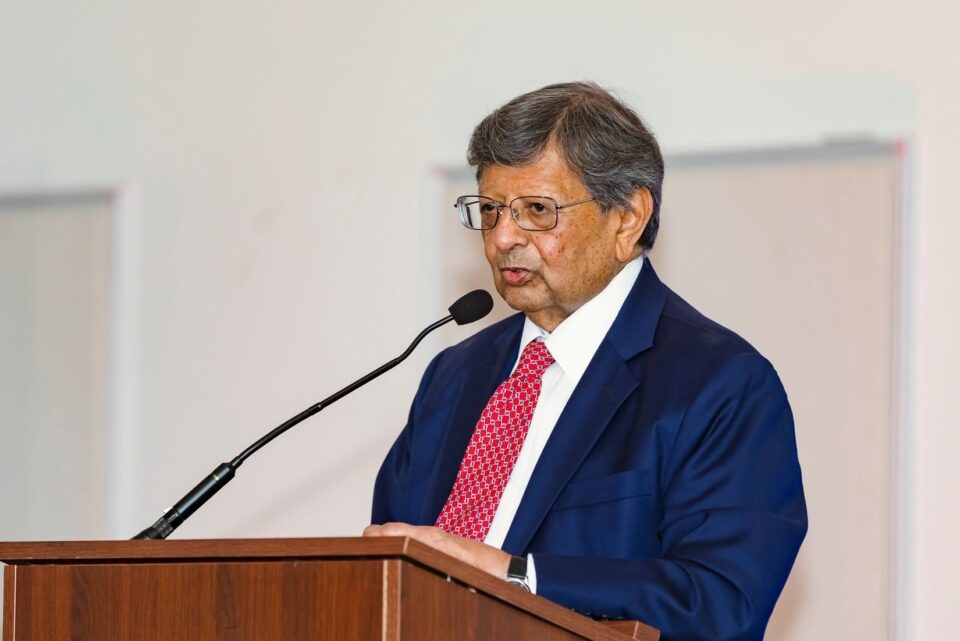
Few marketing scholars have had as profound an influence on business thinking as Dr. Jagdish “Jag” Sheth. Over a career spanning six decades, he has advised Fortune 500 companies, mentored generations of business leaders, authored more than 30 books, and helped shape modern marketing theory. For the past 35 years, Emory University’s Goizueta Business School has been his academic home, where he built one of the world’s leading centers for relationship marketing while inspiring countless students to embrace lifelong learning.
Now, as he retires from full-time teaching at Emory, Dr. Sheth is entering what he calls another “second act.” Far from slowing down, he is writing new books, expanding his philanthropic work, and continuing his lifelong pursuit of knowledge.
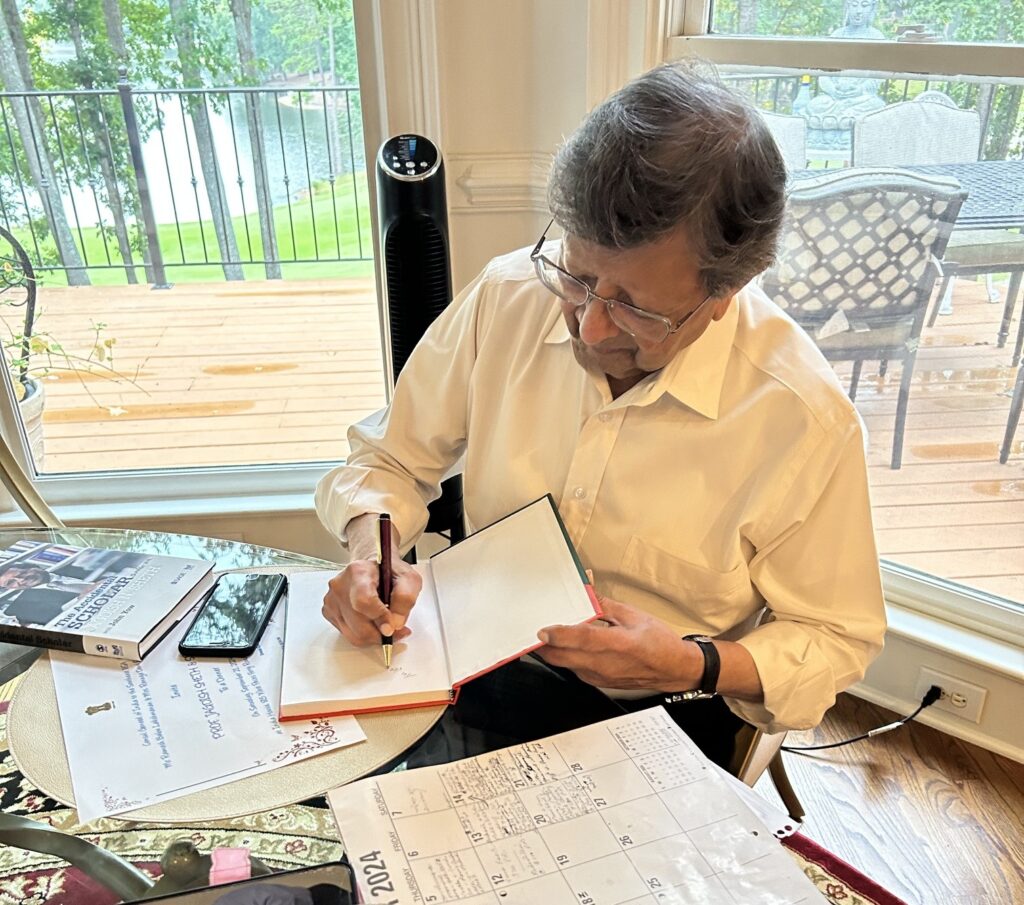
NRI Pulse met Dr. Sheth at his Atlanta home to reflect on his remarkable career, the lessons he’s learned from academia and industry, why he nearly left teaching for consulting, and why curiosity is the secret to staying relevant.
You’ve spent decades advising companies and governments around the world. Looking back, what is the single biggest lesson you’ve learned about staying relevant in a world that is constantly changing?
Staying relevant comes from listening carefully to the problems organizations face. Companies don’t want abstract theories—they want solutions. Every situation has a different context, so my role has always been to understand their challenges and develop practical ways to solve them.
Working with companies like Wipro Consumer Care and Marico reinforced my belief that the best learning comes from engaging directly with real business problems.
You’ve had an extraordinary career spanning more than six decades. Have you experienced your own “second acts” during your professional life?
Yes, twice. The first came when I seriously considered returning to India. My wife and I felt it might be better to raise our children there, so I took a six-month leave from Columbia University and joined the Indian Institute of Management Calcutta through an MIT collaboration.
It was a rewarding experience, but I realized the research infrastructure at the time wasn’t strong enough for the kind of work I wanted to pursue. So I decided to return to the United States.
And your second second act?
I seriously considered leaving academia altogether because my consulting practice was growing rapidly.
Before making that decision, I spoke with three former students and colleagues. All three advised me to stay in academia. They told me something I’ve never forgotten: You need an anchor in your life.
They said the university was my anchor. Consulting was rewarding, but it shouldn’t become my identity. Teaching gave me purpose. It allowed me to keep learning while helping shape the next generation. Looking back, I’m very glad I stayed.
Does retirement feel like another second act?
Absolutely. I’m working on three projects.
The first is an updated edition of my memoir, The Accidental Scholar, covering the final decade of my academic career.
The second is The Accidental Advisor, based on my consulting experiences with more than fifty companies around the world.
The third is The Accidental Philanthropist, which traces how what began with a single scholarship grew into several educational foundations and initiatives supporting scholars in the United States and India.
Philanthropy has become another important part of my life’s work.
Looking back at your 35 years at Emory, what achievements give you the greatest satisfaction?
The first is recruiting outstanding young faculty members who were committed not only to research but also to teaching and mentoring students.
I’ve never believed that great research and great teaching should be separate. Universities exist to educate people and shape lives.
Another accomplishment was building one of the leading centers for relationship marketing, bringing together scholars from multiple disciplines to study how organizations build and sustain relationships. That work had a significant influence on both academic research and business practice.
One important milestone was becoming the first faculty member from the business school to serve on Emory University’s Promotion and Tenure Committee, which advises the president.
One of my responsibilities was to bring greater consistency to how faculty promotions were evaluated across the university. Different schools had developed their own standards over the years, so we worked to create a more unified framework while still respecting disciplinary differences.
I also recommended rotating senior faculty through the committee so they could develop a broader university-wide perspective rather than looking only through the lens of their own departments. That change proved very valuable.
You’ve also been deeply involved with the Indian community at Emory.
Yes. Every year, when new students arrive from India, we host a welcome lunch for them and their families during orientation. It’s become a wonderful tradition and helps families feel connected to the Emory community from the very beginning.
What is the one lesson you hope every student remembers long after leaving your classroom?
That learning never ends. Graduating with a degree should never be the end of your education. The half-life of knowledge is shrinking rapidly, so lifelong learning is essential.
I’m still learning. I’m studying artificial intelligence, blockchain and quantum computing—not because I have to, but because curiosity keeps you alive intellectually.
I’ve always believed the best way to learn is to teach. Every course I taught changed every year. I continually updated the material because I wanted to stay ahead of my students. Teaching forced me to keep learning.
Even after retirement, I’ll continue learning through writing, research, and conversations.
What advice would you give people approaching retirement?
Don’t think of retirement as a finish line. Think of it as a transition.
Several years before retiring, begin preparing for what gives your life meaning beyond your profession. That might be mentoring young people, serving your community or pursuing a cause you care about.
After decades of work, you’ve accumulated tremendous experience and wisdom. Society still needs that.
I’ve often said that educating and mentoring a human being creates almost limitless value. That’s where real fulfillment lies.
Looking back over your career, how would you like to be remembered?
I hope people remember me as someone who helped others realize their potential. Whether through teaching, consulting, writing or philanthropy, my goal has always been to unlock possibilities in people and organizations.
If I’ve been able to help others create opportunities for themselves, then I’ll consider my career well spent.
*Veena Rao is the editor-in-chief of NRI Pulse.
