






BY VEENA RAO*
It often begins with a WhatsApp forward. A video goes viral. Social media erupts. Opinions are expressed.
Recently, an Indian restaurant in Ho Chi Minh City made headlines after its owners accused an Indian family of allowing their children to scatter tissues around the dining area, verbally abusing staff, and damaging property after being asked to stop. Days earlier, videos of Indian tourists dancing on a Vietnamese airport tarmac and on Hanoi’s famous Train Street had sparked similar outrage online.
Within hours, the clips had ricocheted across WhatsApp, Instagram, Facebook, and X, accompanied by a familiar chorus of comments:
“This is why Indians get a bad name abroad.”
“People like this embarrass all of us.”
To explore the issue, NRI Pulse spoke with tour operators, frequent travelers, and members of the Indian diaspora. Their views differed on how widespread the problem is, but they agreed on one point: in an age of viral videos, the actions of a few travelers can shape the perceptions of millions.

A Tourism Boom—and a New Kind of Traveler
There is one point on which nearly everyone interviewed agreed: Indians are traveling abroad in unprecedented numbers.
Rising incomes, greater disposable wealth, and easier access to international travel have transformed India into one of the world’s fastest-growing outbound tourism markets. Destinations that once depended heavily on Chinese visitors are increasingly looking to India as a major source of future tourism.
Prabha “Pabs” Raghava, founder and CEO of Tours Limited and Topaz Tours, has watched that transformation firsthand. Her company brings thousands of travelers from India, the Middle East, and other parts of the world to the United States and also operates outbound tours from North America to destinations across the globe.
“I don’t think that’s true,” she said when asked whether Indian tourists generally deserve their growing reputation for bad behavior.
“I think it’s been magnified because India is one of the fastest-developing countries right now. Per capita income has increased, and many people have moved from the lower middle class into the middle and upper-middle classes. Disposable incomes have risen, so they’re traveling more than ever.”
She said today’s Indian traveler bears little resemblance to the traveler of a decade ago.
“The Indian traveler today is thinking differently,” she said. “They want good hotels. They want unique experiences. They’re willing to spend money to stay in good places, enjoy themselves, dine at nice restaurants, and shop.”
With that surge in travel, she said, it is inevitable that a few incidents will attract outsized attention.
“With so many more people traveling, there will naturally be isolated incidents here and there. But overall, they’re traveling, they’re spending money, and every destination wants them.”
Her company handles thousands of travelers from India and the Indian diaspora every year, and she believes the online narrative is skewed by a handful of viral clips.
“You could find similar examples involving any nationality,” she said. “We handle thousands of passengers from India, and we simply don’t see these kinds of incidents on a regular basis.”
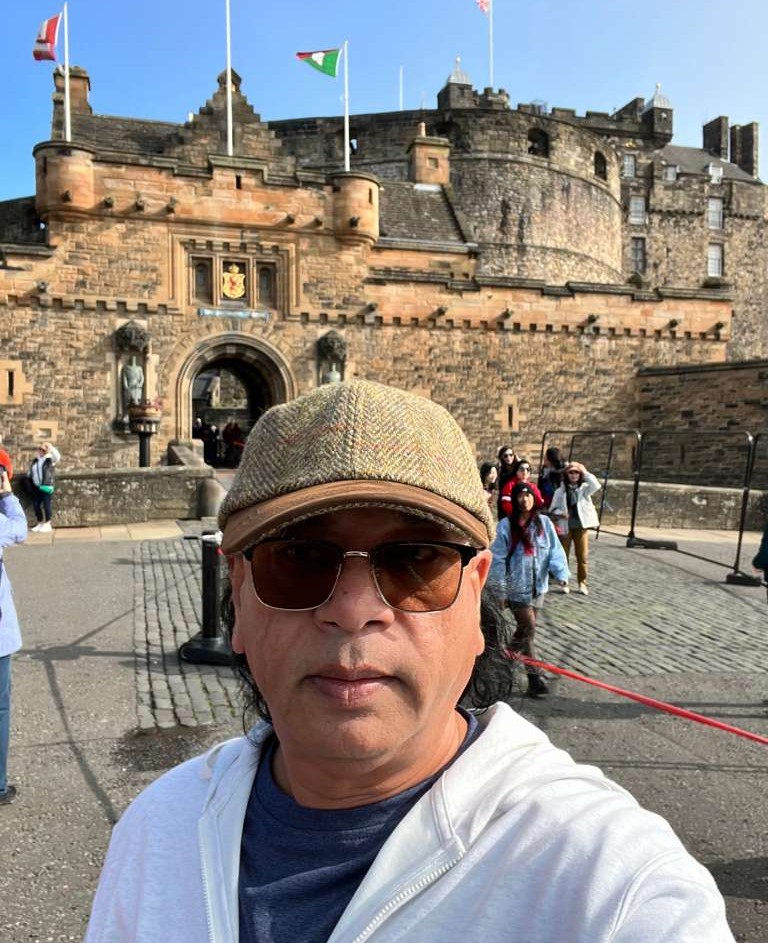
It’s Worth Asking Why
Atlanta-based Oracle executive Vishwanath Ganti, who travels extensively for both business and pleasure, believes the conversation deserves more honesty.
“I’m not going to pretend these incidents are all invented or exaggerated,” he said. “I’ve seen loud conversations in places where everyone else is quiet. I’ve stood in lines where people simply didn’t believe the line applied to them. These things happen often enough that they’re more than isolated incidents.”
But Ganti is equally reluctant to reduce the discussion to stereotypes.
“It’s worth asking why instead of simply judging them,” he said.
He points to India’s unique social environment as part of the explanation.
“India is home to more than 1.4 billion people, and many of us grew up navigating crowds, competing for seats, and treating ‘the line’ as more of a suggestion than a rule—not because we’re rude, but because that’s often how daily life works back home.”
“That doesn’t excuse poor behavior abroad,” he added, “but it helps explain it. In many ways, it’s culture shock running in both directions.”
His point echoed a theme that surfaced repeatedly during NRI Pulse‘s reporting: understanding behavior is not the same as excusing it.

Krina Patel, an Atlanta-based IT consultant and frequent international traveler, agreed that the issue is more complex than social media suggests.
“I think it’s a bit of both,” she said when asked whether Indian tourists are judged more harshly than others. “Like any nationality, there are always going to be people who are loud, ignore local customs, litter, jump queues, bargain in situations where it’s not appropriate, or simply don’t respect the rules. With India’s rapidly growing middle class and more Indians traveling internationally than ever before, there are naturally going to be more stories, both good and bad.”
She believes social media amplifies those incidents. “The negative videos are the ones that go viral, especially if they reinforce stereotypes that already exist. Similar behavior by tourists from other countries doesn’t always get the same attention.”
Yet Patel said her own experiences abroad have often contradicted those online narratives.
“I’ve traveled extensively, and as an Indian, I’ve almost always felt welcomed,” she said. Recalling a trip to Morocco, she said locals would smile, ask if she knew Shah Rukh Khan, and jokingly call her husband Shah Rukh Khan. “I’ve never personally experienced racism or hostility while traveling. If anything, we’ve been met with curiosity and kindness far more than anything else.”

The Same Complaints, Again and Again
Although the respondents came from different professions and had traveled under different circumstances, they repeatedly described the same behaviors.
One Atlanta physician, who has traveled internationally with Indian physician groups for nearly two decades, did not mince words.
“The biggest issue is punctuality,” he said.
“The tour operator might say, ‘Please be here at 8:00 a.m.’ I’m usually there at 7:45. At 8:00 nobody is there. People start arriving at 8:05, 8:15, sometimes even 8:30. Because of that, the group often misses one of the scheduled attractions.”
What troubled him most was that these were not inexperienced travelers.
“These are Indian-American physicians.”
He also pointed to another recurring issue: noise.
“We’ll be seated in one section of a restaurant while local diners sit elsewhere,” he said. “Everyone else is speaking quietly, but our group will be talking loudly enough that people across the room are staring at us.”
“I’ve seen this in many countries.”
Those observations were echoed by Atlanta resident Nutan Rao, who recalled feeling uncomfortable during hotel breakfasts in Europe.
“I’ve often felt embarrassed watching some tourists at breakfast buffets in the UK and Paris,” she said. “Ive seen people pile excessive amounts of food onto their plates, ignore serving utensils, waste food, handle bread before putting it back, speak loudly, and allow children to run around buffet areas.
“I distinctly remember noticing the expressions on hotel staff members’ faces,” she said. “They often appeared frustrated or even disgusted by such behavior.”
The physician described similar experiences, including travelers treating hotel staff as personal attendants and making sandwiches from breakfast buffets to take away.
“They’re actually very nice people,” he said later in the interview. “The issue is awareness.”
Patel said she has witnessed many of the same behaviors during her travels.
“I’ve occasionally seen fellow Indian travelers aggressively push through crowds, jump queues, or try to avoid paying for a meal because they didn’t enjoy it after finishing it all,” she said. “I’ve also seen people ignore ‘Do Not Touch’ or ‘No Photography’ signs, or cross barriers into restricted areas just to get the perfect photo.”
One incident in Germany particularly stayed with her.
“I saw a large group of Indian tourists being incredibly rude to the service staff, treating them as though they were beneath them. It was genuinely uncomfortable to watch. That’s not a cultural difference to me—that’s just basic respect.”

When One Tourist Represents a Billion People
For Sameer Sharma, founder of Atlanta-based Axar Holidays, the issue is not simply whether some Indian tourists behave badly. It is that, in the eyes of many people overseas, one person’s behavior can shape perceptions of an entire community.
“Yes, it does,” Sharma said when asked whether the behavior of some Indian tourists affects how Indian Americans are viewed abroad.
“I’ve been doing this for many years, and I’ve seen situations where the behavior of some tourists reflects poorly on all Indians, including Indian Americans.”
Unlike many tour operators, Axar Holidays caters primarily to Indian Americans and other NRIs living in North America. Sharma said his company operates around 45 to 50 group tours a year, taking travelers to some 60 countries, from Japan and Switzerland to Iceland, New Zealand and South America.
One area where he draws a distinction is professionalism behind the scenes.
“Our groups travel with our own chefs,” he said. “Hotels often allow our chefs to use their kitchens, and our chefs are extremely well trained. When they leave a kitchen, it is spotless. They understand international standards and conduct themselves professionally.”
But he said he has occasionally seen a different experience with some tour groups arriving directly from India.
“Sometimes kitchens are left messy, and unfortunately, that creates problems for everyone who follows.”
He has observed similar issues in public spaces.
“I’ve seen situations in hotel lobbies where travelers are extremely loud or inconsiderate of others,” he said. “In countries like Japan, where people are exceptionally polite and respectful, this behavior becomes especially noticeable.”
As someone who has lived in the United States for decades, Sharma said those moments can be uncomfortable.
“We understand the importance of respecting local customs and public spaces.”
One destination stands out in his memory.
“This year alone, we operated 35 tours to Japan,” he said. “During peak travel season, groups from India often travel on the same trains and routes as our groups.”
He recalled travelers speaking loudly on trains between cities such as Tokyo and Kyoto, despite the quiet atmosphere Japanese commuters expect.
“When other passengers see this behavior, they don’t distinguish between Indians from India and Indian Americans,” he said. “To them, we’re all simply Indians.”
Patel agreed that the actions of a few travelers can affect perceptions of the wider diaspora.
“Most people don’t separate tourists from immigrants, students, or professionals living abroad,” she said. “If someone has a bad experience with one Indian traveler, it’s easy for that to color how they see the wider community.”
That concern surfaced repeatedly during NRI Pulse‘s interviews.
The Atlanta physician expressed similar discomfort.
“We’ll be seated in one section of a restaurant while local diners sit elsewhere,” he said. “Everyone else is speaking quietly, but our group will be talking loudly enough that people across the room are staring at us.”
Nutan Rao described watching hotel employees in Europe react with visible frustration as some guests mishandled food at breakfast buffets.
“I distinctly remember noticing the expressions on hotel staff members’ faces,” she said. “They often appeared frustrated or even disgusted by such behavior.”
For Sharma, however, the answer is not to shame travelers but to prepare them.
“A lot depends on the tour manager,” he said.
“Before every tour, we educate our travelers about local customs and expectations. We tell them that while they are on vacation, they are also representing their community and their country of origin.”
He believes those conversations make a difference.
“We explain basic etiquette and emphasize the importance of respecting local people and cultures,” he said. “If tourists repeatedly behave badly, destinations may eventually become less welcoming to visitors from that country.”
“In our experience, Indian Americans generally understand this and are receptive to guidance. We have seen a positive change over the years.”
Even so, Sharma cautioned against singling out Indians alone.
“It’s not just Indians,” he said. “I’ve been taking groups to Europe for more than 25 years, and I’ve seen travelers from all over the world. Chinese tour groups, for example, often receive similar criticism.”
He noted that in some destinations, signs reminding visitors to keep quiet or follow local rules appear in multiple Asian languages.
“So this isn’t exclusively an Indian issue,” he said. “It is something that affects tourists from several Asian countries.”
Travel experts note that reputations are rarely unique to one country. English football hooliganism during FIFA World Cups and other international tournaments has, for decades, shaped perceptions of some British fans abroad. American tourists are often stereotyped as loud and assuming everyone speaks English. Chinese tour groups have faced criticism over crowding and queue-jumping. Yet few would argue that such behavior defines every traveler from those countries.
Still, Sharma acknowledged that Indian travelers have acquired a reputation in some places for being louder than local norms permit.
“Not just Thailand, but neighboring countries such as Vietnam as well,” he said. “In some tourist areas, there are signs specifically written in Hindi because local authorities have encountered recurring issues with certain visitors.”
“The reality is that our community can sometimes be very loud in public settings. That’s one of the most common complaints.”
His conclusion echoed a theme that would emerge again and again during the reporting: while viral videos may exaggerate the scale of the problem, they resonate because they touch on behaviors that many Indians themselves recognize—and wish would change.

Changing the Narrative
The interviewees all agree on one point: as millions more Indians travel the world, every interaction—with a hotel employee, a restaurant server, a tour guide, or a fellow traveler—becomes an opportunity to either reinforce or challenge perceptions.
Patel believes the responsibility cuts both ways. “As travelers we should make an effort to understand local customs, follow the rules, and treat people with respect,” she said. “And equally, one person’s behavior shouldn’t be taken as a reflection of an entire country.”
Ganti perhaps summed it up best. “I’m not accountable for the actions of a billion people I’ve never met,” he said. “But I am accountable for how I conduct myself… That’s the only part of this conversation any of us can truly control—not the stereotype, not the next viral video, not the algorithm that rewards outrage. Just whether, the next time we’re traveling, we’re the kind of people who make others proud to say, ‘They’re Indian.'”
