





NRI PULSE STAFF REPORT
Albany, NY, June 9, 2026 — Two New York bills that sought to add caste as a protected category under the state’s Human Rights Law failed to advance before the close of the 2026 legislative session, prompting celebration from some Hindu advocacy organizations and disappointment from supporters who argued the measures were needed to address caste-based discrimination.
Senate Bill S.6531 and Assembly Bill A.6920 were introduced in 2025 and would have explicitly prohibited discrimination based on caste in employment, housing, education, and public accommodations. Neither bill advanced before lawmakers adjourned for the year.
Supporters of the legislation argued that caste discrimination exists within some South Asian communities and that existing protections based on race, religion, ancestry, and national origin do not adequately address caste-based bias.
Opponents countered that current anti-discrimination laws already prohibit such conduct and warned that explicitly adding caste to state law could unfairly target Hindus, Indians, and South Asians.
The Coalition of Hindus of North America (CoHNA), which opposed the legislation, welcomed the outcome.
“This is a win for advocacy and civil rights in the face of immense pressure from elite academics and activists with access to powerful media and political players,” said Sudha Jagannathan, CoHNA’s director of government relations.
Jagannathan, who described herself as a Bahujan Hindu, said she spent the past two years meeting with New York lawmakers to discuss the issue.
“I find it offensive that New York State would try to weaponize my identity against my own culture and traditions that provide me solace and strength,” she said.
CoHNA said it conducted a statewide grassroots campaign after the bills were introduced, meeting with legislators and encouraging community members to contact their elected representatives. The organization said it also distributed a memorandum outlining what it described as legal and constitutional concerns regarding the legislation.
Nikunj Trivedi, president of CoHNA, compared the New York effort to California’s controversial caste-discrimination legislation, SB 403, which passed the California Legislature in 2023 but was vetoed by Governor Gavin Newsom.
“This was yet another attempt to misuse a noble desire for social justice and subvert it to drive hate against a minority, like we saw in California in 2023,” Trivedi said.
“It is important to remember that caste is not a neutral word and due to decades of misinformation it is primarily associated with the Hindu and Indian communities in public perception,” he added.
CoHNA also cited a 2024 study by researchers affiliated with Rutgers University’s Social Perception Lab and the Network Contagion Research Institute, arguing that increased institutional focus on caste could contribute to negative stereotypes about Hindus and Indian Americans.
The organization further pointed to California’s widely publicized caste discrimination lawsuit against Cisco Systems, which was ultimately dismissed, as evidence that existing legal frameworks are sufficient and that caste-based legislation could lead to misidentification and profiling.
Advocates of caste protections, however, maintain that explicit legal recognition is necessary because caste discrimination can be difficult to address under existing civil rights categories. They argue that adding caste as a protected category would provide clearer legal remedies for victims and bring New York in line with policies adopted by some universities and local governments.
The debate has generated intense discussion within South Asian communities, with Dalit rights organizations, Hindu advocacy groups, academics, and civil rights activists offering sharply differing views on whether caste-specific protections are necessary or potentially harmful.
For now, the issue appears headed for another year of debate. While the bills did not advance this session, supporters are expected to continue pushing for caste protections in future legislative sessions, while opponents vow to remain engaged in the discussion.
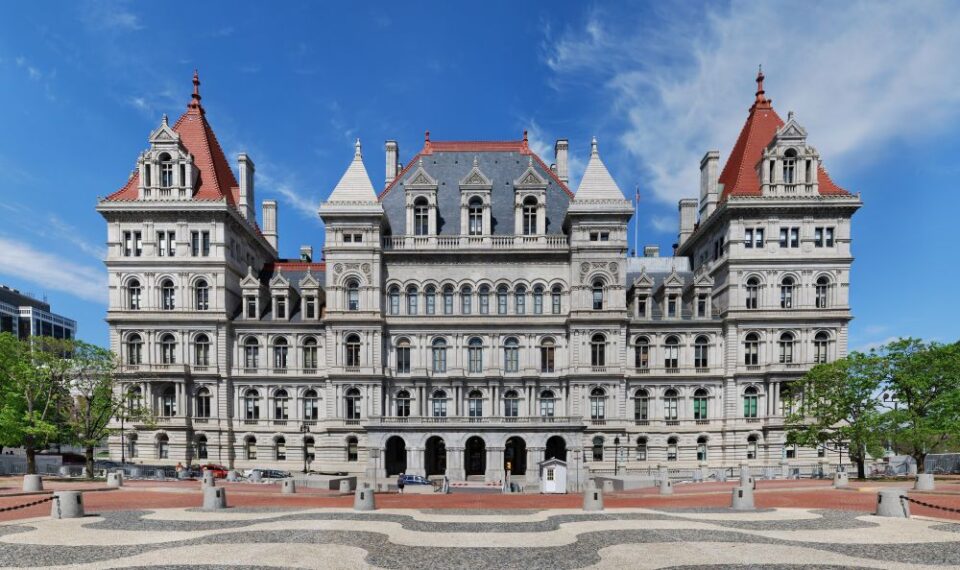
Cover photo courtesy: Wikimedia.
