





BY SHIKHA DAS SHANKAR*
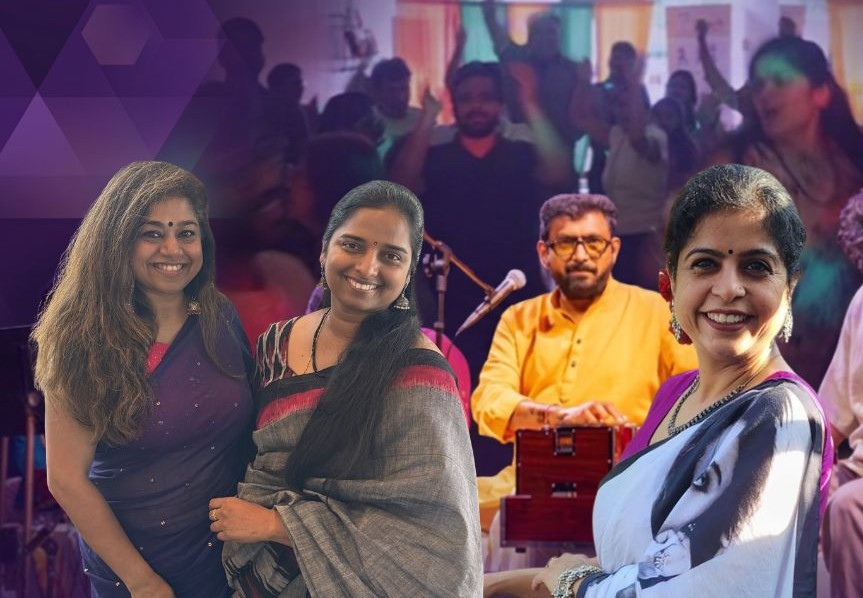
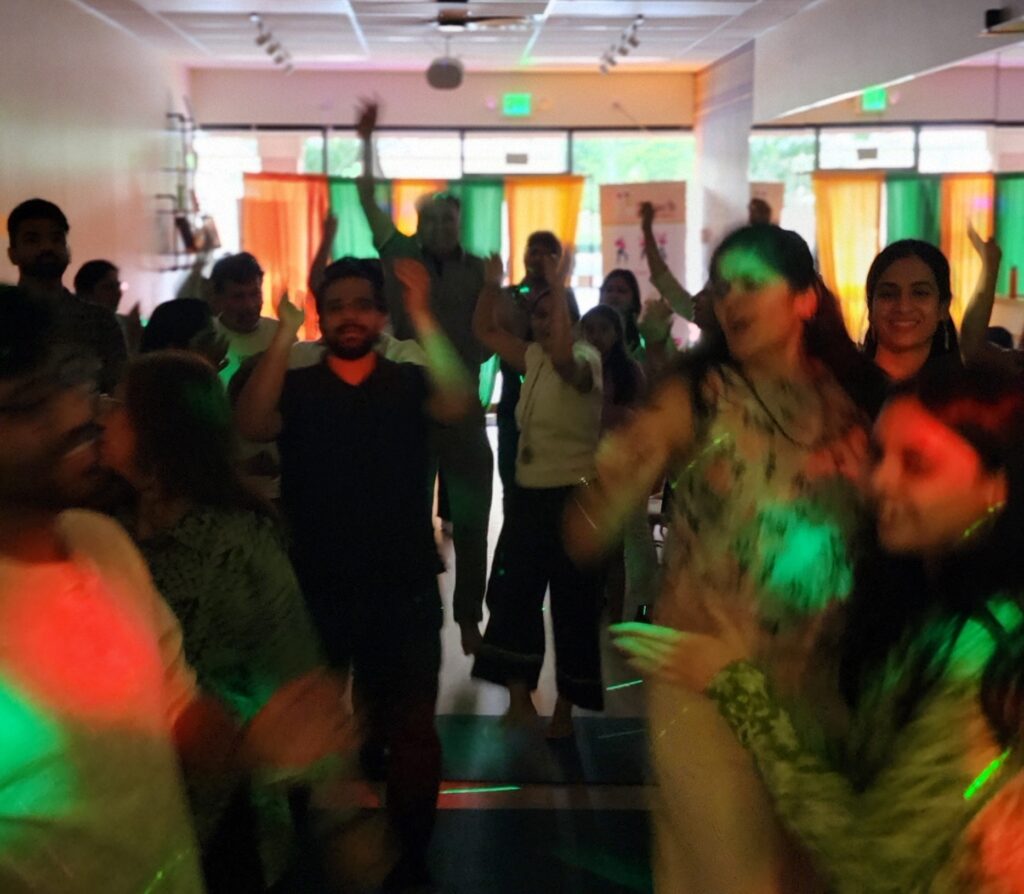
It has the pulsing lights of a club and the energy of a concert, but the songs being sung are centuries-old devotional hymns traditionally sung at your nearest mandir. Arms up, eyes closed, voices rising, people sway shoulder to shoulder to the names of Ram, Krishna, Shiva, to bhajans that have been sung for generations. The words are ancient but the lights, tempo, and packed floor feel like a club.
This is bhajan clubbing, where ancient text and modern beat fuse to create a spiritually charged atmosphere. Where the lights dim and hands go up in devotion. A satsang-meets-rave experience that, depending on who you ask, is either the newest form devotion has ever taken, or a spiritual practice that never really changed at all. All the energy of a nightclub minus the alcohol. The format practically beckons Gen Z and millennials to connect with their culture without the weight of formality or ritual.
But the appeal cuts both ways. Older generations are drawn in just as easily, attracted by the same informal setting and building tempo. As the singing starts and the beats pick up speed, an infectious exchange of energy spreads through the room until everyone is moving and singing, regardless of age.
An Old Current, A New Wave
Across the United States, bhajan clubbing is gaining momentum that’s hard to miss. In California, Bay Raagis has built a sizeable following staging sold-out event across the state. In New Jersey, a group called Cultivate Talents Unlimited has a rotating cast of eight to ten singers, including performers still in their teens, staging bhajan clubbing nights to growing crowds. Dallas has its own scene. And Atlanta, as this story shows, has become one to watch.
Many groups claim to be the “first in America,” and that claim is worth examining. It’s true that bhajan clubbing as a named, social-media-driven format is relatively new in the United States. But what it describes, high-energy devotional music with lights, dancing, and collective chanting, has existed here for decades, going by other names way before crowds were turning it into reels for Instagram.
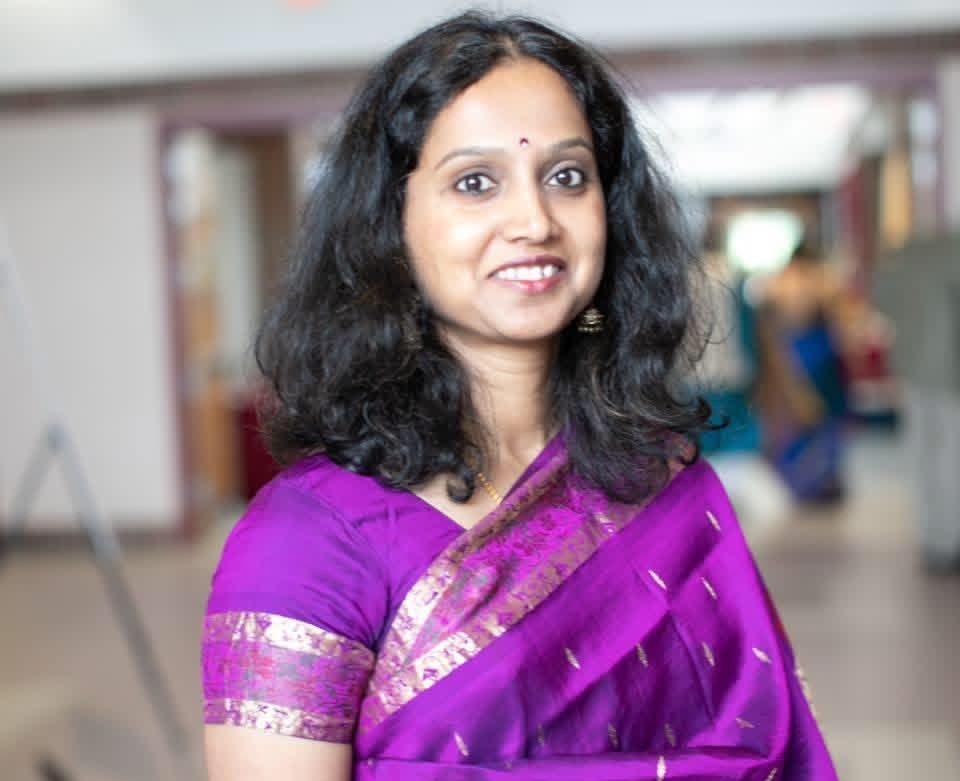
Pin down a single origin point and you’ll find not one root but several, each tangled into Art of Living’s decades-long satsang tradition. The global nonprofit, founded by Gurudev Sri Sri Ravi Shankar, has been weaving high-energy devotional singing into its programming for over four decades. “Art of Living is one of the pioneers of bringing bhajans as part of daily life,” says Preeti Bhat, a senior Art of Living instructor and regional teacher coordinator for the East Coast who has been with the foundation for almost three decades. “We have been always doing it. Art of Living has been doing this for 45 years.”
Preeti traces the thread back to a teacher from the 1990s named Vikram Hazra, a longtime Art of Living Program Director and one of the foundation’s most recognized voices. Rather than performing bhajans in the traditional, slower style, Hazra brought something rawer and more alive to them, drawing satsang culture toward a crowd and not a small gathering.
Through videos of gatherings and events shared with NRI Pulse, Sareena Nagpal, owner of Naach Dance Academy in Marietta and a teacher and organizer with Art of Living for over a decade, traces the format’s most vivid origin point to Argentina. Around 2007, an all-Argentinian musical duo, Nicolás Pucci and Rodrigo Bustos, performing as So What Project, began staging alcohol-free club nights under the banner of Yoga Rave, an Art of Living-affiliated movement that layered Sanskrit chants over electronic beats and drew hundreds of young people across South America. What started in private homes in Buenos Aires eventually filled stadiums and toured seven American cities in 2012, including Atlanta, where Preeti helped organize an event at the Fox Theater.
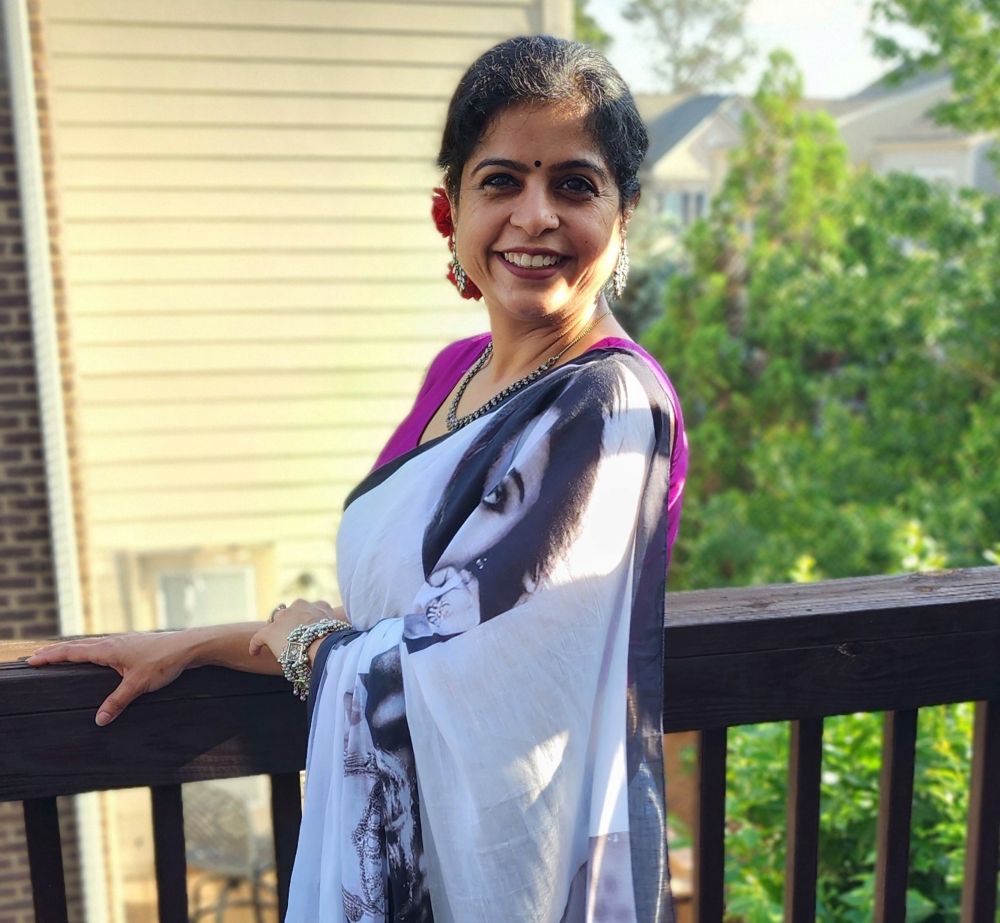
Sareena’s own Naach Dance Academy became one of the first Atlanta spaces to host a dedicated bhajan clubbing event in collaboration with Art of Living. The studio sold out, with 50 people packed into 1,000 square feet for what she describes as an experiment that exceeded every expectation. “This was the first experience,” she says. “We said, let’s see how we take it on. It was such a great response.” For Sareena, youth has always been at the heart of what Art of Living does through music. “Bhajan clubbing is a big part of the foundation,” she says. “Wherever the chapter started, the youth kept coming.”
Preeti puts it plainly. “Art of Living had Yoga Rave and similar bhajan clubbing 14 years ago, but today, if I post it, it’s going to go viral much faster.” Someone, she adds, “just caught on to the trend that was already there.”
What both origin stories share is a single belief that devotional music doesn’t have to stay slow, hushed, or confined to a temple to remain sacred. Bhajan clubbing isn’t new. It just finally has a name everyone’s using.
Beyond the Algorithm
What’s new is the speed at which it has spread, and that’s largely a story about social media. A format that once required someone to physically be in a satsang or a touring concert hall now travels at the speed of a reel. But virality alone doesn’t explain why it’s landing the way it is.
A handful of cultural factors are converging at exactly the right moment. A 2025 Gallup survey found that 45 percent of Americans aged 18 to 29 now drink less or abstain entirely, and bhajan clubbing offers the euphoria of a dance floor without the hangover. Post-pandemic loneliness has left young adults hungry for belonging, and collective chanting and dancing deliver it almost instantly. Pew Research finds that 65 percent of Gen Z identify as spiritual but not religious, and bhajan clubbing offers a way in that asks for presence, not adherence. And for a generation of Indian-American youth, it offers something rarer— a space that feels authentically theirs and welcoming enough for anyone else to walk in and feel the same way.
“There is a need of the hour in the West,” Sareena says, “because everybody can sing and everybody can relate.” Preeti traces the shift directly to the pandemic. “It has really made people turn inwards,” she says, bhajan clubbing becoming one of the clearest outlets for a generation moving, as she puts it, “more towards spirituality than religion.”
Catching on to the Wave
When bhajan clubbing began exploding across India, racking up millions of views on Instagram and YouTube, it landed in the feeds of Indian-Americans who felt its absence in their own cities.
Radhika Vangapally, co-founder of ABC, Atlanta Bhajan Clubbing, first noticed the reels while scrolling through Instagram. Then her mother in India started sending them directly. The more she watched, the more she felt the gap. She forwarded the reels to her friend Lakshmi Mandavalli with a simple message, “I want to recreate this in Atlanta.”
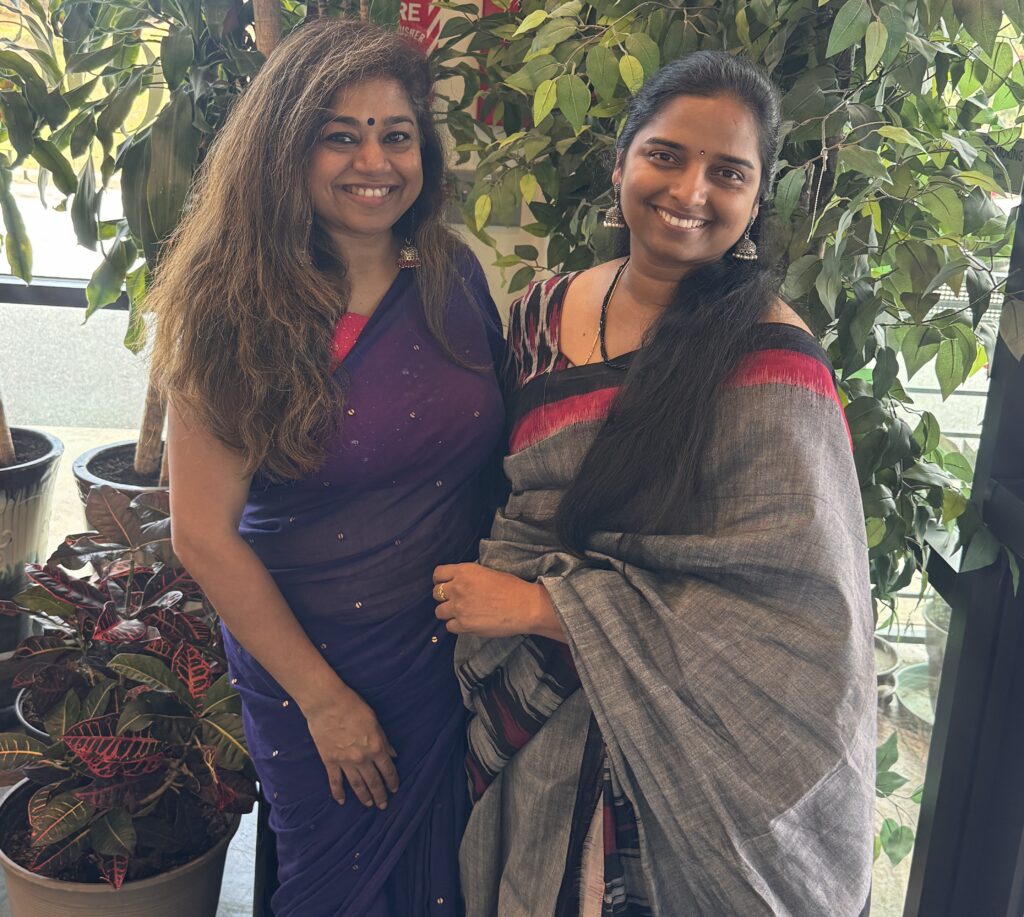
They’d known each other as acquaintances for a while, but it was a girls’ trip that turned familiarity into friendship, and it was that friendship that made Radhika trust her with the idea. Lakshmi didn’t hesitate. Together they built Atlanta’s first grassroots bhajan clubbing group from scratch: twelve local musicians, two teenage tabla players, and a mission with no commercial strings attached.
“I never forgot those bhajans my mom used to sing, my grandmother used to sing,” says Lakshmi. “Why not let my kids hear it in their trending way, and let me give my roots to them, and let them carry it to the generations next.” ABC has already hosted two bhajan clubbing sessions, with flyers out for the third and a fourth being planned specifically for youth.
What sets ABC apart isn’t just that it’s grassroots — it’s that almost everything on stage is homegrown. All twelve singers and instrumentalists, plus their sound engineer, are local Atlanta talent, including two high school tabla students who volunteer their time without missing a single practice session. When Lakshmi and Radhika approached musicians, not one hesitated. “Money never came up,” Lakshmi says. “The moment we said it was bhajan singing, they were all in.” The musicians compose original arrangements rather than borrowing from existing recordings. Bhajans span Hindi, Telugu, and Tamil, with lyrics displayed on screens so language is never a barrier. “I want to take the same staple food and add flavor to it,” Lakshmi says. “If they want to try it, I’m successful. If they continue, I’m blessed.”
Exporting the Wave
Jatin Shah saw the wave coming before most people in Atlanta were paying attention. As founder and president of the International Gujarati Association, a nonprofit established in 2022 to promote Gujarati language and culture across North America, Shah had watched bhajan jamming sessions in India draw crowds of ten thousand or more, mostly young. “If you put bhajan jamming in India and look at the crowds,” he says, “most of it is young people. You will not find any seniors in there.” He saw both an opportunity and a responsibility. Through bhajan jamming (he refers it to jamming instead of clubbing) he could connect Atlanta’s Gujarati diaspora to their roots while giving talented Indian artists a stage outside India.
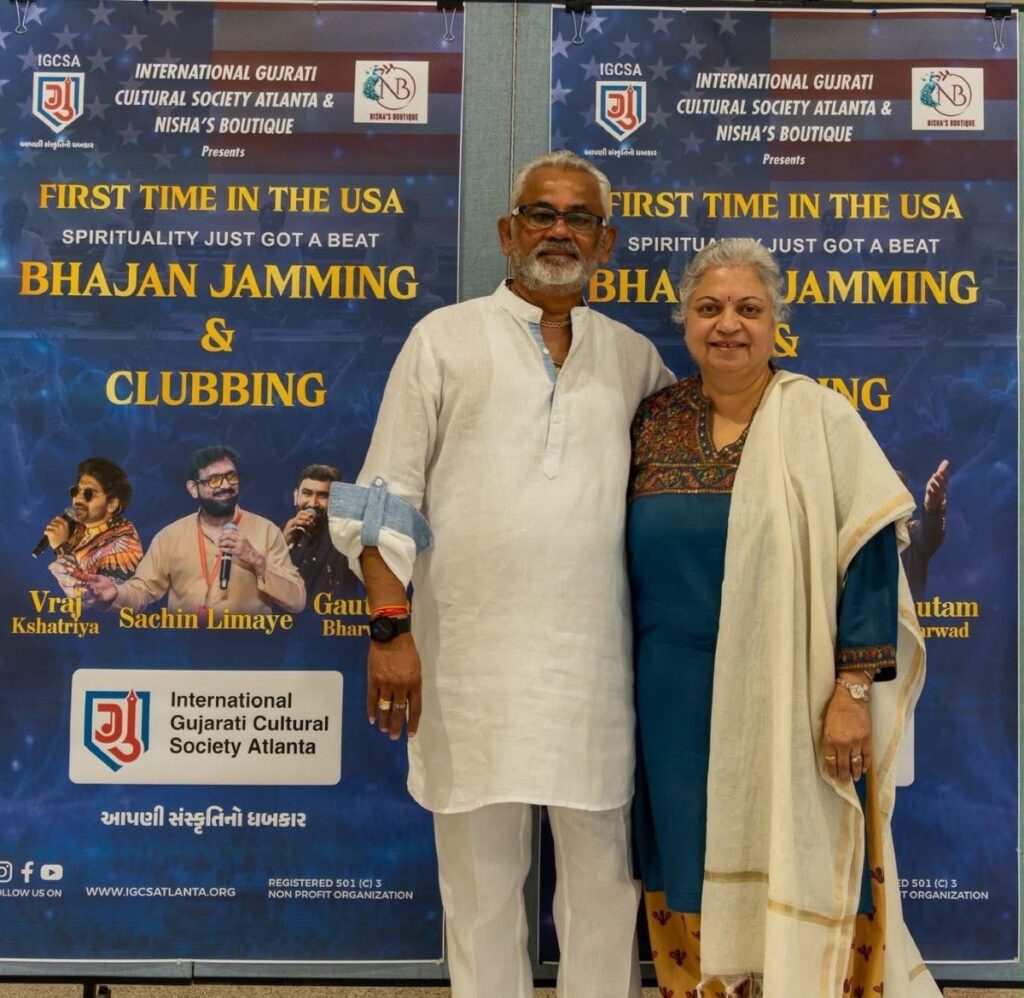
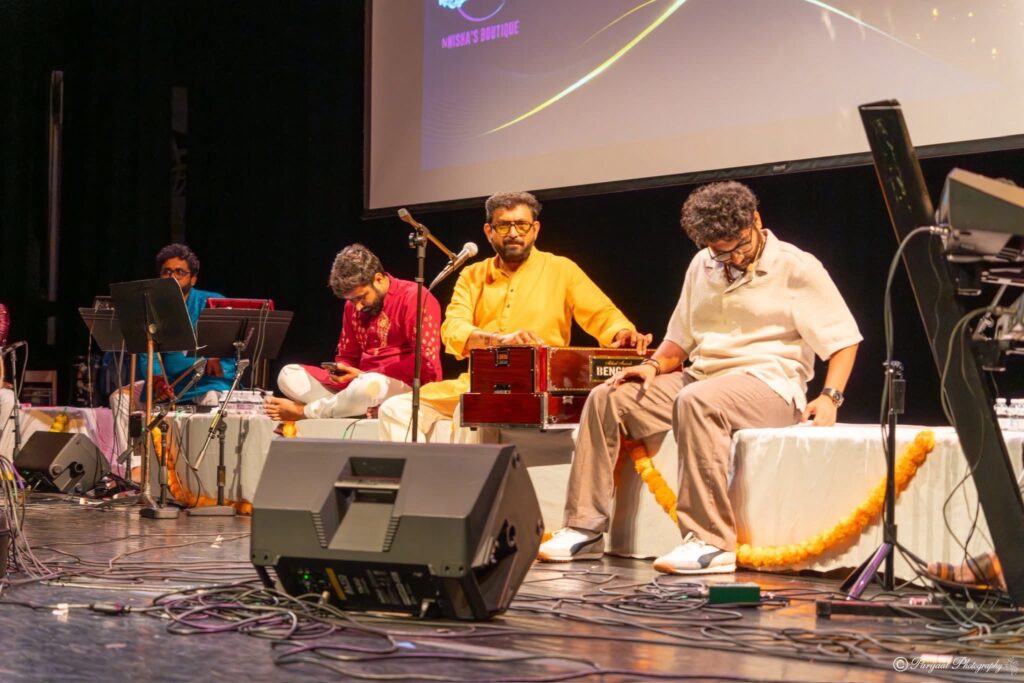
The association flew in Sachin Limaye, Vraj Kshatriya, and Gautam Bharwad from Vadodara, singers with a significant following across India, to headline their bhajan jamming event in June. The singers blended traditional bhajans with modern instrumentation, signaling from the first note that this was not a typical mandir session. The event was intentionally Gujarati in language, reflecting the association’s core mission. “Our organization is focused on language,” Shah says. “We were doing all programs in Gujarati.” For those who didn’t speak it, he was unconcerned: the atmosphere and the melodies, he believed, would carry anyone through.
They did. The auditorium sold out with over 400 attendees. The evening ran 90 percent bhajan jamming before opening into Garba for the final twenty minutes, a pivot he said was necessary to pleasing the crowd. The age breakdown surprised him: 20s, 30s, and 40s filled the room alongside attendees in their 60s. The International Gujarati Association has been building toward this kind of event since its founding, moving from a Gujarati Film Festival to stand-up comedy to literary events celebrating Gujarat’s celebrated authors. Bhajan jamming is its latest chapter in a consistent mission. “We wanted to promote Gujarati language and Gujarati cultural activity in North America,” Shah says. “To bring talent and artists here for the people.” He plans to do more.
Age No Bar, Language No Barrier
Bhajan clubbing doesn’t belong to any single generation, and every organizer in Atlanta will tell you so without being asked. “There’s no bar to age,” Sareena says. “Even a kid can be there, or somebody as old as 75 — it’s very inclusive.” At her Naach Academy event, the crowd spanned college students, parents, Americans, and people of multiple nationalities, drawn in by a WhatsApp post or an Eventbrite listing. Once in the room, she says, hesitation dissolves fast. “Everybody wants to experience. Everybody wants to feel younger. I’ve never seen anybody offended.”
For Lakshmi, the multigenerational mix is the whole point. “If you look at the Indian American community here, there is one generation that is missing their culture. There is one generation that doesn’t know their culture exactly. Through bhajan clubbing, you can cater to both.” She doesn’t need everyone to become a regular. “Even if they come one time, I’m happy. Just give me one chance.”
At the GTA Fest, the venue for their second event, strangers walked up after ABC’s performance to say it was the best thing they’d experienced at the festival. At the same event, an American woman heard the music from outside, walked in, and never left. “She just fell in love with the whole thing,” Radhika says.
Language is no barrier either. Even though the International Gujarati Association’s event was conducted entirely in Gujarati, the crowd cut across regional lines. “The atmosphere created by the singers and musicians doesn’t have a barrier of language,” Shah says. People who didn’t speak a word of Gujarati stayed for the whole event, carried along by melodies they recognized even if the words weren’t always familiar. Both first and second generation Indians attended, Shah noting a 50-50 split between younger attendees and the association’s regulars.
Tradition over Trend
Born into the world of music and now passing the art of Hindustani classical singing to the next generation, Preeti Uttam carries music, tradition, and Indian culture close to her heart. Daughter of legendary Bollywood music director Uttam Singh, she runs a music school in Metro Atlanta where she teaches the same classical foundation she inherited.
Ask her what bhajan clubbing is and she doesn’t reach for a quick answer. “It’s a very relative approach,” she says. “For every generation, bhajan is something else. They have their own connection, their own connectivity. You can’t say they are wrong. They are not wrong, they are just different.”
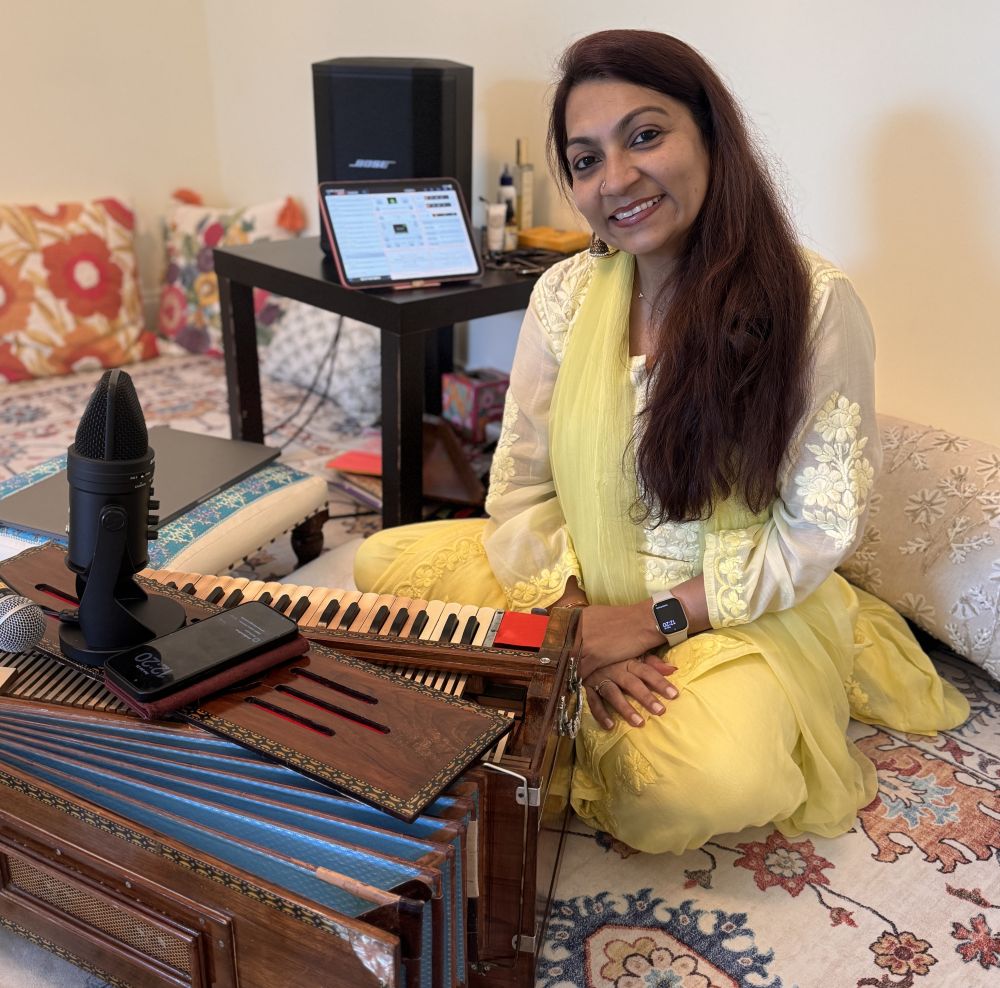
Ask her whether she’d sing at a bhajan clubbing event and the answer takes longer still. Moments before the question, she’d been singing at her harmonium, a semi-classical bhajan she knows by heart. “For me, this is bhajan,” she said, gesturing to what she’d just sung. “This is what I learned, and this is what I have performed so many times.” When the question finally came, she sat with it. “That’s a very tricky question,” she says. “I, as of now, don’t know. It is a very individualistic, very subjective approach. It all depends on the mahaul — the atmosphere — on the day, on the event.” Her hesitation isn’t about gatekeeping. It’s about protecting what she calls the essence of a bhajan, the sanctity she feels responsible for delivering every time she performs. “If I don’t give them what I want to give them, I will not do it just for the heck of doing it. But if I feel that doing it lets me pass on that essence — I would do it.”
She points to a performance from earlier this year as proof of what the traditional format can still do. At a Shiv Mandir bhajan program for 350 seniors, she sang for two hours in a semi-classical style alongside other instrumentalists and two of her students. People were in tears during the performance. For her, that reaction says something no trend can replicate. Bhajan clubbing might be where some people find their connection, but for others, it’s still the older format that reaches something deeper. She doesn’t see it as a competition. Different people will be moved by different doors into the same room, and neither version needs to win for the other to matter.
What she’s certain about is the responsibility she carries toward the next generation. Change, she insists, isn’t something to resist. “Change absolutely will happen with every generation,” she says. But change has to happen without cutting the root itself loose, and keeping roots intact, she believes, is a duty parents and teachers have to actively carry rather than hoping it survives on its own.
Old Existing With The New
Every organizer interviewed is deliberate about one thing—bhajan clubbing is clean, alcohol-free, and built for families. This is not Dum Maro Dum, the Bollywood version of taking God’s name where devotion and a lit cigarette shared the same breath. This is something else entirely.
It isn’t replacing nightclubs. It isn’t replacing satsangs, kirtans, mata ki chowki or the morning home puja ritual. What it’s doing is longer lasting. It’s giving two generations, the one that lost its roots somewhere between immigration and assimilation, and the one that never had them to begin with, a way back.
Lakshmi says it simply. “This is not about money. It’s not about making headlines. It’s about positive energy. Take it, take God’s name, be thankful, and let Him be with you more soulfully.” She pauses. “Even if they come one time, I’m happy. Just give me one chance.” Radhika adds, “Our only purpose is to create something positive. Something pure and soulful.”
The rooms keep filling. The devotional beats keep playing. For Atlanta, there is no looking back.
*Shikha Das Shankar is a feature writer for NRI Pulse.
