



BY JYOTHSNA HEGDE
KSBDB Chairman S.E. Sudheendra speaks exclusively to NRI Pulse on investment, technology exchange and Karnataka’s clean-energy ambitions
Atlanta, GA, September 10, 2026: “I want Karnataka to be strong in this sector, so that other states can see what Karnataka is doing,” said S.E. Sudheendra, Chairman of the Karnataka State Bioenergy Development Board (KSBDB), Karnataka, speaking to NRI Pulse during his visit to Atlanta.
Sudheendra was part of a Karnataka delegation that traveled to the United States to participate in the 50th anniversary celebrations of the Association of Kannada Kootas of America (AKKA) in Philadelphia, Pennsylvania. Beyond attending the event, the delegation leveraged the visit to explore strategic opportunities across investment, technology, research partnerships, and clean-energy initiatives.
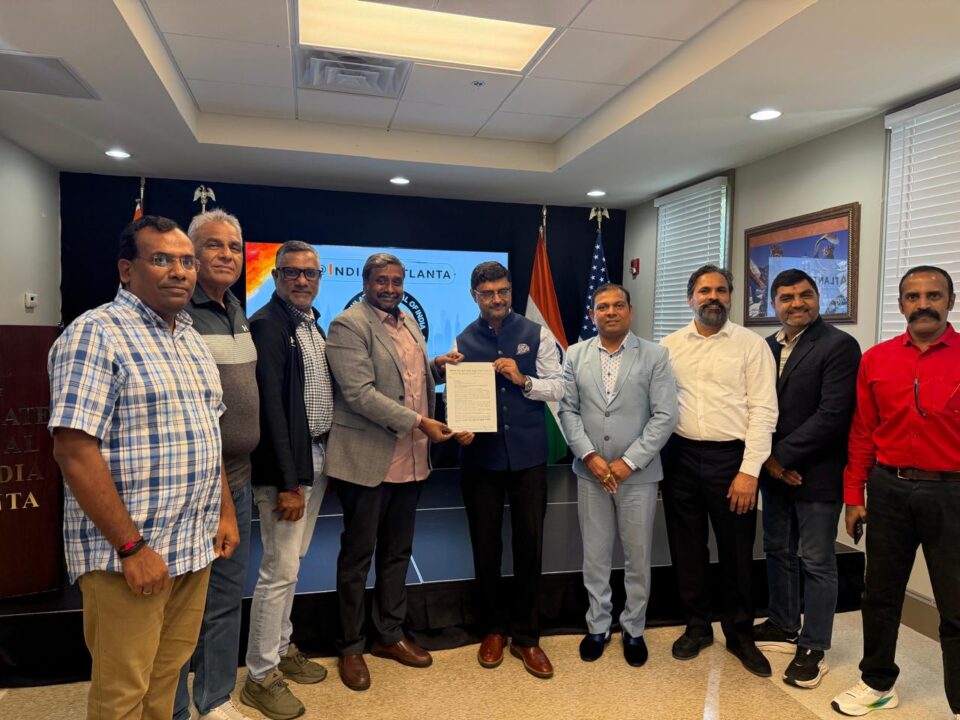
During a stop in Atlanta, Sudheendra and the delegation met with the Hon. Consul General of India in Atlanta, Dr. Sumit Seth. The meeting centered on fostering bilateral cooperation between Karnataka and Georgia, with a particular focus on bioenergy, clean fuels, sustainable technologies, knowledge exchange, and technical collaboration.
To establish a predictable environment for commercial development, Karnataka is advancing a comprehensive policy framework for alternative fuels, including biodiesel, compressed biogas, and ethanol. “When I come with a proper policy, I can interact with anybody and investment can also be brought,” Sudheendra explained. Alongside this regulatory push, the Karnataka State Bioenergy Development Board is expanding its technical capabilities at the University of Agricultural Sciences (GKVK) in Bengaluru, focusing on transforming feedstocks like non-edible oilseeds and used cooking oil into clean biodiesel.
Sudheendra placed particular emphasis on the potential of used cooking oil as a feedstock for biodiesel, describing it as an area where public health, waste management and clean-energy goals can intersect. “Used cooking oil is a big subject,” he said, noting that oil repeatedly used by restaurants, hotels and food establishments can be redirected toward biodiesel production. He added that stronger coordination among food-safety authorities, health departments and the Bioenergy Development Board could help create a more systematic collection and reuse model.
He also stressed that the growth of the bioenergy sector must create meaningful benefits for farmers and rural communities. “The backbone of India is farmers,” Sudheendra said, pointing to the potential of agricultural residues, biomass and decentralized fuel production to create new economic opportunities. Karnataka’s model, as presented during the Atlanta visit, emphasizes multiple feedstocks, community participation, sustainable biomass utilization and more efficient biomass-to-fuel supply chains.
Building the bioenergy sector requires seamless integration across a diverse network of stakeholders, including agricultural producers, regulatory agencies, academic researchers, private investors, entrepreneurs, and consumers. Sudheendra conceptualized this collaborative approach by noting, “If the dots are properly completed, the circle will be formed.” The ultimate objective, he stated, is to cultivate bioenergy as a fully integrated, self-sustaining ecosystem rather than an isolated industry, driving long-term economic and environmental sustainability.
That broader approach was reflected in the delegation’s Atlanta discussions with the Consulate General. Karnataka presented its decentralized, multi-feedstock bioenergy model and explored areas of potential cooperation with clean-energy initiatives in Georgia, including the Clean Cities-Georgia coalition, the I-75 Clean Corridor program and projects involving the conversion of forestry residues into usable fuels. The Center for Transportation and the Environment was also identified as a potential technical and research partner. Proposed next steps include technical exchange visits, knowledge-sharing arrangements and collaboration in areas such as forestry-residue conversion and carbon-capture technologies. Sudheendra also extended an invitation for a Georgia delegation to visit Karnataka and examine the state’s bioenergy ecosystem firsthand.
The U.S. visit also gave Sudheendra an opportunity to study how American companies manage waste streams, scale clean-energy technologies and move innovations from research into commercial application. He cited Coca-Cola as one company whose waste-utilization practices he would like to understand more closely during a future visit.
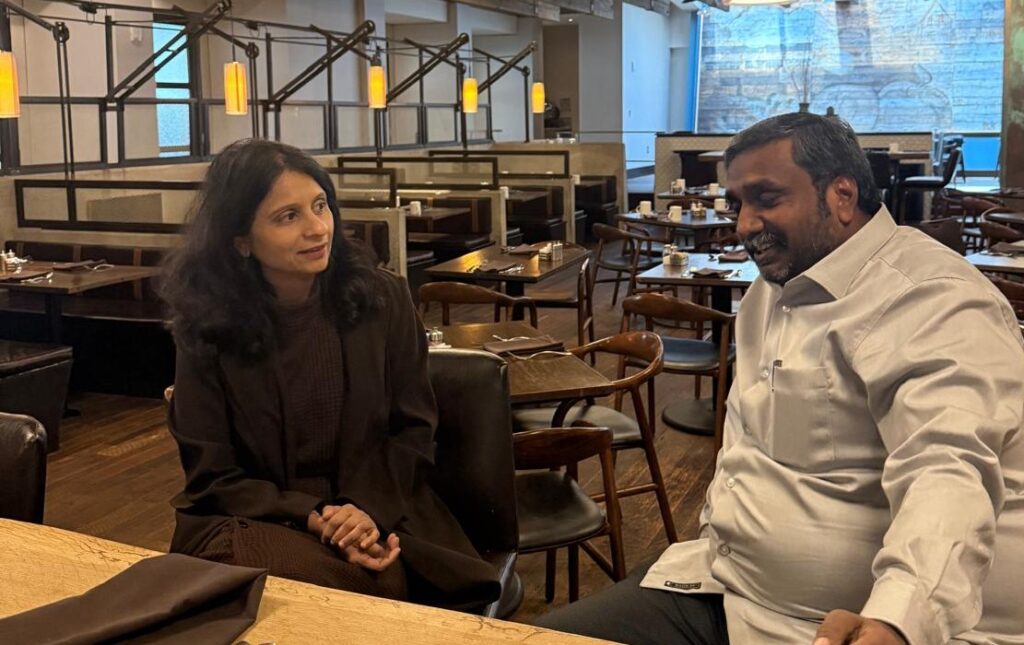
He emphasized that future international collaborations must be built on reciprocal knowledge sharing rather than a standard, one-way technology transfer. According to Sudheendra, Karnataka is fully prepared to offer its own technical insights while actively learning from international partners to address local implementation gaps. This approach aims to foster strategic partnerships through which Karnataka shares its regional expertise in exchange for advanced technologies, scalable investment models, and expanded research capabilities.
KSBDB has already pursued international academic engagement. Sudheendra said an 11-member delegation visited Germany and developed links with universities there, while German representatives later visited Bengaluru and reviewed the Board’s work at GKVK. He sees universities as an important part of the sector’s long-term development and has advocated greater student participation in bioenergy-related education, research and training.
“University is very important to the students,” he noted, adding that the field should offer opportunities not only to researchers and engineers but also to young people considering new areas of employment and entrepreneurship. Sudheendra has also encouraged greater recognition for students participating in bioenergy initiatives and sees potential for broader international academic exchanges.
The Indian and Kannada diaspora in the United States could play a central role in advancing Karnataka’s clean-energy objectives. Sudheendra noted that his interactions throughout the visit demonstrated widespread interest in alternative-fuel technologies, including compressed biogas, biodiesel, and ethanol—a sector he described as offering immense growth potential.
He urged non-resident Kannadigas to actively participate in the state’s bioenergy expansion through direct investment, entrepreneurship, joint research, and technical collaboration. By serving as a bridge between U.S. institutions and Karnataka, he noted, the diaspora can help connect the state with global capital, advanced academic research, and commercial partners. Sudheendra’s longer-term ambition is to position Karnataka as a state that develops replicable clean-energy models of its own rather than merely adopting technologies developed elsewhere. “I have to be strong there and see that other states also see what Karnataka is doing,” he said. For him, that means moving beyond pilot projects toward a larger commercial ecosystem supported by policy, research, investment and rural participation.
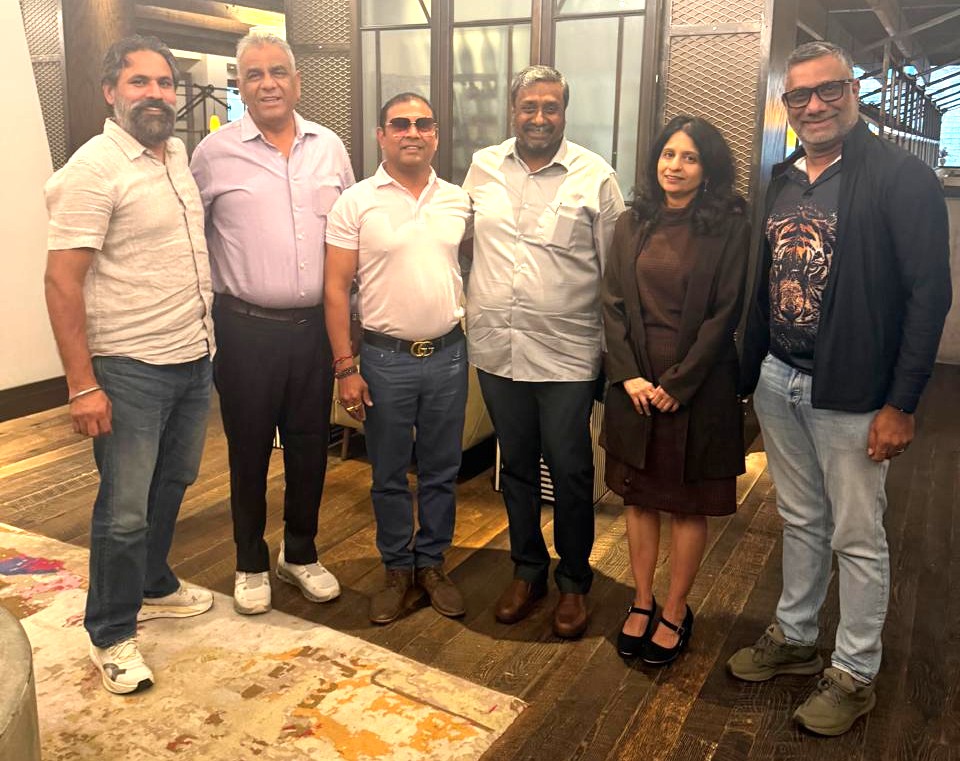
The delegation accompanying Sudheendra included adviser Dr. Shiju Sebastian, Alkesh Kanya Lal Patel, Vinod Ishwar Bhai Patel, Bhika Bhai Patel, Sarbjit Singh and Prashanth B.K. Lokesh Gowda, Private Secretary to the Chairman.
As Karnataka shapes its bioenergy roadmap and broadens its global outreach, Sudheendra views the delegation’s visit to Atlanta as a pivotal step in bridging policy, technology, research, and investment with active community engagement. Ultimately, synthesizing these core elements remains central to building a sustainable, long-term framework, or as he summarized, “If the dots are properly completed, the circle will be formed.”
