



BY VEENA RAO
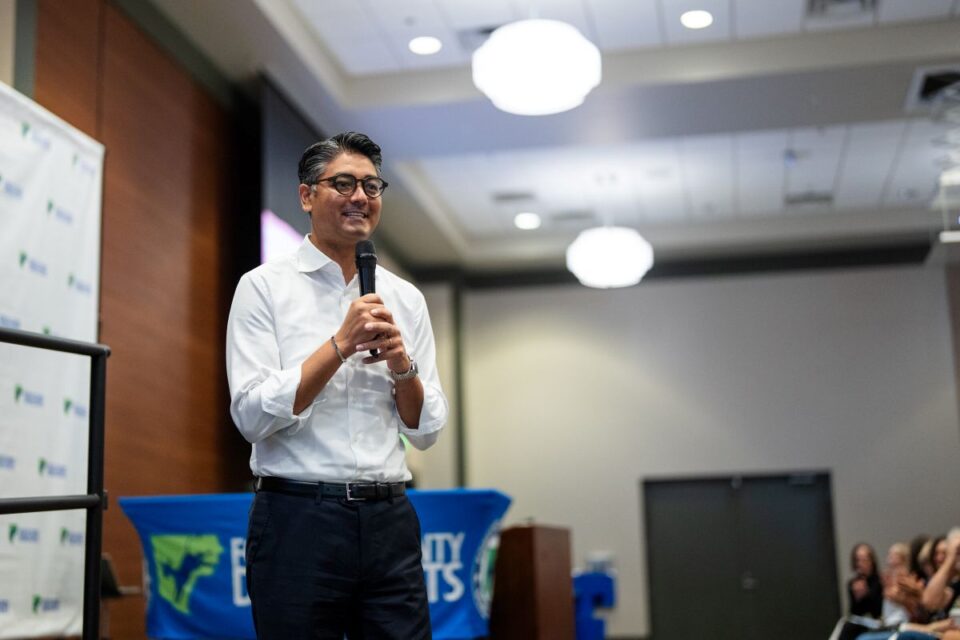
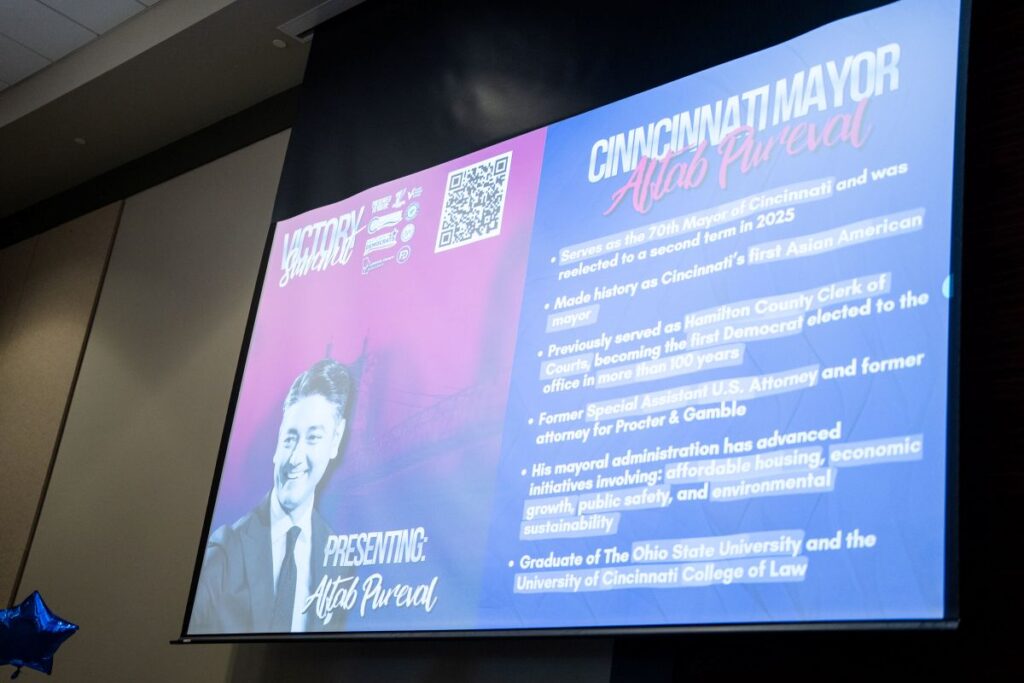
Cumming, GA, October 6, 2026: Cincinnati Mayor Aftab Pureval was in Forsyth County over the weekend with a message for Asian American voters: their growing numbers can translate into greater political influence.
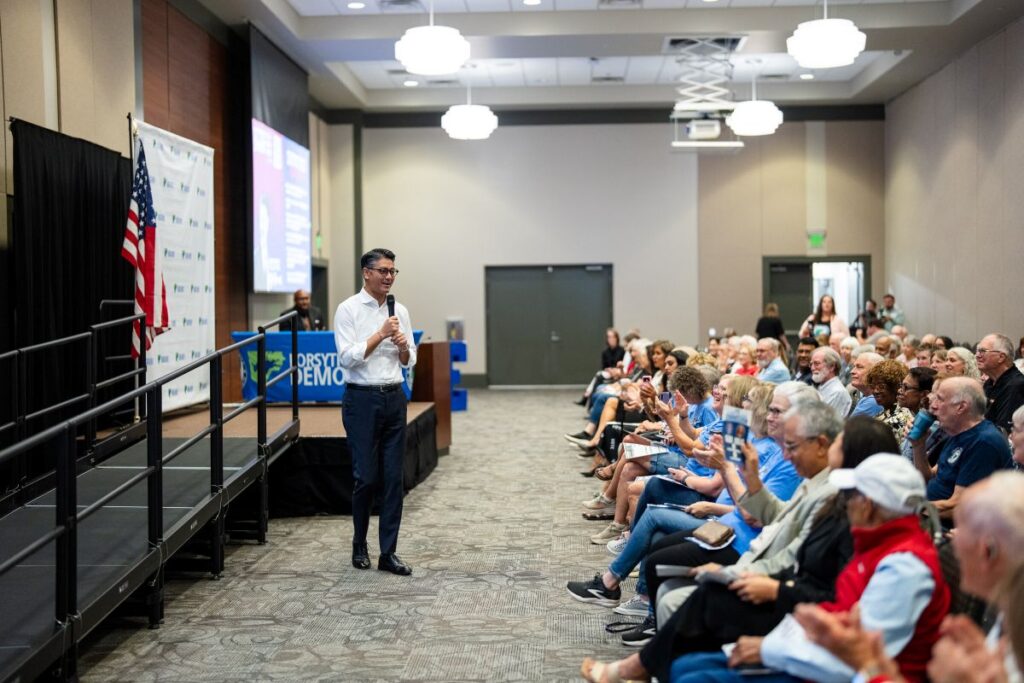
Pureval, the son of a Punjabi father and a Tibetan mother, joined U.S. Sen. Tammy Duckworth, AAPI Victory Fund founder Shekar Narasimhan, Tony Kozycki (a Democrat running for Congress in Georgia’s 7th District), and local candidates at an Oct. 3 community rally at the Forsyth Conference Center in Cumming. The event brought together residents, volunteers and community members ahead of the November election.
Forsyth County has 18,998 eligible AAPI voters, according to the 2026 Georgia fact sheet from APIAVote and AAPI Data. Statewide, Georgia’s eligible AAPI voter population grew 76.14% between 2014 and 2024.
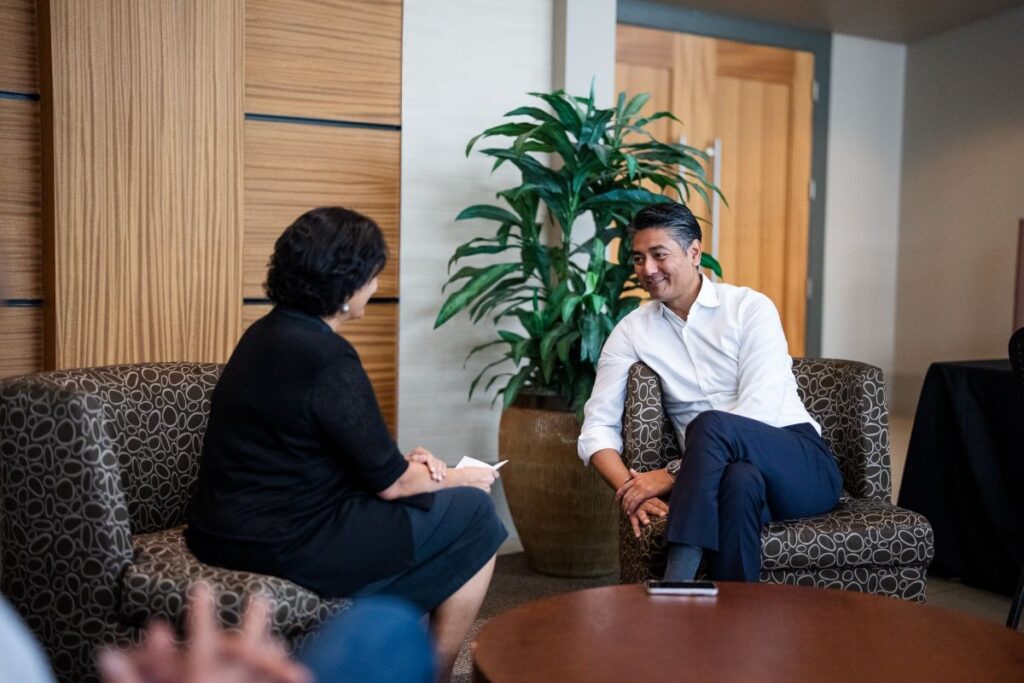
Pureval, Cincinnati’s first Asian American mayor, spoke to NRI Pulse on the sidelines of the rally about the growing political role of Asian and South Asian Americans, immigration and H-1B visas, anti-immigrant hate, housing affordability, crime and mental health.
Here are excerpts from the conversation, edited for length and clarity.
What brings you to Forsyth County, and why did you want to be here today?
Forsyth County is critically important, not just to Georgia and the local elections here, but to Asian and South Asian political mobilization. The growing Asian and South Asian population here presents an extraordinary opportunity to understand our political power and flex it for candidates and movements that represent our values and priorities.
Of course, we have two very important races in Ohio, for Sherrod Brown and Amy Acton, and I’m crisscrossing the state in order to help them. But I also understand that, as one of the few Asian American mayors of a major American city, I have a responsibility and an opportunity to help organize our community across the country.
Ohio has been electing more Republicans statewide in recent years.
There’s no doubt that Ohio has been electing a lot of Republicans statewide. But keep in mind, this is still the state that very recently enshrined abortion rights in our Constitution. It’s still the state that reformed our gerrymandering to elect more Democrats to Congress. Specifically, my district, Ohio 1, is now represented by a Democrat.
And this year, we have an opportunity to swing Ohio back by electing Sherrod Brown and Dr. Amy Acton as our governor. So I’m incredibly bullish and optimistic about the state of affairs in Ohio.
We’re not taking anything for granted. While the political winds are currently at our back, it’ll be the organizing, the door knocking, the voter registration, the culturally competent engagement with Asian and South Asian communities across Ohio.
The biggest concentration of immigrants in Ohio are actually South Asians. It’s part of the reason my family immigrated to Ohio as part of that wave in the ’70s. And so there’s an extraordinary amount of organizing happening in Ohio. I do believe the Asian and South Asian communities have the ability, in Ohio and in Georgia, to be the margin of victory.
What percentage of Cincinnati’s population is Asian or South Asian?
That’s a good question. Maybe surprisingly, it’s quite small. I think it’s about 3%.
As the first Asian American mayor of Cincinnati, with such a small Asian population, I do feel, as I mentioned, a responsibility to advocate for, of course, all Americans and specifically Cincinnatians, but also for my community across the country.
Immigration is such a big issue nationally right now. What concerns you about the direction things are taking?
I approach all of these issues as a mayor. When you have masked federal agents with no identification and no accountability, that is not an immigration issue. That’s a public safety issue.
As mayor, it is absolutely anathema to our American values, but it also undermines order and public safety when you have people who are afraid of their federal government.
The direction that the Trump administration has taken immigration is not only nonsensical, it’s dangerous. People are dying, and that’s a big reason why I think you’re going to see a really big Democratic turnout.
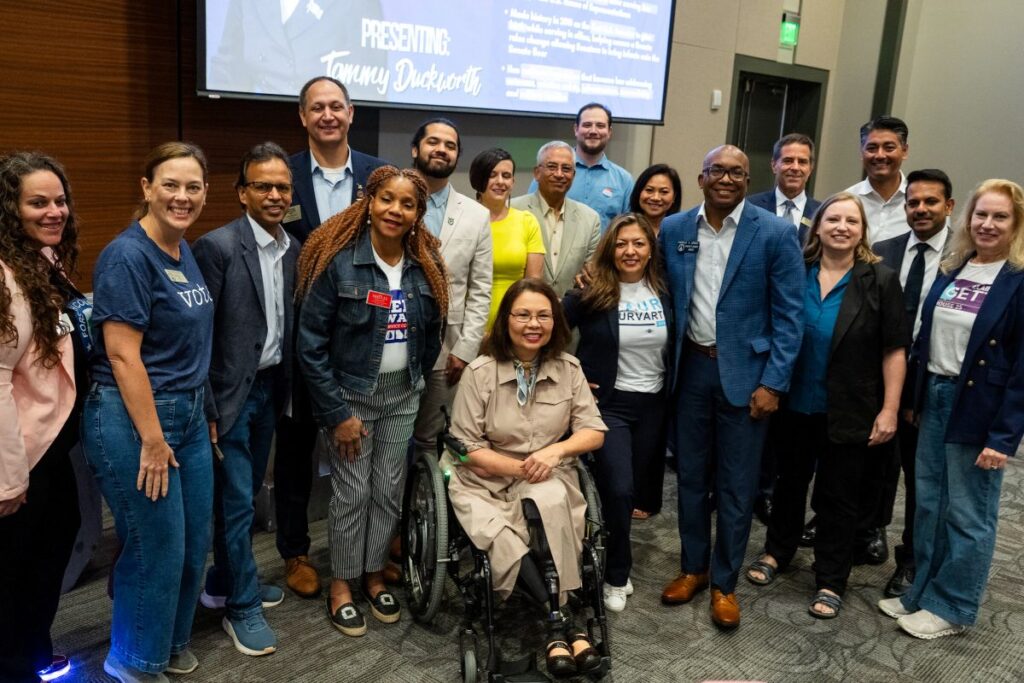
Photo by Kevin Lowery / Collection Media for AAPI Victory Fund.
We’re also seeing a lot of rhetoric against Indian Americans, South Asians, Asians and immigrants in general, including around H-1B visas. How do we respond to it?
I’m very proud to be a birthright citizen. My parents immigrated here and followed the rules, but when I was born, they were not yet naturalized. So I’m a citizen not because of my parents’ nationality, but because I was born here.
That’s probably true for a lot of my generation and the generation before, during the ’70s and ’80s immigration wave.
I center that in my response to you because this is deeply personal to me and deeply personal to so many other folks in our community.
What I make of it is that it is the most cynical, the most hateful and, unfortunately, in some instances, a very effective strategy. When people are suffering, when their paycheck isn’t as big as they want it to be, blame immigrants. When their health care is less affordable or their housing is less affordable, blame someone who has an accent.
That is the page taken directly from the MAGA playbook, and I think, unfortunately, it has been effective in the short term. But the logical consequence of that is not just attacking people who don’t look like you, but starting to attack your people, too. It is expanding. Hispanic voters are seeing that. Asian and South Asian voters are seeing that.
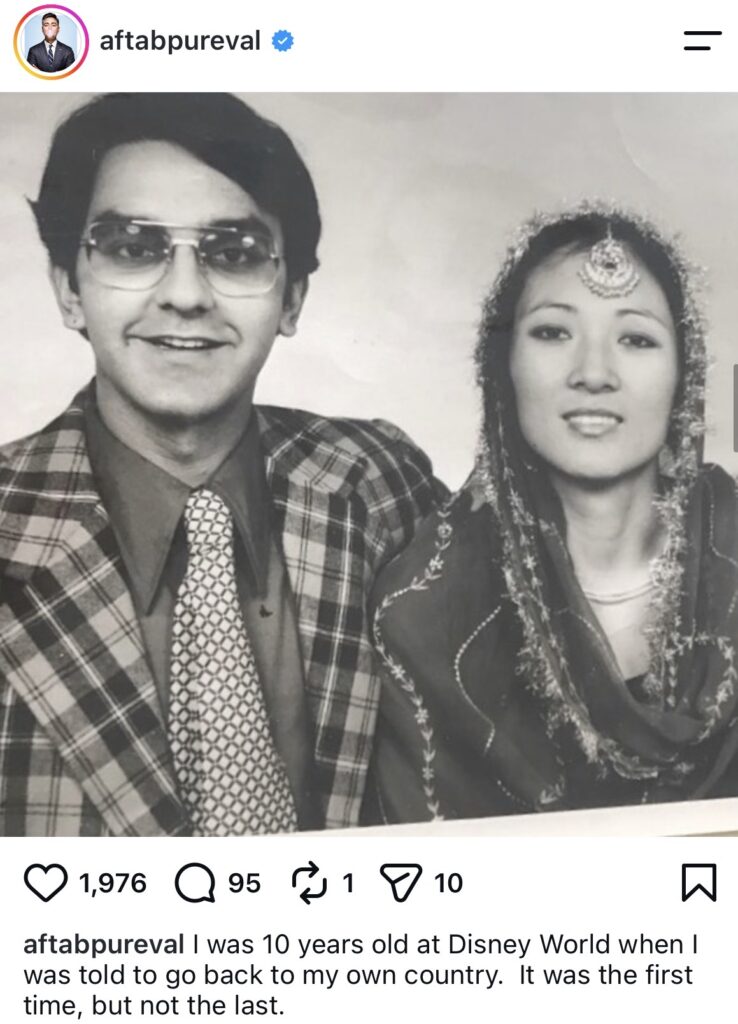
Fundamentally, our country is great because of the immigrants who came here. My story is a perfect example. My mom is a Tibetan refugee. In one generation, she went from fleeing her country to her son being the mayor of a major American city.
That story only happens in this country, and it’s on all of us. The reason I’m down here is because this fight is about preserving that dream for the next generation.
At the same time, do you agree that the H-1B system has flaws and needs reform?
I think any Democrat who thinks that, before Trump came here, the federal government was working perfectly, or that our institutions do not need to be reformed and, in some instances, radically reformed, is wrong.
But let’s be very clear: That’s not what Trump is doing. He’s not reforming the H-1B visa. He’s giving out gold visas with his face on it. He’s giving out green cards based on people paying him patronage, or giving his family members jobs or contracts or investments.
H-1B, all of our visa programs, all of our systems in government, need to constantly be pressure-tested and constantly be improved.
If we win in November, and I hope we do, and if we win the presidency in a couple of years, it’ll be incumbent on Democrats to not just restore the institutions to where they were, but to constantly be improving them, including our immigration system.
Forsyth County has a large South Asian population, and we’re seeing hate incidents here as well. An Indian American woman was recently chased down the road for several miles by a man who yelled at her to “go back to India” and used hateful slurs. What should someone do when faced with a situation like that?
First of all, it’s awful. I’m so sorry for that woman. I’m so sorry for any person of color, immigrants or not, who experiences that.
I’m the mayor of Cincinnati, and I was told very recently to go back to my own country. Unfortunately, racism is real, and the president is stoking those fears and that racism for his own agenda.
When someone is faced with a hate crime or that kind of potential violence or violence, they should immediately go to the authorities.
Our police department in Cincinnati is very well trained as it relates to hate crimes. We have a very strong relationship with our local FBI. It’s something that we take very seriously and something that we have funded and operationalized on the local level.
That victim needs to understand their rights, needs to go to law enforcement authorities, and needs to have community support to drive awareness of that incident and continue to put pressure on law enforcement to prosecute and hold those people accountable.
Let’s talk about housing. Affordability is a major problem here, too. What has Cincinnati done that other cities might learn from?
I really do want to give a lot of credit to Mayor Dickens. A lot of the ideas that he is putting forth are really innovative and unique to Atlanta.
His idea to put housing on top of public buildings, like fire stations, and his idea to take abandoned city-owned lots and put housing on them, those are all bleeding-edge, some of the most innovative, progressive things happening in the country.
I don’t claim to know all of the details about what Mayor Dickens is doing on housing, but I can talk about what we’ve been doing in order to triple the amount of affordable housing development in the last five years.
Fundamentally, it’s about legalizing housing, which is a very conservative idea, frankly. It’s reforming our bureaucratic zoning codes, deregulating, getting red tape out of there, making it easier to build housing so that we can build more housing, preserve the housing that we have and stabilize costs.
It also includes putting all of our incentives toward the most affordable, which is 30% to 60% AMI, low-middle-class and working-poverty households. Those folks are critically squeezed right now because of inflation, because wages haven’t been rising and because housing costs have been rising.
The other thing we’ve done is really focus on the fact that affordable housing too often gets focused on homeowners, whereas 66% of the city of Cincinnati are renters.
So we passed a law that requires people to be represented by an attorney in eviction court if they qualify. We created a new fund for emergency rental assistance to keep people in their homes, because the unfortunate consequence of the affordable housing crisis is that homelessness is going up.
To stem the tide of that and try to get people into stable housing more quickly and more affordably is critically important.
Again, I wouldn’t deign to give Mayor Dickens any advice, but it seems like he’s doing all the right things.
Democrats are often criticized for being too soft on crime. As a mayor dealing with public safety on the ground, how do you respond to that?
I think that’s crap.
If anyone’s soft on crime, it’s members of Congress and United States senators standing by while Trump pardons insurrectionists who attacked police officers and elected officials.
If anyone’s soft on crime, it’s the federal government taking money away from DOJ grants that put money into the hands of police officers in cities in order to provide a massive increase in ICE funding that’s actually killing people rather than keeping them safe.
If anyone’s soft on crime, it’s state legislators who are cutting local government funds that are actually defunding police at the local level.
And if anyone’s soft on crime, it’s the politicians at the national and state level who refuse to hold people accountable when they recklessly own guns, or allow them to get a gun after they have been the perpetrator of violence, specifically domestic violence.
All of that is contributing far more to the gun violence that we’re seeing in American cities than any policy that any mayor is doing.
Mayors are the ones funding police, giving FOP contracts at historic levels, begging people to come and be recruited as police officers. Mayors are the ones putting more police in areas where there is violent crime. Mayors are the ones trying to get illegal guns off the street.
So this national narrative about being weak on crime is idiotic.
What specific steps has Cincinnati taken to reduce crime?
I mentioned a lot of them just now. We have a historic contract for the FOP to increase the number of police officers on the streets. We’re going to walking patrols rather than having police officers in their cars.
We’re the first city in the country to have drones as first responders, to respond more quickly to some 911 calls.
And in instances of homelessness, mental health or addiction issues, we send mental health professionals in order to get those people help more quickly.
We’re at a 15-year low right now for violent crime. In fact, for the first time in anyone’s memory, we haven’t had a homicide in the Over-the-Rhine neighborhood for the entire month of September.
Our strategies are effective. At the end of the day, we have to have as much urgency around supporting police, having the resources and holding violent criminals accountable as we have for addressing poverty, which is the primary driver of violent crime in our communities.
We’re hearing a lot about young people struggling with mental health, especially in schools. What can cities realistically do about it?
It is an epidemic. Cities are poorly situated to specifically deliver mental health services. There is no mental health department in the city, for example.
What cities can do is find nonprofits and service providers that have a track record of success and fund those programs; partner with our schools to get mental health counselors into the schools; keep kids at schools longer by putting community health centers inside the schools, which is what Cincinnati has done; and connect people to help more directly by sending mental health professionals rather than police for the 911 calls that call for it.
All of that takes intention. All of that takes money. And that’s what we’ve been doing in Cincinnati.
Indian Americans are becoming more politically engaged and visible as voters. Do you think the two major parties really understand this community and what matters to its voters?
No. The answer is no.
Even within the South Asian community, there are so many different cultures and languages and cuisines and traditions and religions, whether it’s Pakistan or India.
When you have the broader AANHPI coalition, it’s even harder for politicians or elected officials who are not of that ethnicity, or even elected officials of the ethnicity, to be culturally competent in how they engage.
I think we’re in the very early stages of effective organizing within Asian and South Asian communities, partly because it is so nuanced and partly because it is so difficult.
But the work that Forsyth County, DeKalb and the Atlanta metro region are doing is really a national model that’s being used in Houston and L.A. to understand how you do the hard work of organizing our community and, most importantly, using that to win elections.
