





BY JYOTHSNA HEGDE
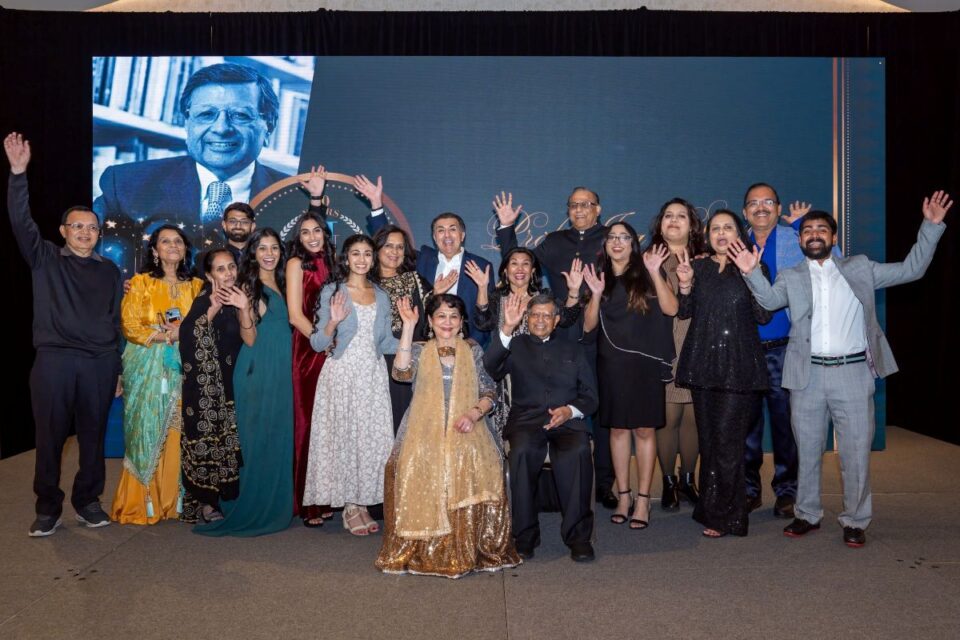
At his retirement celebration, family and colleagues honored six decades of pioneering scholarship, transformative mentorship and relationships that have shaped a discipline.
Atlanta, GA, November 9, 2026: How does one measure a scholar’s legacy? Through theories that endure, books that reshape a discipline, or students who carry an intellectual tradition forward? At Dr. Jagdish “Jag” Sheth’s retirement celebration on October 24, the answer emerged through the convergence of all three, and through the relationships that gave those accomplishments their human meaning.
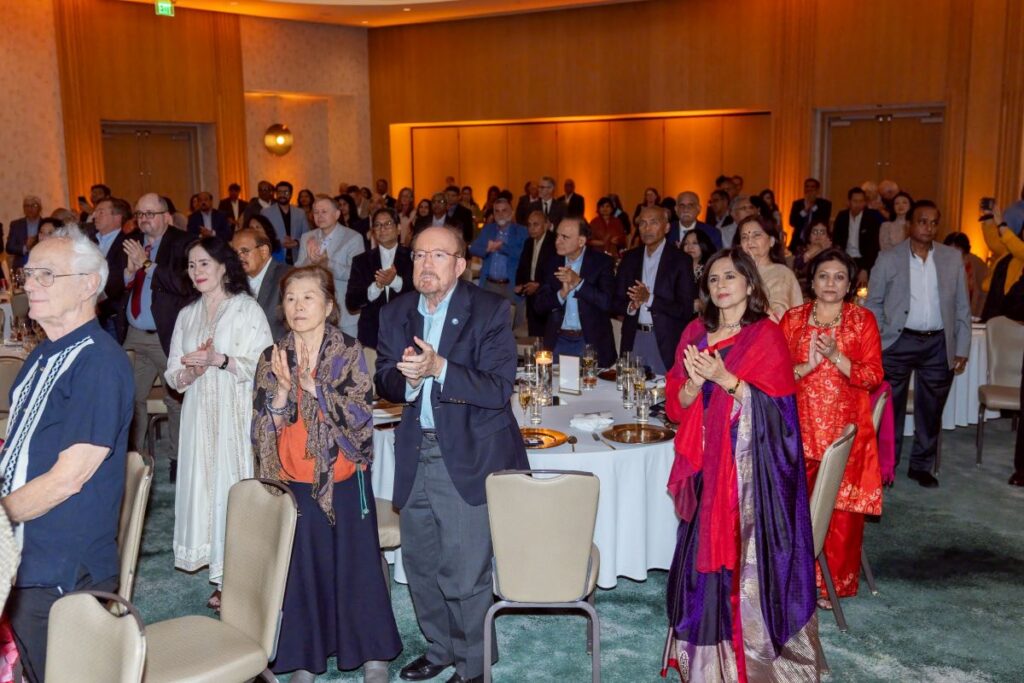
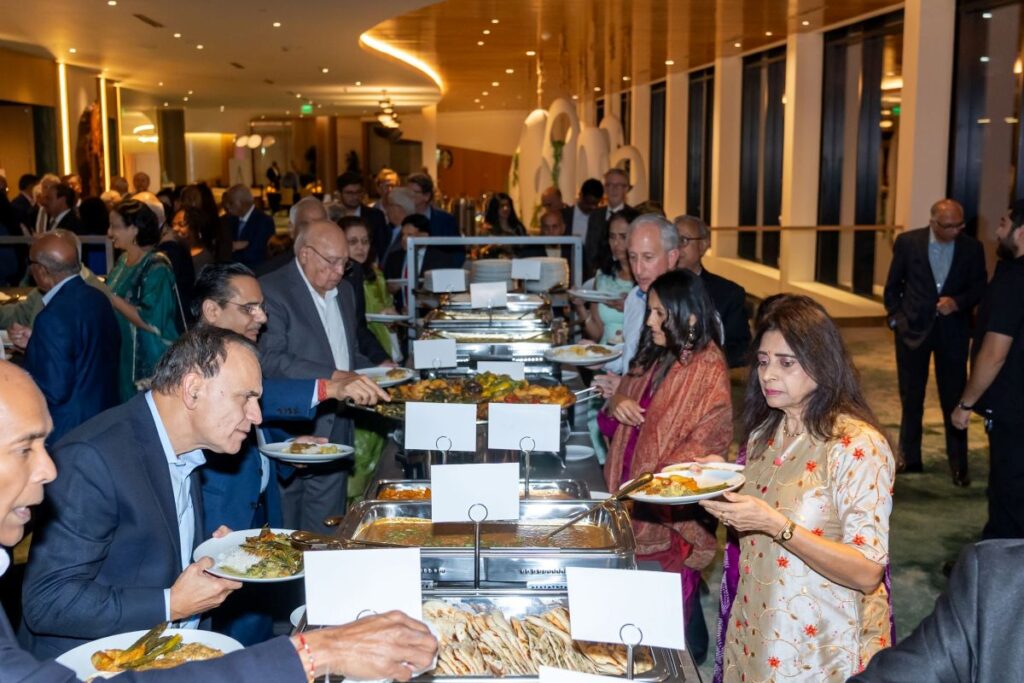
Held at the Westin Atlanta Gwinnett Hotel, the family-hosted gathering celebrated six decades of teaching and research. Academic tributes mingled with affectionate family recollections, humor and expressions of gratitude, revealing the person behind one of marketing’s most distinguished scholarly careers.
A scholar of behavior and a consumer of curiosity, Dr. Sheth has devoted his professional life to understanding what motivates people, how markets evolve and why relationships matter. That evening, the relationships he had cultivated offered their own account of his influence.
For a thinker who helped advance relationship marketing, a room brought together by connections cultivated over a lifetime was a particularly fitting tribute.
A Family’s Perspective on an Extraordinary Career
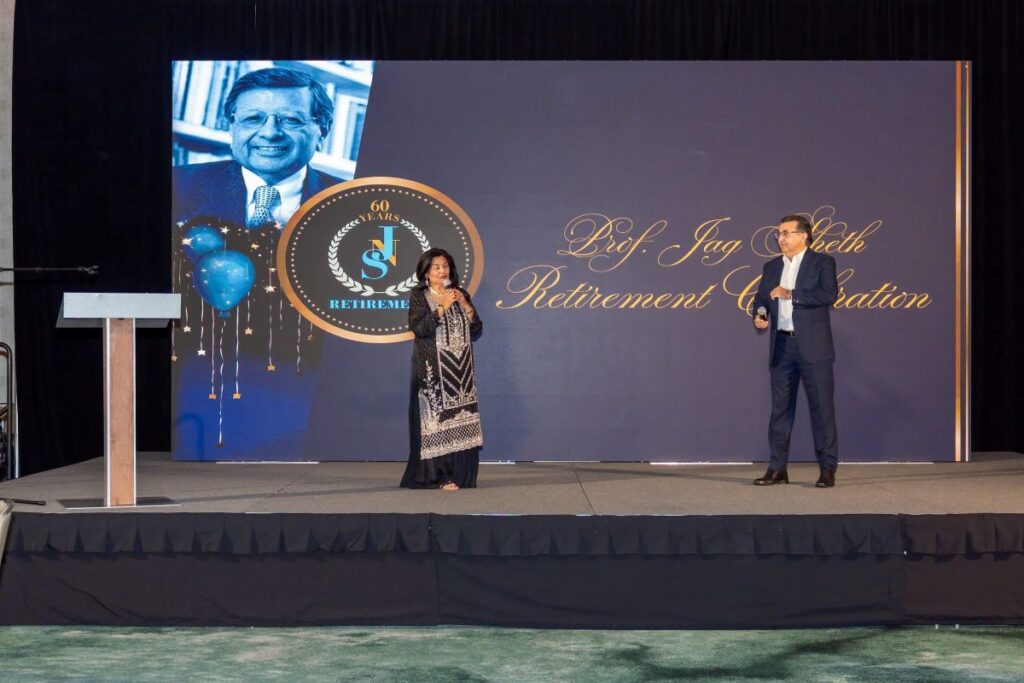
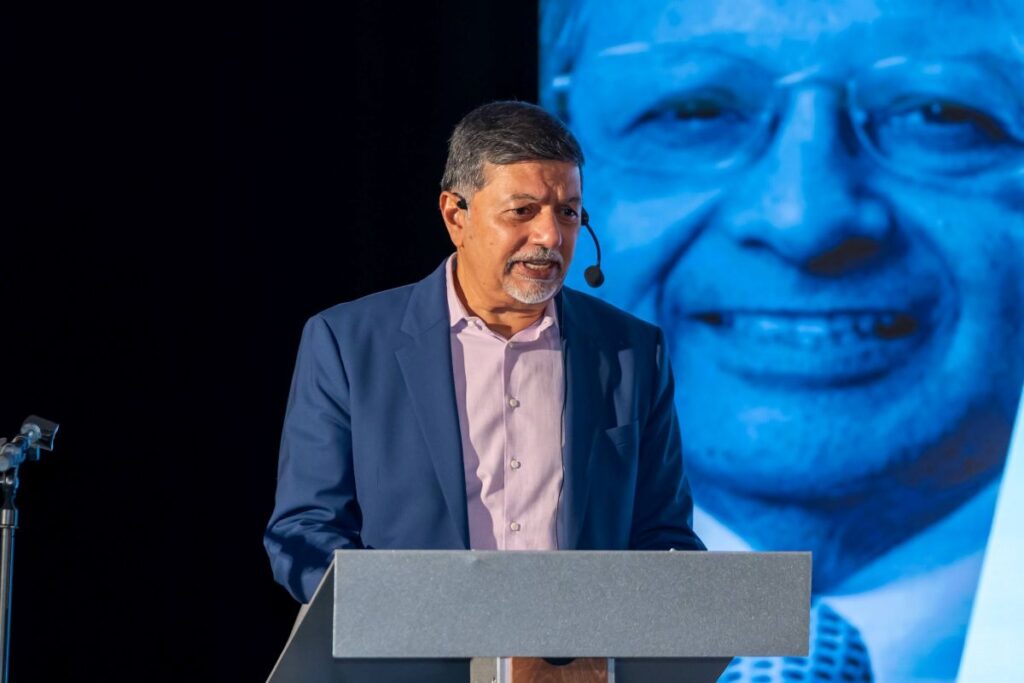
His daughter, Dr. Reshma Shah, an Emory marketing professor, and son, Rajen Sheth, founder and CEO of Boardwalk Development Group, co-hosted the evening. Their affectionate recollections and gentle humor offered an intimate portrait of the father behind the distinguished scholar.
“I thought I would take a page from a famous book called The Rule of Three,” Reshma said, borrowing her father’s celebrated framework to organize her tribute.
“I have huge shoes to fill,” she added. “I don’t know if I could ever live up to his reputation.”
Rajen continued in the same spirit, describing his father as “the Michael Jordan of his field” before offering a more personal measure of his productivity.
“He’s written 40 books, which is more books than I have ever read,” he joked.
Then came the question that captured the evening’s affectionate skepticism: “Do you all believe that he is going to retire?”
Few appeared convinced. The occasion marked a professional milestone, but the intellectual appetite that had sustained his career seemed undiminished.
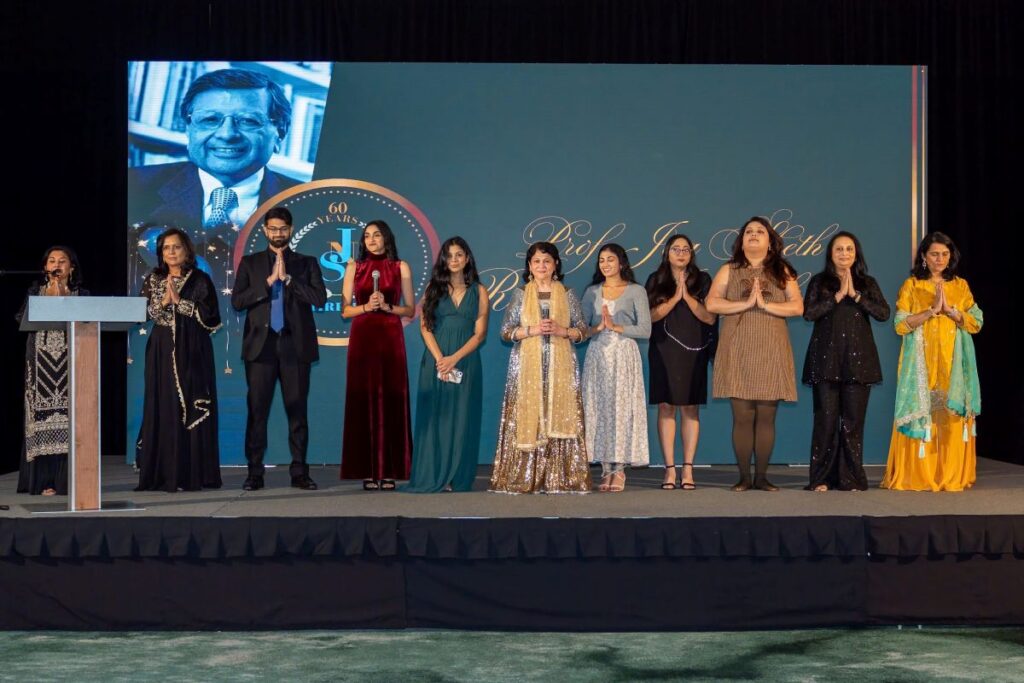
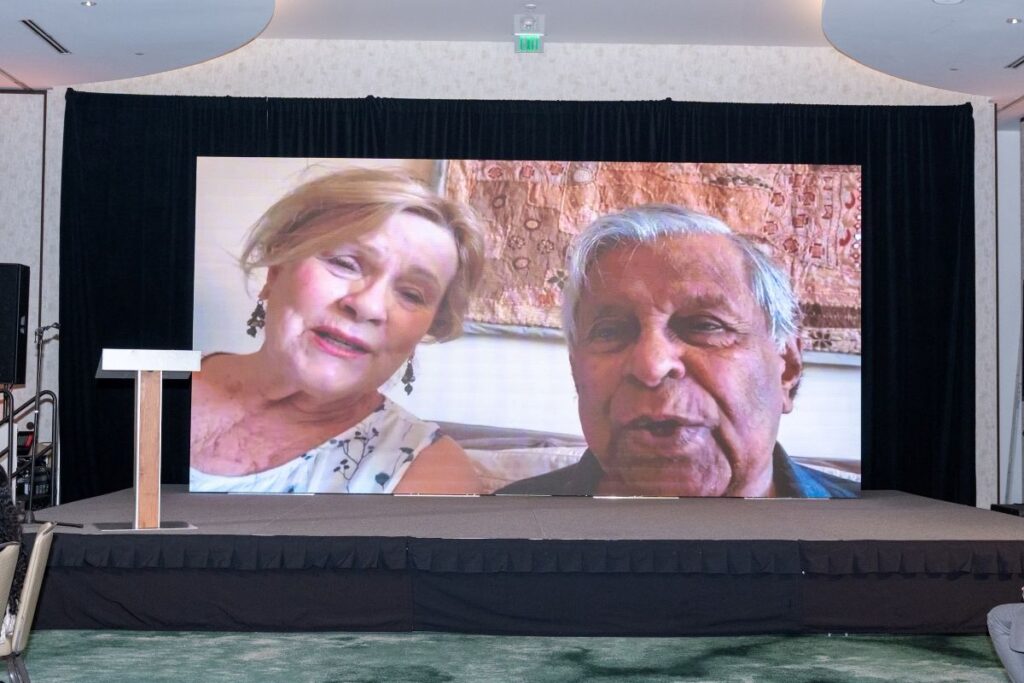
An invocation led by Madhuri “Madhu” Sheth, with the grandchildren joining her, placed family at the center of the proceedings. The program included a toast by Ajay Kohli and keynote addresses and accompanying video tributes presented by Jeff Rosensweig, Raj Sisodia and Cynthia Currence. An interactive trivia session, personal remarks and a surprise presentation completed a celebration that moved comfortably between academic distinction and family warmth.
From Displacement to Discovery
Born in 1938 in Yangon, then Rangoon, Burma, Dr. Sheth experienced displacement early in life. War uprooted his family and took them to India, where his formative years unfolded in Kutch and later Madras, now Chennai. He studied accounting and commerce, earning his undergraduate degree at Loyola College before arriving in the United States in 1961.
The biography shared for the occasion places his journey across three geographies: Yangon, his Janma Bhumi, or birthplace; Kutch, his Dharma Bhumi, the ground of his formative values; and Duluth, his Karma Bhumi, where much of his work and community life have taken root.
At the University of Pittsburgh, he earned an MBA in 1962 and a doctorate in 1966. His interests expanded toward behavioral science and the motivations underlying human decisions, establishing the direction of his intellectual life.
Dr. Sheth recalled his early days in America with an anecdote about buying a white shirt. When a store clerk quoted a price of five dollars, he instinctively tried to bargain, bringing a familiar Indian shopping custom to an unfamiliar setting. “There’s no bargaining in this country,” a friend told him, he recalled. The exchange offered a gently humorous glimpse of the young international student finding his way in America, where even a routine purchase could become a lesson in cultural adjustment.
The anecdote offered an engaging glimpse of the international student before the distinguished career. It also revealed an enduring habit: unfamiliar situations invited observation, questions and learning.
Understanding the Person Behind the Purchase
That disposition found a defining intellectual partnership in John A. Howard, his mentor and collaborator. Their 1969 book, The Theory of Buyer Behavior, brought learning, perception and information search into an integrated explanation of consumer decision-making and brand loyalty.
The Howard–Sheth theory helped give structure to a field drawing on several disciplines. It examined how consumers interpret information, acquire experience and develop preferences, providing a framework through which researchers could investigate the processes behind a purchase. Emory has described the book as a marketing classic.
Its importance lay partly in the ambition of its question. Understanding a transaction required understanding the person making it, including the learning and perceptions that preceded the decision.
Dr. Sheth continued that inquiry through work with Bruce Newman and Barbara Gross on consumption values. Their research examined functional, social, emotional, epistemic and situational influences on choice, recognizing that products and services can offer usefulness, belonging, emotional satisfaction, discovery or value specific to a circumstance.
Across appointments at Columbia University, MIT, the University of Illinois at Urbana-Champaign, the University of Southern California and Emory University, he pursued questions connecting individual behavior with corporate strategy and economic change. Emory now identifies him as the Charles H. Kellstadt Chair Emeritus of Marketing.

Relationships as Scholarship and Practice
Dr. Sheth’s career also involved building institutions around emerging questions. At USC, he founded the Center for Telecommunications Management. After joining Emory in 1991, he established the Center for Relationship Marketing, creating a setting for research into sustained connections between organizations and customers.
In research with Atul Parvatiyar, he explored how technological advances and direct interaction could encourage cooperation and mutual understanding between producers and consumers. Their work examined a relationship orientation in which customers participate in creating value over time.
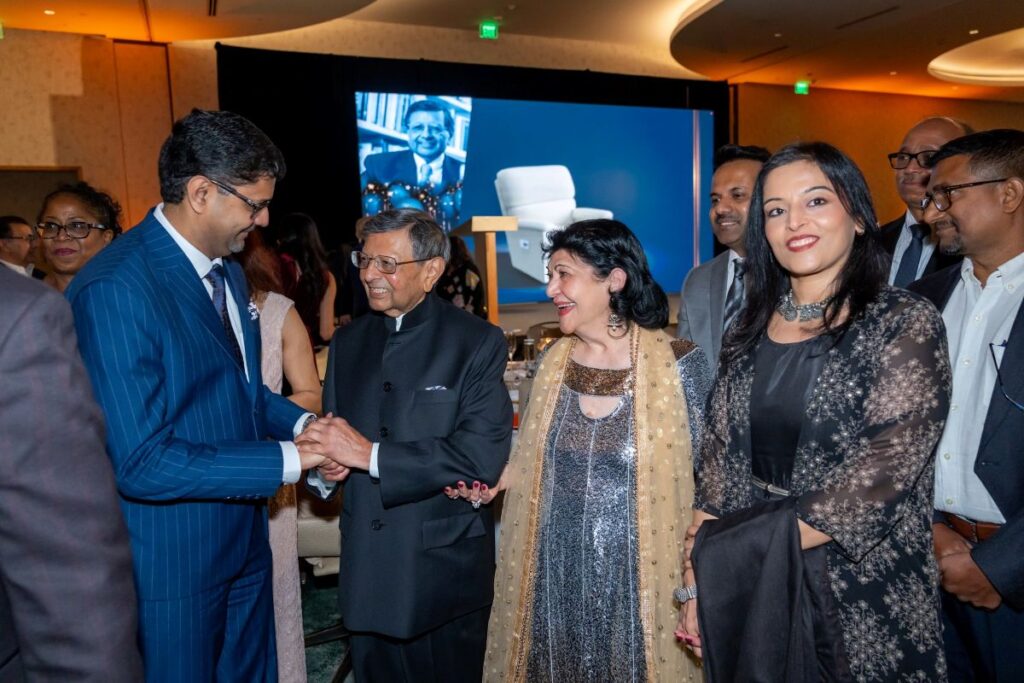
Those concerns found a personal counterpart in the evening’s recollections. Students and colleagues had been regular presences in the family household, where conversations and mentorship extended into weekends.
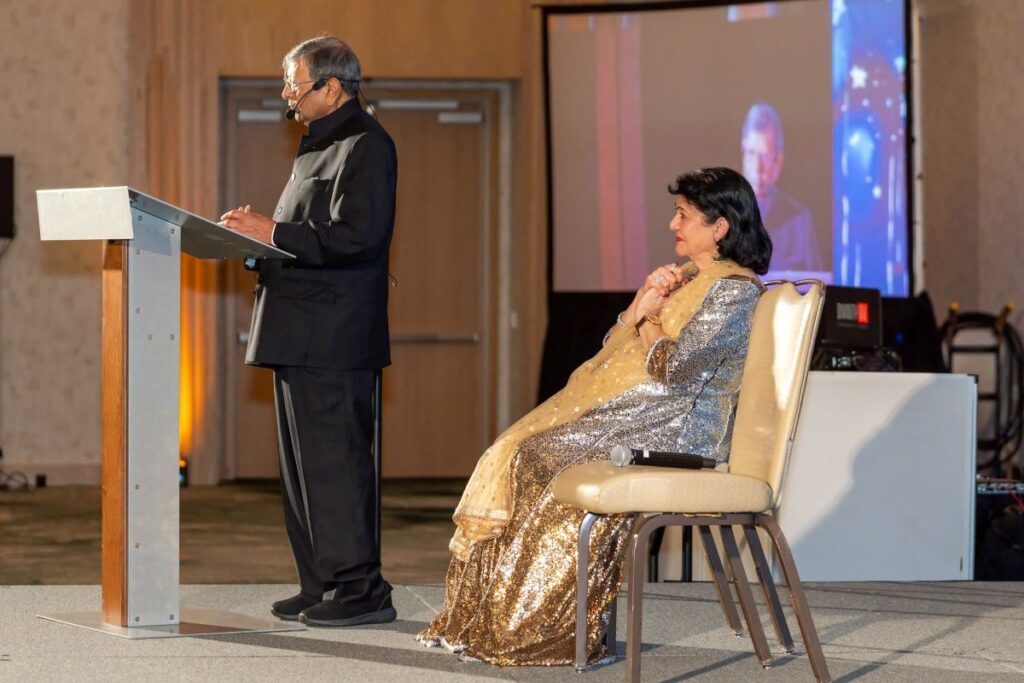
Madhu’s remarks supplied a perspective seldom available in a professional biography. She remembered family life around an intensely engaged academic career, including the succession of meetings and visitors that could occupy a Saturday or Sunday morning. Her affectionate humor acknowledged the demands while conveying pride in the life they had shared.
She also spoke of her husband’s breadth of knowledge and continuing interest in subjects ranging from current affairs to artificial intelligence.
“He knows about everything,” she said.
The observation was grounded in everyday conversation. His curiosity had remained a feature of their home life, as had his willingness to explain and discuss.
“He’s an amazing man,” she added.
Her account illuminated the partnership surrounding the public accomplishments. The biographical material supplied for the occasion gives that partnership a direct expression in Dr. Sheth’s words: “This journey is ours. Madhu has been with me every step of the way and so have my children.”
Madhu’s own community commitments form part of that history. The family biography credits her with helping establish the Jain Society of Greater Atlanta and with pioneering leadership within the North American Jain community. Their shared story encompasses education, faith, family and service.
Ideas That Travel Beyond the Classroom
The evening’s interactive quiz briefly turned the celebration into a classroom.
Guests used their phones to answer questions about Dr. Sheth’s career, honors
and ideas, including the “Rule of Three.”
Developed with Raj Sisodia, one of the evening’s keynote speakers and a significant collaborator in Dr. Sheth’s writing, the framework proposes that mature competitive markets tend toward three major, broad-based competitors alongside smaller specialists. It examines the difficulties facing companies caught between the scale of industry leaders and the distinctive positioning of niche firms. The authors also identify limits to its applicability, including substantial regulatory restrictions and barriers to competition.
Its practical force lies in the questions it encourages leaders to ask about their position, capabilities and ambitions. Expansion requires an understanding of what makes a company competitive and whether growth will strengthen those advantages.
The books pictured in the commemorative brochure illustrated the range of Dr. Sheth’s interests. They included The Global Rule of Three, Clients for Life, The Accidental Scholar, India’s Road to Transformation: Why Leadership Matters, Breakout Strategies for Emerging Markets, The Self-Destructive Habits of Good Companies, Navigating Brand Activism and Chindia Rising.
Together, the titles trace an intellectual agenda extending from advisory relationships and corporate conduct to emerging economies, leadership and global competition. His autobiography, The Accidental Scholar, places his personal journey within that wider body of work.
Other influential books include Firms of Endearment, written with Raj Sisodia and David Wolfe, and The 4 A’s of Marketing, co-authored with Sisodia. They reflect a sustained effort to connect scholarship with the decisions and responsibilities of business leaders.
A Global Perspective on Markets
Dr. Sheth also challenged the geographic foundations of marketing theory. His 2011 Journal of Marketing article, “Impact of Emerging Markets on Marketing: Rethinking Existing Perspectives and Practices,” argued that conditions in emerging economies require scholars to reconsider established assumptions. Infrastructure, resource constraints, governance and forms of competition can substantially alter how markets function.
The argument carries significance beyond its immediate field. Knowledge intended to explain a global economy must be shaped by the experiences of different societies. Emerging markets become sources of theory, capable of changing a discipline’s central questions.
That international perspective also informed his institution-building. He founded the India, China, and America Institute to examine the relationships among the three countries and their implications for geopolitics, security, trade and investment. He also founded the Academy of Indian Marketing to support research and scholarship among Indian marketing and management scholars.
His work across these settings reflects a willingness to investigate change at different scales, from an individual’s purchasing decision to shifts in the global economy.
Recognition Across Disciplines and Borders
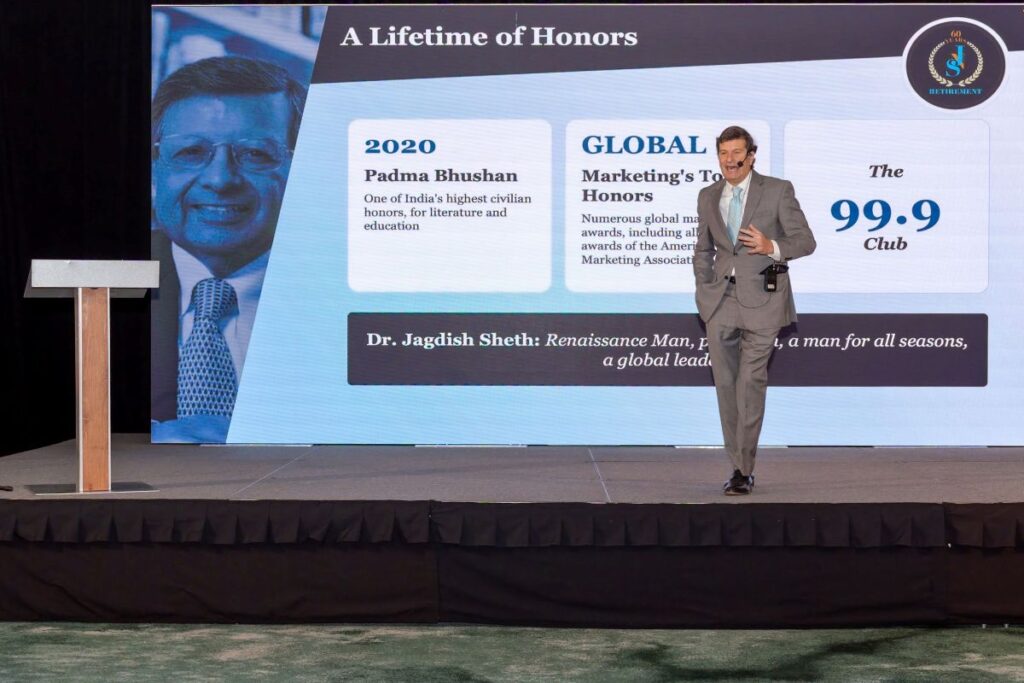
Recognizing his distinguished contributions to scholarship and education, the Government of India conferred the Padma Bhushan, the nation’s third-highest civilian honor, on Dr. Sheth in 2020.
He received an honorary Doctorate of Science from the University of Illinois at Urbana-Champaign in 2016 and an honorary Doctorate of Philosophy from Shiv Nadar University in 2017.
His distinctions include four major American Marketing Association honors: the P. D. Converse Award for contributions to marketing theory, the Charles Coolidge Parlin Award for marketing research, the Distinguished Marketing Educator Award and the William L. Wilkie “Marketing for a Better World” Award. Together, they recognize contributions encompassing theory, research, teaching and societal benefit.
He is a fellow of the Academy of International Business, the Association for Consumer Research, the American Psychological Association and the American Marketing Association, and a distinguished fellow of the Academy of Marketing Science and the International Engineering Consortium.
His record also includes the Academy of Marketing Science’s Outstanding Marketing Educator Award, Outstanding Educator recognition from Sales and Marketing Executives International, and Emory’s Global Innovation and Marion V. Creekmore awards. His professional service has included the presidency of the Association for Consumer Research and leadership of the American Psychological Association’s consumer psychology division.
Emory further recognized his sustained service with its Thomas Jefferson Award in 2019, honoring his contributions to the university through personal activities, influence and leadership.
These distinctions reflect a career in which original research, education and institutional leadership have reinforced one another.
Turning Achievement Into Opportunity
Dr. Sheth’s philanthropic commitments extend that work by helping create opportunities for others. Established by Dr. Sheth and Madhu in 1991, the Sheth Foundation promotes the creation, recognition and dissemination of marketing knowledge.
Its activities include support for the AMA-Sheth Foundation Doctoral Consortium and research through major scholarly associations. The couple also established the Sheth Family Foundation to support charitable work in India and the United States.
At Emory, their giving established the Sheth Distinguished Alumni Award in 2002, recognizing alumni whose achievements encompass service in universities, government, business and nongovernmental organizations.
The family biography records a principle connecting Dr. Sheth’s early experiences with his later philanthropy: “You learn from scarcity what abundance cannot teach you.”
In his remarks at the celebration, he repeatedly acknowledged the people and institutions that had enabled his career. His recollections credited mentors who recognized his potential, universities that created opportunities and collaborators whose intellectual companionship remained important to him.
The emphasis gave his account of achievement a generous perspective. A distinguished career had emerged through individual effort supported by communities willing to teach, encourage and include.
He also reflected on the importance of remaining engaged with children and grandchildren. His concern about continuity across generations, particularly amid technological and social change, brought the evening’s attention toward the future. Experience and values require opportunities for conversation if they are to become meaningful to younger people.
The grandchildren’s participation gave those observations a personal immediacy. Their presence connected the career being celebrated with the generations who would inherit its stories and responsibilities.
An Avatar, a Scepter and a Retirement “Throne”
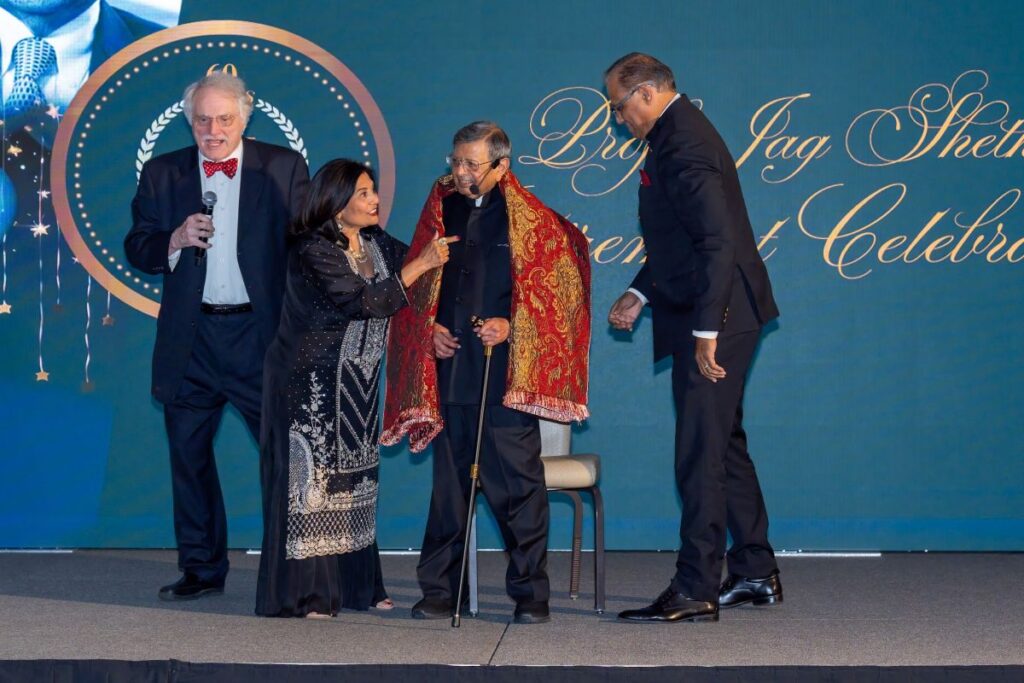
The final portion of the program, billed simply as a “Surprise,” brought a theatrical flourish to the proceedings. Emory colleague Benn Konsynski combined an affectionate scholarly tribute with a playful presentation befitting the guest of honor.
He described an artificial-intelligence project assembled from Dr. Sheth’s books, speeches and interviews.
“I had my teams create an avatar,” he said.
The experiment introduced a contemporary question into a celebration of a long intellectual life: What can a record of someone’s work preserve, and what remains dependent on personal encounter?
Konsynski identified a revealing limitation in the reconstruction.
“It did not reflect humor,” he observed.
His tribute emphasized the empathy and wit that animate conversations with Dr. Sheth. An archive can preserve ideas and explanations. The experience of speaking with a teacher also involves responsiveness, encouragement and an understanding of the individual asking the question.
The distinction helped explain the affection surrounding him. Dr. Sheth’s influence had traveled through his published work and through encounters in which others felt challenged, encouraged and heard.
Konsynski then turned from the technological to the ceremonial. A Jaguar-themed scepter and the introduction of a retirement “throne” gave the tribute a comic grandeur, accompanied by playful speculation about Dr. Sheth’s future pursuits. The presentation supplied a memorable conclusion to an evening whose participants seemed united in expecting his energy to find fresh outlets.
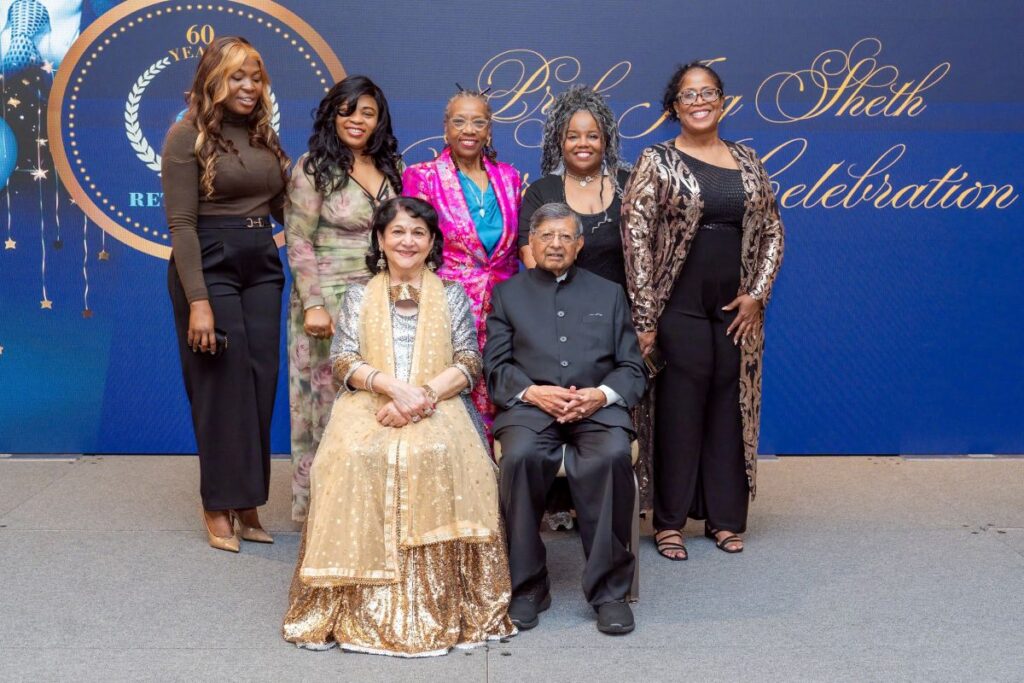
A New Chapter for the Accidental Scholar
As the celebration drew toward its close, Dr. Sheth acknowledged the appreciation surrounding him.
“That gives me a great satisfaction,” he said. “Thank you again.”
The simplicity of the response suited an occasion that had brought public distinction into contact with personal experience. Books, theories and honors established the scale of his contribution. Family and colleagues revealed how that contribution had been lived, shared and sustained.
But what does retirement mean for someone whose life has been organized around the next question? Can a formal departure from teaching contain a curiosity that has moved so freely across disciplines, countries and generations?
The title of his autobiography, The Accidental Scholar, offers an apt starting point for considering what comes next. The journey it recounts demonstrates how an unforeseen opportunity can open into a life’s work. Retirement may offer another such opening, with greater freedom to write, mentor, build institutions and pursue questions beyond the obligations of an academic calendar.
Whether that chapter becomes larger in reach or more personal in purpose remains his to determine. The evening offered little reason to expect it to be quiet. For Dr. Sheth, whose career has repeatedly turned curiosity into contribution, the most interesting question may be what he will discover with the freedom to begin again.
