





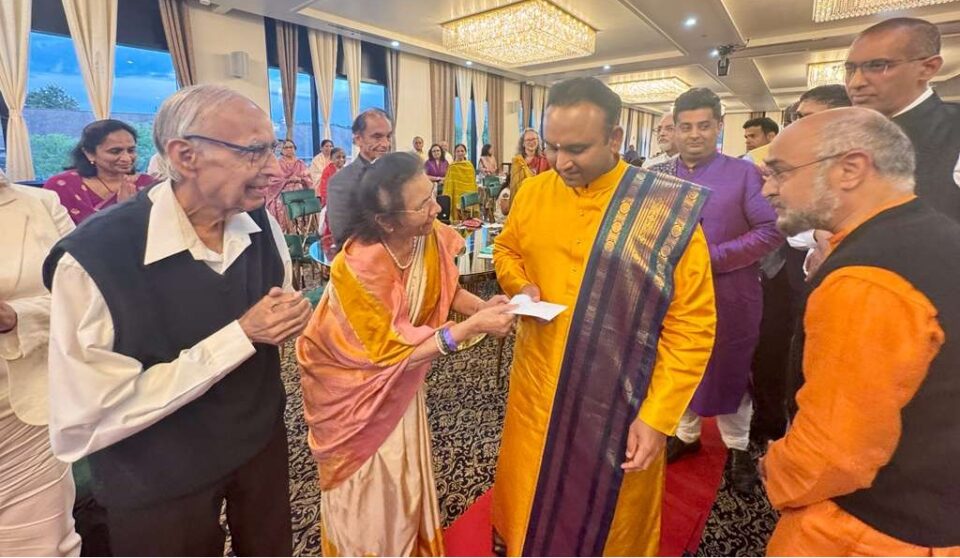
BY JYOTHSNA HEGDE
Atlanta, GA, May 29, 2026: “Just sit down and think of all those known and unknown people who have contributed to your life till today,” Sri Madhusudan Sai told NRI Pulse during a question-and-answer session in Atlanta. “Not only parents or teachers, but even the gatekeeper, the driver, the newspaper boy, the maid servant. So many people shaped who you are today.”
The reflection, offered during a discussion on gratitude and social responsibility, captured the central theme of an evening devoted to service, compassion, and human values. It was a message that resonated throughout a gathering of community leaders, physicians, educators, and professionals who came together on May 16 at Bliss Events in Suwanee to hear Sri Madhusudan Sai speak about a humanitarian mission built on the belief that access to education, healthcare, and nutrition should not depend on one’s ability to pay.
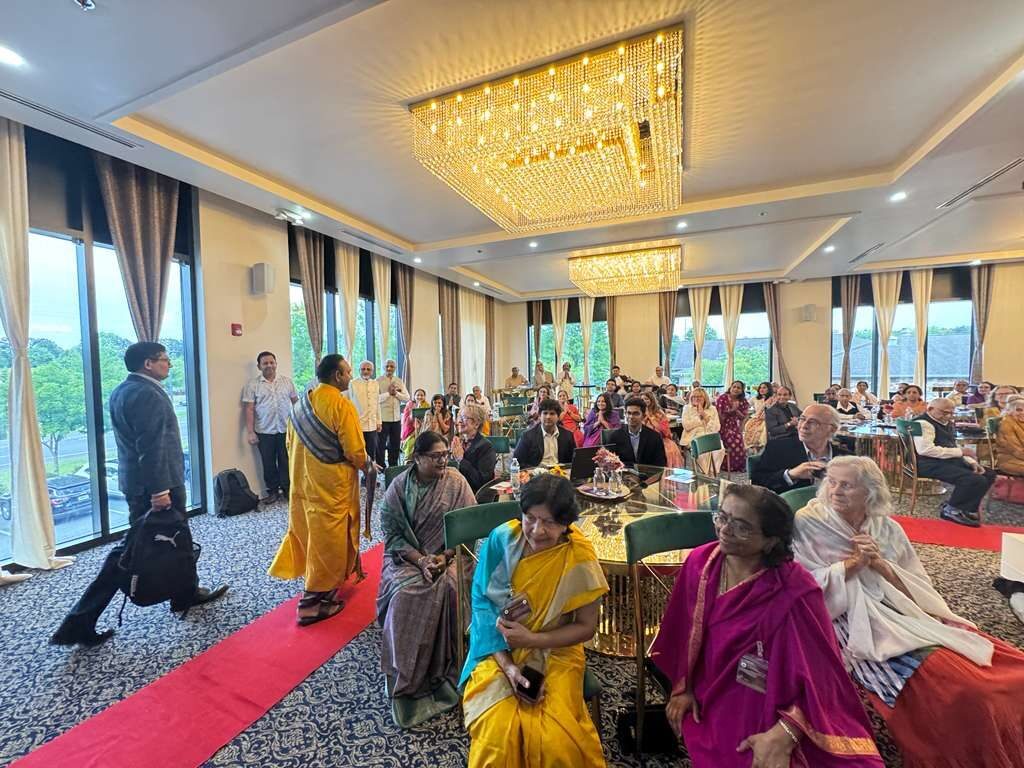
Hosted by Education For All, the event explored how large-scale service initiatives can address some of society’s most pressing challenges while remaining rooted in a philosophy of compassion in action. The gathering also raised awareness and support for a major humanitarian initiative underway in Muddenahalli, India: a 600-bed multi-specialty teaching hospital that will provide advanced medical care entirely free of charge.
The Atlanta event brought together physicians, educators, entrepreneurs, and members of the Indian American community in what became both an introduction to the organization’s work and a broader philosophical conversation about compassion, responsibility, and sustainable social impact.
At the center of the evening was Sri Madhusudan Sai’s address, which moved fluidly between spiritual reflection, practical humanitarianism, and deeply personal observations about modern society.
Rather than presenting philanthropy as charity, he framed service as a form of collective responsibility.
“We do not believe anyone should be denied healthcare or education because of where they were born or what they can afford,” he said during his talk. “When society progresses together, everyone benefits.”
Throughout the evening, Sri Madhusudan Sai repeatedly emphasized three foundational pillars that define the mission’s work globally: free education, free healthcare, and free nutrition.
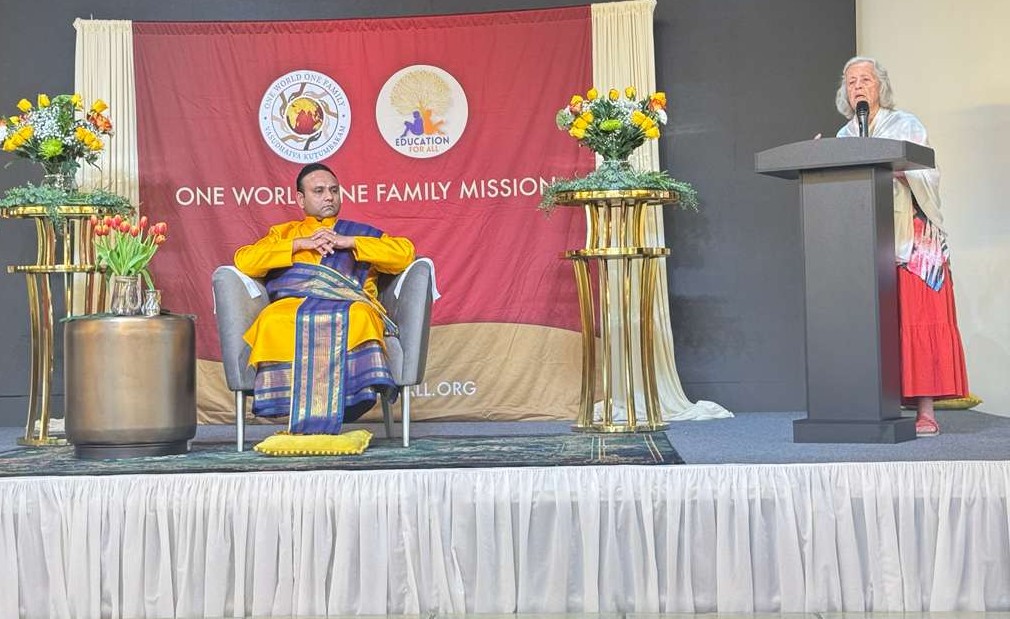
These pillars are not symbolic ideals alone. Over the last decade, the organization has established educational campuses, free hospitals, nutrition initiatives, and university-level institutions serving underserved communities across multiple countries. The initiatives include schools for rural children, pediatric cardiac care programs, nutrition programs for children, and large-scale medical facilities operating without billing counters or fee structures.
The audience heard about the organization’s efforts to create systems where access is based solely on need.
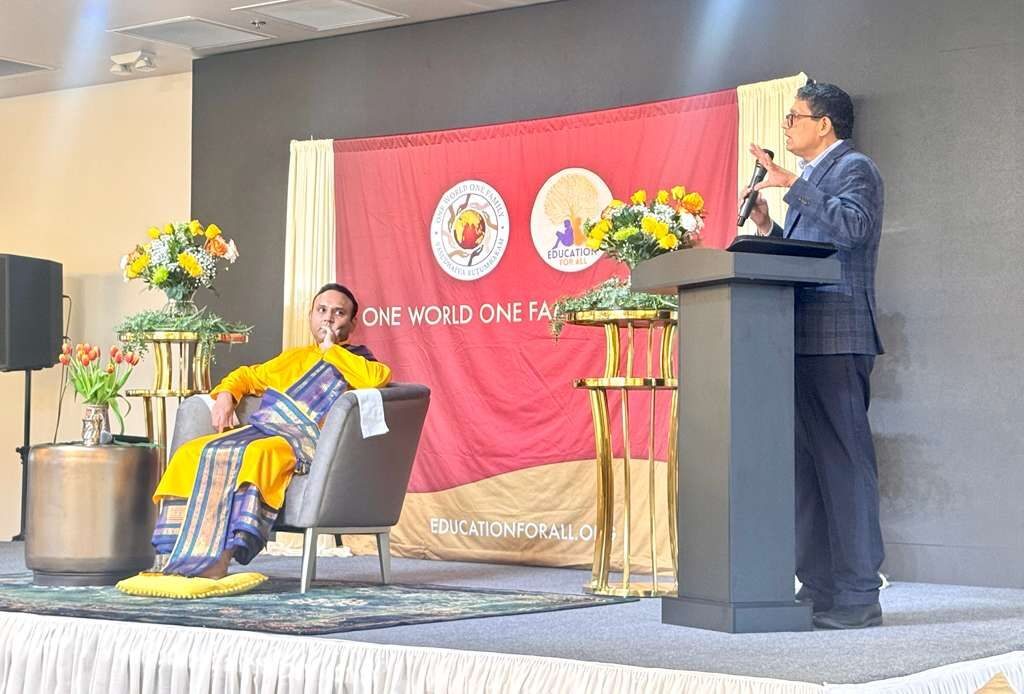
Shiva Ram, Atlanta coordinator for Education For All, highlighted the expanding global impact of Sri Madhusudan Sai’s humanitarian mission and the philosophy driving its initiatives across education, healthcare, and nutrition.
Speaking about the organization’s work, he noted that the mission has evolved beyond traditional charity models into a large-scale effort focused on creating sustainable access to essential services for underserved communities.
“This is about restoring dignity through opportunity,” he said, emphasizing that the organization’s focus remains on providing free education, healthcare, and nutrition regardless of economic background.
He also acknowledged the growing international support behind the initiatives, including the involvement of physicians, educators, professionals, and volunteers from multiple countries who continue to contribute toward projects such as the free hospitals, educational campuses, nutrition programs, and the upcoming 600-bed teaching hospital in Muddenahalli, India.
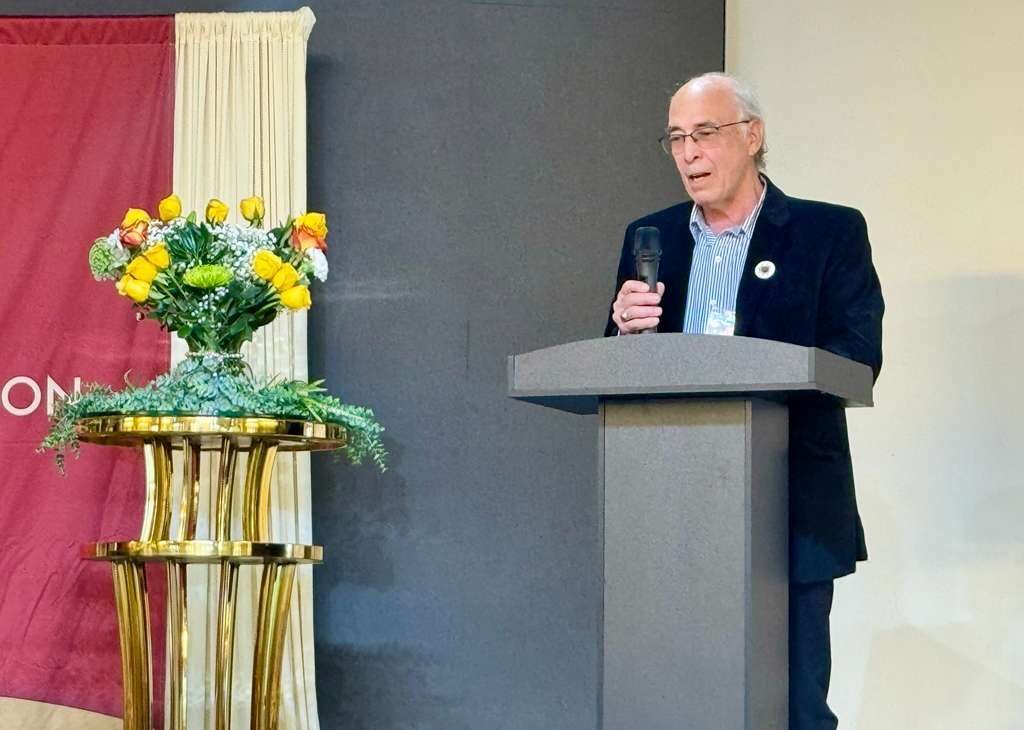
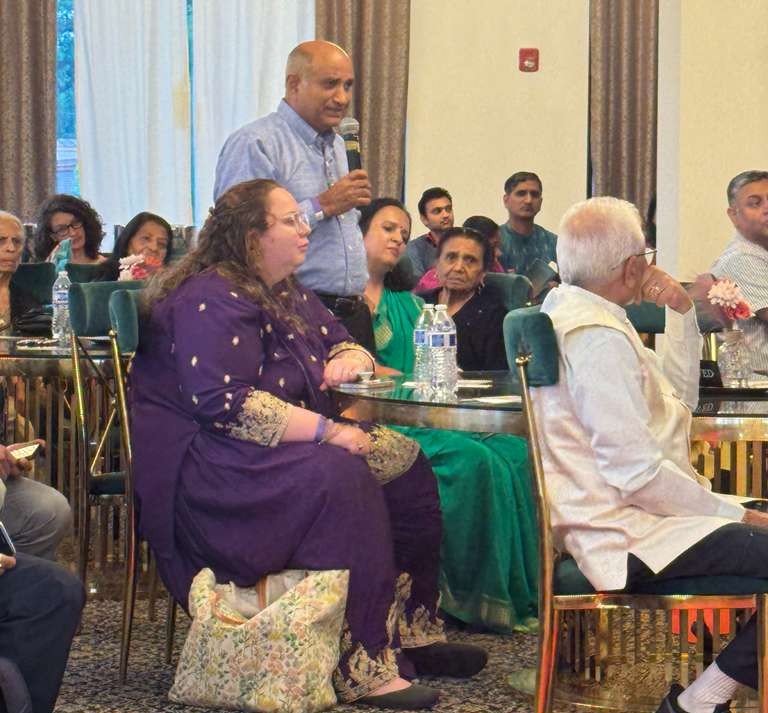
One of the most compelling moments of the evening came during the question-and-answer session, when Sri Madhusudan Sai responded to questions from NRI Pulse about spirituality, gratitude, balance, and the philosophy behind his expanding humanitarian initiatives.
In response to questions about balancing spirituality with the demands of modern life and managing large global humanitarian organizations, he described spirituality not as ritual, but as “love in action” and “compassion in action.”
“The most practical thing in the world is spirituality,” he said. “What you feel inside is what you should express outside. When there is harmony between the inside and the outside, there is balance in life.”
He explained that imbalance occurs when compassion remains only an emotion rather than becoming action through service.
“When you do what your heart says, there is balance in life,” he said, adding that people are less likely to feel anxious or emotionally depleted when their actions align with their inner values.
The reflection transformed the tone of the evening from a conventional nonprofit presentation into something far more introspective.
During the discussion, Sri Madhusudan Sai also addressed how immigrant and professional communities in the United States can cultivate a stronger sense of social responsibility despite the pressures and stresses of modern life.
Speaking in response to NRI Pulse questions about giving back, he emphasized the importance of gratitude and recognizing the countless visible and invisible contributions that shape an individual’s life.
“Just sit down and think of all those known and unknown people who have contributed to your life till today,” he said. “Not only parents or teachers, but even the gatekeeper, the driver, the newspaper boy, the maid servant. So many people shaped who you are today.”
He added that developing “an attitude of gratitude” naturally inspires people to contribute meaningfully to society.
“It is your moral obligation to do something within your capacity,” he said, encouraging people to begin with “small steps, but regular steps.”
Offering a practical philosophy on balancing personal ambition with service, he suggested that individuals dedicate a percentage of their time, energy, and resources toward helping others depending on their stage in life.
“When you are young, you have time and energy but few resources. As you grow older, you have more resources and time, but less energy,” he said. “The idea is moderation in everything.”
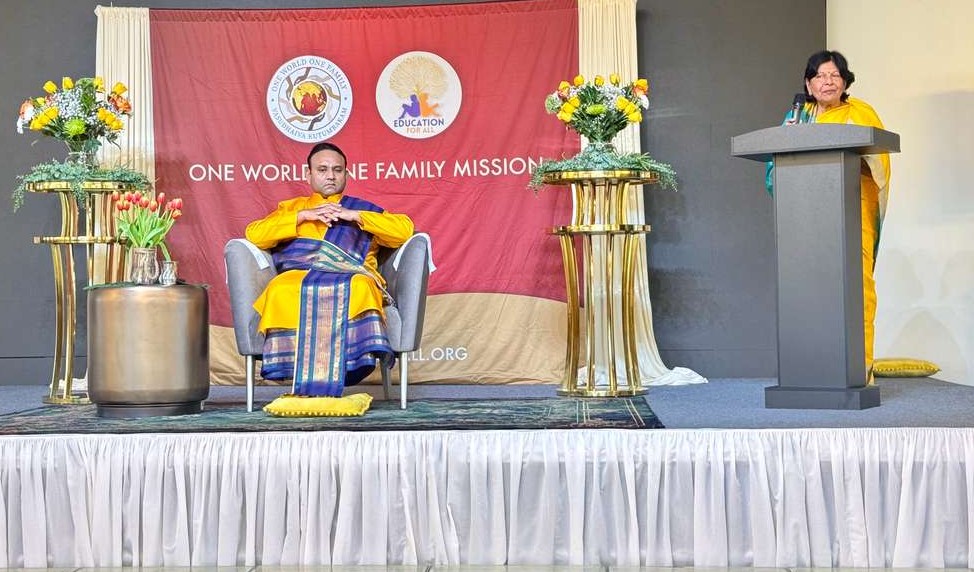
Several distinguished speakers throughout the evening highlighted the impact and scale of the organization’s work.
Dr. Chitra Mani reflected on the transformative role of accessible healthcare and emphasized the profound difference compassionate medical systems can make in underserved communities.
Dr. Gowdhami Mohan discussed the importance of integrating preventive care, nutrition, and education into broader healthcare frameworks, particularly for vulnerable populations.
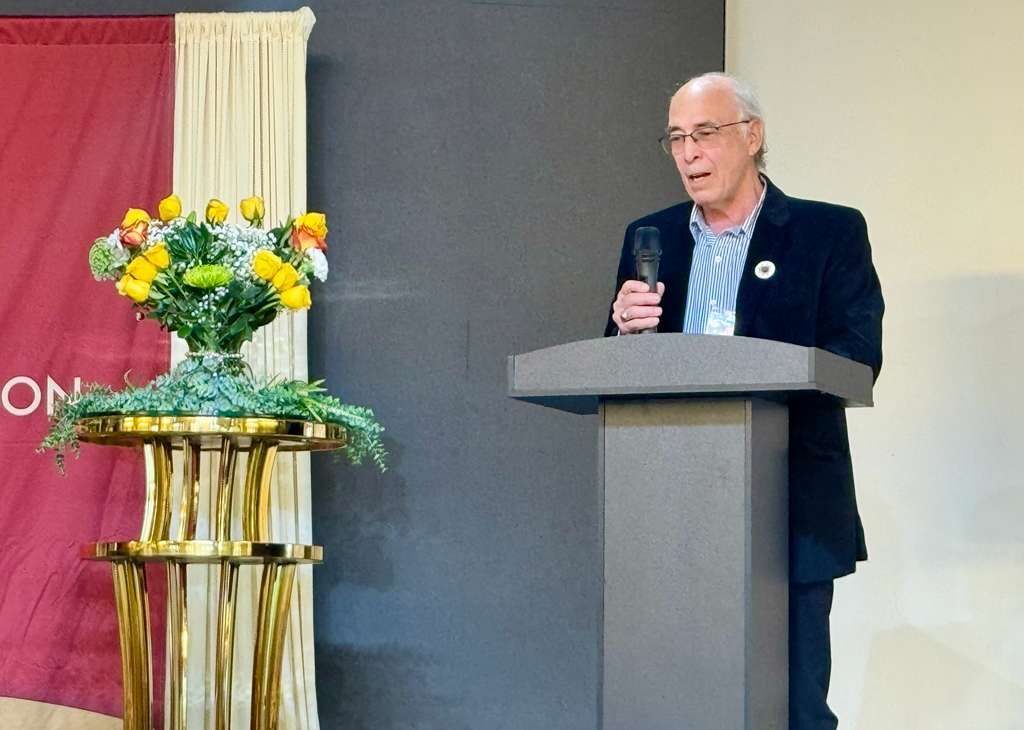
Toni Palmer spoke about the emotional and social dimensions of service, noting how humanitarian work creates dignity and hope alongside material support.
David Ciaffardini emphasized the need for cross-sector collaboration between business leaders, professionals, and nonprofit organizations to create scalable and sustainable impact.
Meanwhile, Dr. Holli Semetko highlighted the broader societal importance of ethical leadership, global citizenship, and educational equity, themes that aligned closely with the mission discussed throughout the evening.
The event also highlighted the organization’s growing healthcare footprint in the United States through the Sri Sathya Sai Sanjeevani Medical Center, located on the campus of Northwest Mississippi Regional Medical Center in Clarksdale, Mississippi. Supported by the Divine Will Foundation and Sri Madhusudan Sai’s humanitarian mission, the facility provides completely free healthcare services regardless of a patient’s financial circumstances.
Many physicians associated with the Clarksdale initiative were present at the Atlanta gathering, underscoring the practical implementation of the organization’s healthcare philosophy within the United States itself. The center’s Sri Sathya Sai Sanjeevani Mother and Child Center focuses especially on free care for women and children while expanding broader community wellness and healthcare outreach in underserved regions.
The discussion later turned toward the organization’s ambitious 600-bed teaching hospital being developed in Muddenahalli, India.
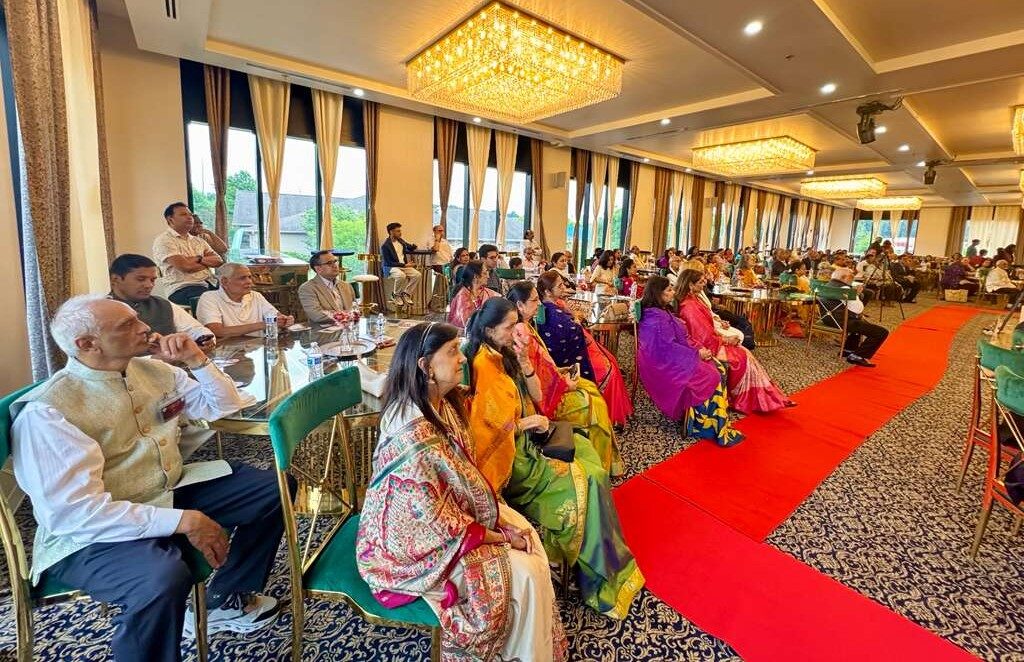
Responding to NRI Pulse questions about the inspiration behind the project, Sri Madhusudan Sai explained that the initiative emerged during the COVID-19 pandemic, when the organization witnessed firsthand the urgent lack of accessible healthcare infrastructure, especially in rural regions.
“We realized that even if you build hospitals, there are not enough healthcare professionals willing to work in rural areas,” he said.
That realization eventually led to the creation of what he described as the world’s first completely free medical college, where students receive medical education at no cost in exchange for serving underserved communities after graduation.
He also emphasized that the hospital was built through contributions from supporters across more than 35 countries and is intended to serve patients globally, not only those in India.
“This hospital is open for the whole world,” he said. “Healthcare should be available to all when they need it the most.”
Addressing healthcare systems globally, he noted that both long public waitlists and prohibitively expensive private care leave many vulnerable people without timely treatment.
“The whole world helped us build this hospital,” he said. “The hospital also ought to serve the whole world. That is the idea behind One World, One Family.”
The proposed 600-bed teaching hospital emerged as one of the evening’s central focal points.
The hospital, envisioned as a large-scale multi-specialty institution, is expected to combine advanced medical technology, education, research, and charitable healthcare under one umbrella. Organizers described it as part of a larger vision to build systems where high-quality healthcare is available universally and free of financial barriers.
As the evening concluded over dinner and informal conversations, many attendees lingered in discussion about how such service-oriented models could influence communities far beyond India. Conversations returned repeatedly to the themes that had framed the evening from the outset: gratitude, responsibility, and the belief that meaningful change begins when compassion moves beyond sentiment and becomes action.
More information about the initiatives discussed during the event can be found through Sri Madhusudan Sai Global Humanitarian Mission and Education For All.
