





BY VEENA RAO
Atlanta, GA, August 5, 2026 – Describing the Indian diaspora as the enduring “thread” that binds India and the United States, India’s Ambassador to the United States, Vinay Mohan Kwatra, outlined a vision of “one rise, two flourishes, and one thread” during a community reception held at the Aashiyana Banquet Hall in Atlanta on August 2. Speaking before about 200 members of the Indian-American community, Ambassador Kwatra praised the pioneering generation of immigrants, highlighted India’s transformation over the past decade, and credited the diaspora with helping shape one of the world’s strongest strategic partnerships.
The reception marked the beginning of Kwatra’s August 2–4 visit to Atlanta, during which he met Georgia Governor Brian Kemp, participated in an education roundtable with university leaders, and addressed business executives to advance the India–U.S. Comprehensive Global Strategic Partnership.
Beginning his remarks by recognizing the elders in the audience, Kwatra said they had served as the original anchors of the Indian diaspora in the United States.
Recounting his first visit to Atlanta in 2010, when his son enrolled at Georgia Tech, he shared how Subash and Raj Razdan welcomed his family and helped ease the anxieties of sending a child to college in a new country.
“For the first time, I realized… what it means to have ‘a home away from home,'” he said, recalling how the couple welcomed complete strangers and cared for his son during his years in Atlanta.
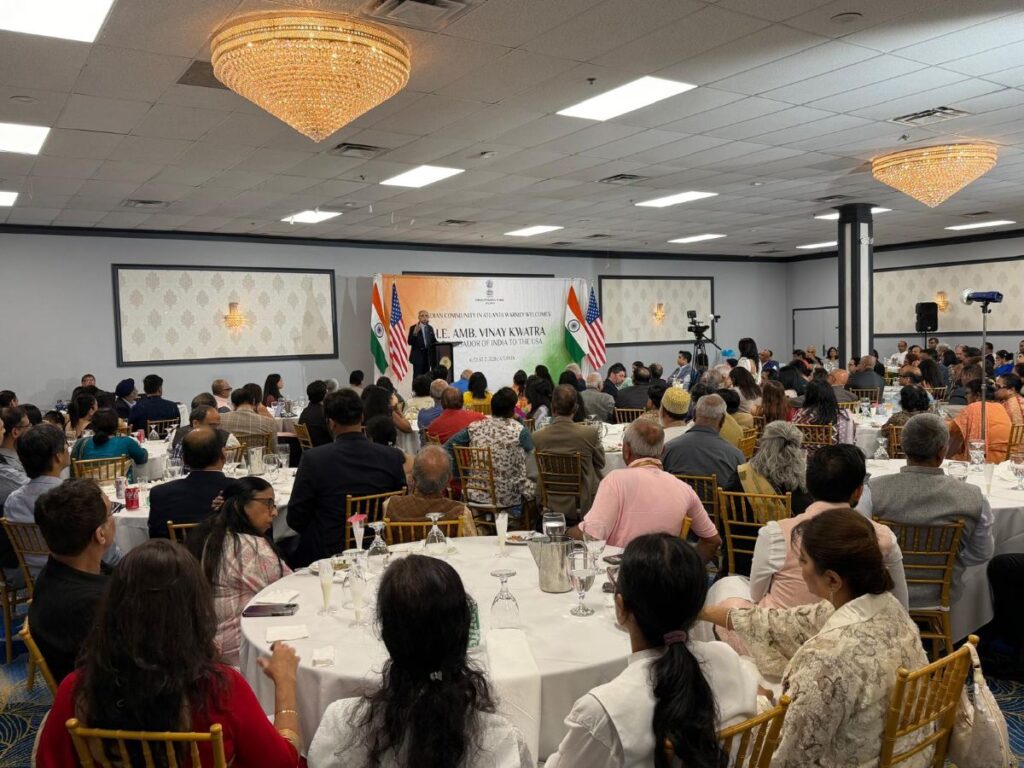
Kwatra described the evolution of the Indian-American community as the “first rise,” paying tribute to those who arrived in the 1960s and 1970s, built successful lives, and preserved Indian values and culture while contributing to their adopted homeland.
“The net result of that today is… the larger metro Atlanta area has about roughly 130,000 to 140,000 people of the Indian community,” he said, noting that Indian Americans have distinguished themselves across business, medicine, engineering, law, public life, philanthropy, and community service.
He said the community’s next responsibility was to pass those values on to future generations.
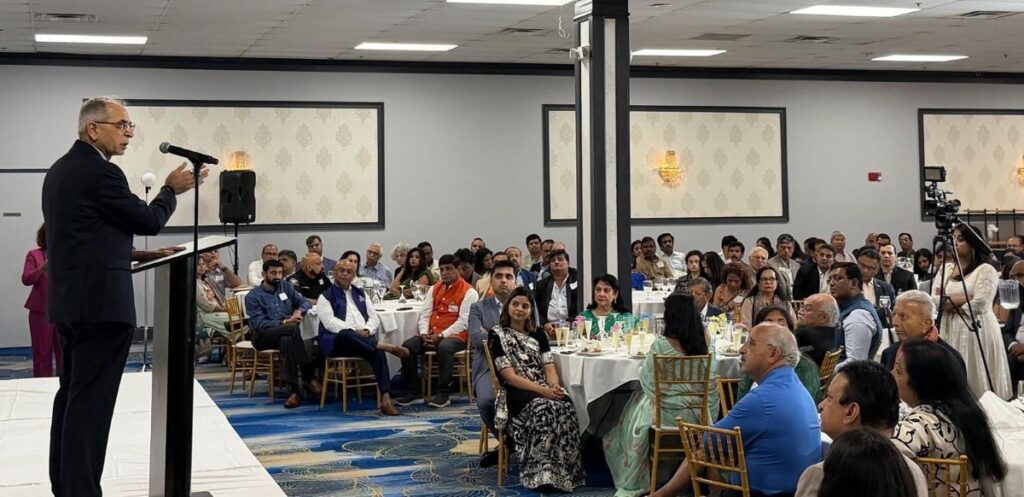
“How does the transference of these values, the transfer of these cultural strengths, the civilization of India, take place from the ones who brought it, to the ones who now have to assimilate it and build on it?” he asked.
Turning to what he called the “two flourishes,” Kwatra spoke first about India’s transformation and then about the resulting expansion of the India–U.S. partnership.
“It is very crucial for us to understand what is happening in India,” he said, describing the changes he has witnessed firsthand since 2014.
Calling transparent governance “the most fundamental change” in the country, he cited India’s digital public infrastructure—including Aadhaar and UPI—as examples of technology improving both efficiency and accountability.
“When people talk of UPI or Aadhaar, these are, of course, technology revolutions in themselves… but they are also equally drivers of transparency,” he said.
Kwatra also highlighted financial inclusion through the Jan Dhan-Aadhaar-Mobile (JAM) initiative, expanded access to credit, infrastructure development, manufacturing growth, and the goal of making India a developed nation by 2047. The flourishing of India, he said, had in turn enabled the flourishing of the India–U.S. relationship.
Reflecting on his own experience in government, he said many proposals that once seemed ambitious had become reality as bilateral cooperation expanded across defense, technology, manufacturing, supply chains, trade, and investment. He noted that bilateral trade had grown from roughly $70–80 billion during his previous posting in Washington to about $240 billion today, with both countries working toward a target of $500 billion by the end of the decade.
In the final part of his address, Kwatra spoke of the “one thread” that ties everything together—the Indian diaspora itself.
“The most important thread, besides the policies of the Government of India… is the thread of your contribution to the relationship,” he said. “I think that’s a permanent thread.”
Describing Indian Americans as “roughly 130,000 to 140,000 Indian ambassadors” in Georgia, he said the community had provided an enduring foundation for bilateral relations.
“You are not only real ambassadors around the communities in which you live… you have provided an anchorage to the relationship which is unshaken,” he said.
Expressing his gratitude on behalf of the Government of India, Kwatra thanked the community for strengthening ties between the two countries.
“You have been the most wonderful partner—not just in your own journeys… but also in the journey of our country, and the journey of the relationship between those countries,” he said.
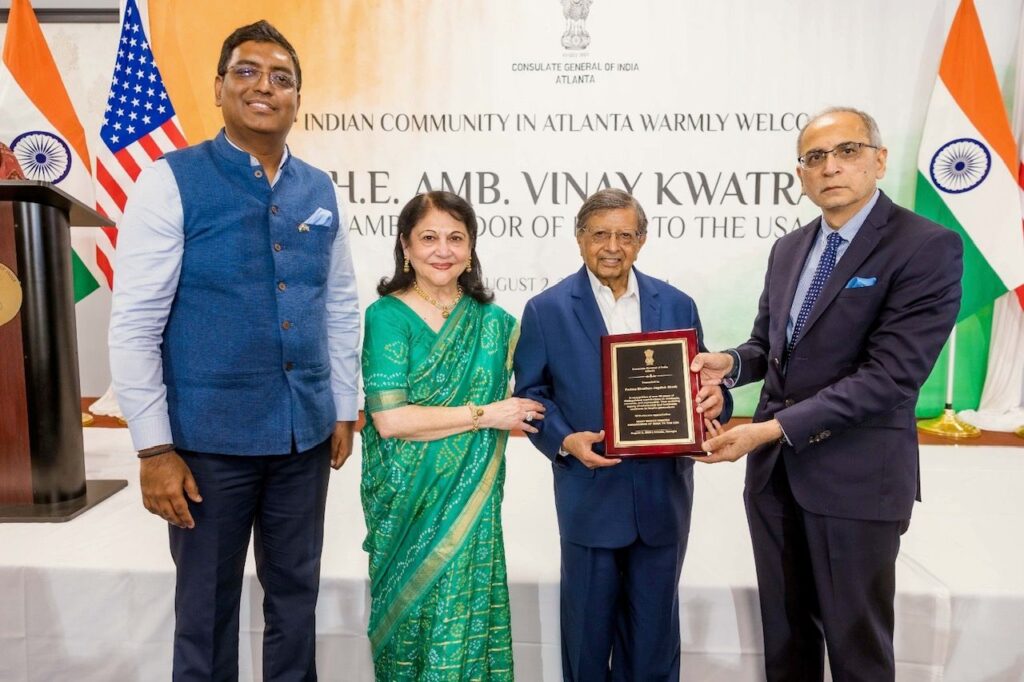
The evening also included a special felicitation for Padma Bhushan awardee and internationally renowned marketing scholar Dr. Jagdish Sheth, recognizing his more than six decades of contributions to academia and his role in strengthening intellectual and people-to-people ties between India and the United States.
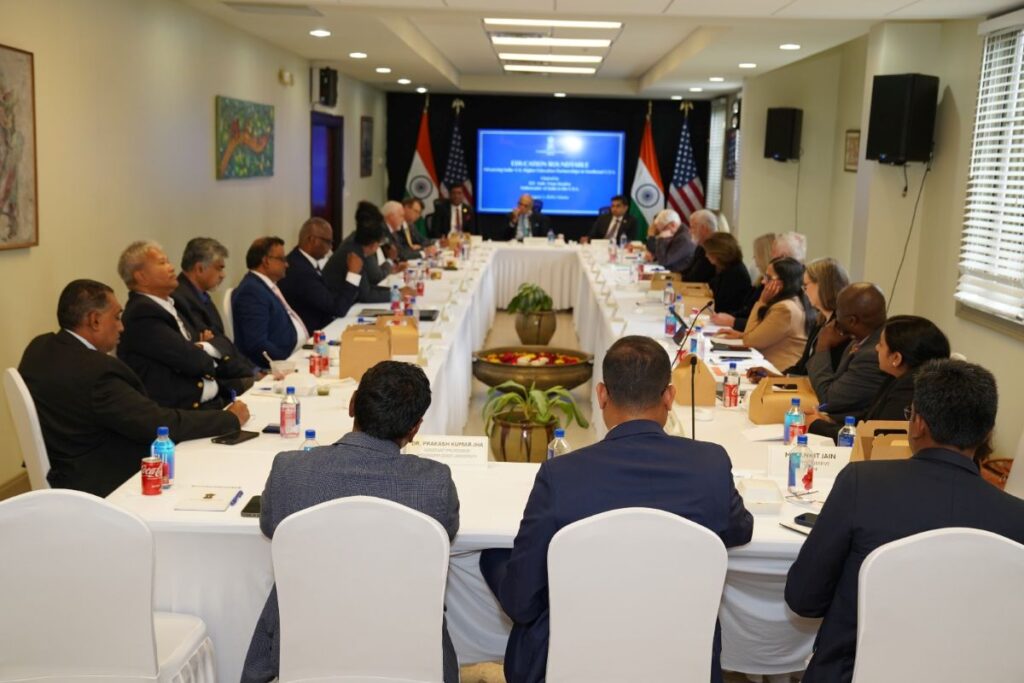
On August 3, the Consulate General of India in Atlanta hosted an Education Roundtable attended by leaders from nearly 20 universities across the southeastern United States, including Georgia Tech, Emory University, Vanderbilt University, and the University of Florida. In his keynote address, Kwatra highlighted opportunities to expand collaboration through joint research, faculty and student exchanges, dual-degree programs, innovation partnerships, and study abroad initiatives. He also invited leading U.S. universities to explore opportunities under India’s National Education Policy (NEP) 2020, including establishing campuses and strengthening partnerships with Indian institutions.
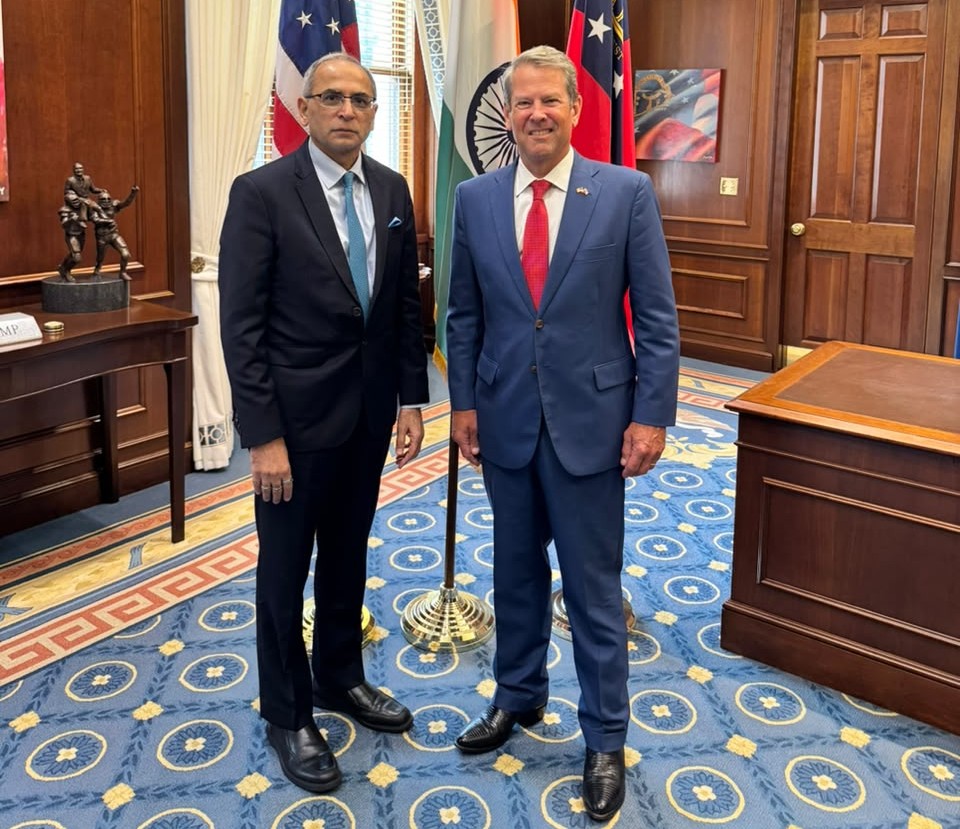
During the visit, Kwatra also met Georgia Governor Brian Kemp, congratulating him on Georgia’s sustained economic growth and thanking him for his continued support of the state’s vibrant Indian-American community.
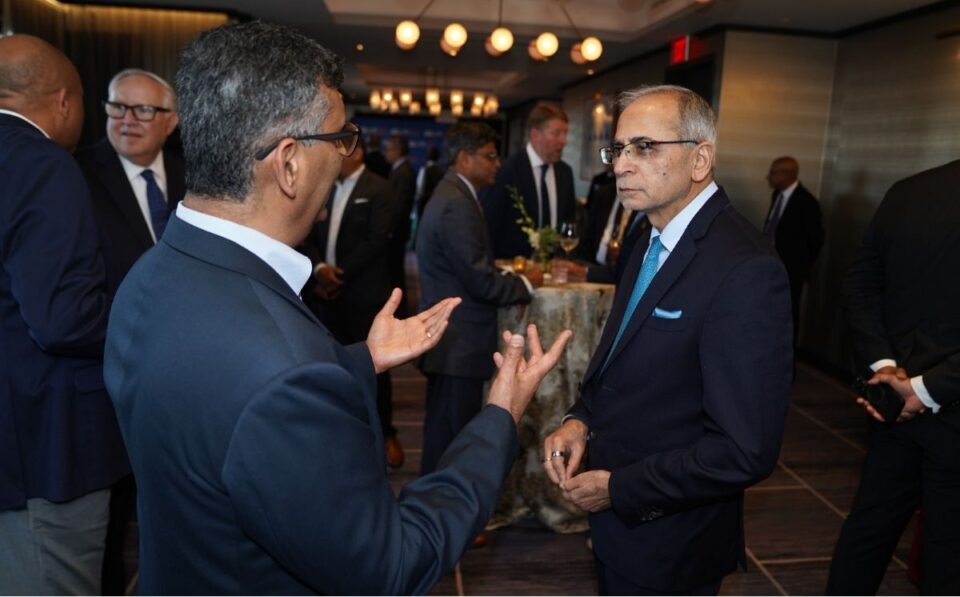
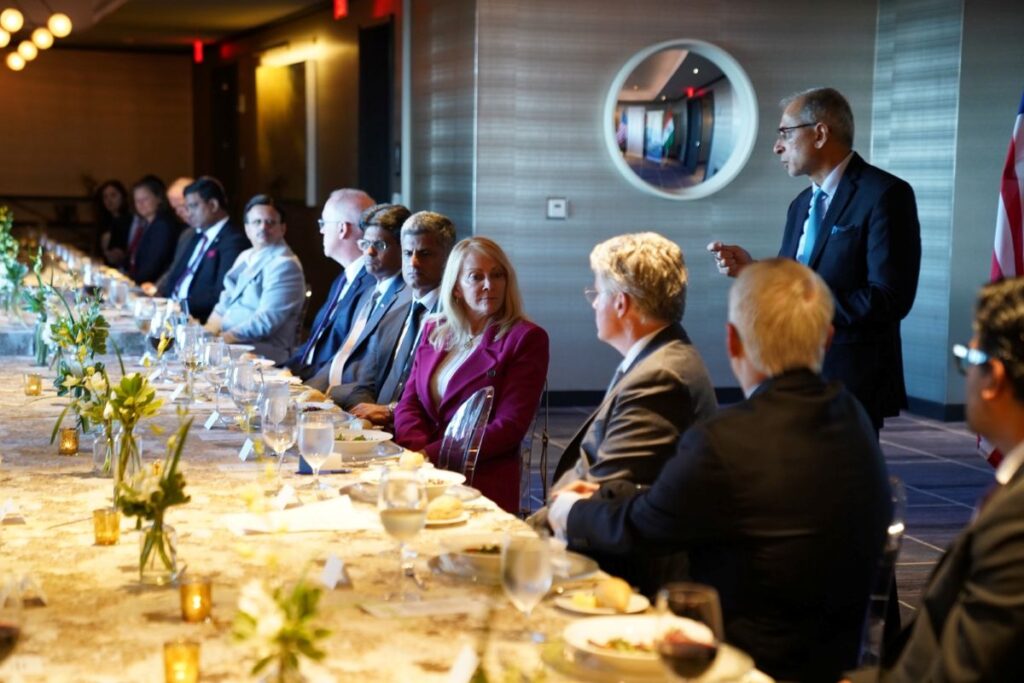
The U.S.-India Strategic Partnership Forum (USISPF), in partnership with the Consulate General of India, hosted a business reception attended by more than 35 senior executives representing leading companies from across the Southeast, including Atlanta-headquartered Fortune 500 firms such as The Home Depot, UPS, Delta Air Lines, The Coca-Cola Company, AGCO, Global Payments, Graphic Packaging International, and Intercontinental Exchange. Addressing the gathering, Kwatra highlighted India’s economic transformation and opportunities in manufacturing, innovation, digital technologies, and advanced industries, while emphasizing that the southeastern United States is well positioned to help achieve the shared goal of $500 billion in bilateral trade.
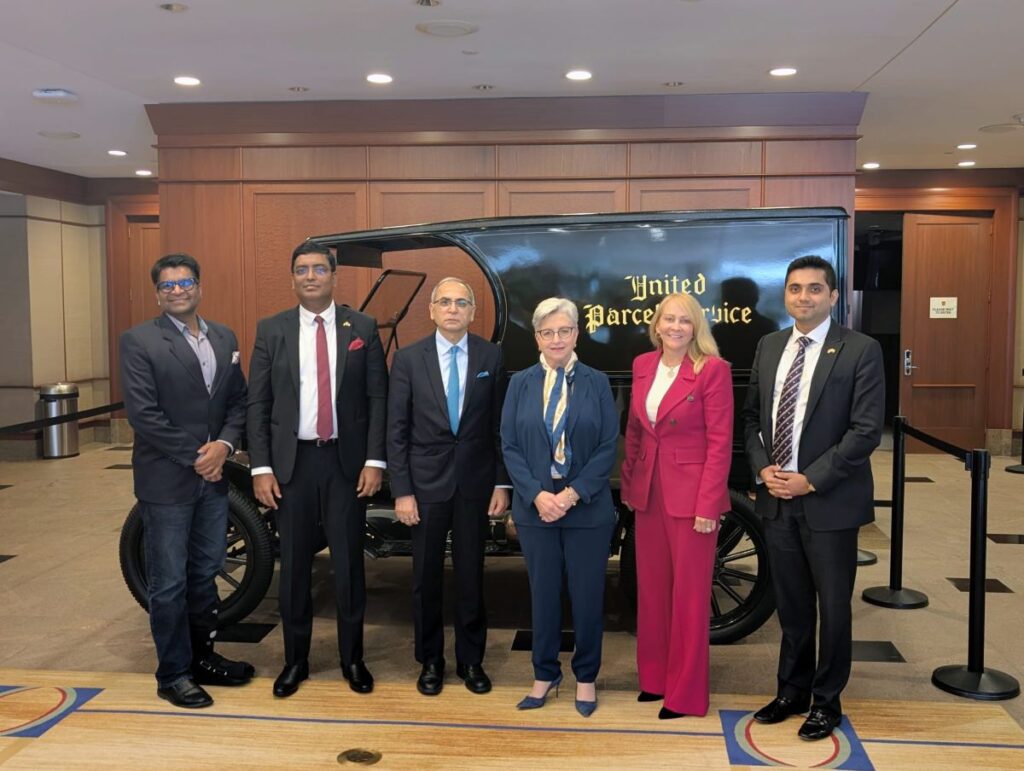
The visit highlighted the growing importance of the southeastern United States in the India–U.S. partnership and reinforced cooperation in education, trade and investment, innovation, and people-to-people ties.
