




BY VEENA RAO
The hospitality solutions company unveils a 30,000-square-foot Experience Center in Norcross, showcasing 24 years of innovation, enterprise, and relationship-building.
Atlanta, GA, November 13, 2026: Forty gallons of homemade chai, a pedal rickshaw shipped from India and a mascot dressed in a turban and dhoti helped an Atlanta-area entrepreneur turn a bathroom vanity business into a recognizable name in the American hospitality industry.
Fourteen years later, the chai is still flowing, but the business has undergone a remarkable transformation.
ApneWala Hotel Supply, formerly known as Vanity Wala, is set to formally open its sprawling, 30,000-square-foot Experience Center in Norcross on November 15, marking a significant milestone in the company’s 24-year entrepreneurial journey.
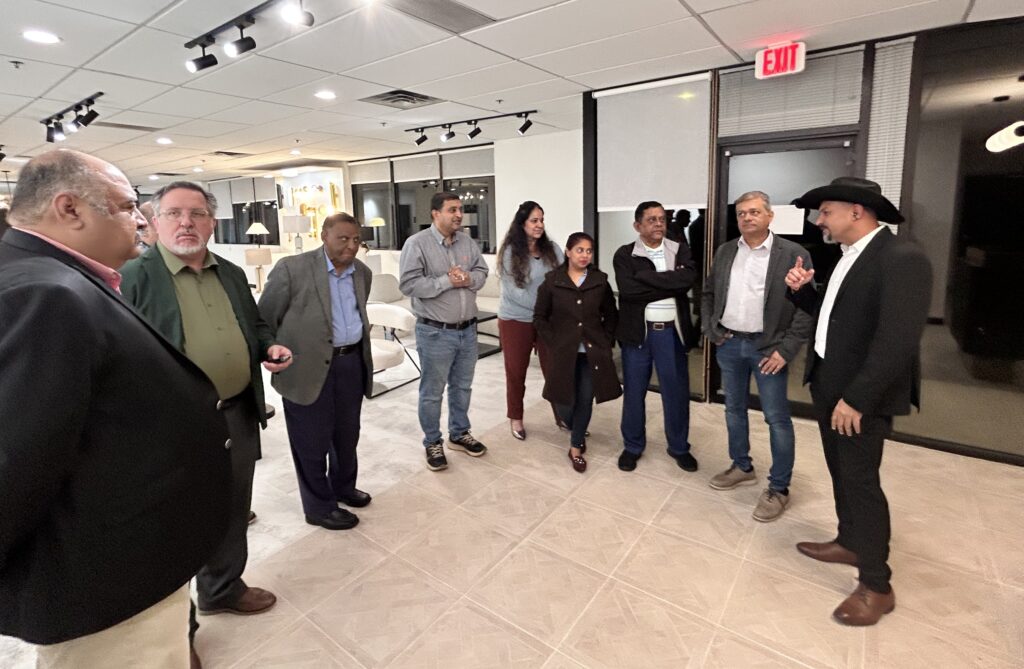
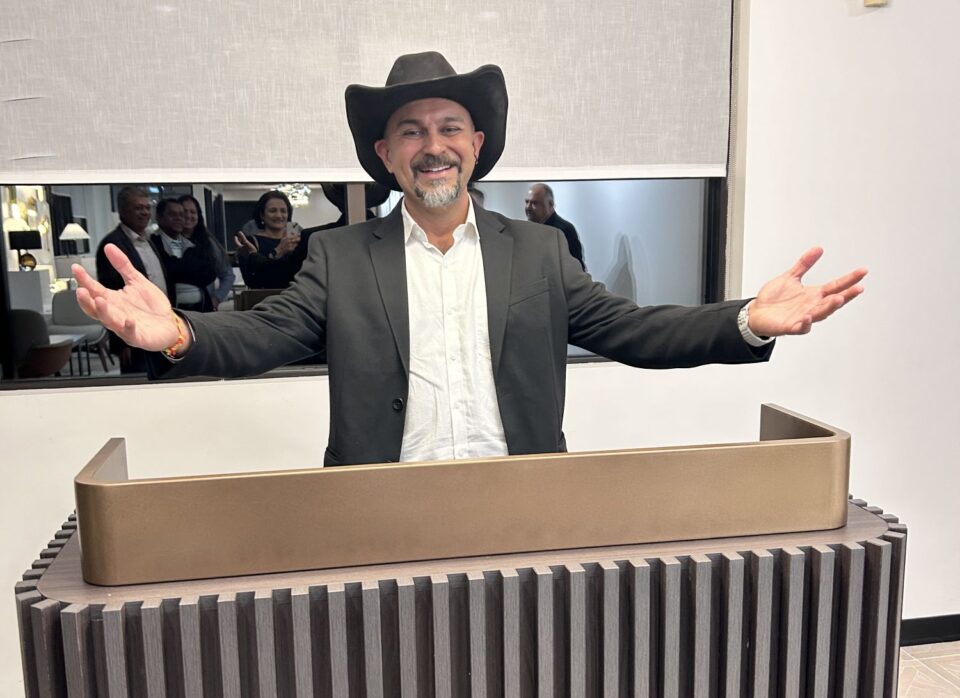
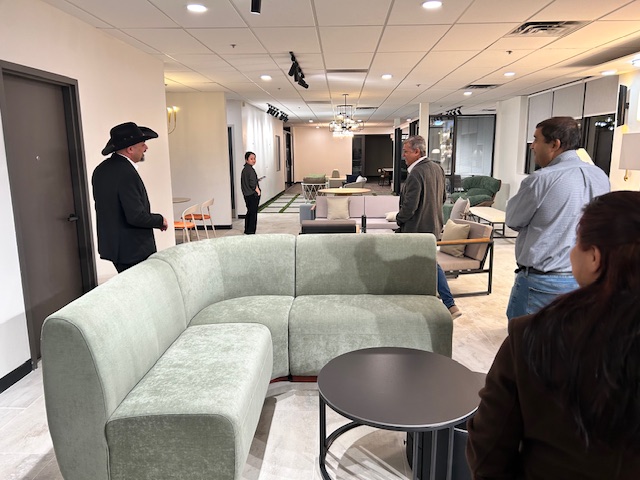
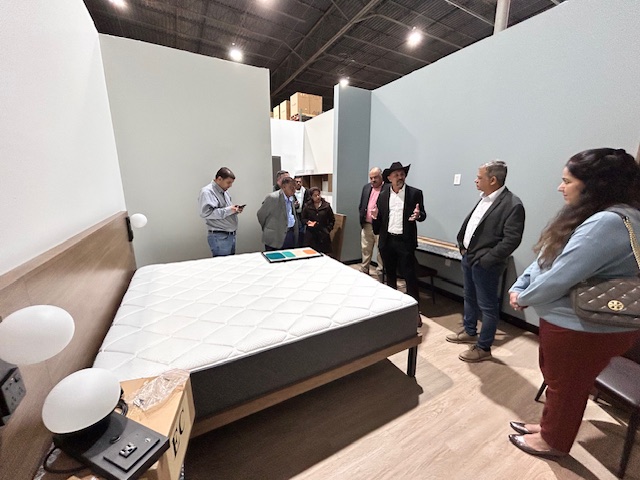
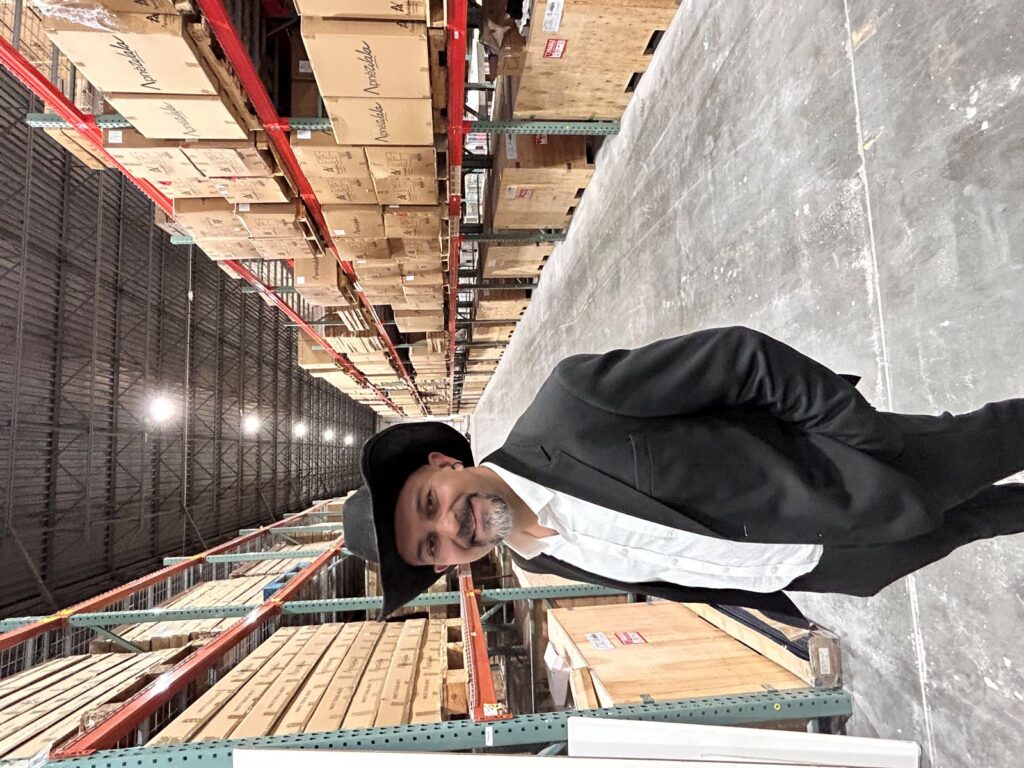
At an exclusive media sneak peek on Thursday, November 12, founder and Executive Vice President Ritesh Desai walked members of the Atlanta media through the facility, which includes a massive warehouse and six hotel room prototypes representing popular hotel brands.
From the flooring beneath one’s feet to the lighting overhead, the furniture, bathroom fixtures, cabinetry, windows and outdoor furnishings, virtually everything on display is available for purchase and can be customized.
The idea is to move beyond conventional catalogs and product samples, allowing hotel owners, developers, architects and designers to experience products in realistic settings, explore design possibilities and make informed purchasing decisions.
“You can touch it, you can feel it, you can ask for changes, you can seek inspiration,” Desai said.
The story of how ApneWala got here is as much about recognizing opportunities and building relationships as it is about selling products.
The company began in 2002 as Eshco International, a name derived from the common syllable in the names of Desai and his brother, Rinkesh. In its early years, the company explored various business opportunities without a specific focus on hospitality.
A consulting assignment for RaceTrac Corporation around 2009-2010 proved to be a turning point. The company had approached Desai for help in positioning itself as the brand of choice among Indian American gas station operators.
The experience prompted him to ask a simple question: What other businesses was his community heavily involved in?
The answer was hotels.
Eshco was already supplying stone and other products to some hotel owners, but Desai recognized an opportunity to focus on the hospitality sector, where he believed there was a need for greater attention to detail and customer service.
The name Vanity Wala emerged from an informal conversation. Desai had asked a customer how he referred to the company when recommending it to friends. The customer recalled telling someone about his positive experience purchasing bathroom vanities and countertops from Desai.
The other hotelier had responded, “Make sure you give me the name of that vanity wala.”
For Desai, it was an aha moment.
Armed with a new brand identity, the company made an ambitious debut at the Asian American Hotel Owners Association (AAHOA) convention in Atlanta in 2012, coinciding with its 10th anniversary.
Desai wanted to do something different from the hundreds of other exhibitors vying for the attention of hotel owners.
He hired 20 promotional models who circulated throughout the exhibition floor, brought in a pedal rickshaw from India and introduced a traditionally dressed Indian mascot. Visitors received Vanity Wala stickers and VIP badges and posed for photographs.
But perhaps the biggest draw was the homemade chai prepared by Desai’s wife Sheetal, an attorney.
Over two days, the visitors went through over 40 gallons of chai.
According to Desai, more than 3,200 people visited the Vanity Wala booth over an 11-hour period, an extraordinary turnout at a trade show where many exhibitors would have been delighted with a hundred visitors.
The brand had arrived.
As the company’s reputation grew, so did the demands of its customers. Hotel owners who had purchased bathroom vanities began asking whether the company could also supply cabinets, flooring and other products.
As Desai gradually expanded the business, the company strengthened its global procurement and production capabilities, headed by Lorna Zhang.
Today, bathroom vanities account for only about 3 percent of the company’s business, Desai said.
The company now offers comprehensive hospitality solutions, working with hotel brands, architects, designers, procurement companies, general contractors and property owners. Its services extend to interior design, customized manufacturing and helping hotel brands implement and maintain their design standards.
Central to that expansion has been the development of a diversified international supply chain, a strategy Desai credits, interestingly enough, to Swedish furniture giant IKEA.
After learning that IKEA was distributing its manufacturing operations across multiple countries, Desai realized the importance of reducing dependence on any single manufacturing location.
Zhang began traveling across countries, identifying manufacturing partners and establishing quality assurance processes that could be replicated across factories.
ApneWala now sources products from several countries, including China, Malaysia, Vietnam, Thailand, the Philippines, Cambodia and Mexico. It also has an office in Noida, India.
The strategy, Desai explained, enables the company to navigate disruptions in individual markets while maintaining consistency in product quality.
The media preview was also an opportunity for Desai to introduce members of his international team and acknowledge their contributions to the company’s growth.
“Companies don’t grow by themselves. I can claim whatever credit I want, but truth be told, it’s not me. It’s them. We stand on their shoulders,” he said.
As the company expanded beyond vanities, its original name no longer reflected the breadth of its offerings. But Desai wanted the new identity to convey something more than the range of products it sold.
ApneWala, a name that evokes a sense of belonging and familiarity, emerged from the relationships the company had built over the years.
Desai said customers knew they could call him even at two in the morning if they had a problem. He wanted that same sense of belonging to extend to everyone who interacted with the company, from customers and employees to truck drivers and delivery personnel.
“Once you become a part of the ApneWala ecosystem, you’re part of us,” he said.
That philosophy finds expression in the new Experience Center, where the emphasis is as much on interaction as it is on merchandise.
During the tour, Desai demonstrated several products that reflected his engineering background and the company’s focus on solving everyday problems.
Among them was an innovative faucet installation mechanism designed to eliminate the cumbersome process of working underneath a sink. With a simple locking and turning action, the faucet could be secured in seconds.
He also showcased customizable windows, including impact-resistant options and energy-efficient designs that incorporate thermal break technology to reduce heat transfer through metal frames.
The company’s emphasis on innovation extends beyond physical products.
ApneWala has developed a procurement app designed specifically for owners and operators of multiple hotel properties. The platform allows hotel general managers to place orders, which can then be reviewed, modified and approved by authorized administrators.
More significantly, it enables owners to analyze purchasing patterns across their entire portfolio.
Desai offered the example of a hotel owner with 10 properties. If most of the hotels purchased between three and eight televisions over a six-month period, but one purchased 25, the owner could identify the discrepancy and investigate whether it was related to a renovation, inventory loss or some other factor.
The same analysis could be applied to everything from air-conditioning units to sheets and towels, giving owners greater oversight of their operational spending.
Amid all the technology, product displays and hotel prototypes, however, one corner of the Experience Center offers a particularly personal touch.
It is called the Chai Bar.
Visitors can sit down over a cup of masala chai, coffee, espresso or cappuccino, discuss their projects or simply take a break after exploring the facility.
It is a fitting tribute to the homemade chai that helped launch Vanity Wala into the hospitality industry in 2012.
At Thursday’s media sneak peek, media members also got a firsthand taste of the Desai family’s hospitality over a delicious dinner, where they met Desai’s parents and his wife, Sheetal.
As ApneWala prepares to celebrate its 25th anniversary next year, the new Experience Center brings together the many strands of its entrepreneurial journey — an engineer’s attention to detail, an understanding of the Indian American hospitality industry, a global manufacturing network and a business philosophy rooted in relationships.
“This is 24 years in the making,” Desai said.
And through it all, there is still a cup of chai waiting for those who walk through the door.
