





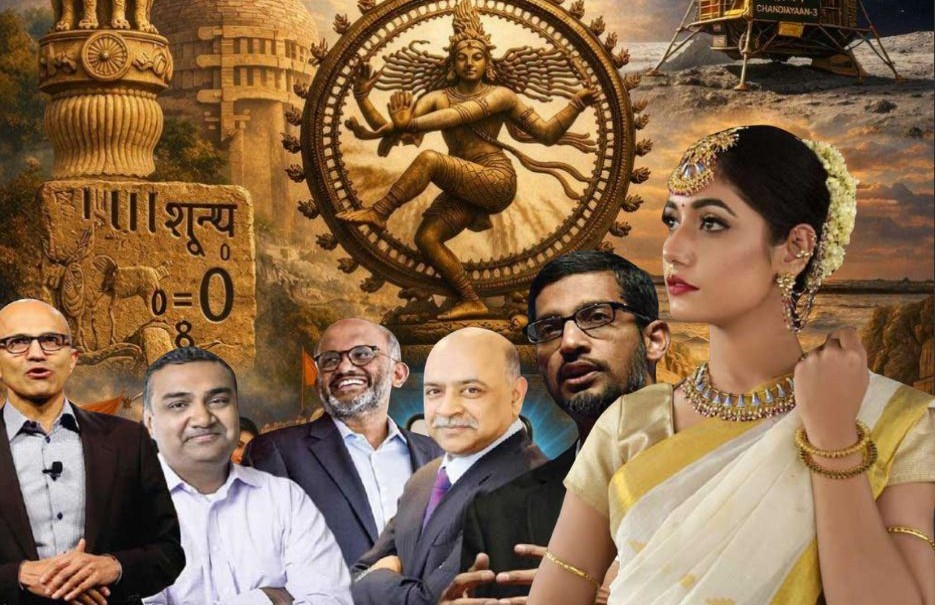
Atlanta, GA, May 14, 2026: For decades, Indian Americans have built temples, cultural associations, businesses, and professional networks across the United States, creating institutions that preserved faith, language, and community for future generations. Now, a growing group of Indian American professionals, scholars, entrepreneurs, physicians, and community leaders is working toward something even more ambitious—building permanent cultural institutions that tell India’s civilizational story to the world.
That vision has taken shape in the form of the India Heritage Center, a nonprofit initiative that aims to establish immersive cultural museums in Washington, D.C., Atlanta, and Memphis, where visitors can experience India’s journey across thousands of years through scholarship, technology, and storytelling.
Leading the effort is Dr. Amitabh Sharma, an Atlanta-based entrepreneur and educator who traces the origins of the project back nearly eight years, to a conversation with Dinesh Paliwal, the former Chairman and CEO of Harman International and a veteran executive who had spent over two decades with ABB.
According to Sharma, Paliwal spoke about several areas where India needed global leadership—renewable energy, infrastructure, research and development—but also raised another concern: India’s civilizational history was not being presented in a meaningful way to global audiences.
Sharma recalled visiting museums in India and finding that many focused heavily on artifacts but not enough on India’s broader intellectual and cultural journey.
That conversation stayed with him.
“It touched my heart,” Sharma said, explaining why he began exploring the idea of creating a museum dedicated not simply to Indian artifacts, but to the story of Indian civilization itself.
What began as a conversation eventually evolved into years of planning.
Sharma said teams in Atlanta, Washington, D.C., and India spent over six years researching historical data, consulting scholars, and collecting material dating back thousands of years—from the Indus Valley civilization to modern India’s technological achievements.
He said the team then spent another year and a half cross-checking the content with historians and cultural institutions including the Indian Council of Historical Research (ICHR) and the Indian Council for Cultural Relations (ICCR).
Among those who helped validate aspects of the historical content were Sachchidanand Joshi of the Indira Gandhi National Centre for the Arts and noted scholar Professor Kapil Kumar, who served as chief historian for six museums developed in India, including the Red Fort museums in New Delhi, the Jallianwala Bagh museum in Amritsar, and Icons from the Soil of Bengal at the National Library in Kolkata.
“We didn’t want to put anything that was not validated,” Sharma said.
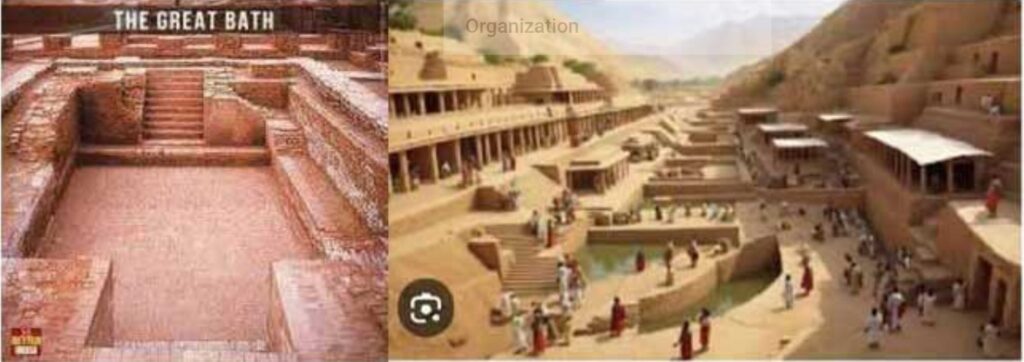
The research, he said, covered India’s civilizational history stretching back thousands of years, including ancient archaeological and cultural sites such as Dholavira, Harappa, Rakhigarhi, and Mohenjo-daro.
Sharma said the initiative has drawn support and guidance from several respected Indian American leaders, including Atlanta-based marketing scholar Jagdish Sheth, along with former World Bank official Mohinder Gulati, physician Suresh Gupta, and entrepreneur and community leader Rajesh Gooty.
Among a growing list of enthusiastic local and outstation volunteer supporters, Sharma lists Paddy Sharma, Rakesh Luthra, SaiKumar, Vijai G, PrakashRao Velagapudi, Purshattam Tandu, Chandler Sharma, Rajeev Menon, Kirtan Patel, Dr. Stephen Knapp, Subhash Kak, Arun Anand, Lalit Jha, Surinder Dhar and others.
Washington, D.C., remains central because of its visibility and symbolic importance.
Sharma said the team is exploring a downtown location in the nation’s capital, where the museum could reach lawmakers, diplomats, educators, students, and millions of annual visitors.
According to project materials, organizers envision a 20,000-square-foot facility with:
- Ten immersive galleries
- A 350-seat auditorium
- Library and educational spaces
- Café and bookstore
- Event and cultural programming areas.
Atlanta serves as the project’s operational base. The organization recently secured 501(c)(3) nonprofit status in Georgia, a milestone Sharma described as critical for fundraising and credibility.
“We got the 501(c)(3) in January,” Sharma said, noting that the approval came unusually quickly.
Memphis entered the conversation after supporters there expressed interest in hosting part of the initiative.
Sharma said the team had been offered land by philanthropists in the region, opening the possibility of building in the South beyond Georgia.
According to project documents, the estimated budget for the museum initiative is between $12 million and $14 million.
If built, the India Heritage Center would be unlike traditional museums, Sharma said. “We are creating a 3D teaser right now,” he added.
The museum is envisioned as an immersive experience featuring ten galleries that would take visitors on a journey through India’s evolution—from ancient civilization and knowledge systems to modern India’s achievements in science, medicine, technology, and entrepreneurship.
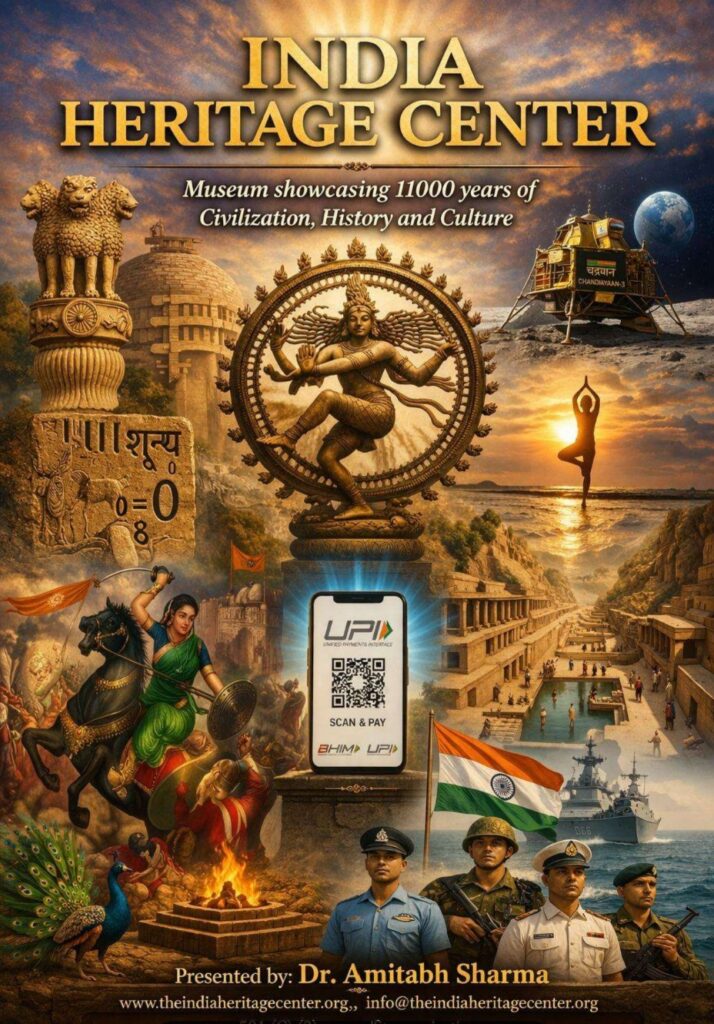
Project materials show exhibits focused on:
- Ancient civilizations including Dholavira, Harappa, and Mohenjo-daro
- Sanskrit, Tamil, and India’s linguistic traditions
- Yoga, meditation, and Ayurveda
- Ancient education systems
- India’s kings and queens
- Colonial invasions and resistance
- The independence movement
- Modern India’s achievements in technology, digital payments, and space exploration.
Sharma said visitors would experience the journey through virtual reality, augmented reality, immersive audio-visual presentations, murals, and interactive displays.
“You can travel through history,” he said.
One of the museum’s core goals is to challenge stereotypes about India. Sharma spoke about how many Americans still know little about India beyond clichés.
The museum, he said, would showcase India’s contributions to mathematics, surgery, navigation, linguistics, philosophy, chess, and modern digital innovation.
It is also intended to educate second-generation Indian Americans, many of whom, Sharma believes, have grown up disconnected from their deeper historical roots.
“Our children should know who we are,” he said.
Funding, Sharma said, will come from multiple sources. “We are looking at CSR, grants, high-net-worth individuals, and crowdfunding.” A digital donation portal is expected to go live soon.
As the interview drew to a close, Sharma returned to the message he had emphasized throughout the conversation—the India Heritage Center was never meant to belong to any one individual. “This is not my project or your project. This is the entire Indian American community’s project. Because we need to be able to make people understand what we truly are.”
“We welcome sincere volunteers to join this legacy-creating mission,” he added.
For Sharma and the growing network of supporters behind the initiative, the proposed centers in Washington, Atlanta, and Memphis represent more than museum spaces. They represent an effort to preserve a civilizational story, strengthen cultural identity, and ensure that future generations of Indian Americans—and mainstream America—better understand the depth, resilience, and contributions of one of the world’s oldest civilizations.
Visit the India Heritage Center for more information about the project.
