





BY SHIKHA DAS SHANKAR*
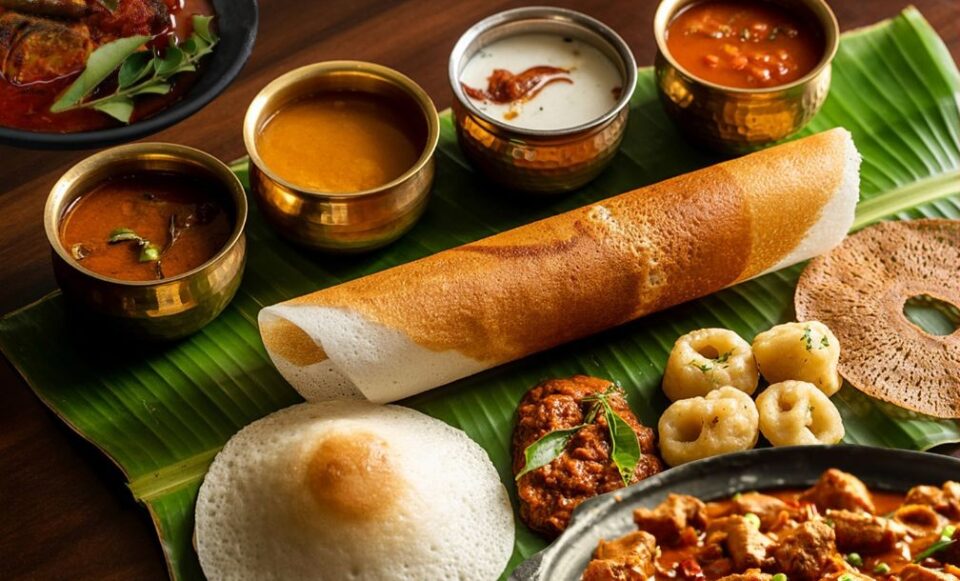
Ask an immigrant what nostalgia means and you will get an answer before they even speak. A tightness in the chest, a faraway look that says the question itself has already pulled them somewhere else. We prepared for the big losses like family, festivals, and the feeling of belonging. What we didn’t prepare for was the slow fading of what we once tasted, smelled, and felt. The sabziwala’s voice winding up the staircase. The way railway station chai tasted in a clay cup. The way your grandmother held your face in both hands and looked at you a moment too long. Food became the only thread connecting the life left behind to the one being built here. But for Metro Atlanta’s Indian diaspora, that thread was for a long time thin and unsatisfying. That is finally changing.
The Era That Was
For a long time, dining at an Indian restaurant in metro Atlanta meant settling for a muddled, generic version of a cuisine that is anything but. The complexity, regionality, and depth of flavors that make Indian food one of the most diverse in the world, had no place in the laminated menu. What made it onto the plate was simplified, toned-down dishes that were stripped of authentic flavors. North Indian food dominant and buffet lines looked identical. There were rows of overly sweetened butter chicken, saag with dense paneer, and dry garlic naan. A weekend spread might stretch to include a biryani, though no one was asking whether it was Kolkata or Hyderabadi.
In a February 2022 piece, food journalist and cookbook author Nandita Godbole traces the city’s first Indian restaurant to necessity rather than ambition. Sumitra and Ashok Bhattacharyya arrived in Atlanta in the late 1960s, and in 1973, Ashok converted a Cherokee Plaza pizza parlor into Calcutta, becoming the city’s first Indian restaurant.
By the 1990s, names like Haveli, Touch of India, Raja and Zyka began dotting the Atlanta landscape, each one giving the community hope that there was room for more. According to Ricky Walia, Co-founder and CEO of Walia Hospitality Group, “My father Jay Walia started an Indian restaurant in the early 1990s called Maharaja. The restaurant offered North Indian, Punjabi, Mughlai cuisine.” Not surprising as this was the only version of Indian food the city had encountered so far.
The Population that Changed Everything
The story of Indian food in Metro Atlanta is inseparable from the story of who arrived, and when. The 1990s tech boom didn’t just bring more Indians to Atlanta, it brought a far more diverse India. Before that wave, the community was largely Gujarati and Punjabi. With the opening of the H-1B visa pipeline, an unprecedented number of Indians entered the country, and Atlanta felt this change acutely.
According to the Indian American Experience, a report published by the Sociology Institute, engineers and IT professionals from Andhra Pradesh, Tamil Nadu, Karnataka, Kerala, and West Bengal arrived in large numbers, adding entirely new layers of regional and linguistic diversity to what had been a relatively uniform diaspora. As documented by the National Council on Public History in their piece “Atlanta: Immigrant Gateway of the Globalized South,” the city’s foreign-born population more than doubled in that decade alone, from 4% to 10%, and most of them settled northeast of Atlanta, into Gwinnett, Forsyth, Johns Creek, Alpharetta. These suburbs started reflecting the growing regional diversity within the Indian diaspora.
The newer wave of immigrants arriving in metro Atlanta was less willing to accept the existing Indian food norm. As the community expanded across Duluth, Alpharetta, Johns Creek, Suwanee, Forsyth, it also grew more vocal about what was missing.
People didn’t just want curry. They wanted Chettinad’s peppery heat and Andhra’s bold spice. They wanted Gujarati thalis, Bengali sweets and Jain street food, Indori poha on a Sunday morning, Rajasthani dal baati churma, Gongura mutton. The ask was no longer for something familiar. It was for something exact.
The Pioneers and Newcomers
Some restaurants from the 1990s continue to serve Atlanta without fanfare or marketing gimmicks. Zyka introduced Atlanta to Hyderabadi cooking in 1997 and hasn’t stopped. It is still drawing lines in Decatur and still serving the same Chicken 65 that made it a landmark.
The Madras restaurant family arrived that same year with Madras Cafe, which grew into Madras Saravana Bhavan and later, Madras Chettinaad. Narendra Patel, who started it all with that first cafe, now runs Madras Mantra restaurants in Decatur and Marietta, and has recently launched Madras Catering and Co., a large-scale catering operation serving weddings and special events. After thirty years in Atlanta’s Indian food story, he shows no signs of slowing down.
Vatica in Marietta has been serving a traditional Gujarati thali to a devoted following for over two decades. These restaurants didn’t wait for a trend. They simply cooked what their community needed and the community showed up.
The last five years is when the shift began. Atlanta’s Indian food scene is quietly growing into one of the most diverse in the South, and it shows.
At the street food end, the Michelin-recommended Chai Pani in Decatur has built a cult following by bringing Indian street food to a mainstream audience that didn’t know it was waiting for kale pakoras and pani puri. Its sister counter Botiwalla at Ponce City Market holds its own with wraps that have earned a loyal following.
In Alpharetta, Nalan Indian Cuisine has a reputation for its appams, kothu parotta, and an Ambur chicken biryani that reviewers keep coming back for. Blockbuster Cafe in Alpharetta has Bollywood on the walls, a kitchen offering dosas and festive specials, and an Irani chai that earns the drive.
For those who know what they’re looking for, Sri Krishna Vilas in Cumming has become a popular spot for authentic South Indian vegetarian cooking. Traditional Andhra tiffins, crisp dosas, soft uthappams are made the way they are supposed to be made out here.
Desi Chowrastha’s Suwanee location draws crowds for its sheer range of offerings, from live chaat and biryani to dosas, mandi, Irani chai, and much more.
Come to Chutneys (C2C), a 100% vegetarian South Indian spot, has already earned a devoted following. Known for Thatte Idli and Benne dosa, one reviewer says the variety of chutneys took them straight back to Chennai’s legendary Murugan Idli Shop, one of Tamil Nadu’s most iconic tiffin institutions. Alongside it, Chai Bisket Indian Eatery and the recently opened Hocco Indian Kitchen complete a belt that simply didn’t exist five years ago. In a high-traffic grocery store plaza, Rajni Indian Cuisine has quietly built a dedicated following, and the recently opened Srirangam next door which is already finding its feet. Two concepts in the same shopping plaza is proof that the right food will bring people back for more than one table.
The fusion tier is filling with restaurants like Jai Ho at Krog Street Market, Masti, NaanStop, Tandoori Pizza and Wing Co., Tabla, and Rasoi Fusion Indian Cuisine. These restaurants meet Atlanta’s broader appetite for Indian flavor without demanding initiation.
Atlanta’s Indian fine dining scene is having a moment as well. Miami-based Ghee Indian Kitchen recently brought unapologetic dishes like Kerala lamb curry and duck biryani to the city. Ikara, the newest arrival, goes further still. The restaurant offers a chef’s tasting menu built around six distinct regional cuisines from the states of Bihar, Kashmir, Goa, Rajasthan, Kerala, Himachal Pradesh. A menu that would have been unimaginable in Atlanta a decade ago.
Fine dining, street food, fast casual, regional specialities—Atlanta has been quietly building a serious Indian food story. And now, a restaurant veteran from the opposite coast has taken notice.
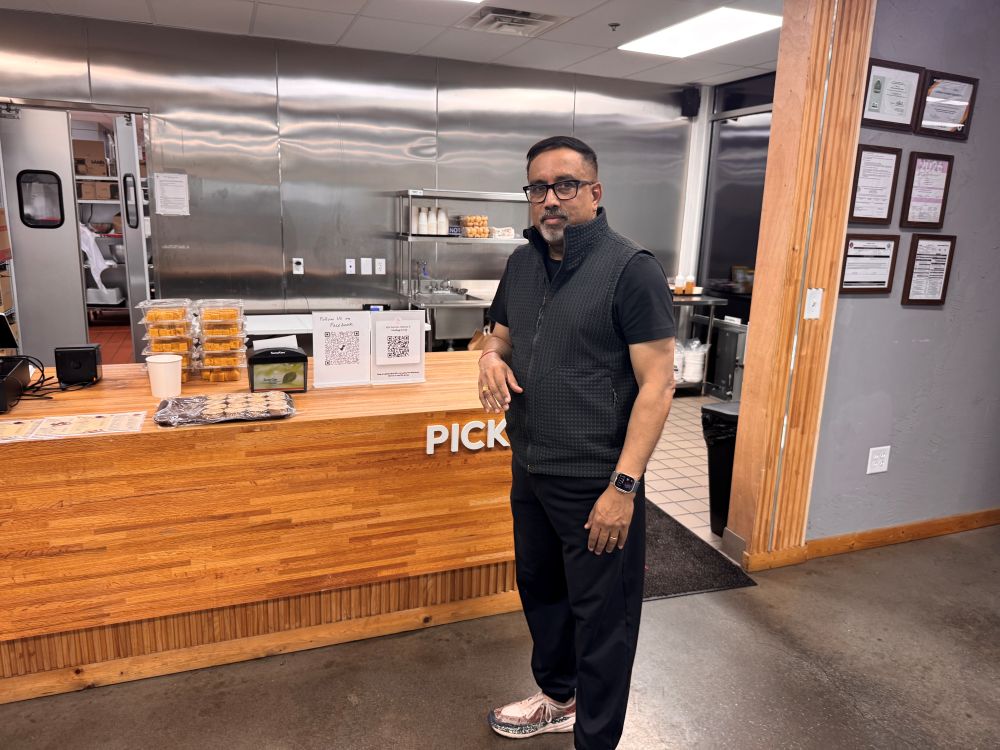
Jay Jayaraman did not set out to build an empire. He set out to feed people the way their mothers did. In 2008, he opened his first restaurant in the Bay Area named Mylapore Express, after the iconic Chennai neighborhood two kilometres from Marina Beach. Pure South Indian vegetarian with no onion, no garlic in almost everything on the menu.
Today, the Mylapore name consists of six Mylapore Express restaurants, seven Idly Express Restaurants, cloud kitchen, catering and several restaurant launches lined up.
When asked why, after all that success in the Bay Area, he chose Atlanta over other Indian-community-heavy cities like Houston, Dallas or Chicago, Jay does not talk about demographics or market research. He tells a story about a pickle. The pickle in question called Maavadu, made from tender baby mango, is a delicacy specific to Tamil Nadu.
Jay had posted on social media that he was stocking it. Anuradha Ganesh, an Atlanta-based community resident who had visited his Bay Area restaurant years earlier and couldn’t forget the food, reached out. She wanted some but the shipping costs made it impractical. She offered to collect local orders and have it shipped directly. Jay said go for it.
Within one hour, she had sold fifty packets. The next day, a hundred more. By the time it was over, around 600 packets of these specialty pickles had moved across the Atlanta area. Jay says this number was comparable to what he sells across the entire Bay Area.
“You have to read between the lines,” Jay says. “If there is a demand for this kind of pickle here, the audience I’m particularly looking for are out here.” Not a market study. Not a demographic report. A demand for a rare pickle and his gut feeling made him decide Atlanta is where he will spread his wings.
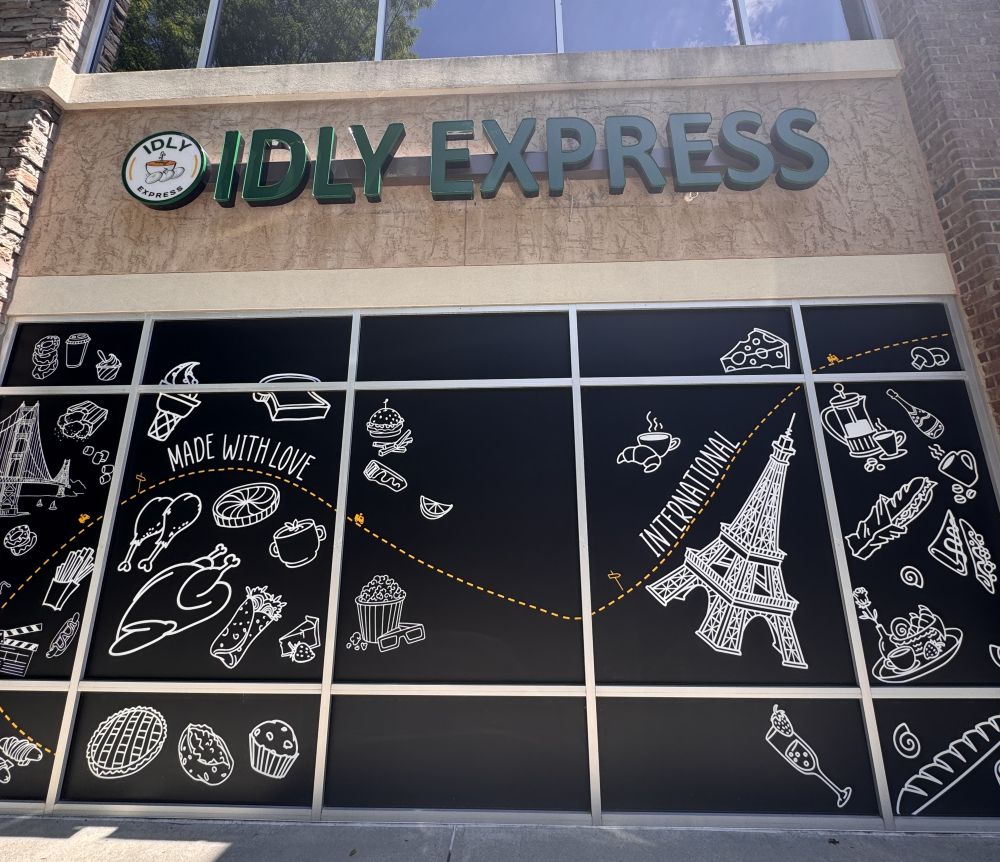
With Idly Express already running in Suwanee and the first Mylapore Express in Alpharetta on the horizon, he is already planning three more locations. He takes quiet pride in what sets him apart from the crowd. “Every restaurant here has that Andhra twist to it. Onion, garlic, onion, garlic everywhere. Show me one restaurant that offers satvik khana.”
Established names in the Atlanta area are also confident enough to venture into something new. After years of building bridges between Indian flavors and American comfort through Masti Indian Eatery, and offering Punjabi and Mughlai food at Café Bombay, Ricky Walia is now exploring something more specific. “We are looking into something more coastal,” he says. “Along the lines of Goan cuisine.” For a family that began with butter chicken and palak paneer in the early 1990s that single sentence captures how far Atlanta’s Indian food conversation has traveled.
Not everyone needed a business case to act. Some simply followed their hunger.
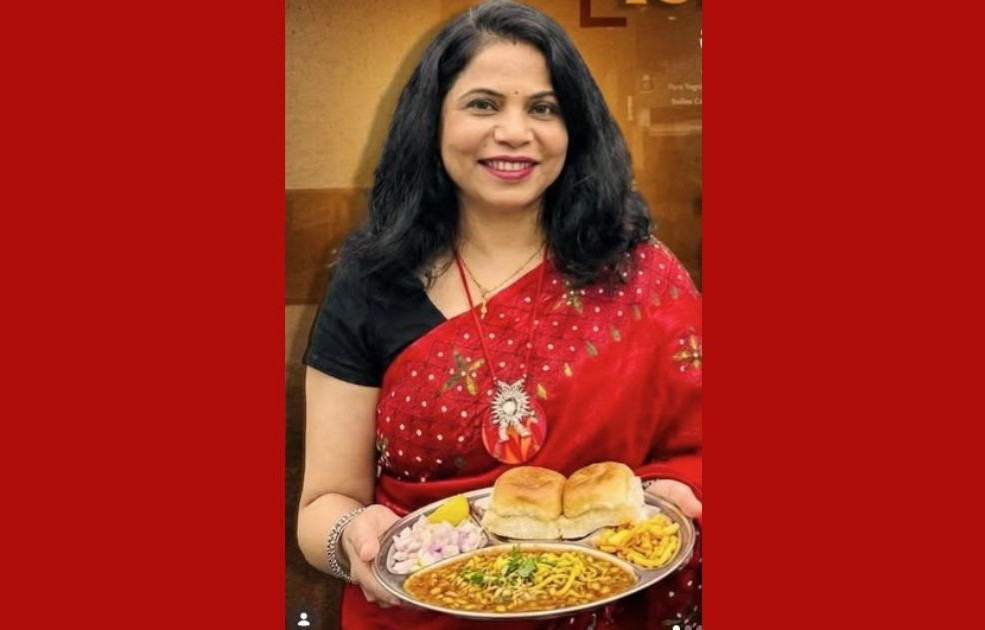
For Deepti Joshi, owner of MH15 restaurant, it started with a craving she and her husband couldn’t satisfy. A paramedic and hospital management professional from Mumbai who moved to Atlanta over a decade ago. For years, she and her husband talked about starting a business. The idea that finally stuck was the simplest one that involved food. They couldn’t find a vada pav that tasted like “theirs.” So, they set out to create one for others to enjoy as well.
“We wanted the same taste — that hamara vada pav,” she says. “There was no one who could make that. So we started with this small idea of gathering people together just on the basis of vada pav. And this is how we ended up opening MH15.” MH15 is one of Atlanta’s very few Maharashtrian restaurants. She makes the pav herself, in-house, 100% vegetarian, and the masala for her vada pav and misal are not bought off a shelf.
But it is her misal that tells the deeper story of what authentic really means. The masala for her misal and vada pav are not bought off a shelf. Deepti sources her ingredients from local markets in Pune and has them ground to her exact proportions by women-run small businesses also known as laghu udyog or small cottage enterprises. Each masala recipe was developed by Deepti herself, through rounds of back-and-forth testing until every proportion was exactly right.
The Honest Question
Atlanta’s Indian food story is undeniably changing. New restaurants are opening, regional cuisines are finding their footing, and the diaspora is asking for something from a specific city or region rather than a general idea of India. But scratching beneath the surface, how deep does that change really go?
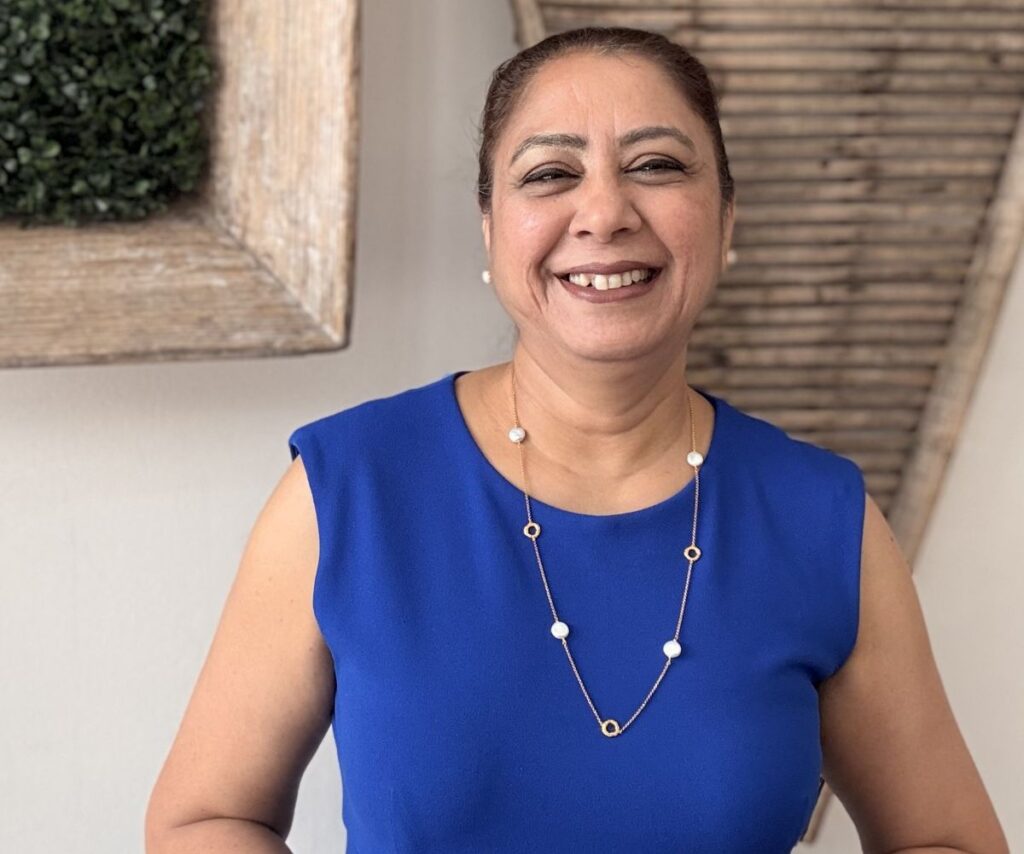
Nandita Godbole has been watching Atlanta’s Indian food scene for twenty years. A Gourmand World Cookbook Award-winning author and food journalist, she has spent two decades championing the complexity and depth of Indian cuisine. She is not entirely convinced by the progress narrative.
For all the talk of regional food, she has a word for what she sees happening. “People are using regional cuisine as buzzwords,” she says. “And those buzzwords bother me.” She has eaten at many Indian restaurants across the Atlanta area and her verdict is direct. “I love seeing the range and diversity. But when I go to the restaurant, they are disappointing.”
Her frustration is not with the idea of regional food. It is with what actually makes it to the plate. India, she argues, is being served to Atlanta in broad strokes. “We have not broken down India into a quadrangle. It’s just like six portions of India. And those are the zones. And we have covered only those zones.” The result is a kind of false diversity. There is an appearance of wide range but without substance. Andhra food, for instance, has become so dominant in the Atlanta market that Godbole says flatly, “It is tiresome.”
But Godbole’s sharpest point is not aimed at the restaurants. It is aimed at the community that walks through their doors. “Unless the desi population expects more, asks for more, we’re not going to get it.” She is equally disappointed about who is missing from the table altogether. “What you’re missing is taking the next generation to the restaurant.” And if that next generation grows up ordering the same butter chicken every weekend, science says they will stop being curious all together.
“Our taste buds change every seven years. If you do not introduce them to new flavors, you will consistently just keep dulling them. By the time you hit 40, you will not be willing to take on new things.” The choice, she argues, belongs to the consumer. “You have to decide whether you want to create a space where your culture and cuisine are celebrated for being unique, or you’re going to go out to lunch on the weekend, have the same thing, no hassle, and that’s it.”
It is a challenge the city’s restaurants are betting the community is finally ready to meet.
For every Chettinad chicken and gongura biryani there is a longer list of absences. The kokum-infused coconut seafood dish from Maharashtra’s Konkan coast, Malvani fish curry, does not exist on a single Atlanta menu. Neither does Koorgi pork, a slow-cooked pork curry from Karnataka’s hill district that carries centuries of Kodava tradition. A few Bangladeshi restaurants found in Camblee and Norcross serve macher jhol, the everyday mustard-tinged fish curry. But a dedicated Indian Bengali restaurant with hilsa preparations, kosha mangsho, and a proper cholar dal is still nowhere to be found.
On the Cusp of Change
These are not obscure dishes. They are the everyday food of communities that live here, cook them at home on weekends, but have never pushed hard enough for restaurants to take the risk and offer these regional varieties. The food exists in Atlanta. It just hasn’t crossed the threshold from home kitchen to restaurant table yet.
The chapters unfolding in Metro Atlanta’s Indian food story are promising. The region may not be abandoning butter chicken overnight, but regional cuisine is gaining legitimacy, visibility, and a dedicated audience. The food has always been here — in home kitchens, tiffin boxes, and community gatherings where the best cook in the room never needed a recipe book and no restaurant has yet come close to replicating it. Now it needs two things in equal measure: restaurants willing to go deeper, and a community willing to ask for more.
*Shikha Das Shankar is a feature writer for NRI Pulse.
