





BY VEENA RAO
For many young Indians growing up in middle-class households, the script is familiar: study hard, become an engineer, doctor, or lawyer, and build a stable life.
For Ankish Shetty, that script was already written. Raised in Mumbai and trained as a computer science engineer, he appeared to be following the expected path. But somewhere between coding assignments and long workdays, a quiet realization began to take shape—one that would eventually take him from India to some of Europe’s most demanding kitchens, and finally to the top ranks of New York’s corporate culinary world.
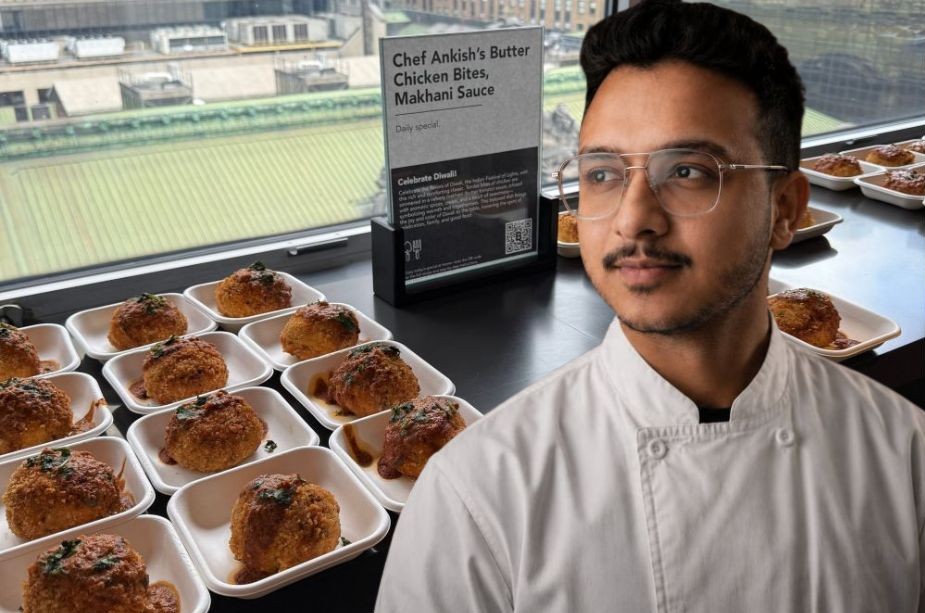
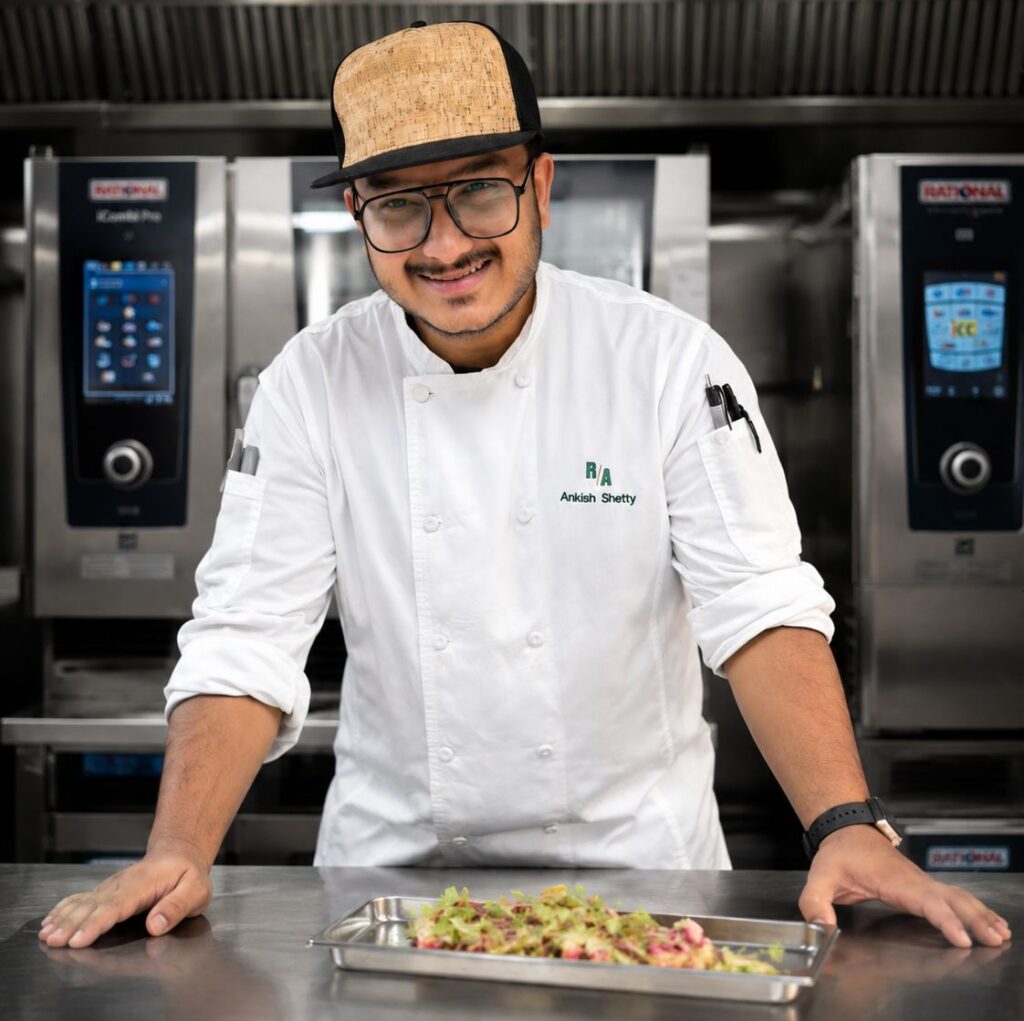
Today, Shetty lives in New Jersey and serves as Corporate Executive Chef at Restaurant Associates, part of Compass Group, overseeing culinary operations for one of Wall Street’s leading financial firms and other major institutional accounts in New York City. It is a role that demands precision, leadership, and creativity at scale—feeding thousands of professionals every day while managing high-profile events that leave no room for error.
But Shetty’s journey began not in a professional kitchen, but in his home kitchen in Mumbai.
“It didn’t arrive with a grand announcement,” Shetty recalled. “It crept up quietly on an ordinary evening.”
After an exhausting day, he came home and decided to cook chicken ghee roast—his favorite comfort dish. As he focused on balancing the spices and recreating the flavors he loved, something shifted.
“When I tasted it, every ounce of tiredness I had been carrying all day just vanished,” he said. “I felt alive in a way I had not felt in a very long time.”
Even then, he did not immediately think of cooking as a profession. That push came from his then-girlfriend, now wife, Shruti.
“She told me, ‘You should do whatever it takes to make you happy. You are not made for this rat race.’ And then she said, ‘You should be a chef if that makes you happy.’”
That conversation changed his life.
Breaking the news to his family was not easy.
“I come from a deeply orthodox family where the path in life is clearly mapped out,” he said. “Leaving engineering for cooking was incomprehensible to them.”
His parents initially viewed his culinary ambitions as a phase. But after Shetty launched a cloud kitchen in Mumbai and his food began attracting praise, word eventually reached them through friends and clients.
“Today, they couldn’t be more proud,” he said.
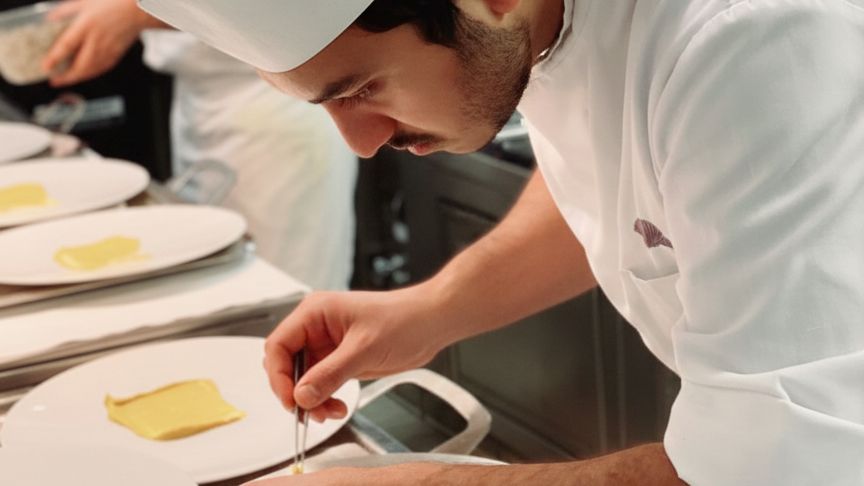
To sharpen his skills, Shetty moved to Europe, training in elite kitchens including Rasoi by Vineet, the Michelin-starred restaurant in Geneva, and the Kempinski Grand Hotel des Bains in St. Moritz.
At Rasoi, he learned the uncompromising standards of fine dining. One moment remains etched in his memory: after preparing butter chicken for guests, his head chef’s initial response was simply, “It’s okay.”
Hours later, members of an Arab family dining at the restaurant came into the kitchen asking to meet the chef who had prepared the dish. His head chef stepped aside and pointed to Shetty.
“One of them handed me a $200 tip and said it was for making food from the heart,” Shetty said. “It felt like winning a Michelin star.”
At Kempinski, he learned a different kind of discipline—running kitchens under pressure.
During the COVID lockdown, when four of six kitchen staff members tested positive, Shetty and one colleague were left to feed 400 hotel guests.
“We started at 3 in the morning and finished at 6 in the evening—sixteen hours a day, for almost two weeks,” he said. “That experience taught me everything I know about cooking at volume, staying calm under pressure, and refusing to give up.”
That combination of culinary instinct and engineering discipline now defines his leadership style in New York.
“I’ve never stopped thinking like an engineer,” he said. “Engineering didn’t leave me when I walked into the kitchen. It became the foundation of everything I do.”
Last year, Shetty led one of his most ambitious projects yet: a 2,800-guest Diwali dinner across three simultaneous kitchen locations in New York.
“It was an engineering project that happened to produce the most beautiful Indian food I have ever made at that scale,” he said.
For Shetty, the event carried deep emotional meaning.
“Diwali is the day you spend with family. I was far from Mumbai, far from everyone I love. But that night, I realized I was creating that feeling for other people.”
As an Indian chef in America, Shetty says he often encounters diners whose understanding of Indian cuisine begins—and ends—with butter chicken and naan.
“For most non-Indians, every curry begins and ends with butter chicken or chicken tikka masala,” he said. “But I don’t see it as pressure. I see it as an honor—to introduce people to the depth and diversity of Indian food.”
He hopes Americans will come to understand that Indian cuisine cannot be reduced to a handful of dishes.
“Every Indian dish carries a story,” he said. “A dal made in Punjab is not the same as one made in Tamil Nadu. Same ingredients—different land, different history, different soul.”
“What Americans have not yet fully discovered is how deeply every Indian dish is connected to the specific land it comes from. Indian food is not one cuisine you can summarise with a handful of dishes. It is hundreds of distinct culinary traditions, each with its own identity, its own soul, its own relationship to the climate and culture of its region. I would love nothing more than for people to slow down and really listen to what each dish is trying to tell them: one dish, one region, one story at a time,” he added.
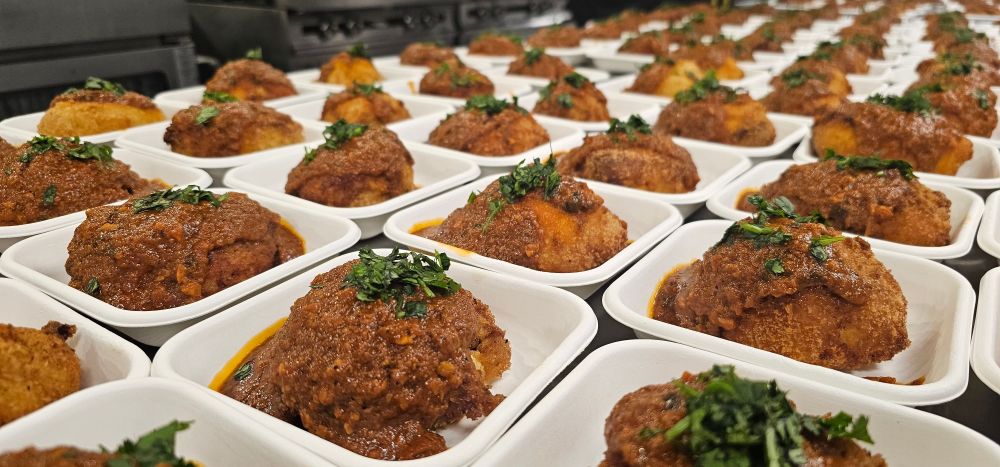
Among his own creations, Shetty points to two signature dishes that have become crowd favorites at corporate events: butter chicken bites with butter sauce, and Bombay masala sliders—small but bold examples, he says, of what happens “when you take Indian flavors seriously and present them with confidence.”
Looking back, Shetty says he has one message for young Indians considering unconventional careers—and for the parents who may hesitate.
“If your child has the courage and the dedication to pursue something different, believe in them,” he said. “No one should have to look back and carry the weight of never having tried.”
For a young engineer from Mumbai who once cooked alone after a tiring day, that leap of faith has taken him a very long way.
From Chef Ankish’s Kitchen: The Dish That Changed Everything
A classic dish from Mangalorean cuisine, chicken ghee roast remains deeply personal for Shetty — the flavor he returns to when he wants a taste of home.
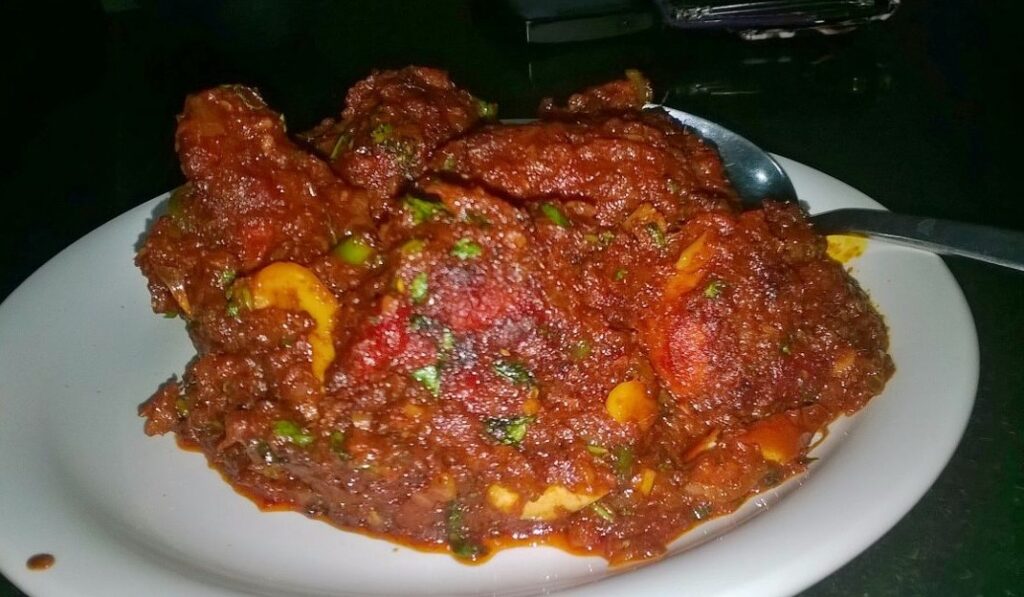
Chicken Ghee Roast
A Mangalorean Classic
Serves 4
A note on the chillies:
This recipe uses two varieties — Byadgi and Gundu — in a 4:2 ratio. Byadgi gives the dish its deep red colour and smoky aroma with mild heat, while Gundu adds stronger heat and depth.
Ingredients
For the chicken
- 2 lb bone-in chicken, cut into medium pieces
- 1 tsp salt
- ½ tsp turmeric
- 1 tbsp lemon juice
For the roasting masala
- 4 dried Byadgi chillies
- 2 dried Gundu chillies
- 1 tbsp coriander seeds
- 1 tsp cumin seeds
- 1 tsp black peppercorns
- 6 cloves garlic
- 1-inch ginger
- Small marble-size tamarind piece
- ¼ cup water
For cooking
- 5–6 tbsp ghee
- 1 sprig curry leaves
- 1 medium onion, finely chopped
- 1 tsp jaggery (optional)
- Salt to taste
Method
- Marinate chicken with salt, turmeric and lemon juice for 30 minutes.
- Dry roast the chillies and spices until fragrant.
- Blend roasted spices with garlic, ginger, tamarind and water into a thick red paste.
- Heat 2 tablespoons ghee and sear chicken for 5–6 minutes. Remove and set aside.
- Add remaining ghee, curry leaves and onions; cook until lightly golden.
- Add masala paste and cook slowly until dark red and aromatic and the ghee begins separating.
- Stir in jaggery and salt. Return chicken, coat well and cook covered on low heat for 15–20 minutes until done.
- Finish with extra ghee and fresh curry leaves.
Best served with: neer dosa, ghee rice, or parotta.
Chef’s notes:
• Bone-in chicken creates deeper flavor.
• Slow roasting in ghee defines the dish — don’t rush it.
• A clay pot adds extra depth.
• Keep the masala thick and clingy; this is not a gravy dish.
