




NRI PULSE STAFF REPORT
Mountain View, CA, April 20, 2026: In a move that could reshape higher education, Khan Academy has partnered with TED and ETS to launch the Khan TED Institute, a new initiative aimed at offering a low-cost, AI-focused alternative to traditional college degrees.
The announcement was made this week at the TED conference in Vancouver, where the three nonprofit organizations outlined a vision for education designed for an artificial intelligence-driven world. The proposed program is expected to cost under $10,000, significantly lower than the cost of most U.S. college degrees, and applications are likely to open within the next 12 to 18 months.
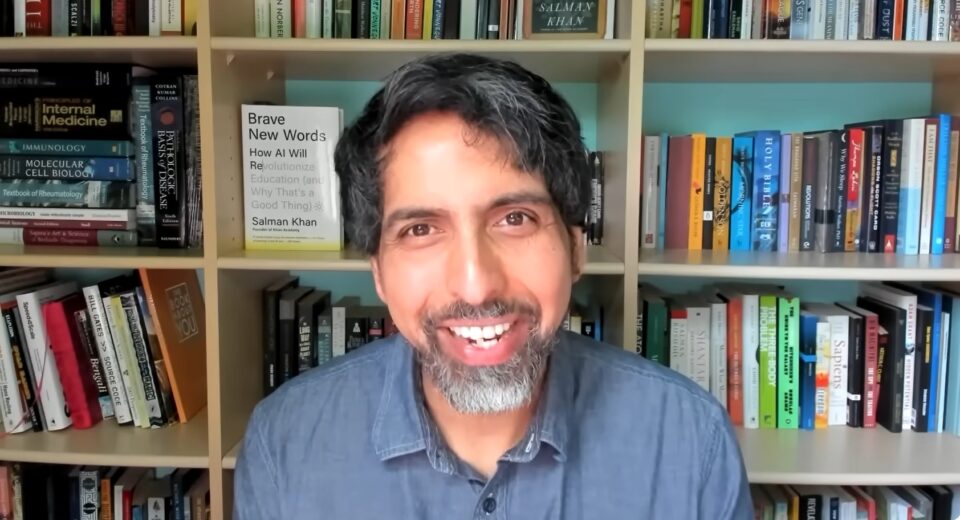
The initiative is being positioned as an extension of Khan Academy’s long-standing mission to make high-quality education accessible globally. “Khan Academy’s mission has always been to make world-class education accessible to all,” said Sal Khan, founder and CEO of Khan Academy. “The Khan TED Institute is an extension of that vision to higher education, creating new paths that help more people find meaningful ways to contribute to the world around them.”
Unlike traditional universities that rely on credit hours and semesters, the Khan TED Institute plans to adopt a competency-based model. Students will advance by demonstrating mastery of skills rather than spending a fixed amount of time in class, allowing for personalized pacing while ensuring measurable outcomes.
The inaugural program will focus on three key areas: core academic knowledge, applied artificial intelligence skills, and communication and leadership. Coursework is expected to include subjects such as mathematics, economics, computer science, and writing, alongside hands-on AI applications like building AI agents, app development, and financial modeling.
The program also emphasizes “durable” human skills such as collaboration, public speaking, and critical thinking—areas that organizers say will remain essential even as automation reshapes the workforce.
Amit Sevak, CEO of ETS, highlighted the importance of linking education to employment outcomes. “This collaboration helps open new pathways into the AI economy where skill-based measurement becomes the critical link between learning and livelihood,” he said.
To ensure the curriculum aligns with industry needs, several major corporations—including Google, Microsoft, Accenture, Bain & Company, McKinsey, and Replit—are expected to serve as thought partners, helping define the skills and competencies students will be expected to demonstrate.
The institute will also tap into TED’s global network of thinkers and educators, offering students opportunities to engage in live talks, discussions, and collaborative learning experiences. Logan McClure Davda, CEO of TED, said the initiative aims to expand how people engage with ideas in a rapidly changing world.
Khan Academy, founded in 2008, has grown into one of the world’s most widely used free learning platforms, with more than 200 million registered users across 190 countries. The new institute builds on that reach, with organizers envisioning a global student community connected through both digital learning and real-world problem solving.
For Indian American students, the initiative could signal a shift in long-standing educational pathways. With families often investing heavily in elite college admissions as a route to career stability, a sub-$10,000 program aligned with top employers—if it delivers comparable job outcomes—may offer a compelling alternative, particularly for middle-income households. However, questions around accreditation, long-term placement success, and the cultural value attached to prestigious university degrees are likely to influence how quickly such a model gains acceptance.
While the Khan TED Institute is being framed as a potential alternative to elite universities, it remains in the early stages, with details such as accreditation and long-term outcomes yet to be fully established.
Still, the initiative reflects a broader shift in education, where rising costs, rapid advances in AI, and growing employer demand for practical skills are prompting new models that challenge the traditional college system.
