



BY JYOTHSNA HEGDE
Atlanta, GA, October 28, 2026: “I want better for my family. But it’s got to be better for yours too, if it’s going to be better for mine.”
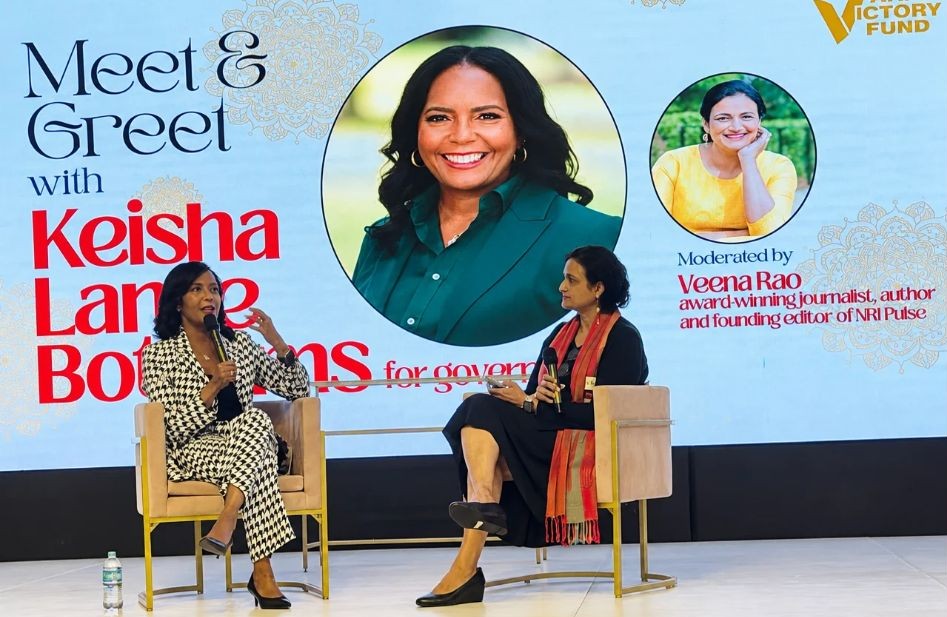
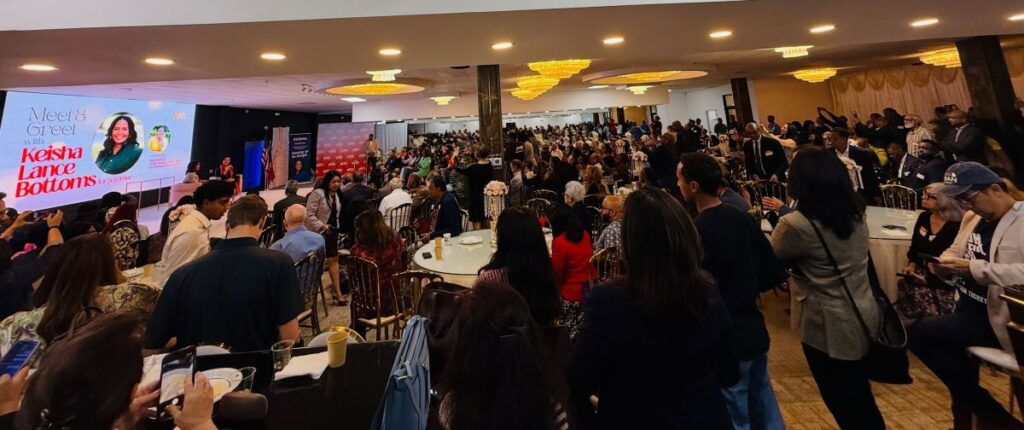
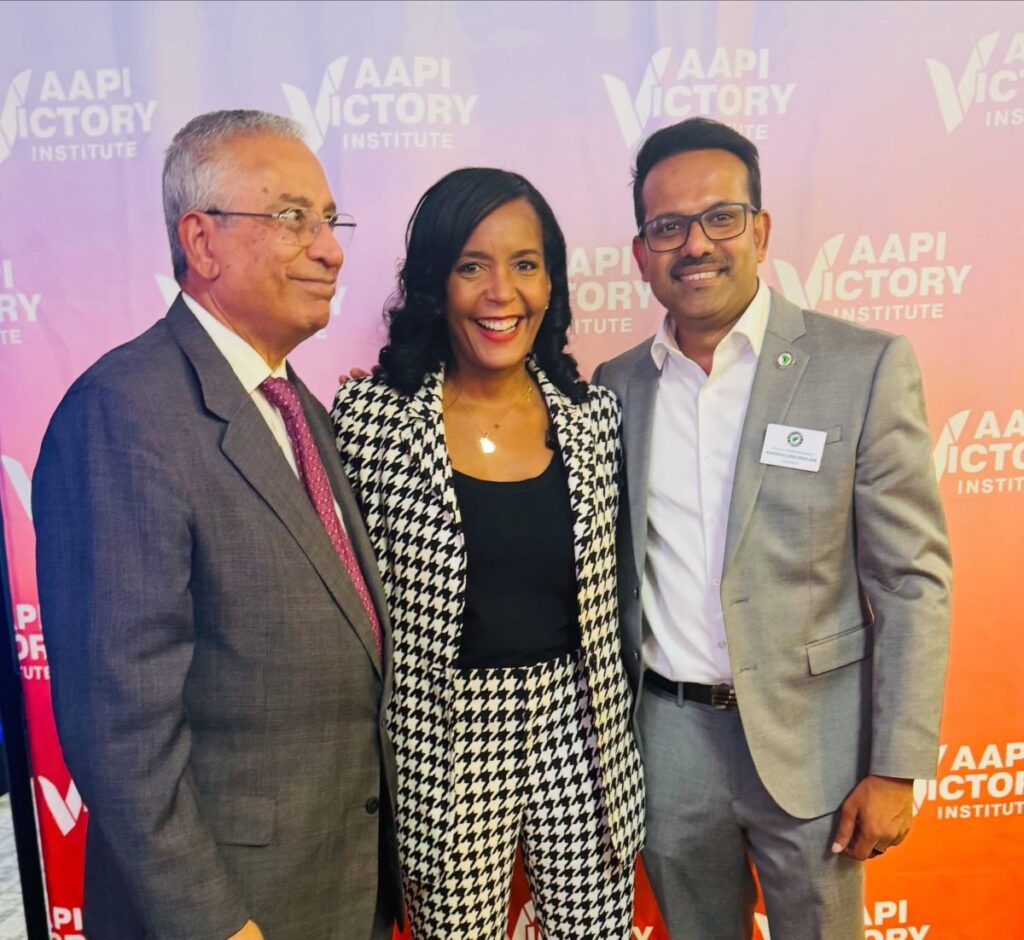
With those words, Democratic gubernatorial candidate Keisha Lance Bottoms connected her personal aspirations to a broader promise of opportunity for Georgia families during an October 26 gathering at Royal Banquet in Alpharetta. Organized by AAPI Victory Fund and hosted by Kannan Udayarajan, Chairman of the Forsyth County Democrats and Advisor to AAPI Victory Fund, the gathering brought together community members, elected officials and candidates for an evening focused on policy priorities and political participation ahead of the November 3 election.
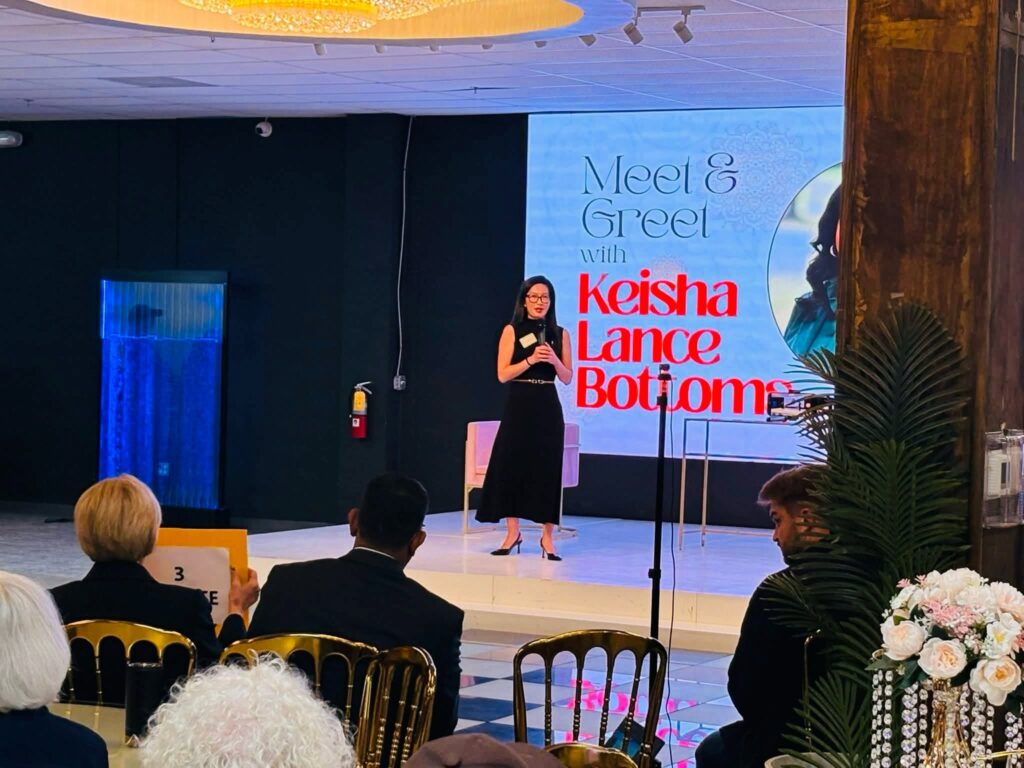
NRI Pulse founder and chief editor Veena Rao moderated the fireside chat, posing questions submitted by attendees and pressing Bottoms on issues affecting Georgia families. According to organizers, nearly 350 people attended and more than 300 questions were received.
The discussion connected statewide concerns with questions particularly relevant to Indian American and other Asian American communities: rising anti-Indian rhetoric, public safety, rising costs, health care accessibility, education, and her plans to ease traffic congestion.
Leadership, Inclusion and Community Safety
Opening with a question about Bottoms’ background, Rao invited the former Atlanta mayor to explain the experiences behind her candidacy. Bottoms spoke about tracing her Georgia roots through at least five generations, including ancestors who had been enslaved, and about the people who supported her family during difficult periods in her childhood.
She recalled a teacher who drove her to school and a neighbor who welcomed her into her home, describing those acts of care as formative examples of how individuals can create opportunity for others. Her public service, she said, was informed by that understanding of shared responsibility.
The conversation turned more pointed when Rao described an alleged racist confrontation involving an Indian woman in Forsyth County and her 12-year-old daughter. According to the account Rao presented, another driver pursued and blocked the woman’s vehicle before directing racial slurs at her and telling her to return to India.
Bottoms called the account “heartbreaking” and recalled receiving a racist message while her own then-12-year-old son stood nearby.
“Leadership matters,” she said, emphasizing that public officials influence whether inclusion or hostility becomes normalized.
Asked what she would do as governor, Bottoms pointed to her efforts to promote Atlanta as a welcoming city and to discussions on hate crimes and inclusion during her service in the Biden administration. She also recalled the community response following the Atlanta-area spa shootings during her mayoral tenure.
Inclusion, she said, must be intentional and reflected in leadership appointments, policies and the conduct an administration is willing to tolerate.
Addressing the Cost of Living
Rao’s questions on household expenses moved the discussion from broad campaign themes to specific proposals.
Bottoms outlined a grocery tax relief plan that would allow local governments to suspend or eliminate grocery taxes where their budgets permit. She also proposed eliminating taxes on diapers, baby formula and feminine hygiene products, along with taxes associated with automobile and homeowners insurance that she said are passed along to consumers.
On housing, she advocated expanding and fully funding a statewide affordable housing trust fund. Drawing on her experience in Atlanta, she described such a fund as a flexible resource for down payment assistance, rental support, construction and preservation of affordable homes.
Bottoms also emphasized that housing challenges extend beyond metropolitan Atlanta, arguing that rural communities face additional obstacles when infrastructure needed for development is limited.
Healthcare, Transit and Public Education
Healthcare access emerged as another central concern. Bottoms identified Medicaid expansion as a priority, saying she would begin by preparing state agencies and working with legislative leaders to advance it.
She argued that gaps in insurance coverage affect the broader healthcare system, including people who already have insurance, because patients without access to primary care may turn to emergency departments.
Asked about traffic congestion on corridors such as Interstate 285 and Georgia 400, Bottoms called for sustained investment in public transportation and greater state support for local transit systems, including MARTA.
“Show me your budget. I’ll show you the priorities,” she said.
The education discussion addressed both fast-growing communities and the conditions necessary for students to succeed. Bottoms called for revisiting Georgia’s school funding formula, investing in literacy instruction and providing services that address children’s needs beyond the classroom.
“You can’t have a child in a classroom for eight hours a day and then send them into chaos for another 16 hours and think that you’re going to have great results,” she said.
She also proposed raising average starting teacher pay to $60,000 and questioned why educators should have to cover professional certification expenses incurred while meeting schools’ staffing needs.
On youth mental health, Bottoms said access to care consistently arises in her conversations with high school and college students. She called for stronger funding and better public awareness of available services, while noting that inadequate treatment can place additional demands on families and law enforcement.
Shekar Narasimhan: Political Influence Requires Accountability
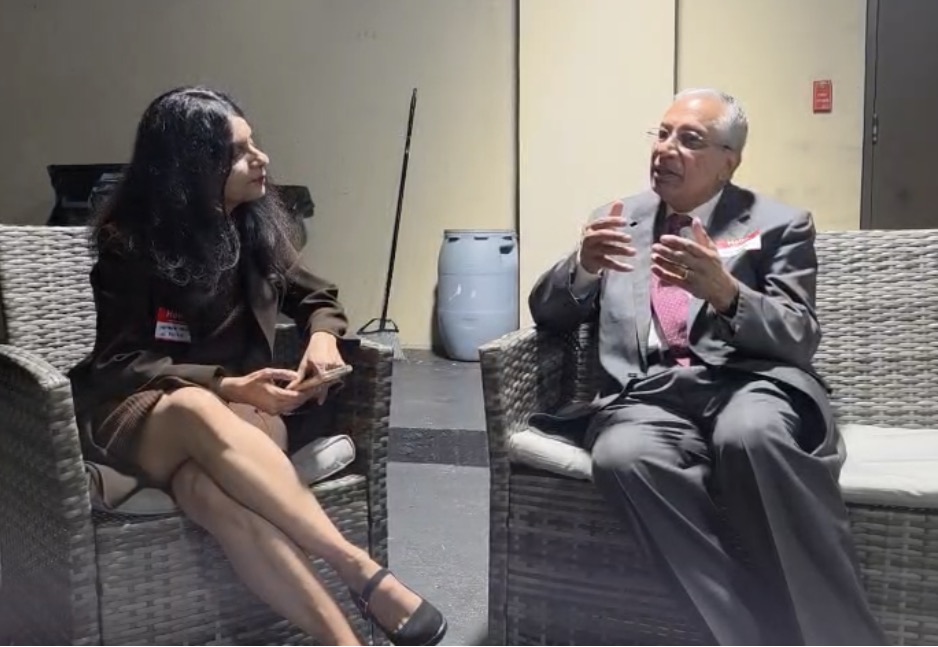
In an exclusive interview with NRI Pulse, Shekar Narasimhan, Founder and Chairman of AAPI Victory Fund, described the gathering as evidence of a significant change in Asian American political participation.
The growing number of candidates seeking office at different levels, he said, offers a visible measure of that progress. Equally significant is the willingness of candidates to engage directly with communities whose votes they recognize as consequential.
“When you see candidates showing up to talk to our community, because it’s our community and it matters, that’s totally different than 10 years ago,” he said.
For Narasimhan, however, representation must translate into responsive government. He urged community members to ask specific questions about school safety, threats to religious institutions, discrimination and support for families confronting immigration-related crises.
Political contributions, he argued, should come with an expectation of public accountability.
“I keep saying, don’t write a check unless you have an ask,” he said, adding that those requests should serve the wider community.
Asked about the relationship between political donations and electoral influence, Narasimhan cautioned against equating financial resources with guaranteed results. Money is necessary in politics, he said, but voters must also assess which candidates will respond meaningfully to their concerns.
Building Bridges Beyond One Community
Narasimhan emphasized that Indian American and Asian American priorities overlap with those of other communities, particularly on education, family well-being and economic opportunity. At the same time, he said, specific experiences involving discrimination, immigration and the security of places of worship require direct attention.
Responding to concerns about hate and anti-immigrant rhetoric, he described efforts to build civic and legal support through collaboration with Black, Latino, Jewish and other communities.
“We have resources, we have voting power now,” he said. “Let’s make sure that we build the bridges with all the other communities.”
He also identified younger generations as particularly comfortable building relationships across racial and cultural backgrounds. Established community leaders, he argued, should help provide the infrastructure and opportunities that allow that leadership to grow.
For those reluctant to participate in politics, his message was that professional success and personal discretion cannot substitute for civic engagement when decisions affect children, schools and community safety.
“Vote. Actively engage,” he urged, challenging residents to turn the energy spent discussing politics in messaging groups into advocacy on issues affecting their families.
A Community Ready to Engage
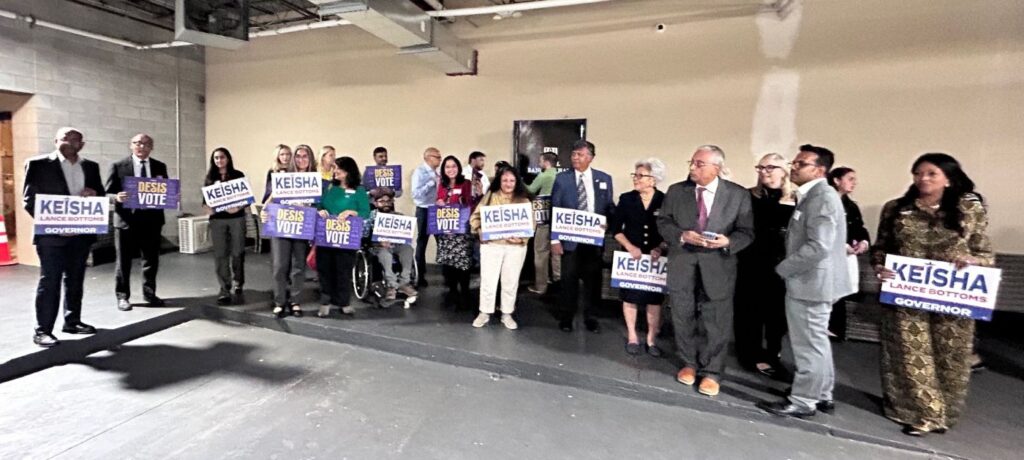
Reflecting on the turnout, Udayarajan said the response underscored the community’s enthusiasm for participating in Georgia’s political future.
“Forty-eight hours. That is all the notice we had. Nearly 350 people came anyway, and we had to cut off registration because the room and security could not hold more. Community leaders came. Mothers came with their daughters. Friends and families came together. They came with questions too. We received more than 300 of them, and our moderator, Veena Rao, award-winning author and founder and chief editor of NRI Pulse, brilliantly brought them together for the conversation.”
Udayarajan said that enthusiasm would carry into the final days before the election.
“Every person walked out encouraged about where Georgia is headed. The Indian American community is not sitting on the sidelines this year. We share the values of the Democratic Party, we believe in Keisha Lance Bottoms’ mission to make Georgia better, and we are going to be part of making it happen. The people who could not get in tonight will be the volunteers and voters of the next few days.”
A Call to Participate Across the Ballot
Remarks from elected officials and candidates reinforced the importance of participation beyond the governor’s race. The gathering included State Senator Sheikh Rahman; State Representatives Dr. Michelle Au, Long Tran and Akbar Ali; former State Senator Nabilah Parkes; and former State Representative Brenda Lopez Romero.
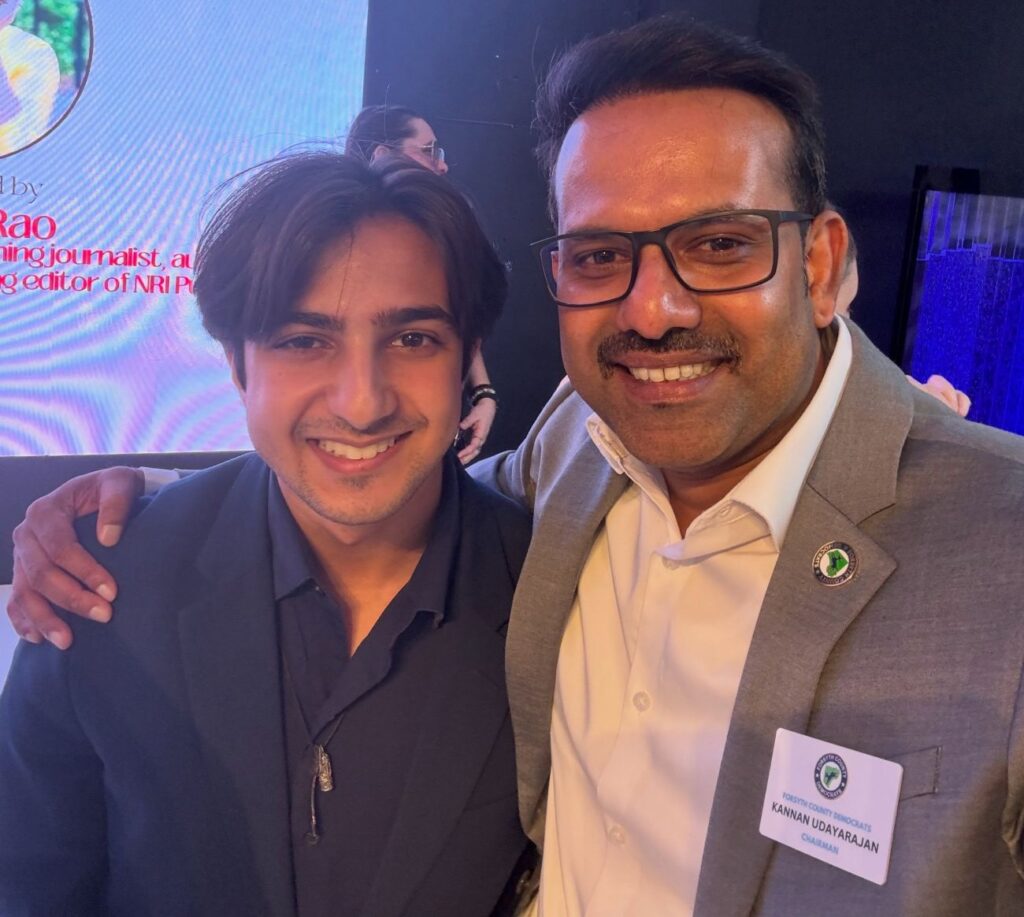
Ali introduced a succession of speakers, emphasizing coalition building and the importance of electing officials who could work together across levels of government. Au, a practicing physician, described her decision to seek office as an extension of her work caring for patients, noting that many factors affecting community health fall outside what a doctor can address at the bedside.
Tran emphasized Asian American electoral participation, while Rahman urged attendees to mobilize friends and relatives and support candidates throughout the ballot. Parkes likewise stressed the importance of down-ballot contests, connecting those offices to reproductive rights, public education, working families and utility costs.
Candidates participating included Shuchita Patel, running for Forsyth County Commission District 3; Maggie Goldman, running for Fulton County Commission District 1; Vishal Srivastava, running for Forsyth County Board of Education District 5; Jennifer Ambler, running for State House District 100; Laura Murvartian, running for State Senate District 48; and Tony Kozycki, running for U.S. Congress in Georgia’s 7th District.
Their remarks brought local concerns into the broader discussion. Patel emphasized the importance of being present when decisions are made, while Goldman focused on responsive county government, fair taxes and accessible services. Srivastava discussed teacher compensation, school climate and the responsible use of artificial intelligence in education. Ambler urged voters to pay greater attention to state legislative races, and Murvartian connected her immigrant family’s experience to economic opportunity, equal justice and dependable public institutions.
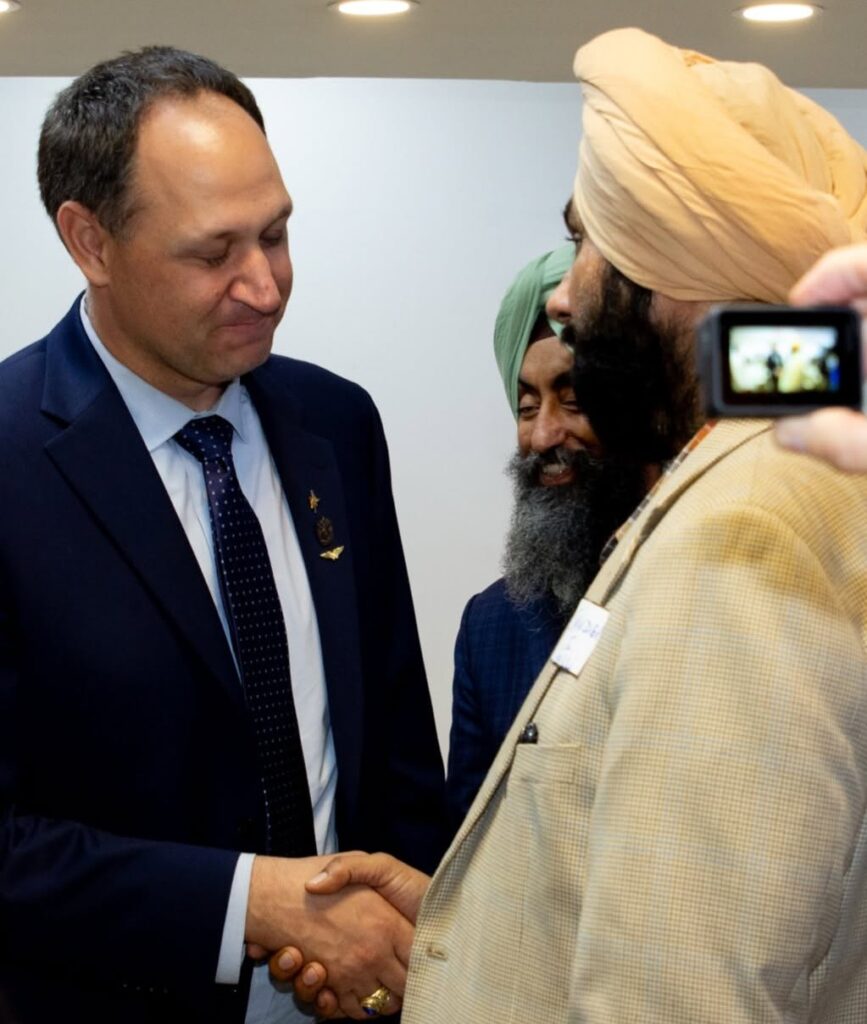
Kozycki, a Navy veteran and immigration attorney, spoke about the immigration cases that helped motivate his candidacy and called for leadership that listens to immigrant communities and understands their concerns.
Also attending were Cassandra Littlejohn, Chairwoman of the North Fulton Democrats; Dr. Erika Barnes Ford, President of the North Fulton NAACP; and Daniel Blackman, a former Biden administration appointee who served as Regional Administrator for Region 4 of the U.S. Environmental Protection Agency.
Across the evening, speakers urged attendees to contact friends and relatives, encourage early voting and pay attention to offices throughout the ballot.
Bottoms closed with a similar appeal, asking attendees to reach out to 21 other people and encourage them to vote. She called for “whole ballot energy,” extending participation from statewide races to local contests.
Asked what she would most want Georgians to say about her four years later, she answered simply: “I truly want to be your favorite governor.”
The evening ended with early Diwali wishes, returning to a theme of light overcoming darkness. Its central civic message was equally clear: the influence of a growing community depends on sustained participation, specific demands of its leaders and relationships that endure beyond Election Day.
