





BY JYOTHSNA HEGDE
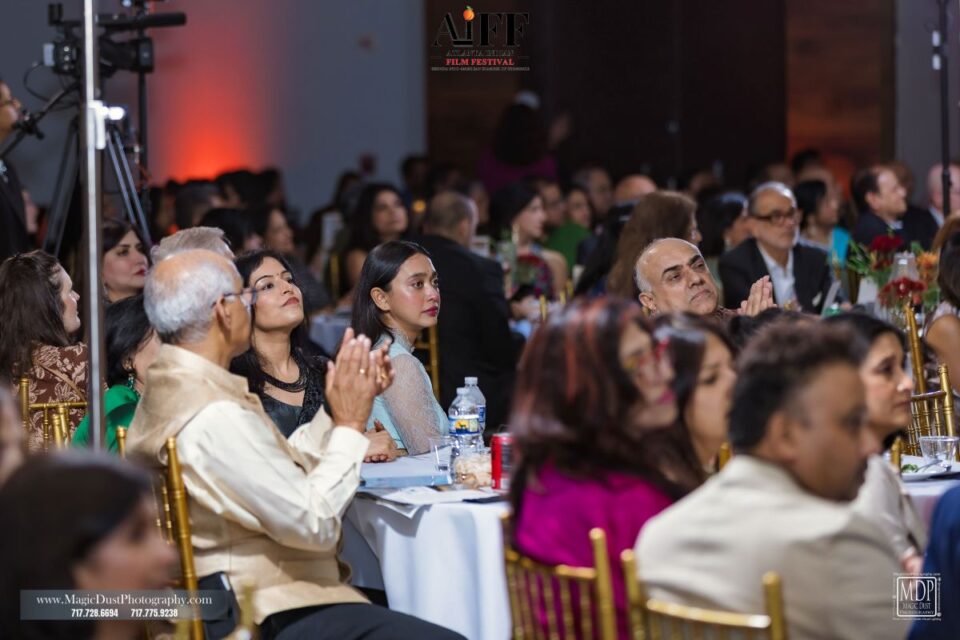
Atlanta, GA, October 20, 2026: Before a film reaches the screen, it often begins with something much smaller: a memory that refuses to fade, a question that interrupts sleep, or a story someone finally finds the courage to tell. At the eighth annual Atlanta Indian Film Festival, those beginnings found their way into a shared celebration of cinema, bringing stories from India and the diaspora into conversation with audiences in Georgia.
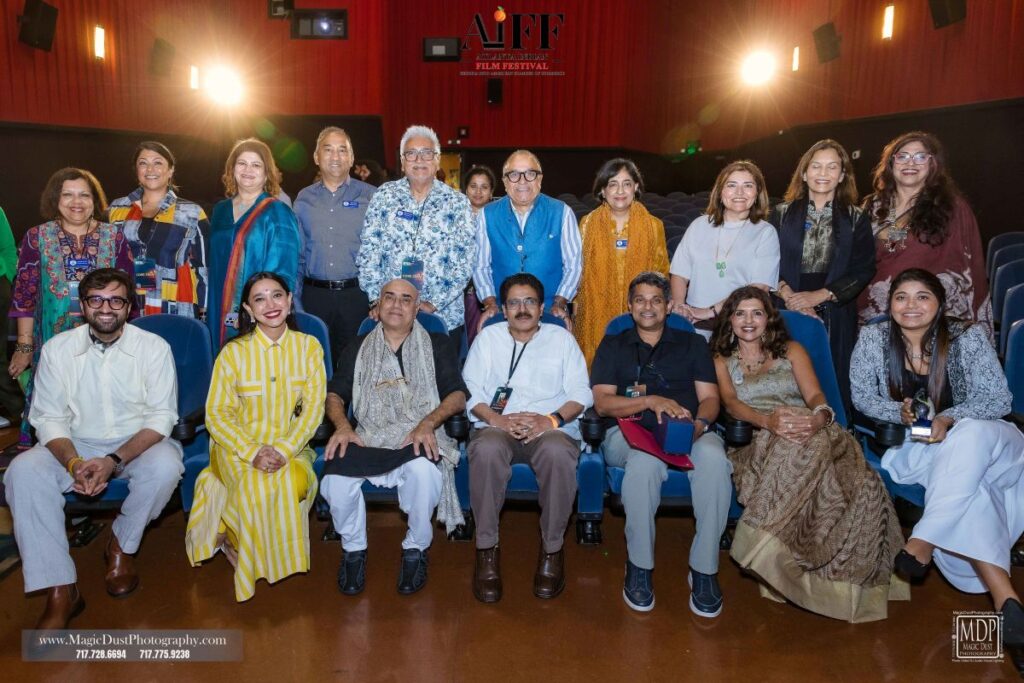
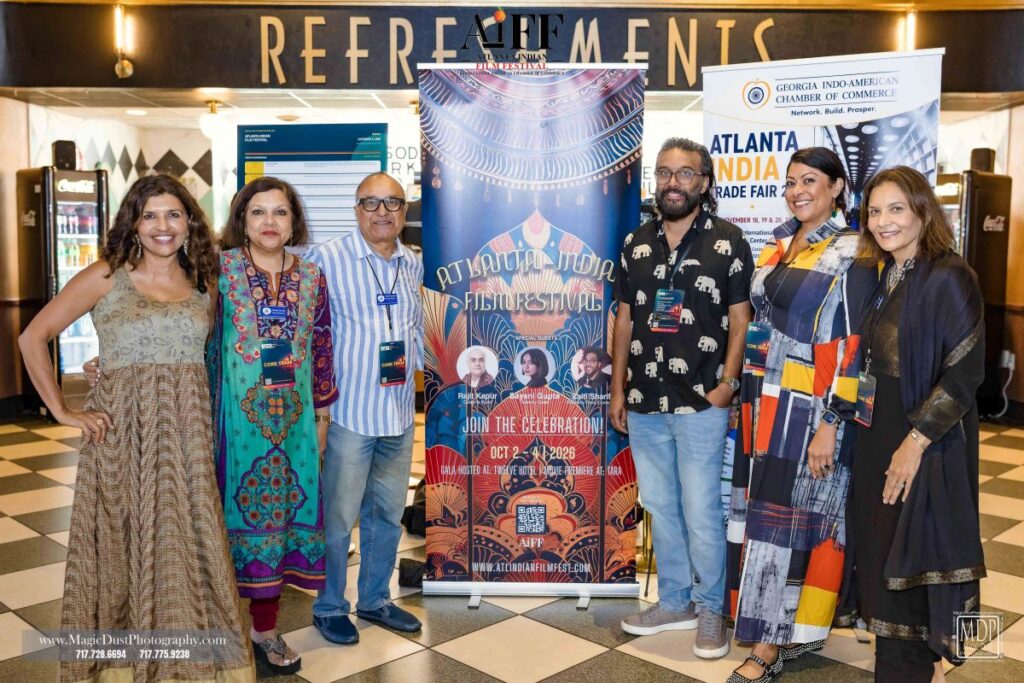
Presented by the Georgia Indo-American Chamber of Commerce (GIACC) from October 2 to 4, 2026, the festival combined an opening gala, a press meet, filmmaker discussions and screenings of 20 films across seven languages and a silent format. Actors Rajit Kapur and Sayani Gupta joined filmmakers and community members for a weekend that celebrated independent storytelling while examining the challenges of making, distributing and discovering films.
The festival’s awards honored that creative range. Sayani Gupta’s Aasmani won Best Short Film, while Jeejivisha Rajshekhar Kale’s Tighee received Best Feature Film. Manisha Kishor Makwana earned Best Director in the short film category for Gudgudi, and Das Eranezhath received the corresponding feature film honor for Saradambaram. The cinematography awards went to Halgi in the short film category and Enna Villai in the feature film category, recognizing the visual craft that brought these distinct worlds to life.
The opening gala took place at Twelve Midtown, Autograph Collection Hotel, followed by screenings at Tara Theater on October 3 and 4. Across the three days, audiences had opportunities to encounter unfamiliar stories and speak directly with the artists behind them.
Building a Bridge Through Cinema
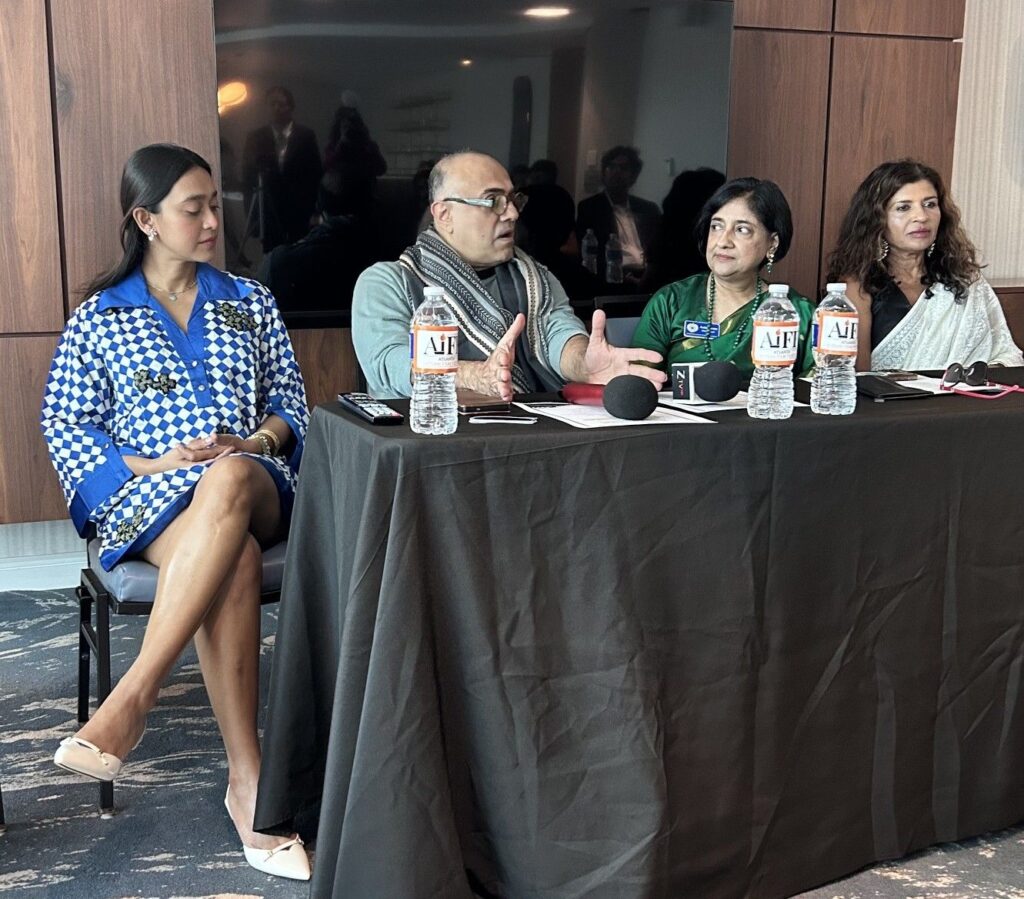
At the press meet, GIACC Chairperson Anita Ninan traced the festival’s origins to a chamber delegation’s 2016 visit and meetings with Bollywood and studio representatives. Those early conversations explored the possibilities of connecting India’s film industries with Georgia’s production resources and business opportunities.
What began as an exchange of ideas grew into one of the chamber’s signature events. Ninan described the effort required of a volunteer organization with a 15-member board, crediting the sustained involvement of organizers, sponsors, media partners and community supporters.
GIACC President Daniel Preston similarly placed the festival within the chamber’s broader mission of connecting Georgia and India. Cinema offered a meeting ground where cultural relationships and professional possibilities could develop together.
Written messages in the festival program reinforced that purpose. Georgia Gov. Brian Kemp highlighted cultural exchange and the state’s filmmaking opportunities, while U.S. Sen. Jon Ossoff recognized the organizers’ dedication and community engagement. Consul General of India Dr. Sumit Seth described the festival as a bridge between cultures and a platform for the diverse voices of Indian cinema.
The Work Behind the Selections
Content Director Nina Chopra described a planning process that began in February and drew 56 submissions through FilmFreeway. An eight-member jury evaluated the films using a detailed rubric designed to consider their different creative and technical strengths. The final published screening program featured 20 films in Tamil, Hindi, Marathi, Punjabi, Malayalam, Bengali and English, along with a film told without dialogue.
The official jury comprised Anvita Gupta, Kapil Tanwar, Roshni Malik, Shally Venkatesh, Bharath Tejasvi, Vikas Kapil, Anuj Jain and Varsha Gupta, bringing perspectives from filmmaking, business and the community to the selection and awards process.
Speaking at the press meet, Tejasvi praised the organizers for preserving the jury’s independence. He also observed a steady improvement in the technical quality of submissions, as accessible cameras, editing tools and learning opportunities enabled more filmmakers to develop their craft.
Rajit Kapur: The Search Beyond the Script
For Rajit Kapur, a compelling role begins with the possibilities beneath the words on a page. Discussing Birha, directed by Puneet Prakash, he described being drawn to its simple, touching story and the emotional territory it offered him as a performer.
Set against a Punjabi backdrop, the short film follows a family affected by a young son’s ambitions. Kapur spoke about its father-son relationship and the consequences of leaving home in search of better prospects, encouraging audiences to experience the film rather than hear its story explained in advance.
His attraction to a project, he said, depends on whether it excites, stretches or challenges him. The script provides a foundation, but an actor must also recognize what can be discovered beyond its literal meaning.
Asked whether he had fulfilled a particular creative ambition, Kapur resisted the idea of completion. Creative work must remain an ongoing process, with each experience opening another question or possibility. His definition of success was equally personal: being able to find opportunities to do work that continues to excite him.
During the gala conversation, he also discussed his involvement in short films. Younger directors often have strong stories but limited resources, he noted, and working with them offers an opportunity to support new voices. Birha reached him through a producer who contacted him with the story and script.
Sayani Gupta’s Aasmani: An Inheritance of Freedom
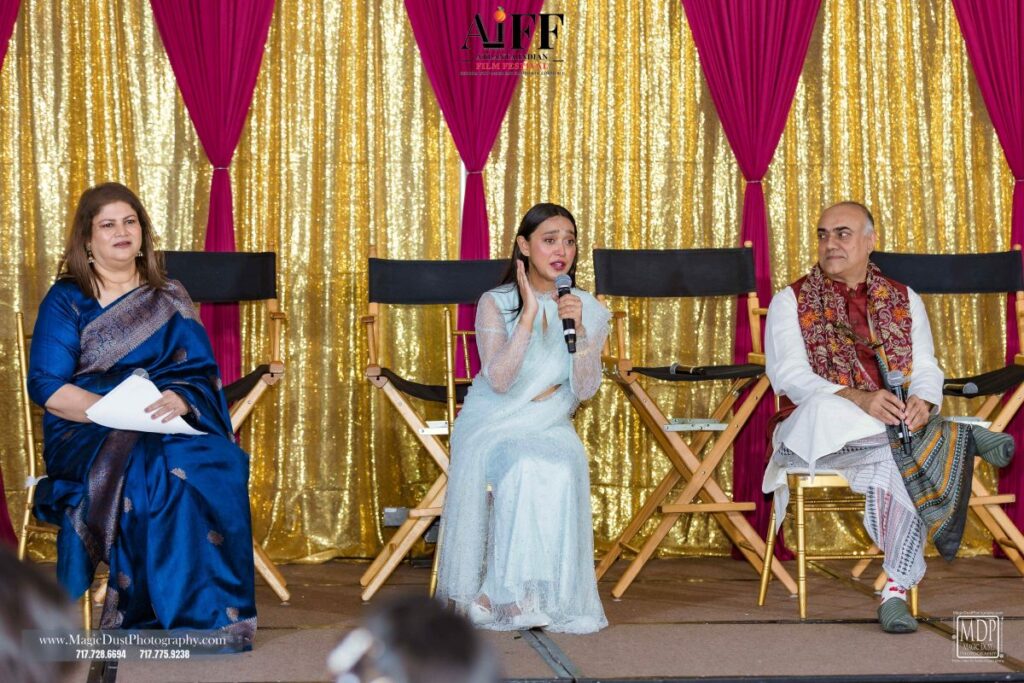
Sayani Gupta spoke about Aasmani, which she wrote and directed, as a story of love, friendship and freedom. Its central relationship brings together Smita, a spirited woman in her 60s, and Tia, her sharp-witted 10-year-old granddaughter. A powder-blue vintage Fiat becomes part of their shared world, carrying questions of relevance, independence and attachment.
The film grew partly from Gupta’s relationship with her grandmother and the influence of the women who raised her. Her mother, grandmother and aunts had helped shape her values and sense of possibility. Wearing her grandmother’s bangles at the press meet, she described carrying a piece of that inheritance with her.
Gupta also reflected on how women can be made to feel less relevant as they age, regardless of their abilities or accomplishments. Their lives often become organized around supporting others, leaving their own desires in the background. Through Aasmani, she sought to give those questions an affectionate, hopeful expression.
“I think freedom is the only thing worth fighting for,” she said. For her, the film’s intergenerational friendship also challenged the assumption that learning moves only from older people to younger ones. A grandmother can guide a child, but a child can also help an older person rediscover a freer way of living.
Gupta hoped the film would feel like warmth and sunshine in a world too frequently shaped by hostility. People who knew her and had seen it, she added, recognized aspects of her in both central characters.
The Shared Language of Emotion
Taking Aasmani to international audiences strengthened Gupta’s belief that a well-told story can travel beyond its original language. She recalled a premiere before an audience without Hindi-speaking South Asian viewers, where laughter arrived at the intended moments. Their response reassured her that the humor and emotions were reaching people through the subtitles.
Streaming platforms make films available across borders, but availability does not guarantee discovery. Recommendation systems frequently offer viewers more of what they already watch, she observed, potentially narrowing their encounters with unfamiliar stories. Festivals provide another path by placing different languages, subjects and sensibilities alongside one another.
The discussion also addressed whether streaming changes an actor’s approach. Gupta and Kapur emphasized that the pursuit of truth in performance remains consistent across formats. What changes more substantially is the structure of storytelling, particularly when a narrative unfolds through several episodes and must sustain interest between installments.
Kapur cautioned against treating realistic cinema as a creation of streaming. Such films existed long before digital platforms. What has grown is the range of creators and choices available to viewers.
An Industry of Possibilities and Obstacles
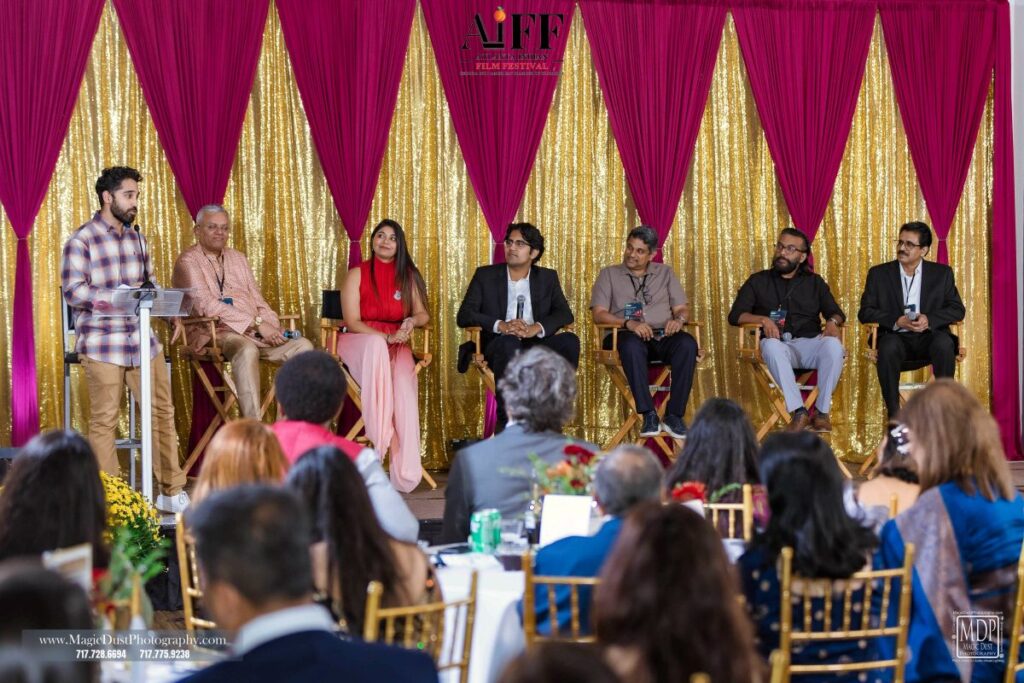
The filmmakers offered differing assessments of the changing industry. Rishi Raj, writer and director of The Turning Point, described new distribution channels as both an opportunity and a complication. Digital platforms allow filmmakers to reach audiences through routes outside traditional systems, while also shaping expectations about format, rhythm and pacing.
Gupta offered a more guarded assessment of commissioning trends. In her view, the space for certain kinds of films had contracted, particularly projects between very small productions and large commercial ventures. A film such as Margarita with a Straw, her breakthrough project, would be difficult to make in the present environment, she said.
More platforms do not automatically mean a greater diversity of stories. Films still need appropriate financial support, and even completed or commissioned projects can struggle to secure release.
Kapur observed that technology had made filmmaking more accessible while marketing remained difficult. A Zee representative discussed television and streaming opportunities and encouraged filmmakers to consider distribution early in development. Independent filmmakers, in turn, asked for clearer avenues through which smaller projects could reach platforms such as ZEE5.
The conversation revealed a shared concern beneath the differing views: a story’s journey remains incomplete until it reaches an audience.
Twenty Films, Twenty Invitations
The screening program reflected that range of creative ambition. Sajeev Pazhoor’s Tamil feature Enna Villai followed an ordinary man’s struggle to protect his dignity through a confrontation with the system. In Mrittika Sarin’s Hindi-Marathi short Scarce, water scarcity became a question of individual responsibility, while Jeejivisha Rajshekhar Kale’s Tighee (Motherhood) explored the silences, sacrifices and secrets that sustain and fracture a family.
Dhani Jhankal’s Avagunthan addressed women’s aspirations and restrictive traditions through a film supported by Sufi and Rajasthani folk music. Rakesh Rawat’s Almari Ka Achaar followed a middle-aged same-gender couple caught between love and family, and Sharlee Deshmukh’s Nebula centered on a young phlebotomist’s visits to a homebound cancer patient. Prakash’s Birha considered regret, redemption and forgiveness within a family marked by separation.
The Malayalam short Sootradhaarini, directed by Vijaya S. Nambiar, turned an exchange of treasured saris into an exchange of affection, courage and recognition. At the press meet, a representative of the production described how his wife’s script led to a film shot over three days in their apartment complex, with women who had not previously acted before a camera.
Rohit Ravindra Jadhav’s Marathi short Halgi explored the silence of a man forced to turn away from his drum. Anubhav Anand’s silent film The Bridge examined guilt, loneliness and unexpected grace, while Sachith Ram’s The Better Half considered a troubled marital relationship against the backdrop of advancing science and technology.
Nausheen Dadabhoy’s animated documentary Halal Bodies explored how family expectations, cultural traditions and social pressures shape young Muslims’ understanding of intimacy and faith. In Nilarun Basu’s Bengali short Homecoming, a woman returned to her childhood home after two decades, reconnecting with memory through the act of cooking.
Samar Jain’s Hindi satire Daddu Zindabad addressed caste discrimination, toxic masculinity, political opportunism, women’s agency and media influence. Rajdip Ray’s Bengali-Hindi short The First Bite found an intimate expression of devotion in a husband joining his terminally ill wife in her prescribed diet. The Hindi short Rise brought the program into the boxing ring, setting a younger fighter against an established national champion.
Raj’s English-language The Turning Point moved into a near-future Seattle under federal military occupation, following an Asian American man and his niece as they tried to escape a violent white nationalist group. Raised in Marietta and now based in Seattle, Raj recalled weekly family trips to the movies as the beginning of his love for the theatrical experience. His aim was to give the film’s action an emotional foundation.
Manisha Kishor Makwana’s Gudgudi offered a quieter encounter between a tired amusement-park mascot performer and a lonely child who found unexpected comfort in each other. Das Eranezhath’s Malayalam feature Saradambaram explored an older husband’s devotion as his wife grew increasingly fragile, finding its emotional center in the small joys he sought to preserve for her. Gupta’s Aasmani completed the lineup with its affectionate exploration of age, freedom and an unlikely intergenerational friendship.
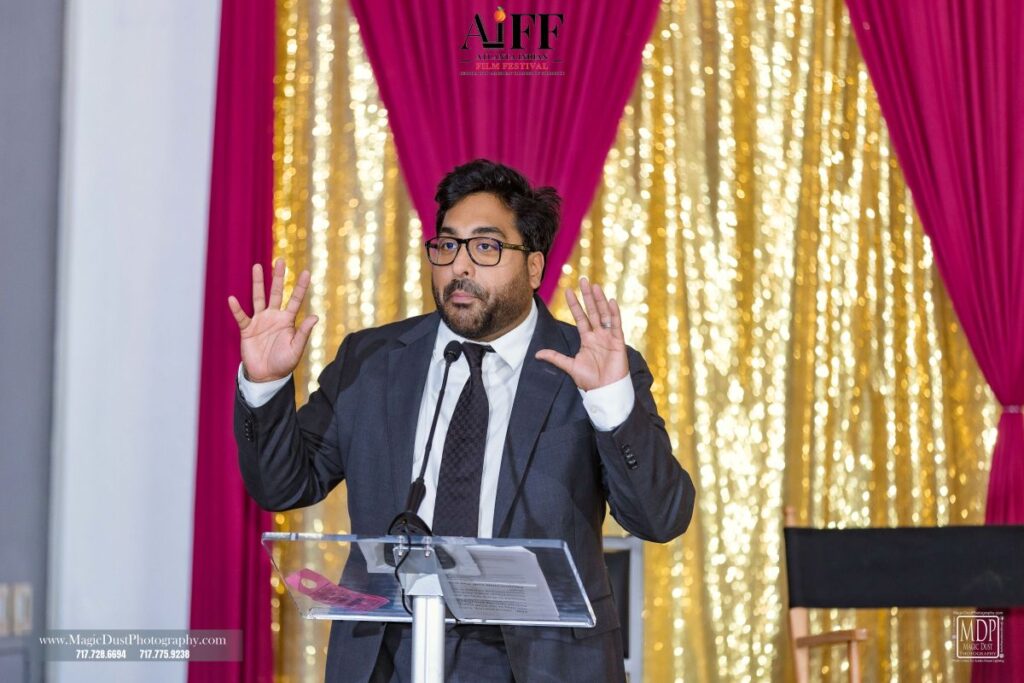
A Gala That Brought the Makers Into the Room
The October 2 gala placed the people behind these films at the center of the celebration. Comedian Zain Sharif returned as emcee, drawing laughter from immigrant family expectations and the courage required to pursue an artistic career. Beneath the humor was an encouragement to support those who choose unfamiliar professional paths.
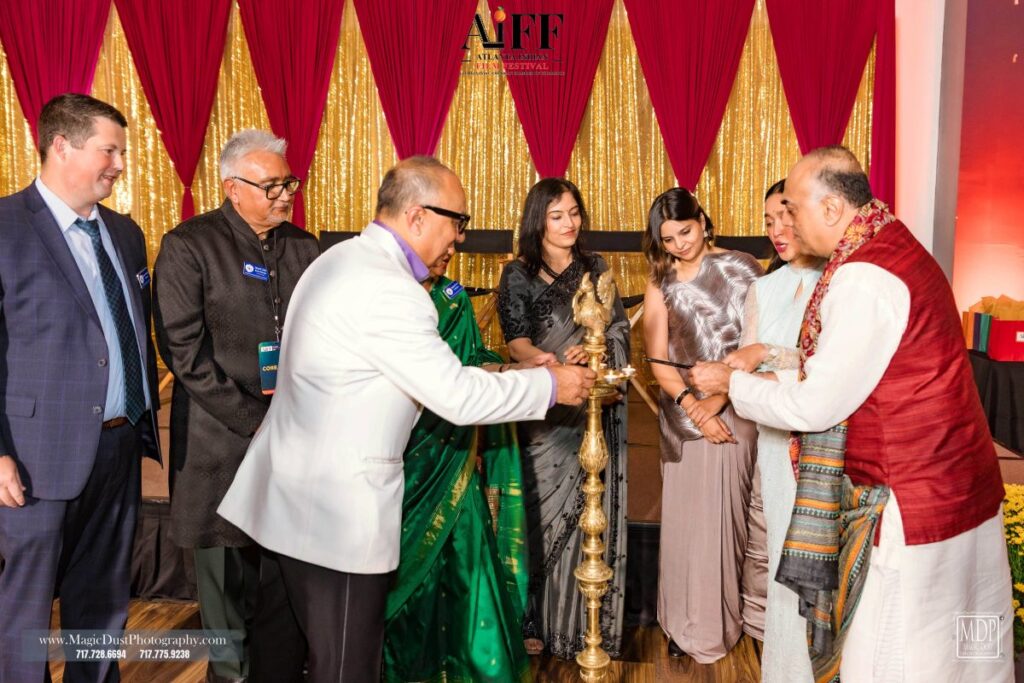
Dimple Seth attended as chief guest in the absence of her husband, Consul General Dr. Sumit Seth. Dr. Divya Singh also joined the occasion, with the featured actors and festival leadership invited to participate in the ceremonial lamp lighting.
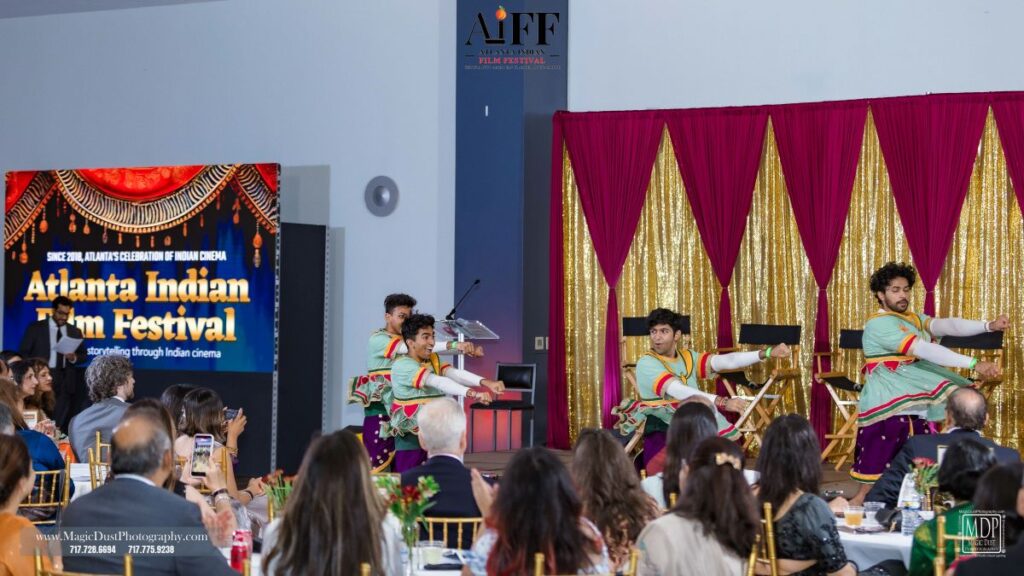
The evening included a Georgia Tech Garba Team performance, film previews, a filmmaker discussion led by Anil Kumar, and a conversation with Kapur and Gupta moderated by Sumeeta Mishra. Sonjui Kumar introduced the featured actors, and the program recognized the festival team and sponsors.
Media partners Zee, NRI Pulse and Khabar were acknowledged at the press meet, along with community supporter Mustafa Ajmeri. Ninan credited their role in helping the festival connect with wider audiences.
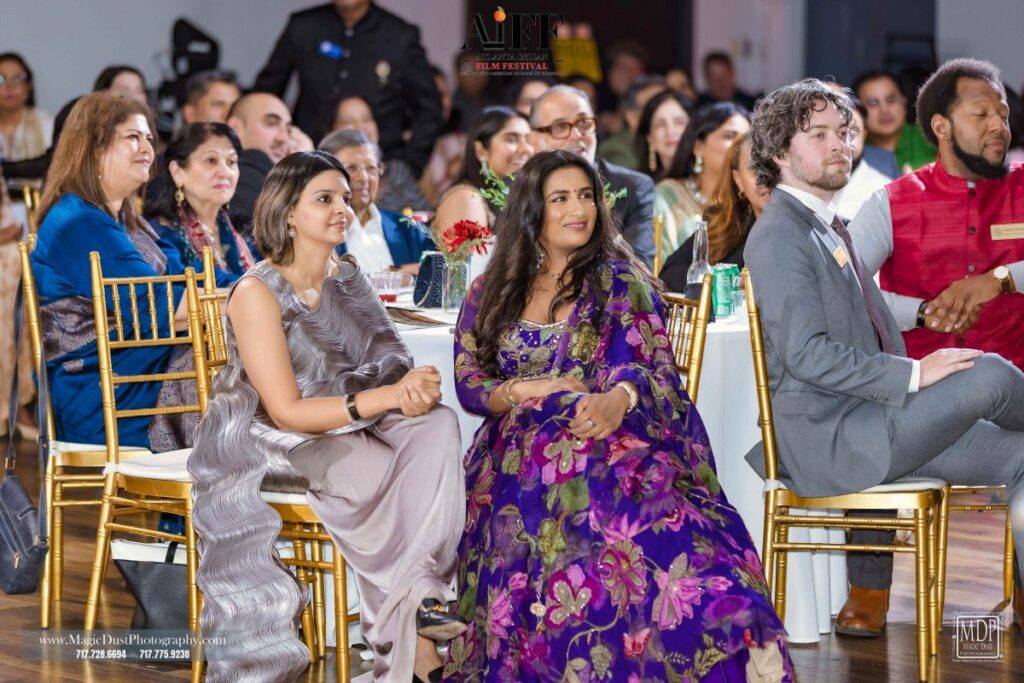
Co-festival chairs Anil Kumar and Jayant Joshi led an organizing team that included Chopra; media and marketing leads Adil Devshi and Zohra Hasta; sponsorship and youth engagement lead Ritu Patel; ticketing lead Navaid Siddiqui; and finance lead Jigna Shah. Ninan coordinated the press conference, while Anokhi and Pooja Parikh planned the gala. Intern Poorvi Mathur and advisors Sonjui Kumar and Grace Multani were also recognized.
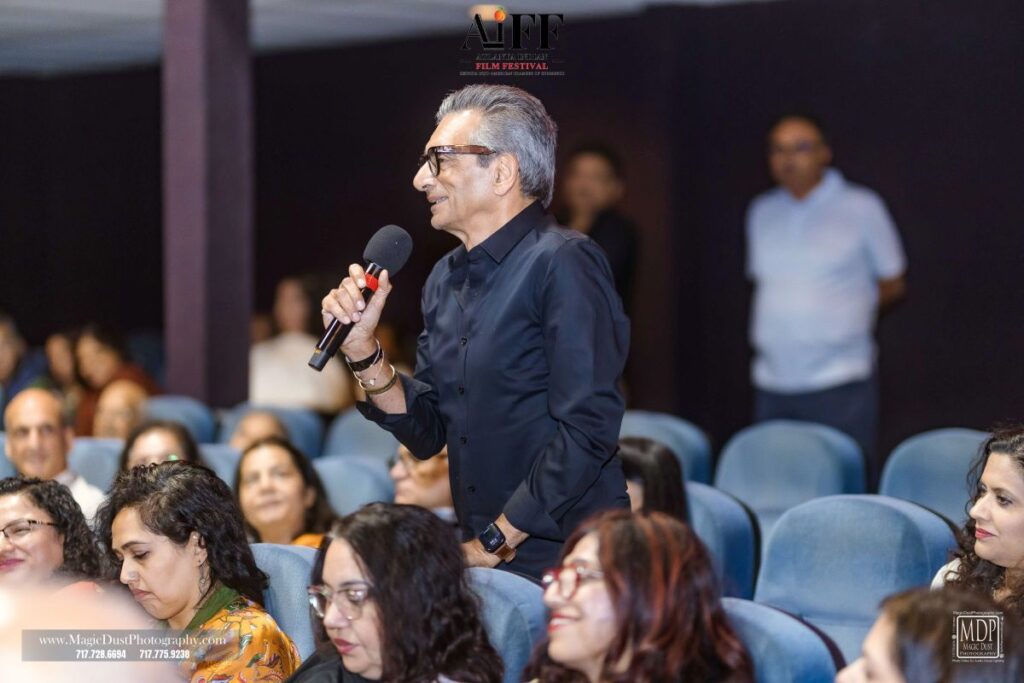
Throughout the festival’s conversations, the filmmakers returned to a practical appeal: come to the theater. Sharif encouraged guests to watch a film they knew nothing about and remain afterward to hear from its makers. The artists spoke of the effort, personal investment and uncertainty behind independent productions, and of the satisfaction of seeing audiences respond.
For three days, the festival brought those two sides of cinema into the same room. Stories that had begun in private memories and individual imaginations became shared experiences, finding their next chapter in the people watching.
Cover photo credit: Magic Dust Photography.
