



NRI PULSE STAFF REPORT
Washington, DC, July 13, 2026: A nationally televised civics competition created to celebrate America’s 250th anniversary has come under scrutiny after a NOTUS investigation raised questions about the transparency of its judging process following the elimination of a highly accomplished Sikh-American contestant.
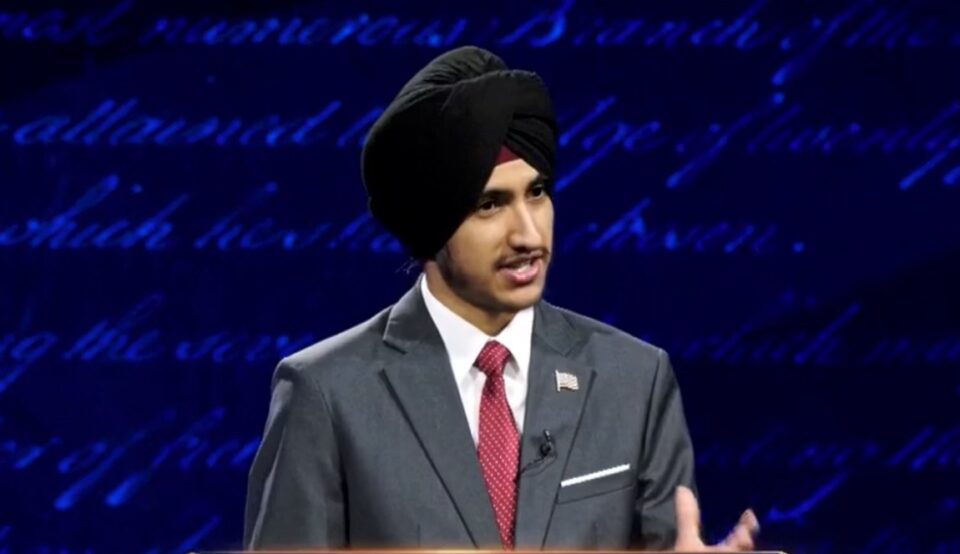
The investigation, published by NOTUS reporter Sam Fortier, centers on Aangad Singh, a 15-year-old student from Milford, Connecticut, who competed in the Presidential 1776 Award Competition. The contest, held as part of the America250 celebrations, brought together 20 of the nation’s top high school civics students and concluded with a televised championship at the John F. Kennedy Center for the Performing Arts, hosted by Mario Lopez.
According to the NOTUS investigation, Singh’s family began questioning the results after he failed to advance to the competition’s final three despite what they believed was a strong performance.
NOTUS reported that several contestants and parents said they kept their own scorecards during the competition and believed Singh had earned enough points to advance. However, the contest did not display a live scoreboard, and organizers did not publicly release detailed scoring or explain how judges’ evaluations were combined to determine the finalists.
After the event, Singh’s mother, Ramandeep Singh, requested the final scores from the U.S. Department of Education but was told they were “proprietary,” according to NOTUS. The family later reviewed the televised broadcast and conducted its own analysis of the scoring.
The controversy centers on two answers during a constitutional law round. According to NOTUS, Singh cited provisions of Article III of the U.S. Constitution that matched the constitutional text but were marked incorrect during the broadcast. In a later lightning round, Singh answered that the Thirteenth Amendment ended slavery, a response that was also ruled incorrect. The family contends that if either of those disputed answers had been accepted, Singh would have advanced to the final three.
The NOTUS investigation notes that Singh himself initially attributed the outcome to possible judging errors rather than intentional bias. While some relatives wondered whether his identity as a Sikh-American who wears a turban could have influenced the outcome, Singh cautioned against drawing conclusions without evidence, suggesting instead that judges may have relied on an inaccurate scoring rubric or simply made mistakes.
Singh’s father subsequently contacted the Department of Education seeking a review of the scoring. Shortly before the NOTUS investigation was published, the department responded that the competition had been “developed, judged, and scored independently” by the James Madison Memorial Fellowship Foundation. It also noted that contest rules state judges exercise “independent good faith judgment” and that their decisions are final and binding. According to NOTUS, the Singh family said the response did not address their specific concerns about the disputed scoring.
The James Madison Memorial Fellowship Foundation did not respond to NOTUS’ requests for comment, according to the report.
The episode has prompted questions about transparency in the judging of national academic competitions, with critics arguing that the public release of detailed score sheets would help strengthen confidence in the results. Neither the Department of Education nor the James Madison Memorial Fellowship Foundation has indicated that the competition’s scoring will be reviewed.
