




BY JYOTHSNA HEGDE
The candles glowed softly, illuminating faces marked by grief, confusion, and disbelief.
Students stood shoulder to shoulder, some holding flowers, others clutching handwritten notes they would never have the chance to deliver. Teachers lingered quietly at the edges of the gathering. Parents watched from a distance, their eyes moving instinctively between the memorial and their own children. The air carried the heaviness that follows a tragedy too large to fully comprehend, the kind of sorrow that leaves a community searching not only for answers, but for meaning.
Earlier this year, a metro Atlanta community was shaken by the death of a teenage girl who took her own life. Out of respect for her family, she remains unnamed in this story. Yet in many ways, her story has become larger than any one family. It has become a mirror reflecting fears and questions shared by parents across the country.
In the days that followed, families returned home and looked differently at the children sitting across from them at the dinner table. Teachers replayed classroom interactions in their minds. Friends scrolled through old messages searching for clues. Beneath the grief was a growing realization that emotional suffering does not always announce itself. Sometimes it hides behind good grades, busy schedules, social media posts, and the outward appearance of success.
As communities around the world prepare to observe World Suicide Prevention Day on September 10, those questions have taken on renewed urgency. Established by the International Association for Suicide Prevention in partnership with the World Health Organization, the annual observance serves as a reminder that suicide is preventable. The theme for 2024 through 2026, Changing the Narrative on Suicide, calls for replacing silence with conversation, stigma with understanding, and fear with connection.
The need for that shift has never been greater.
Suicide is one of the leading causes of death among young people in the United States. According to the Centers for Disease Control and Prevention, nearly one in five high school students has seriously considered suicide, while roughly one in ten reports having attempted it. Between 2007 and 2021, suicide deaths among Americans ages 10 to 24 increased by 62 percent. Globally, more than 720,000 people die by suicide every year, making it the third leading cause of death among young people ages 15 to 29.
Yet statistics alone cannot explain the heartbreak left behind when a young life is lost.
For one mother, that reality remains painfully personal.
When she speaks about her daughter Priya, she does not begin with diagnoses or tragedy. Instead, she remembers a little girl who loved to write and illustrate stories, a gifted student who enjoyed helping others learn, and a compassionate young woman who noticed when someone around her was struggling.
“Priya was so much more than her suicide attempts and the last seconds of her life,” says her mother, Geetha Balagopal. “I would like her to be remembered for how she lived and not for how she died.”
Her words capture an important truth. Suicide prevention is not ultimately about death. It is about understanding life, particularly the invisible struggles many young people carry long before anyone recognizes the depth of their pain. It is about creating environments where asking for help feels safer than suffering in silence.
For today’s teenagers, however, silence can be surprisingly easy to maintain.
The Pressure to Be Everything
Adults often speak about the pressures facing teenagers, but the reality can be difficult to fully appreciate unless we listen to the young people living through it. For many adolescents, life feels like a constant balancing act between academic expectations, social pressures, extracurricular commitments, family responsibilities, and an increasingly uncertain future. The challenge is not simply succeeding in one area, but excelling in all of them simultaneously.

Nived Lakshman, a student in the University of Michigan’s LSA Honors Program and a youth mental health advocate who works directly with teenagers, says the pressures facing young people today are both academic and social.
“High school is a time that presents a significant amount of change and new challenges in the life of every teenager, both academically and socially,” he says. “The academic pressure is compounded by both a lack of future direction in their careers, with some students not yet discovering what their future path looks like, and by the struggles of often seeing some adapt quicker to high school, with this often affecting confidence.”
Those comparisons no longer end when the school day is over. Through social media, teenagers are constantly exposed to carefully curated snapshots of other people’s accomplishments, friendships, vacations, awards, and celebrations. What they often do not see are the struggles, insecurities, disappointments, and failures that exist outside the frame.
At a stage of life when identity is still forming, that constant comparison can be emotionally exhausting. Lakshman has seen how quickly feelings of isolation can develop.
“Teenagers are often either isolated socially and feeling alone as their lives are changing so rapidly, or they are forced to engage in things that they are not comfortable with doing,” he says. “Peer pressure and isolation are truly havoc for a mind that is not fully developed yet.”
Mishka Bahl, a student volunteer with SOAR Family Support, believes many adults underestimate just how much is expected of today’s teenagers.
“As college admissions and other academic programs become more competitive, academic standards increase exponentially,” she says. “Students are expected to network, perform well in school, participate in internships, play sports, volunteer, help at home, and still maintain relationships with family and peers.”
What makes the situation particularly challenging, she notes, is that teenagers are expected to define themselves before they have fully discovered who they are.
“A sixteen or seventeen-year-old writing their application has to know who they are and write about it profoundly while they still have not figured it out,” she says.

Mental health professionals are increasingly concerned about the emotional cost of those expectations. Dr. Deepti Talluri, healthcare administrator and member of the Forsyth County Mental Health Council, says some of the students who appear most successful on the surface may actually be struggling the most.
“Research shows high-achieving students can experience intense anxiety, perfectionism, burnout, and fear of disappointing parents or society,” she says. “Many teens learn to look fine externally while silently struggling internally.”
The danger, she explains, is that achievement can become tied to identity. When children receive more recognition for accomplishments than emotional well-being, they may begin to believe that their value depends on success.
“Children are often praised more for achievement than emotional well-being,” Dr. Talluri says. “Over time, some teenagers begin believing, ‘If I fail, I lose love, respect, or identity.'”
In that environment, a disappointing grade becomes more than a grade. A rejection becomes more than a rejection. A setback can feel like a judgment on one’s worth. For many teenagers, the struggle is not simply managing pressure. It is carrying that pressure while trying to convince the world, and sometimes themselves, that everything is fine.
Between Two Worlds
For many South Asian teenagers, the pressures of adolescence are layered upon another reality that is often difficult to articulate. Alongside the universal challenges of growing up, they are also navigating cultural expectations, family sacrifices, and competing definitions of success. Many grow up hearing stories of parents and grandparents who overcame tremendous obstacles to create opportunities for future generations. Those stories can be inspiring, but they can also create a sense of responsibility that feels overwhelming.

Dr. Kalpana Prasad, Program Director of the Psychiatry Residency Program at Northeast Georgia Medical Center, believes one of the biggest challenges facing South Asian youth is the expectation that they fit a particular mold.
“The model minority myth hurts those kids who cannot fit into this stereotype and invalidates their struggles,” she says.
Parents naturally want their children to succeed, but Dr. Prasad notes that conversations within families can sometimes become focused on performance rather than emotional well-being. One observation she shares captures that distinction powerfully.
“Over dinner, the parents ask how was school and not how did you feel.”
The difference between those two questions may seem small, but it reflects two very different approaches to parenting. One focuses on outcomes and accomplishments. The other invites vulnerability, reflection, and emotional honesty. When children become accustomed to discussing grades, awards, and achievements but not fears, disappointments, or insecurities, they may gradually learn to keep those struggles to themselves.
Dr. Nisha Gupta, clinical psychologist and professor of psychology at the University of West Georgia, believes one of the strongest protective factors in a child’s life is the certainty that love does not depend on performance.

“Children need to know they are unconditionally loved by their parents, no matter their external performance,” she says.
For teenagers navigating intense academic and social pressures, that reassurance can be transformative. Young people who believe their worth depends on achievement often become fearful of failure. They may hide mistakes, avoid asking for help, or suffer quietly rather than risk disappointing those they love.
Dr. Gupta encourages parents to focus not only on solving problems but also on validating emotions.
“If parents can practice emotionally validating children’s strong emotions rather than trying to take the emotions away from them, this teaches children how to validate their own strong emotions.”
Learning to sit with difficult emotions is an essential part of resilience. After all, life rarely unfolds in a straight line. There are disappointments alongside triumphs, setbacks alongside achievements, and moments of uncertainty alongside moments of joy. Young people who understand that reality are often better equipped to navigate adversity when it arrives.
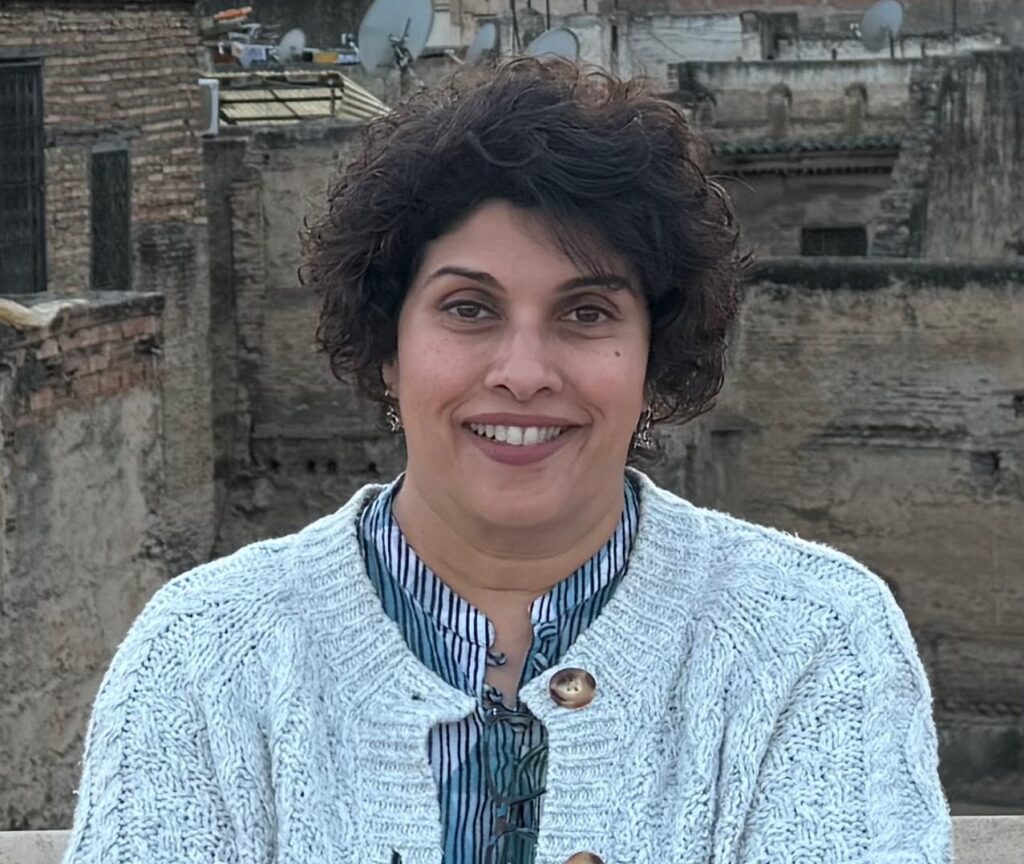
That philosophy is echoed by Sumana Moudgal, Associate Director of College Counseling at Westminster Schools and former Magnet Counselor at Wheeler High School. While social media is often blamed for many of the challenges facing teenagers today, Moudgal believes parents must also focus on helping children develop confidence and independence from within.
“Harmful external influences will exist from now to eternity,” she says. “As parents, the way to combat them is by raising self-confident children who are comfortable in their skin.”
Moudgal encourages families to move away from parenting approaches that rely heavily on authority, judgment, or constant direction. Instead, she advocates creating homes where children feel respected, heard, and encouraged to think for themselves.
“When you treat children with respect, as beings with worthy ideas and dreams, you draw the best out of them,” she says.
She also believes children need opportunities to fail. While parents naturally want to protect their children from disappointment, resilience develops through learning how to recover from setbacks rather than avoiding them altogether.
“When you allow for failure,” Moudgal says, “it will have your children grow into emotionally strong human beings who are willing to do what they don’t enjoy because it will lead them to something better.”
Taken together, these perspectives point to a common theme. The goal of parenting is not simply to help children succeed. It is to help them develop the confidence, emotional strength, and sense of self-worth necessary to survive life’s inevitable challenges. Long before a young person reaches a crisis point, they are forming beliefs about who they are, what they are worth, and whether they can safely share their struggles with the people around them. Those beliefs are shaped not by a single conversation, but by thousands of small interactions accumulated over years.
It Takes a Community
In the weeks following the Atlanta tragedy, grief gradually gave way to reflection. The initial shock was replaced by difficult conversations among parents, educators, healthcare professionals, and community leaders who found themselves asking not only what had happened, but what could be done to prevent similar tragedies in the future. If suicide prevention is truly the goal, many concluded, the conversation cannot begin only after a crisis occurs.

Dr. Vani Gaddam, an educator, academic advisor, and community advocate who helped organize the vigil, saw both heartbreak and hope in the community’s response.
“The overwhelming community response showed that many families are genuinely concerned about the rising levels of stress, anxiety, fear of failure, and emotional isolation among teenagers,” she says.
For Dr. Gaddam, one of the most important lessons is helping young people understand that setbacks are a natural part of life rather than defining moments.
“One of the most important messages we need to reinforce is that setbacks are part of growth and that no single moment should define a child’s identity or future,” she says.
That message resonates strongly with Aditya Bahl, founder of SOAR Family Support, a Georgia-based nonprofit that provides education, advocacy, and peer support for families navigating children’s mental health challenges. For Bahl, the mission began not in a boardroom or conference hall, but in his own home.
“Our daughter’s OCD and Depression diagnosis and treatment at a young age made us realize how isolating the journey is for the entire family,” he says. “We wanted to talk to all our friends and family and open her world and ours. We wanted to seek help from other parents who had lived experiences.”
What began as conversations among a handful of families eventually grew into a community.
“A lot of such families became close friends and an integral part of SOAR,” Bahl says. “We started in our basement two years ago and never looked back.”
Today, SOAR connects families facing challenges ranging from anxiety and depression to OCD, ADHD, and autism, providing educational programs and support groups that remind parents they do not have to navigate these experiences alone.

Community leader and youth mentor Shankar Mahadevan believes that awareness efforts must focus as much on adults as on children.
“There is a need for education and awareness more amongst the adults than the youth,” he says.
His observation echoes a theme that surfaced repeatedly throughout conversations with experts and advocates. Young people are often willing to talk when they feel safe, understood, and free from judgment. The challenge is creating environments where those conversations can happen.
Organizations such as Raksha, which serves South Asian families in Georgia, have observed the consequences when stigma prevents those conversations from taking place. According to information shared by the organization, Asian American and Pacific Islander youth continue to underutilize mental health services despite experiencing emotional distress at rates similar to their peers. A therapist affiliated with Raksha believes reducing stigma must be a community priority.

“Today, adolescents are navigating unprecedented social, academic, and digital pressures,” the therapist says. “We need to start modeling how to have more conversations about our mental health without stigma and build environments where young people feel seen, heard, valued, and connected every day.”
Mental health experts also caution that emotional distress is often connected to broader experiences within a child’s environment. Reshma Mahendra, CDC Deputy Director of the Division of Violence Prevention, has pointed to research showing that exposure to domestic violence and other adverse childhood experiences can significantly increase the risk of depression, anxiety, emotional dysregulation, and suicidal thoughts among young people. Her observations serve as a reminder that protecting children’s mental health requires looking beyond individual symptoms and understanding the broader circumstances shaping their lives.
As the conversations surrounding teen mental health continue, one message emerges with remarkable consistency. Whether discussing academic pressure, cultural expectations, family communication, trauma, or social isolation, every expert, advocate, parent, and student interviewed for this article returned to the same fundamental truth: connection matters.
Young people thrive when they feel connected to caring adults. They are more likely to seek help when they believe they will be met with understanding rather than judgment. They are more resilient when they know their worth is not tied solely to achievement. Most importantly, they are more likely to overcome periods of emotional distress when they feel seen, valued, and supported by the people around them.
As World Suicide Prevention Day approaches, the theme Changing the Narrative on Suicide offers both a challenge and an opportunity. Changing the narrative requires more than awareness campaigns or annual observances. It requires communities willing to have uncomfortable conversations, parents willing to listen without immediately fixing, and adults willing to recognize that emotional well-being deserves the same attention as academic success.
Perhaps the most important lesson emerging from that tragedy is that suicide prevention begins long before a crisis. It begins in everyday conversations, in homes where children feel safe enough to speak honestly, and in communities willing to replace stigma with compassion. The goal is not simply to prevent death. It is to help young people feel seen, valued, and supported while they are still finding their way through life.
Perhaps the most important step in preventing the next tragedy begins with a simple question asked with genuine curiosity and patience: How are you doing, really?
If you or someone you know may be struggling with depression, anxiety, suicidal thoughts, or emotional distress, resources are available. Help can be found through the 988 Suicide & Crisis Lifeline (call or text 988), Georgia Crisis and Access Line (GCAL) at 1-800-715-4225, Crisis Text Line (text HOME to 741741), NAMI, The Trevor Project, Raksha, SOAR Family Support, and other local mental health organizations. Reaching out for help is a sign of strength, and no one should have to navigate these challenges alone.
