





BY DR. KUNJ PATHAK*
A parent in our community recently shared a painful post about racial discrimination against Indian kids at the local middle school. Her son faced taunts and exclusion. The story felt familiar. I read it and remembered.
My older daughter went through the same school system years ago. Back then, she was one of only a handful of Indian students in Decatur. She was introverted, kept her head down, and survived those years quietly. She had few close friends. The experience left scars I didn’t fully recognize until much later.
We were preparing for a similar saga with our younger daughter, but we were pleasantly surprised by how different her experience turned out to be. We watched her build a circle of friends, laugh easily, and find a sense of belonging. She pushed herself to talk to everyone, join everything, and create a life that felt full.
But here’s what I didn’t know: how to handle the prejudice that would inevitably come.
I never went to middle school or high school in this country. I can’t speak to what happens in the hallways when teachers aren’t looking. But I’ve observed enough to know that racism among children often grows from ignorance. Sometimes their parents’ ignorance, too. It’s not always malice. Often, it’s simply a lack of exposure to people who are different.
We decided to fight it with soft power.
The Open Door
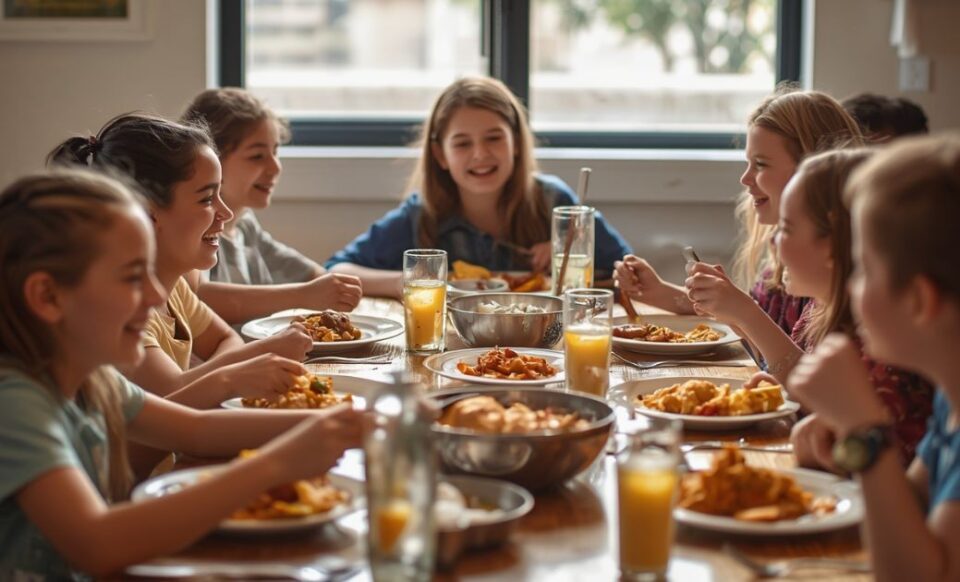
My daughter started inviting friends over for dinner and sleepovers, and I would cook Indian meals—real Indian meals, not the watered-down versions often served in restaurants. We talked about our culture, our festivals, and our food. We answered questions without defensiveness.
Many of her friends had never tried Indian food. Some had moved to Decatur from rural towns and had little exposure to Indian culture. They simply had no frame of reference for what we ate or how we lived.
One day, I asked the middle school activities teacher if I could use the school’s professional kitchen. I showed up with ingredients and cooked butter chicken and pulao for the students. The kitchen filled with the aroma of garam masala and caramelized onions. Kids lined up for seconds.
A boy from a small town in Georgia told me, “I never knew Indian food could be this good.”
The TikTok Dad
I should probably confess something here: I became a TikTok fan because of these kids.
My daughter’s friends pulled me into their world of dances and trends, and instead of resisting—as most parents my age probably would have—I jumped in. Literally. We did TikTok dances together in our living room, me trying to keep up with teenagers who moved as if they were born choreographed.
Then one of those videos went viral.
The kids shared it so widely that suddenly everyone knew me—the Indian dad who could keep up with TikTok dances. My daughter was equal parts mortified and delighted. I was simply happy.
Because that moment of ridiculous, joyful dancing with a group of American teenagers communicated something that a hundred serious conversations about racism never could: We belong here. We are fun. We are part of this community.
Trust, it turns out, is often built in the most unexpected moments.
The Diwali Moment
Our daughter talked so much about Diwali—the lights, the sweets, the traditions, the stories—that her friends became genuinely curious. Not politely curious. Truly curious. Curious enough to want to participate.
Three of her closest friends decided they wanted to learn a Bollywood dance and perform it at a community Diwali celebration. They practiced for weeks. I watched them rehearse in our living room, stumbling over Hindi lyrics, laughing at their mistakes, and working hard to get it right.
The night of the celebration, they performed.
The audience—mostly Indian families gathered to celebrate their own culture—watched with delight. Not because the performance was flawless. It wasn’t. But because three American girls were standing on stage celebrating Diwali with genuine joy and respect.
I watched the faces of my Indian friends. Many had never expected to see their culture reflected back to them by children who didn’t share their background.
Those girls became ambassadors that night without even realizing it. They demonstrated something powerful: prejudice begins to dissolve when people are invited in rather than kept out.
This year, even more girls are eager to perform, continuing that quiet spread of cultural understanding.
Beyond Borders
The trust we built didn’t stay inside our home. It traveled.
I started taking my daughter’s friends on beach vacations—without their parents. At first, that might sound like a small thing. But think about it from a parent’s perspective. You’re sending your child on a trip with an immigrant family you know primarily through your child’s friendship. You’re trusting us completely.
That trust is one of the most meaningful gifts I have ever received.
This fall break, I’m taking two of her friends on an international vacation—again, without their parents.
I want to pause on that for a moment.
In a climate where immigrants are often made to feel like outsiders, like people to be feared or viewed with suspicion, two families trusted us enough to place their child in our care across international borders.
That is not a small thing.
It is a profound, quiet, and powerful statement against everything racism stands for.
The Bully Problem
Kids will always find ways to bully. That’s a constant across cultures and generations.
I see two ways to deal with bullies.
One is to fight back harder—to roast them, match their cruelty, and give them a taste of their own medicine. For some kids, especially those with thick skin and quick wit, that approach works.
The other is not to react.
Bullies thrive on power and attention. They want to see you cry, rage, or shrink. When you deny them that reaction, much of their power disappears.
We chose the second path, but we added something else.
We didn’t just teach our daughter not to react. We made her world bigger than the bullies.
We filled it with friends who loved her mom’s cooking, wanted to celebrate Diwali, danced with her dad on TikTok, and learned Bollywood routines because they genuinely wanted to.
The best defense against prejudice isn’t a sharp comeback.
It’s building a rich, full life that other people want to be part of.
Moving Forward
Our daughter is graduating from middle school this year and heading into high school. She’s carrying something with her that my older daughter didn’t have at that age: a circle of friends who see her culture as something beautiful—not something to mock, tolerate, or ignore.
Will there still be prejudice in high school? Probably.
But our younger daughter now knows something essential: she doesn’t have to hide who she is. She can share her culture, celebrate it openly, and watch others embrace it too.
We’re hopeful that her high school years will be even better—more maturity, more understanding, more open doors, more shared meals, and maybe even a few more viral TikTok dances.
To every immigrant parent who feels invisible, unwelcome, or worried that their child will never fully belong, I offer this:
Don’t fight prejudice with walls. Fight it with your kitchen, your culture, your laughter, and your willingness to show up fully, joyfully, and unapologetically.
The butter chicken strategy worked better than we ever imagined.
And apparently, so did the TikTok dancing.
*Kunj Pathak is a Decatur-based biotechnology professional, molecular virologist, and father of two.
