




BY NAMITA DOGRA SUDAN
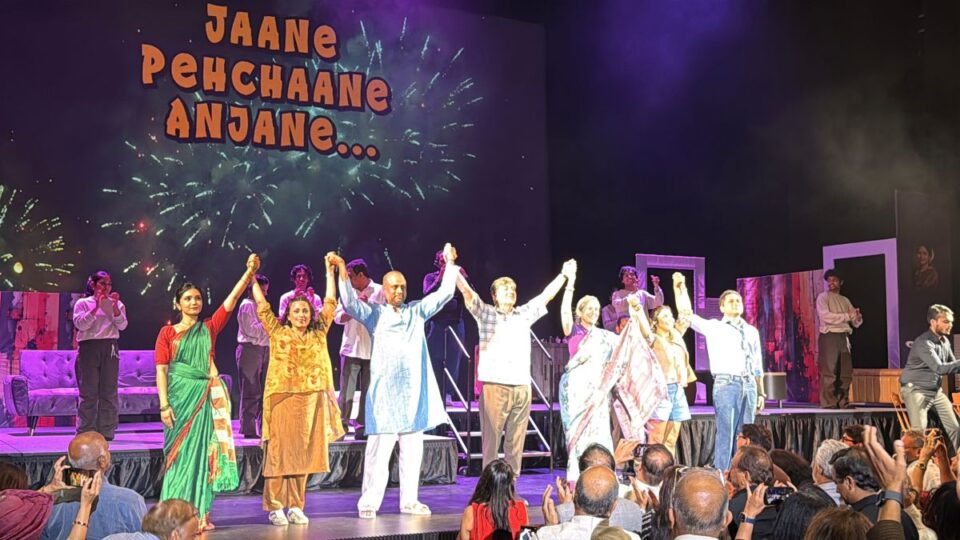
Anupam Kher’s Jaane Pehchaane Anjaane brought Hindi theater to life at the Gas South Theater in Duluth on September 25, blending comedy, music and emotional storytelling with a thought-provoking look at relationships, loneliness and a woman’s right to make her own choices.
Written and directed by Gajendra Ahire and produced by Anupam Kher Studio, the play had already enjoyed a successful run in India before heading to North America. In Atlanta, the production kept the audience laughing through its lighter moments, while its more poignant scenes brought the theater to complete silence.
Kher takes on a central role as well as the role of narrator, guiding the audience through the interconnected stories. Music by Anu Malik, along with energetic dance sequences, adds a cinematic scale to the live production.
But the real strength of the play lies in its three female characters and the very different questions about love, companionship and independence they raise.
Three Generations, Three Stories of Choice
The story moves across three generations of women, each confronting relationships and personal choices at a different stage of life.
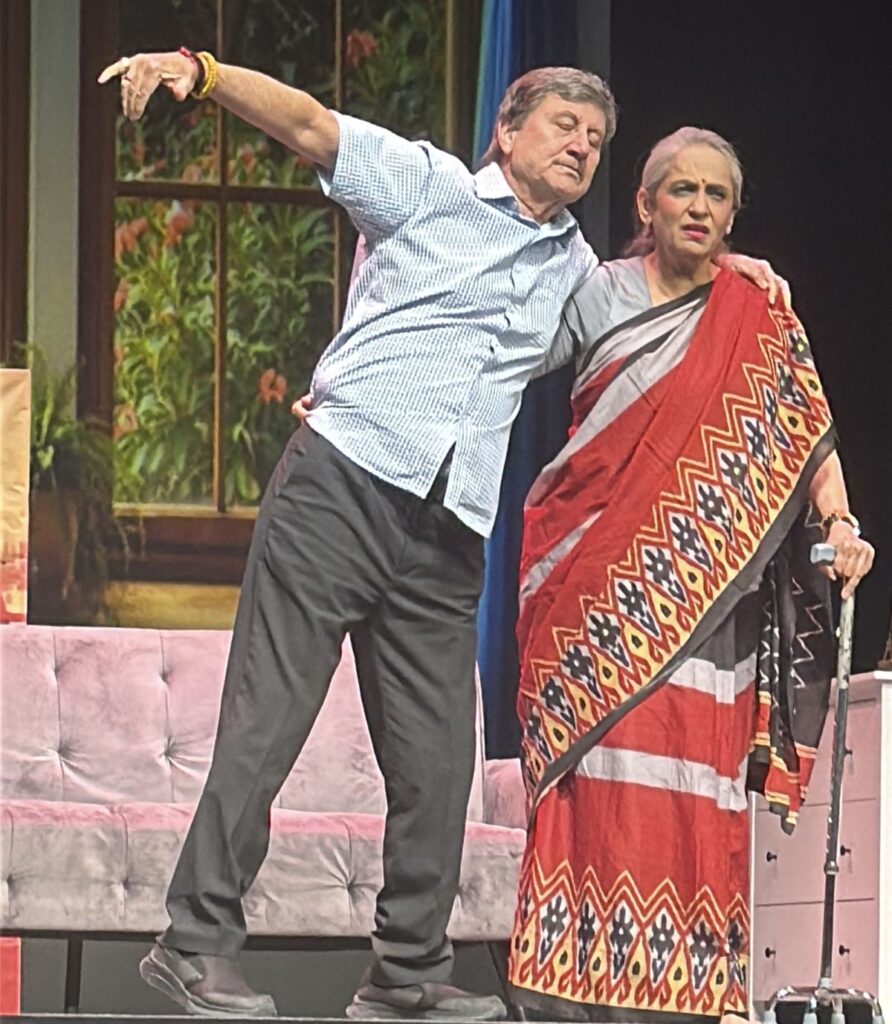
Swaroop Sampat plays a woman in her 60s who, after losing her husband, seeks companionship with another widower, played by Kher.
Her character carries the scars of a marriage in which she was emotionally and financially taken for granted. Even after becoming a widow, she finds herself facing another challenge: an adult son who struggles to accept that his mother is capable of making her own decisions.
Her journey becomes a quiet but powerful statement about the right to companionship and independence at any age. The play refuses to treat an older woman’s desire for a new beginning as unusual or inappropriate.
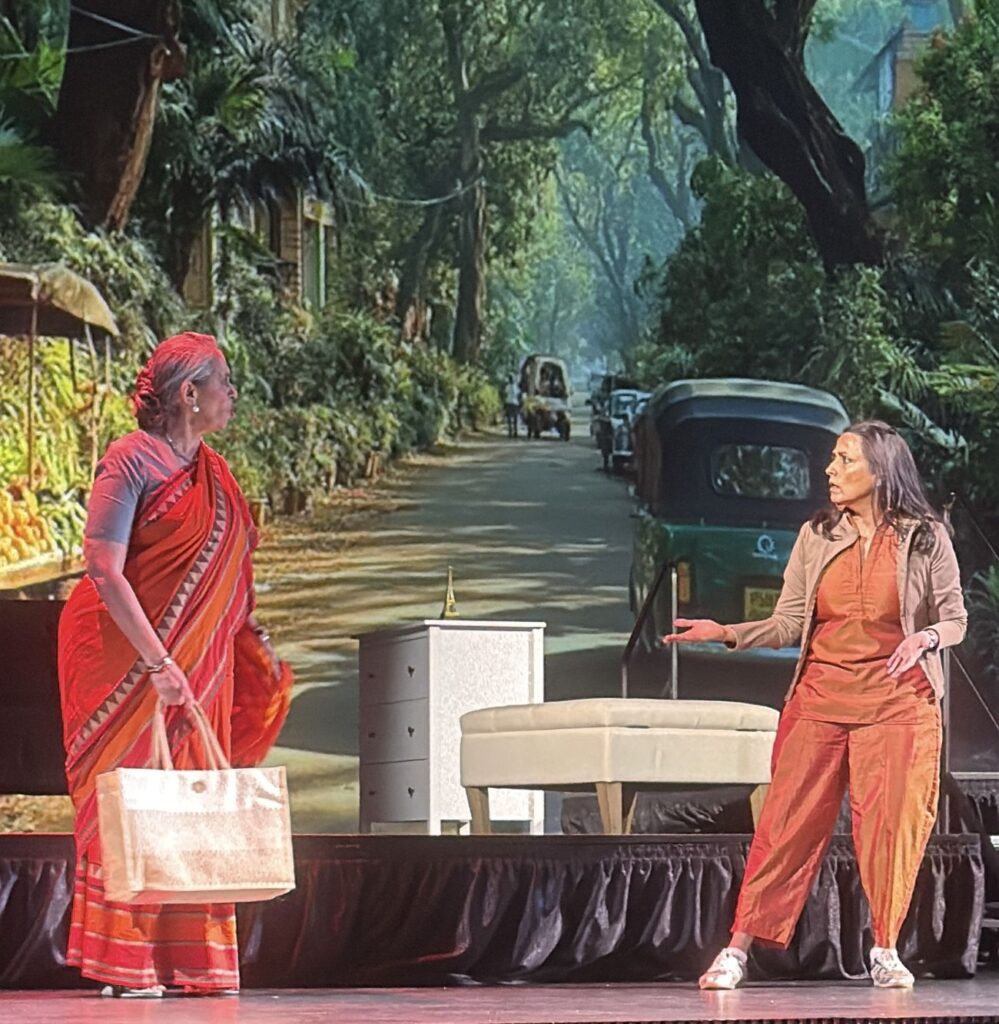
The story then moves to a woman in her 40s, portrayed by Meghna Malik, whose marriage ended under circumstances beyond either partner’s control. Her husband, who was also her closest friend, eventually came out as gay and left to build a life with his partner.
The play approaches her experience with empathy rather than blame. Her loneliness and search for companionship form the emotional core of her story, while her eventual reconnection with her former husband suggests that relationships can evolve even after a marriage ends.
Finally, Maya Sharma represents the younger generation. She plays an independent young woman who chooses to walk away from a long-term relationship despite knowing that her partner is headed toward considerable wealth and success.
With her father encouraging her to settle down, she still chooses to leave after realizing that she is not truly being seen or valued in the relationship. For her, self-respect and personal freedom matter more than financial security.
Together, the three stories offer a simple but powerful message: a woman’s right to choose does not come with an age limit.
Kher, Sampat and Malik Steal the Spotlight
Anupam Kher is completely at home on stage. His comic timing, warmth and ability to shift between humor and emotion make him a natural anchor for the production.
Swaroop Sampat is equally impressive, particularly in the quieter moments of her character’s journey. Her performance gradually moves from vulnerability to determination, allowing the character’s strength to emerge without unnecessary dramatics.
But one of the evening’s biggest surprises was Meghna Malik.
Malik brought an infectious comic energy to a character that, according to the actress, was not originally written with such a strong comedic dimension. Her expressive delivery, physical comedy and ability to find humor in small moments made the character instantly endearing.
Speaking backstage exclusively with NRI Pulse, Malik said that the original character arc was not particularly comic, but her own interpretation helped bring out its lighter side.
And it worked. Every time Malik walked onto the stage, the energy in the room changed.
NRI Pulse Goes Backstage – Exclusive
Following the Atlanta performance, NRI Pulse caught up backstage with writer-director Gajendra Ahire and members of the cast.
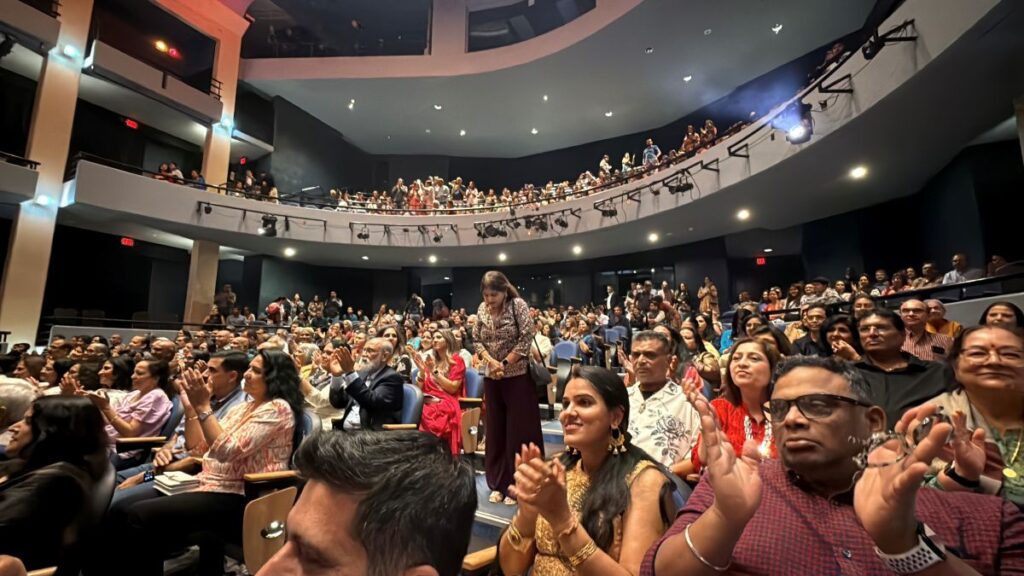
Ahire thanked the Atlanta audience for its warmth and enthusiastic response. Asked whether he would consider adapting Jaane Pehchaane Anjaane into a feature film, he said he had not given serious thought to a film adaptation yet, but remained open to the possibility.
He also spoke about the scale of the production and praised Kher’s vision in taking the play on an extensive U.S. and Canada tour.
NRI Pulse also spoke with Maya Sharma and Shraddha Mandale backstage. Both actresses shared similar feelings about the ongoing U.S. tour, saying they are thoroughly enjoying the experience and are extremely happy with the response from audiences. For both, performing in Atlanta carried an especially warm feeling, with the city making them feel “at home.”
Young actor Vikas Rawat also highlighted the importance of audience engagement in live comedy. According to Rawat, good comic timing depends not only on the performers but also on an audience that understands and responds to those moments, and he felt Atlanta delivered on both counts.
Kher echoed that sentiment during his closing remarks, personally thanking the Atlanta audience for its enthusiastic response.
The evening also attracted a notable guest from Atlanta’s diplomatic community, with Consul General of India in Atlanta Dr. Sumit Seth attending the performance with his wife.
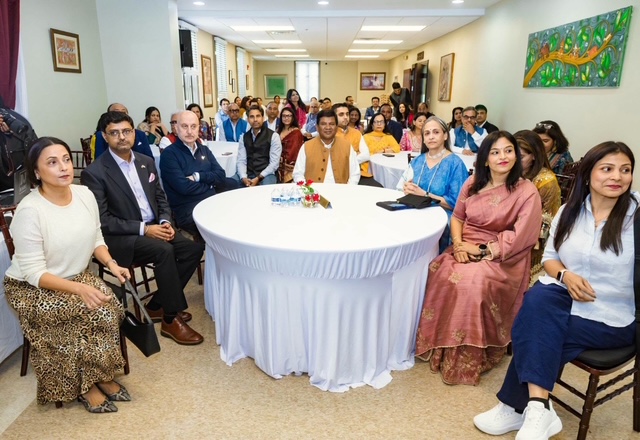
Panel Discussion at the Consulate
A day before the Atlanta performance, Anupam Kher and Swaroop Sampat took part in a panel discussion at the Consulate General of India in Atlanta on September 24, moderated by Dr. Pamila Dembla. The conversation focused on theater, ambition, setbacks and building a career in the arts.
Kher spoke about the sense of wonder he continues to carry from his childhood in Shimla. Despite more than 550 films, he said, “I’m still that small-town boy from Shimla.”
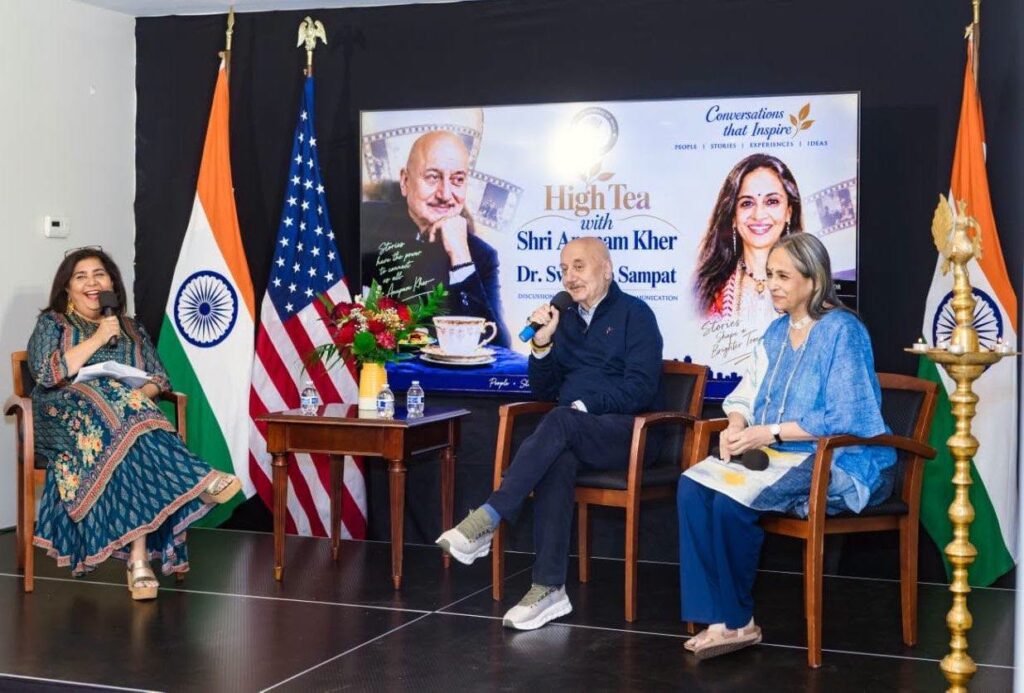
He also described nervousness before a theater performance as a creative force, calling it “very creative.”
When asked what aspiring artists in the Indian diaspora should do when opportunities are limited, Sampat offered a simple message: “Work gets work.” Kher emphasized persistence, recalling his father’s advice that “failure is an event, never a person.” His message was clear: “Giving up is not a choice.”
Sampat also spoke about her lifelong connection with theater, recalling how she grew up watching performances from backstage and helping with costume changes. For both actors, the discussion underscored the importance of persistence, connection and the lasting impact of live performance.
From India to North America
The production’s journey began in India, where Jaane Pehchaane Anjaane completed a successful run before heading overseas.
The North American tour, promoted nationally by Rajender Singh of STAR Promotion, opened with a sold-out performance in Houston on September 5, 2026, and is scheduled to continue through October 11, with Boston as the final stop.
The tour is taking the production to major Indian-American communities across the United States and Canada, giving audiences the opportunity to experience a Hindi theatrical production featuring some of India’s most recognizable performers.
The play was brought to Atlanta by Sharmila Hudda alongside the Nari Shakti women’s charity.
For Atlanta audiences, the result was an evening that went beyond a conventional stage play. It combined the immediacy of live theater with music, comedy and performances that carried the emotional weight of a film.
And while the star power may have drawn the audience into the theater, it was the performances and the questions the play left behind that kept the story alive after the curtain fell.
*With inputs from Jyothsna Hegde, who covered the panel discussion at the Consulate General of India in Atlanta.
