




BY NATE NATESAN*
When Prime Minister Narendra Modi launched Swachh Bharat in India in 2014, it brought cleanliness and civic responsibility into the national conversation.
Today, we see so many reels and social media posts about poor civic sense in India. They are widely shared, including by Indians living abroad. India is a huge country with more than 1.4 billion people, and there are many challenges in bringing about change. During my last visit in 2026, I did see a few positive changes, though there is still a long way to go.
But while we point fingers at India, perhaps we in the United States should also look at ourselves in the mirror.
We follow civic sense in America. We stand in line. We follow parking rules. We put trash where it belongs. We generally respect public spaces.
But what happens when we gather with Desis?
Why is the same civic sense not always followed by educated and well-to-do people of Indian origin in Atlanta and other cities across the United States? At temples and places where we congregate, we sometimes create the very disorder that we would never create elsewhere.
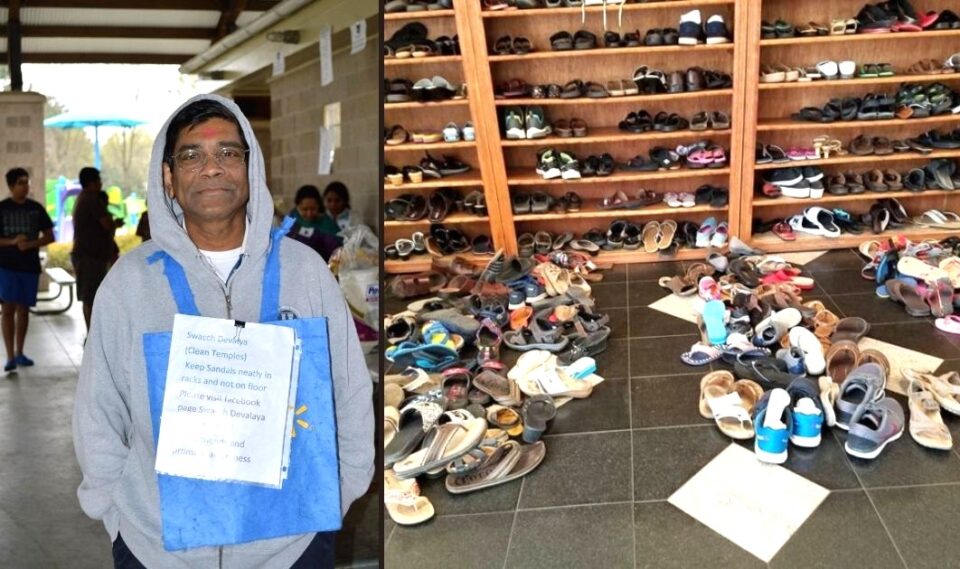
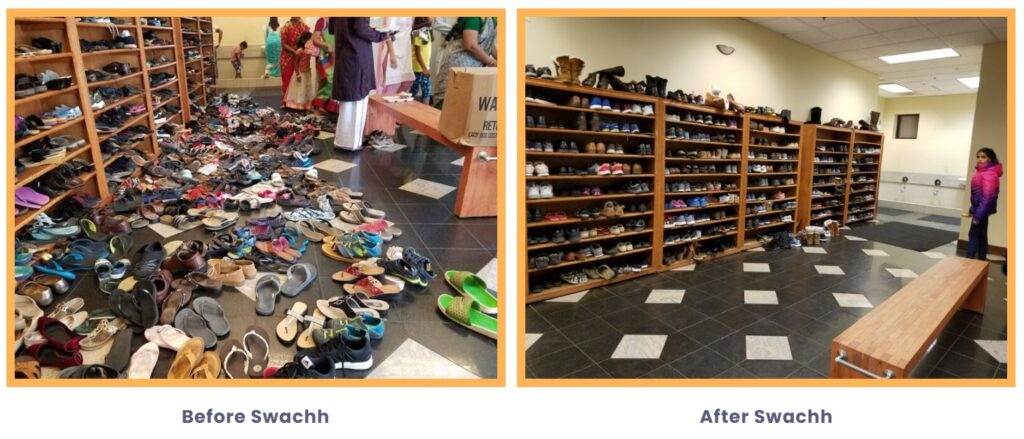
Footwear is a simple example. Temples provide designated stands, yet shoes and sandals are often piled around entrances instead of being placed neatly in the stands.
That simple observation led to my journey with Swachh Devalaya.
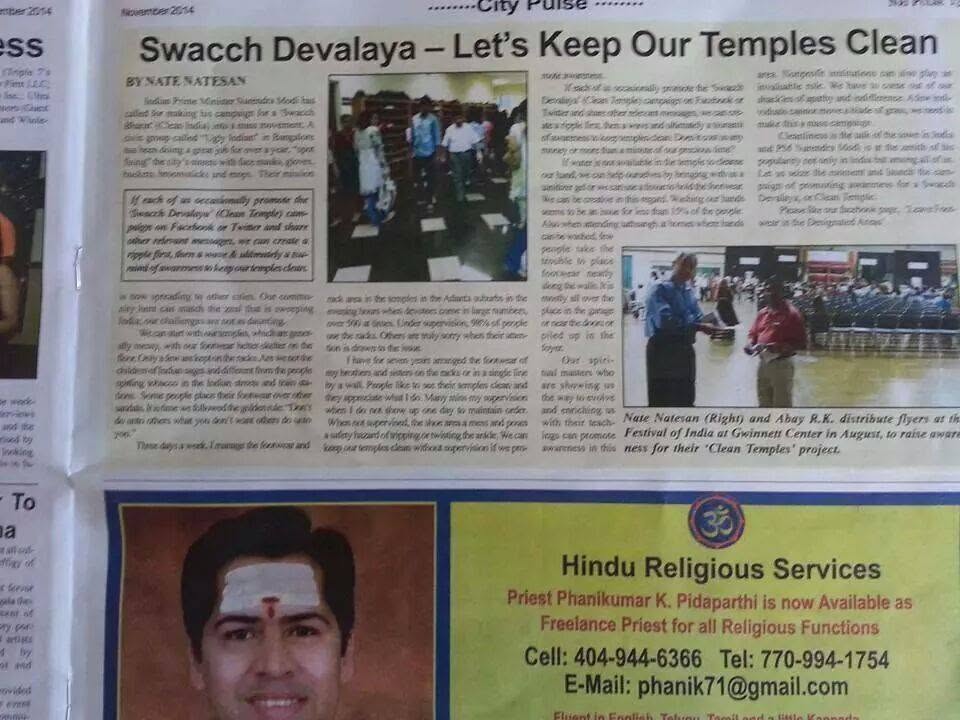
NRI Pulse gave the first media coverage to Swachh Devalaya in 2014. At the time, I was managing Swachh at Hanuman Mandir in Alpharetta and Shirdi Sai Baba Temple in Suwanee. In December 2014, TV Asia covered the Swachh story at Shirdi Sai Baba Temple.
Then came one success story after another.
In 2015, Swachh was introduced at the newly consecrated Sri Mahalakshmi Temple in Cumming. The concept also reached the Hindu Temple of Atlanta in Riverdale, Ambaji Shree Shakti Mandir in Lake City and Sanatana Mandir in Smyrna.
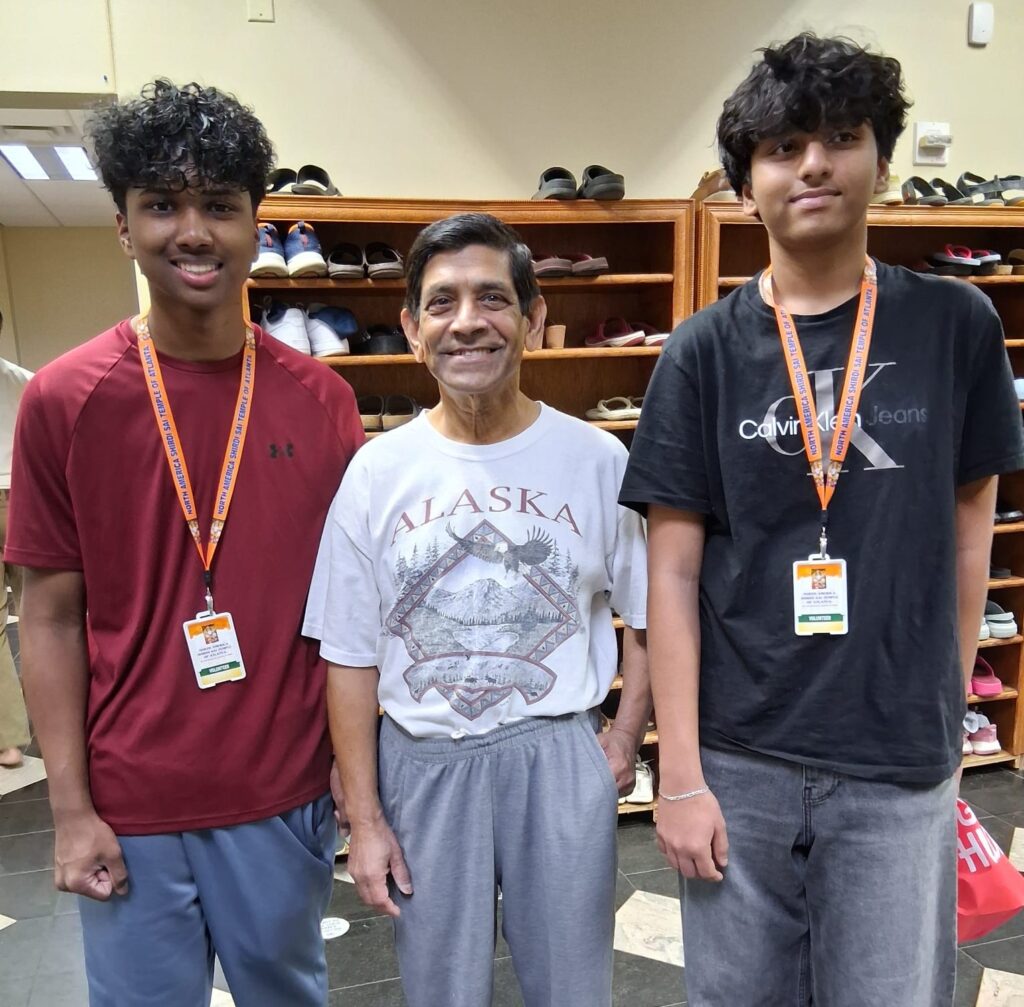
Over the years, Swachh Devalaya became well known in Atlanta. Temples embraced the concept and honored the effort. I have been greeted by “strangers” in public places because they recognized me through Swachh.
One of my favorite Hindi songs from 1968 has words that roughly mean: a sign of recognition appears on strangers’ lips, and strangers of yesterday become lifelong friends.
Those words have become true in my life.
But for all its success, Swachh has now reached a crossroads.
For all its success, Swachh has reached a dead end. The Swachh concept will wither away as I retire soon. Added to that, we see new immigrants from India and other states and cities who are not exposed to the concept of Swachh, and we will be back to square one.
For Swachh to become a lasting reality, the community must work together to lift the mountain of apathy.
Only Lord Krishna can lift the mountain alone, though I have done a lot of lifting.
This cannot remain one person’s mission.
National organizations such as IACA and IFA, regional organizations, Indian diplomatic missions and spiritual organizations should promote awareness about civic responsibility. Some organizations clean streets a couple of times a year, which is a wonderful concept in America. But why do we hesitate to address our own civic sense at temples and community gatherings?
There is a contradiction here that we should be willing to acknowledge.
We generate hundreds of thousands of dollars for very good causes in India by running miles in Atlanta. We take great pride in our heritage and culture. Yet we sometimes ignore something as basic as keeping our own gathering places orderly.
Our spiritual organizations can play an especially important role. Many of them already practice excellent civic sense within their own institutions. Why not actively promote that awareness to the larger community?
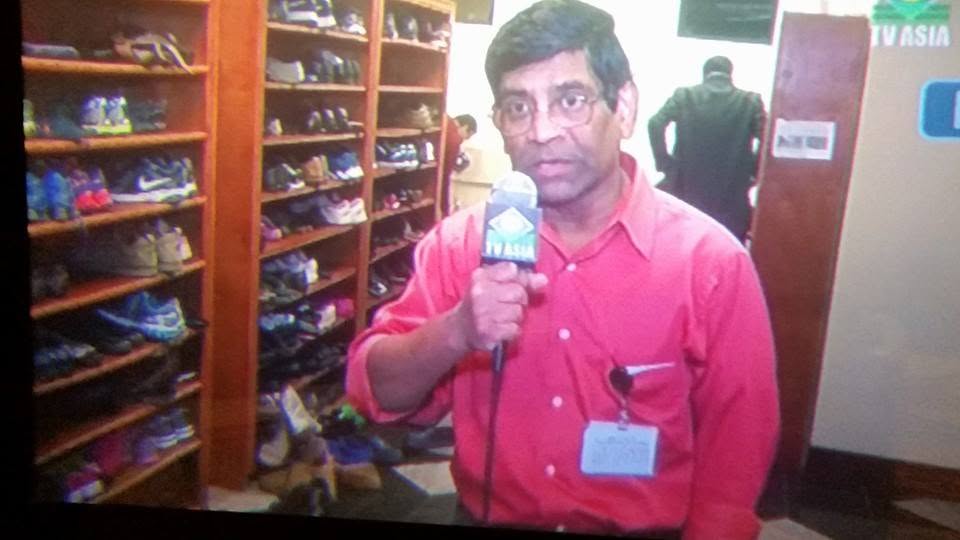
Over the years, I have carried the Swachh message to temples, community organizations and spiritual leaders. I briefed four Indian Consuls General in Atlanta as well as Ambassador Arun K. Singh in 2016. Consul General Nagesh Singh spoke highly of Swachh during his farewell speech.
I also had opportunities to brief leaders including Pujya Swami Tejomayanandaji of Chinmaya Mission in 2016 and Swami Swaroopanandaji in 2025, as well as leaders associated with Vishwa Hindu Parishad and other organizations. Swachh Devalaya has been honored by several Atlanta temples and commended by community organizations.
BAPS Swaminarayan Mandir, whose temples already follow strong standards of cleanliness and order, honored Swachh Devalaya. I also addressed a VHPA national satsang attended by representatives from chapters across the United States. My request was simple: promote this awareness nationally.
If one person can do so much, imagine what we can accomplish by coming together.
There is another Hindi song whose message I have often remembered: friends, extend a helping hand; a person working alone will eventually get exhausted.
I am not burnt out — neither in spirit and motivation nor physically. But no movement should depend forever on one soldier.
And today social media gives us an opportunity that did not exist before. Long ago, the pen was mightier than the sword. Now we have social media, where trash travels faster than the speed of light. Why can’t messages about civic sense travel just as fast?
Swachh Devalaya has never been about money. I have never taken money from anyone for this work. As I like to say, “Nate will never say donate.”
It has always been about changing a habit.
Put your footwear where it belongs. Keep the temple clean. Leave a gathering place as orderly as you found it. Think about the person who comes after you.
These are small things. But civic sense is built from small things.
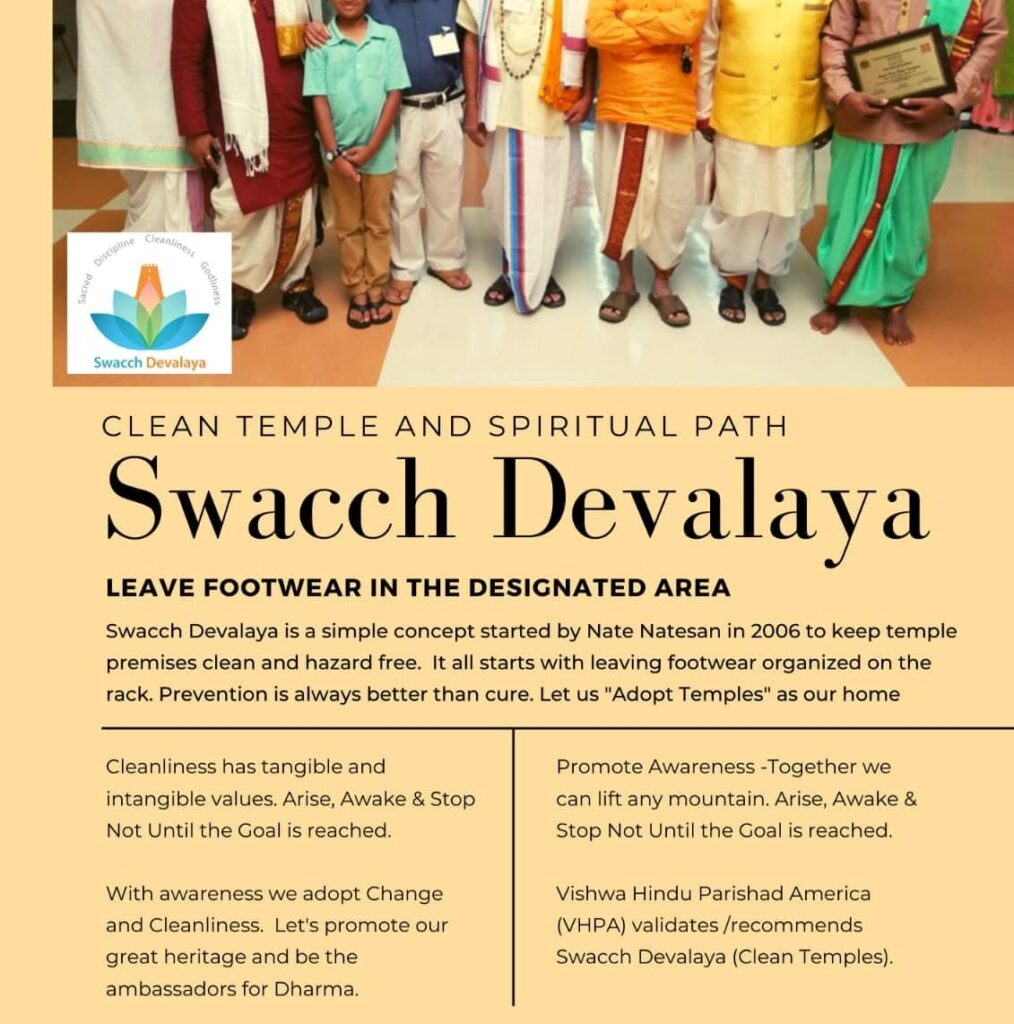
I thank all the people who connected me with leaders of temples and organizations where I could introduce Swachh Devalaya, and those who introduced me to eminent community and spiritual leaders. Most of all, I thank the entire community for giving me the moral support to continue this work for nearly two decades.
But appreciation for one person’s work is not enough.
Swachh Devalaya should not end when Nate stops standing near the shoe racks. The real success of Swachh will come when nobody needs to stand there at all.
More information about the Swachh Devalaya journey, including its success stories, videos and photographs, is available at SwachhDevalaya.org.
*Atlanta resident Nate Natesan is the founder of Swachh Devalaya.
