



NRI PULSE STAFF REPORT
Tech billionaire Elon Musk has revealed that his partner, Neuralink executive Shivon Zilis, is half-Indian, while pushing back against critics who have accused him of racial bias in recent debates over immigration and skilled workers.
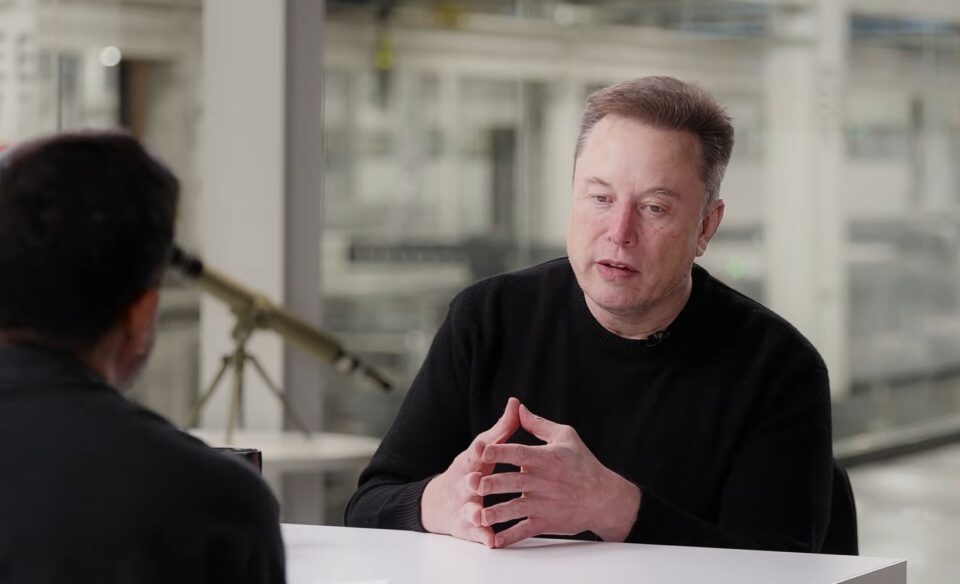
Speaking on entrepreneur Nikhil Kamath’s podcast, the Tesla and SpaceX CEO said Zilis was born to an Indian father and a Canadian mother before being adopted and raised in Canada.
Musk made the remarks while responding to criticism stemming from his views on immigration and public disagreements with Indian American venture capitalist Vinod Khosla. Rejecting accusations that his positions were motivated by prejudice, Musk pointed to his own family and professional relationships as evidence to the contrary.
“I have a lot of respect for India,” Musk said during the conversation, adding that the United States has benefited immensely from Indian scientists, engineers, and entrepreneurs.
Musk also shared that one of his sons with Zilis carries the middle name Sekhar, a tribute to renowned Indian American astrophysicist Subrahmanyan Chandrasekhar, who received the 1983 Nobel Prize in Physics for his pioneering work on the structure and evolution of stars. Chandrasekhar is best known for formulating the Chandrasekhar Limit, a foundational concept in modern astrophysics that defines the maximum mass of a stable white dwarf star.
The revelation about Zilis’ Indian heritage drew significant attention on social media, particularly among members of the Indian diaspora. While Zilis has been a prominent figure in the artificial intelligence industry for years, her Indian ancestry had not previously been widely publicized.
Zilis, who studied economics and philosophy at Yale University, joined Neuralink in 2017 and serves as the company’s Director of Operations and Special Projects. She has also held senior positions in the AI sector and was previously recognized by Forbes in its “30 Under 30” list for venture capital.
The wide-ranging podcast covered topics including artificial intelligence, entrepreneurship, population decline, immigration, and the future of technology. Musk reiterated his longstanding support for attracting highly skilled workers to the United States, arguing that talented immigrants have played a crucial role in the country’s scientific and technological leadership.
The comments come amid continuing debate in the U.S. over employment-based immigration programs such as the H-1B visa, an issue that has frequently placed Musk at the center of online political discussions.
