



NRI PULSE STAFF REPORT
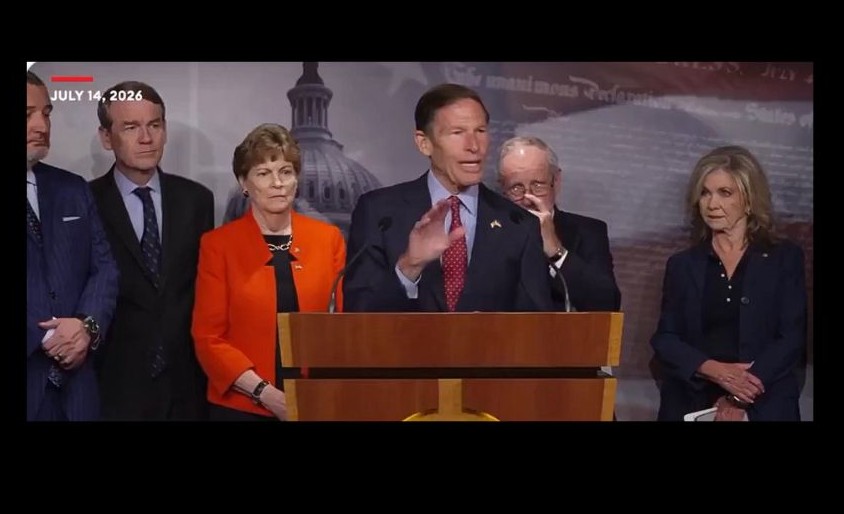
Washington, D.C., July 15, 2026 — A bipartisan group of U.S. senators has revived and advanced legislation championed by the late Senator Lindsey Graham—with the backing of President Donald Trump—that could impose tariffs of up to 100% on imports from countries that continue purchasing Russian oil, placing India and China squarely in the crosshairs of Washington’s latest effort to squeeze Moscow’s war finances.
The proposal, unveiled July 14, is a revised version of an earlier bill that called for tariffs as high as 500%. Lawmakers lowered the maximum penalty to 100% while preserving broad authority for the president to levy tariffs against countries deemed to be helping finance Russia’s war through continued energy purchases.
India has emerged as one of the world’s largest buyers of Russian crude since Russia invaded Ukraine in 2022, taking advantage of steeply discounted prices after Western sanctions reshaped global energy markets. China has also significantly increased imports of Russian oil.
Supporters of the legislation argue that while the United States and its allies have imposed extensive sanctions on Russia, Moscow continues to earn billions of dollars from oil exports to countries that have not joined those sanctions.
“The objective is to reduce the revenue stream that funds Russia’s war machine,” lawmakers have said.
Bipartisan support
The legislation is being led by Senators Richard Blumenthal (D-Conn.), Roger Wicker (R-Miss.), Jeanne Shaheen (D-N.H.), and Jim Risch (R-Idaho). It builds on an earlier effort championed by the late Senator Lindsey Graham, who had spent more than a year assembling bipartisan backing for tougher sanctions on Russia.
The bill reportedly has the support of more than 80 senators, making it one of the most broadly supported foreign policy measures currently before Congress.
The White House has also endorsed the revised proposal, although the legislation would leave President Trump with considerable discretion over whether to impose tariffs, how high to set them, and whether to grant exemptions in the U.S. national interest.
India not automatically subject to tariffs
Despite headlines suggesting India could face 100% tariffs, the legislation does not automatically impose them.
Instead, it authorizes the president to levy tariffs of up to 100% on countries that continue purchasing Russian oil and other energy products. The final decision would rest with the White House, allowing room for diplomatic negotiations and potential waivers.
The bill must also pass both the Senate and the House of Representatives before becoming law.
Potential impact
If enacted and fully enforced, the measure could significantly affect U.S.-India trade.
The United States is India’s largest export market, with Indian companies shipping pharmaceuticals, engineering goods, textiles, jewelry, chemicals, information technology services, and other products to American consumers and businesses.
A steep tariff on Indian imports could increase costs for U.S. buyers while placing pressure on New Delhi to reduce its dependence on Russian energy.
The proposal also comes at a delicate moment in U.S.-India relations. While the two countries have deepened cooperation on defense, technology, and Indo-Pacific security, they have differed sharply over India’s continued purchase of Russian oil.
Indian officials have consistently defended those purchases, arguing that ensuring affordable energy for 1.4 billion people remains a national priority and that Europe continued buying Russian energy for months after the Ukraine war began.
Broader sanctions
In addition to authorizing tariffs on countries purchasing Russian energy, the legislation would expand sanctions on Russian financial institutions, target Moscow’s so-called “shadow fleet” of oil tankers used to evade sanctions, and impose additional restrictions on Russian energy projects.
Analysts say the revised measure is designed not only to punish Russia but also to increase leverage over countries whose energy purchases continue to provide Moscow with a vital source of revenue.
Whether the legislation ultimately becomes law—and whether India ever faces tariffs under its provisions—will depend on congressional action and decisions made by the Trump administration in the months ahead.
