





BY SHIKHA DAS SHANKAR*
Does Metro Atlanta need another South Indian restaurant? The buzz around a Bay Area favorite making its way into Metro Atlanta says yes.
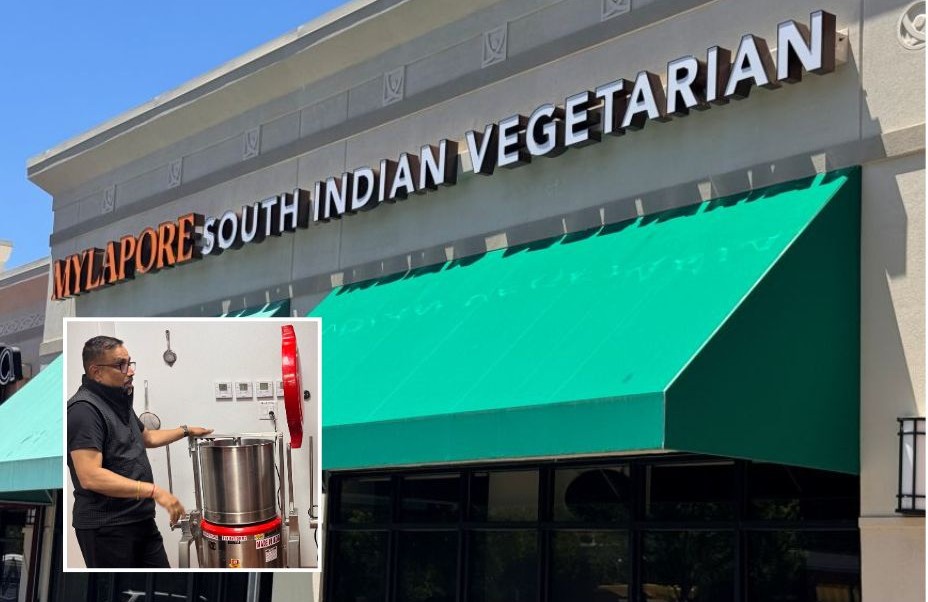
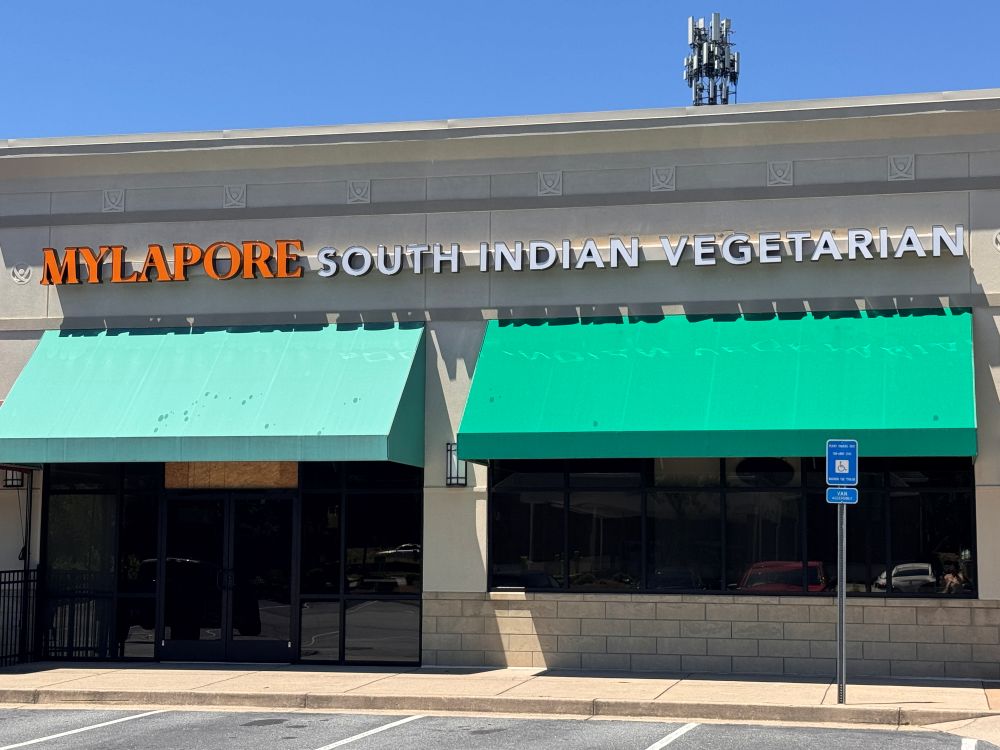
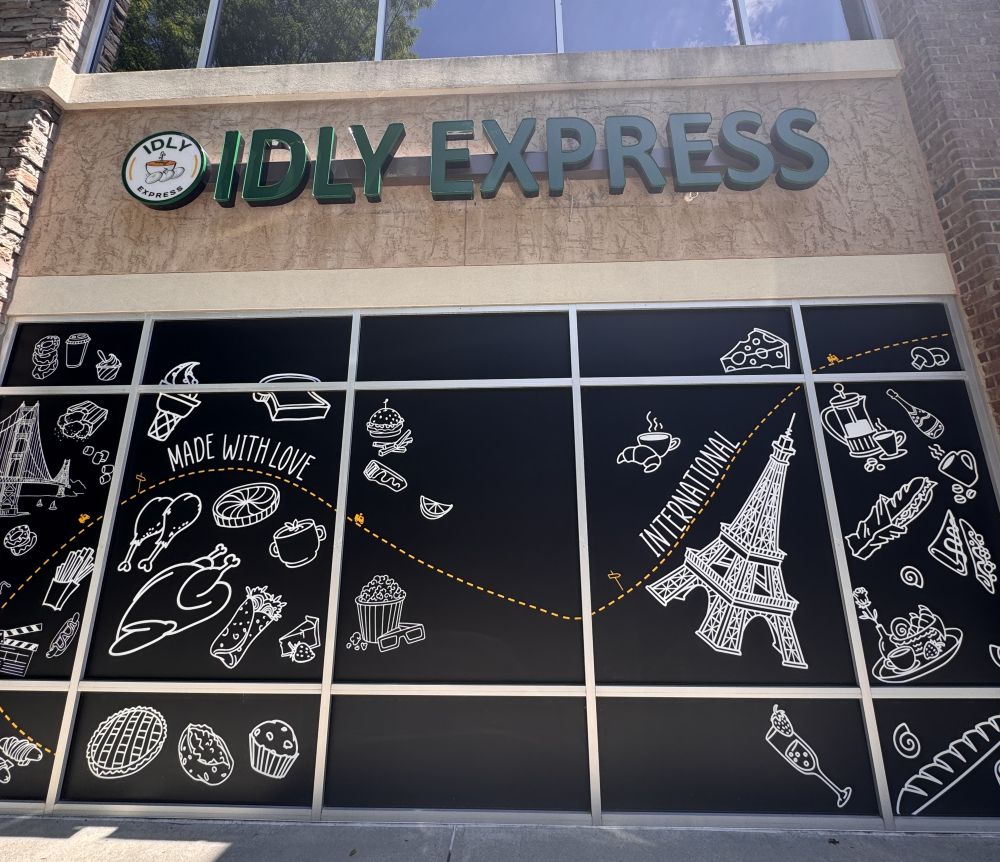
After nearly two decades of building one of the most trusted and enduring South Indian restaurant operations on the West Coast, Jay Jayaraman is making Atlanta his next chapter. The Mylapore family of brands spans thirteen Bay Area locations and includes its dine-in restaurants called Mylapore and Idly Express, its quick-service counter. He expands to the opposite coast by first setting up a 6,500 square-foot facility in Suwanee under the Idly Express name, from where he has been quietly operating for the last few months, followed by the Mylapore dine-in restaurant in Alpharetta.
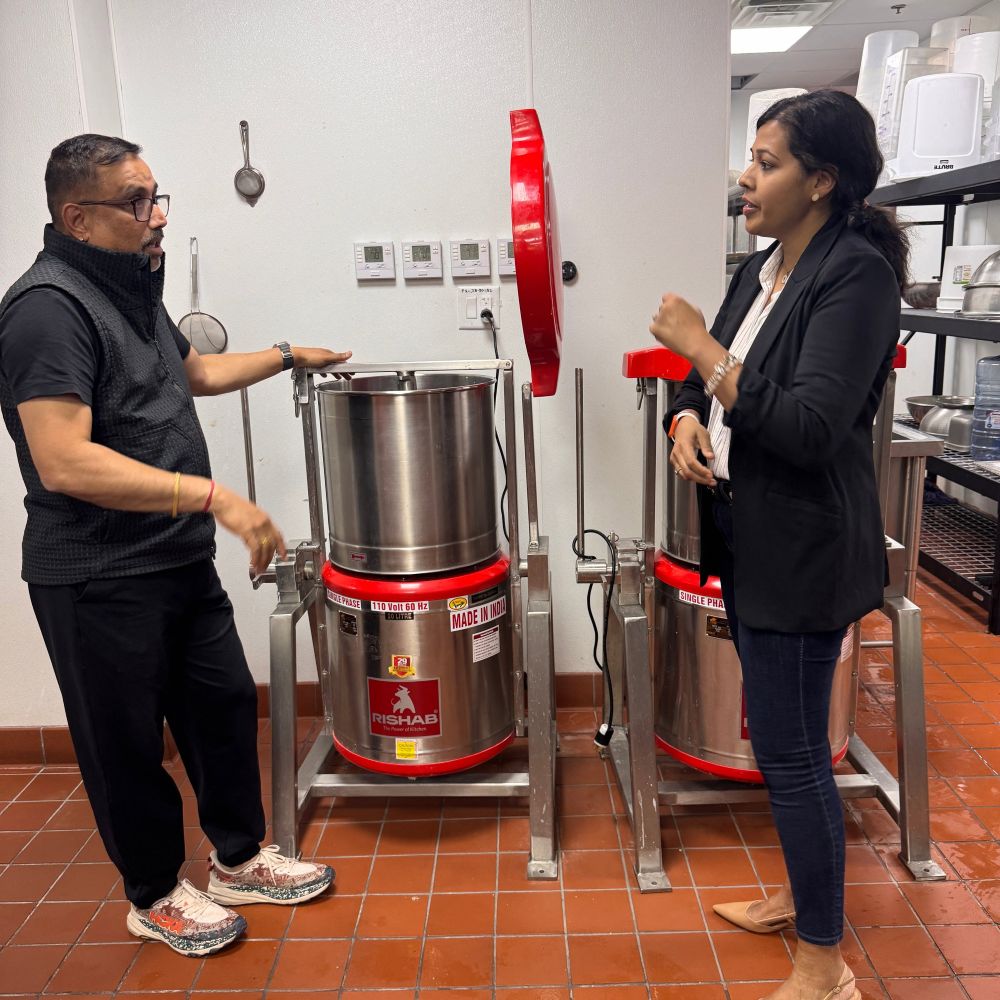
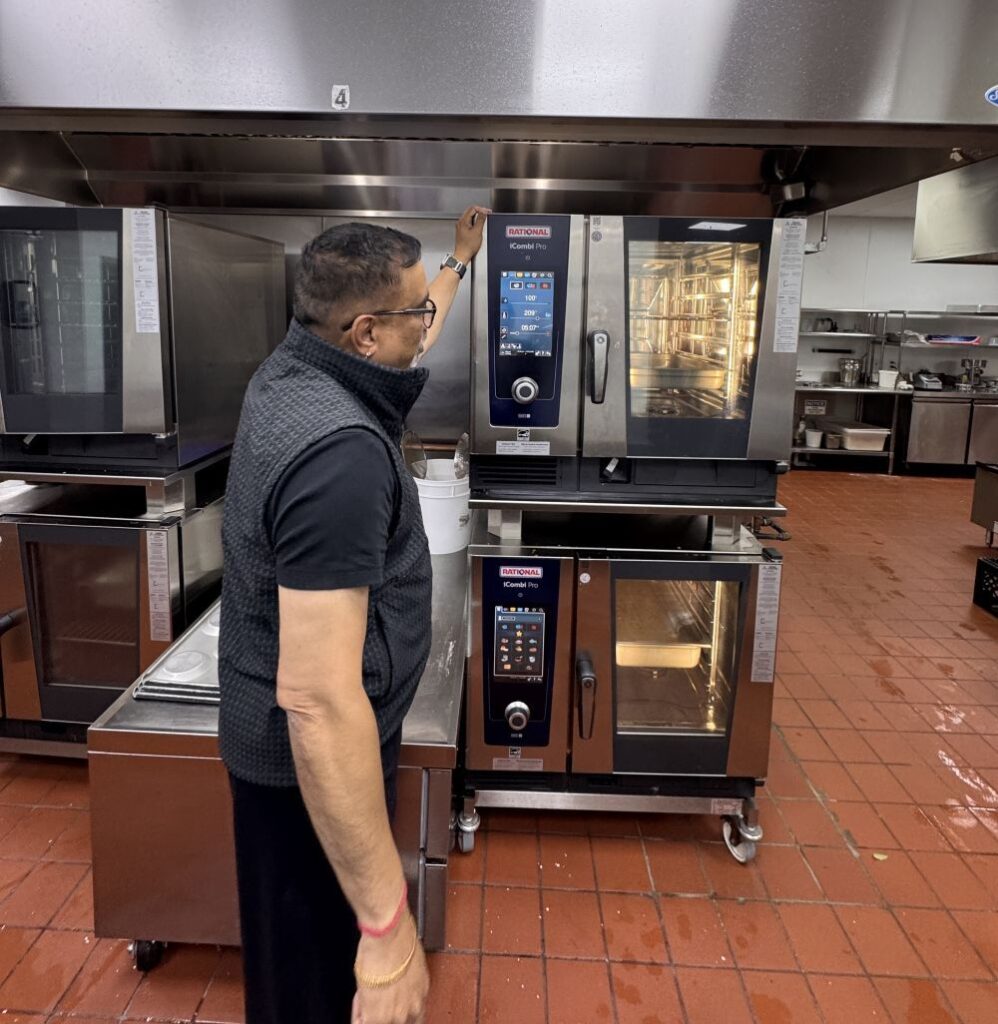
At 6,500 square feet, the facility is the engine behind everything he is building here. Its real purpose is to function as a central kitchen feeding up to eight Atlanta locations, by his own projection, producing batters, masalas, and prepared components that go out to each restaurant daily. Every future location draws from the same kitchen, same batter, and same masala. The taste that brings someone back the first time is the same taste that brings them back the tenth.
“The primary goal is to cater to large weddings, large events, and also be a place where we can churn out food for all the other locations,” says Jayaraman. The storefront at the front, he adds, is almost incidental. “Anything we make from here is a bonus for us.”
Apart from being the operational heart behind Mylapore’s upcoming Atlanta-area restaurants, this location doubles as a takeout counter throughout the day. Freshly made South Indian food, snacks, dosa batter and filter coffee are all available to anyone who walks in. The space is built with purpose, and it shows. Lalitha Sahasranamam plays near the cash counter. A pitcher of zeera water sits at the front. The ghee-rich sweetness of mysore pak cuts through the sight and sound, demanding your immediate attention.
Building an Empire
The name itself has been with Jayaraman for longer than any of his restaurants. In the early 1990s, while working at a prestigious hotel chain in Chennai, he watched his GM dismiss names after names during a brainstorming session for a new South Indian restaurant. The discarded names from the suggestion box included Mylapore. Garbage, the GM said. Doesn’t tell me anything. The hotel chose Dakshin instead.
But something about that dismissal did the opposite for Jayaraman. The name that meant nothing to his manager meant everything to him. Mylapore, with its ancient Kapaleeshwarar temple, its jasmine-scented lanes, its hole-in-the-wall vegetarian eateries and filter coffee set the standard for everything Jay was going to build someday. The moment it was thrown out, he quietly picked it up and tucked it away in his mind and heart, where it stayed for decades.
“I was so happy they didn’t choose the name Mylapore,” he says. “Because I realized I wanted to save it for my life.”
He moved to the United States in 1997, tried software, tried insurance, tried real estate — careers that paid the bills but never really stuck. Through all of it, the name stayed with him. When he finally opened his first restaurant in Sacramento in 2008, he called it Mylapore. But the real expansion didn’t start until after COVID.
At the peak of the pandemic, five vans were running delivery routes across the Bay Area, bringing bundled food boxes to long lines of people waiting for the signature van to arrive. What that audience never saw was what happened before the vans pulled out each morning. Jayaraman slept on the couch with an alarm set for 3 am, drove thirty minutes to the restaurant in the dark, and had the vans gassed up and loaded before his drivers arrived. The food had to be cooked fresh, packed, and delivered on time, every time.
The demand wasn’t a fluke. It showed that the Bay Area had the audience he had been cooking for all along. The community was hungry enough to order week after week, rain or shine, pandemic or not. Physical restaurants followed, until there were thirteen including dine-in restaurants, quick service counters, and large-scale catering. And now he is bringing that entire world to Atlanta.
Reading Between the Lines
The decision to come to Atlanta was not made in a boardroom. It was made through a pickle.
In March 2025, Jayaraman flew to Atlanta for a restaurant equipment show with no intention of opening here. A social media post announcing his arrival led to a meeting with Anu Ganesh, a community connector who had enjoyed his restaurant’s food years ago. Before Jay left, she asked when are you opening in Atlanta? He told her there were no plans.
Shortly after, back in California, he posted about a new batch of maavadu — a tender baby mango pickle, a delicacy so specific to Tamil Nadu that most people outside the community have never encountered it. Seeing the post, Anu offered to take local orders. Within an hour, she had sold 50 packets. The next day, 100 more. By the end of that week, she had orders for 500 to 600 packets across the Atlanta area.
For Jayaraman, the numbers were not a surprise. They were a signal. He needed no more convincing. “You have to read between the lines,” he says. “If there is demand for this kind of pickle here, the audience I’m looking for is out here.” This was not a community that had discovered maavadu recently. This was a community that had been waiting for someone to bring it to them. The demand was not created by his post. It was already there before he arrived. He started looking for commercial kitchen space the same week.
Sattvic, Simple, and Fresh
In a market as crowded as Metro Atlanta’s Indian food scene, the question of competition is inevitable. Jayaraman doesn’t lose sleep over it. Ninety-nine percent of the Mylapore menu is sattvic — no onion, no garlic, no alcohol. The menu is deliberately one page. Not because the kitchen can’t do more, but because a six-page menu, in his view, is a quiet admission that not everything on it is being made fresh.
“If you can create a restaurant that cooks food every day, fresh every single day, that will market to the customers by itself,” he says. “People can identify freshness. That’s all you need.”
His target customer is not the person looking for butter chicken and a beer. It is the exhausted working parent who wants nothing more than dal and rice at the end of a long day, but doesn’t trust most restaurants enough to feed that food to their children. Mylapore’s answer to that distrust is simple—small menu, fresh daily, open at 8am when no one else does. “Restaurant business is not rocket science,” he says.
Atlanta’s Appetite Is Changing
Atlanta has no shortage of Indian restaurants. The question is whether it has the right ones. Most are trying to be everything to everyone — the long menu, the North-South hybrid, the biryani alongside the dosa alongside the Indo-Chinese. The city’s Indian food scene is now pulling in two directions at once, and both feel like progress. Fine dining is staking its claim — Ghee Indian Kitchen’s Michelin recognition and Ikara’s nine-course regional tasting menu signal a city finally being trusted with complexity and elevation. At the other end, restaurants like Mylapore are narrowing their focus to go deeper. specific, sattvic, rooted in something particular rather than general. The catch-all menu is no longer enough, and Atlanta’s diners seem to know it.
What Mylapore’s arrival signals is that the city is moving toward an Indian food market that does not have one dominant cuisine but many specific ones.
“I’m trying to create a slice of mom for you,” Jay says. In a market this crowded, simple, consistent, and trustworthy is the hardest thing to build. He has nailed that equation in the Bay Area. Atlanta is about to find out if he can do it again.
*Shikha Das Shankar is a feature writer for NRI Pulse.
