



BY JYOTHSNA HEGDE
Atlanta, GA, October 2, 2026: Behind the professional bios are the stories we rarely hear: the accident that divided a life into before and after, the country left behind, the family searched for across decades, the moment home suddenly felt unsafe, the dream pursued after years of putting it aside. These are the experiences that shape a life, but are rarely told.
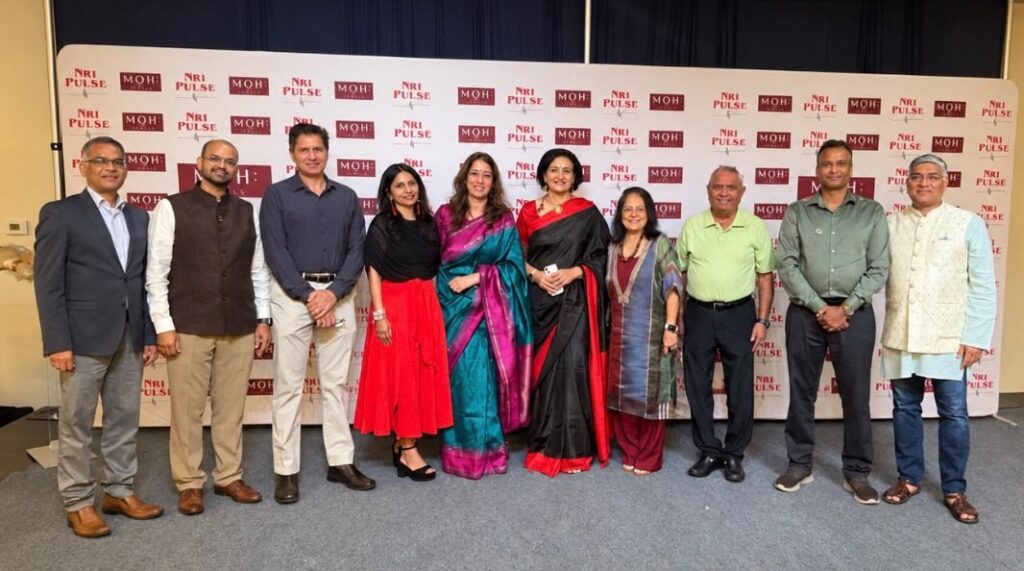
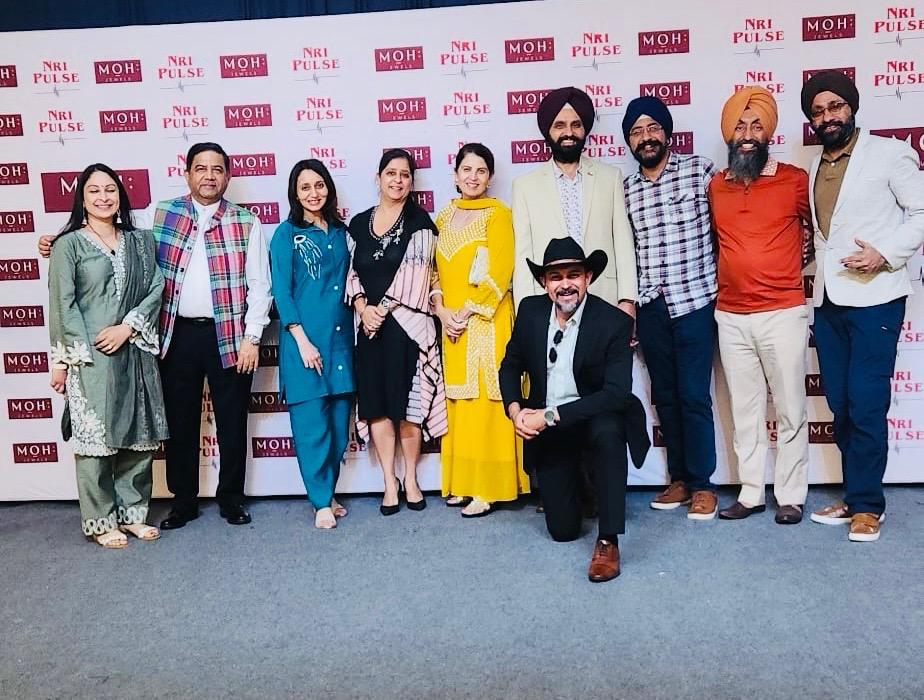
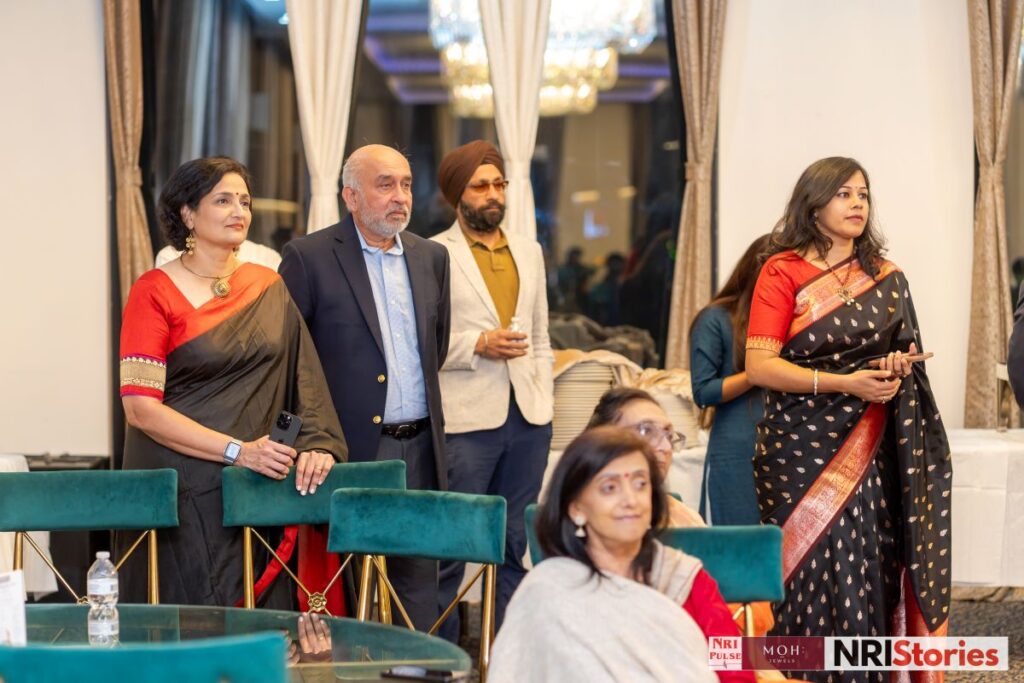
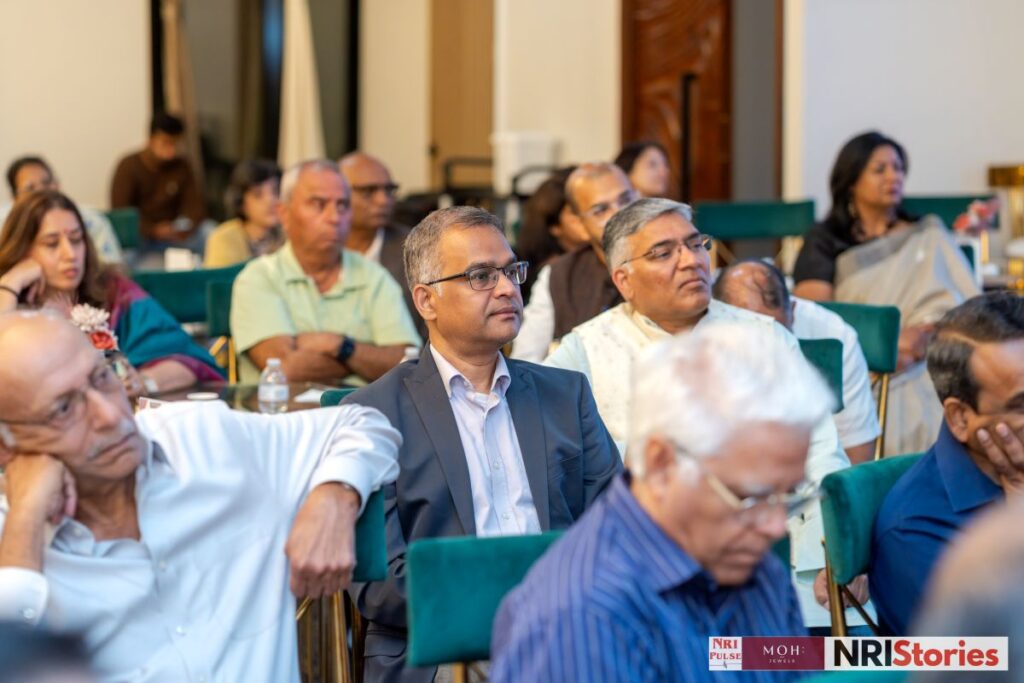
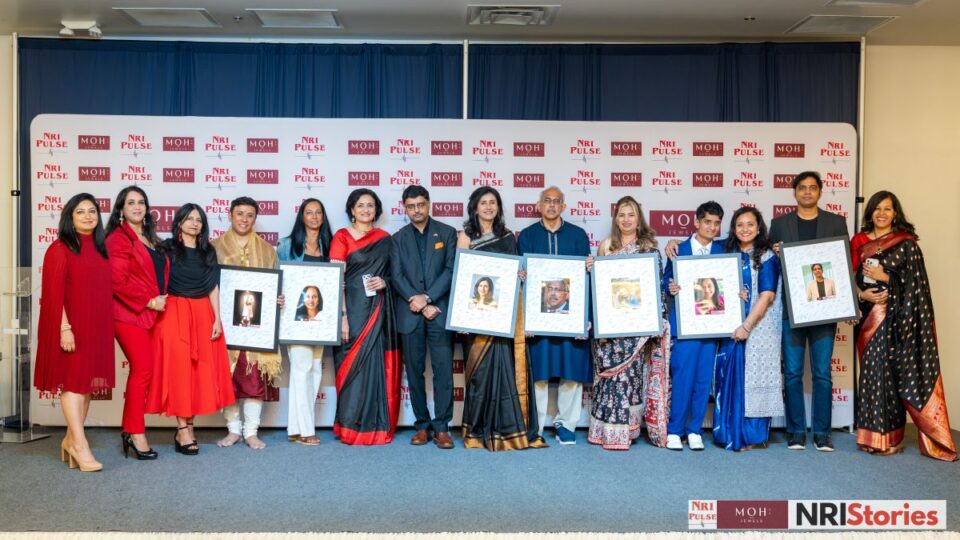
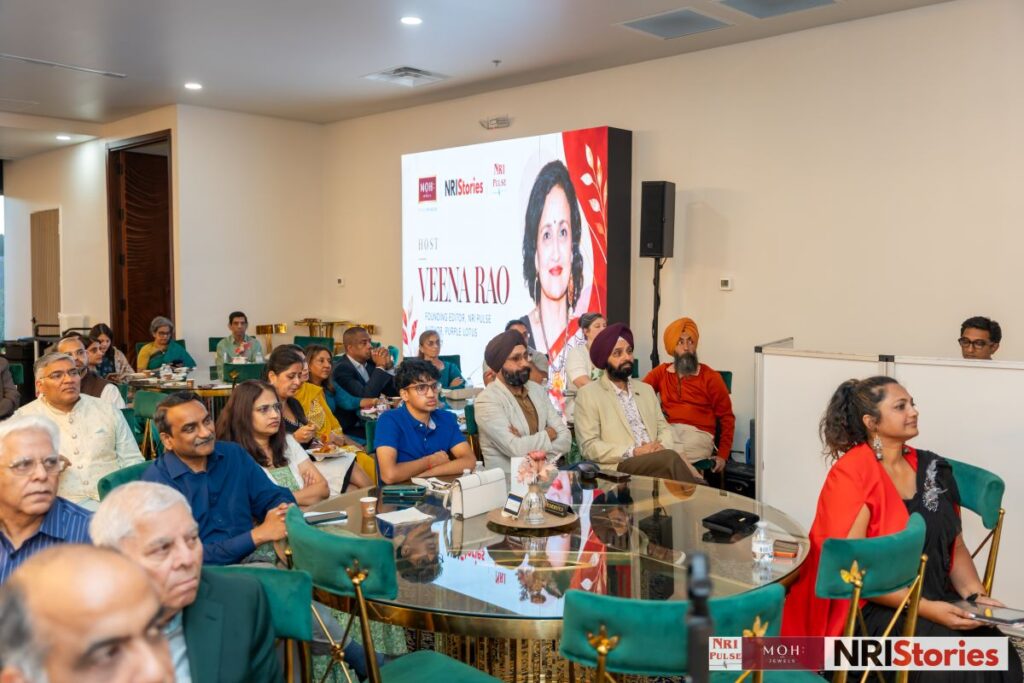
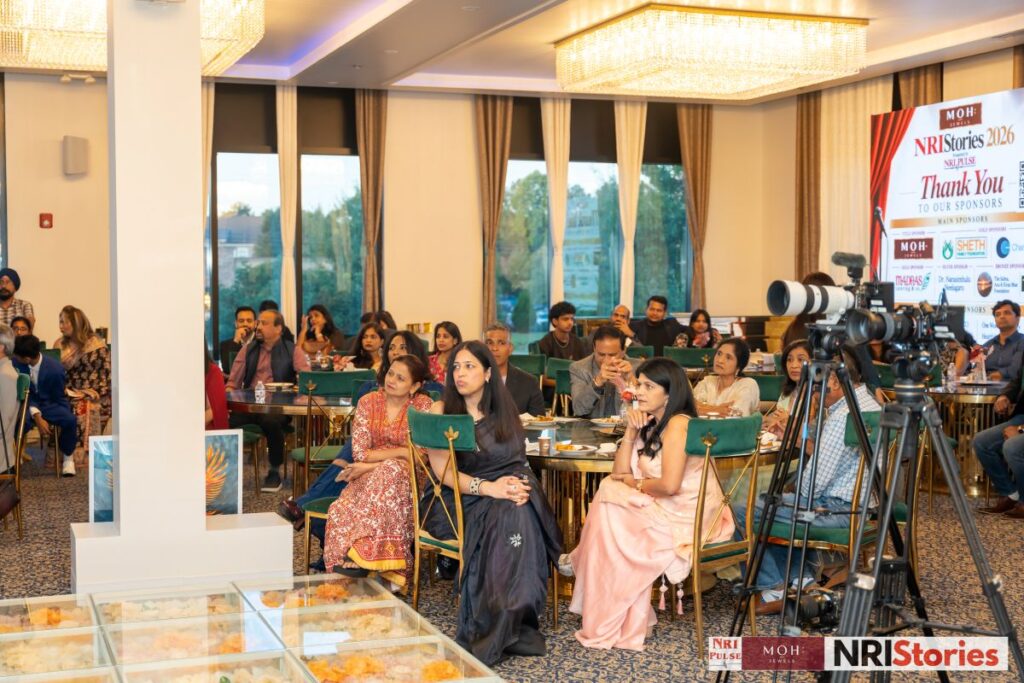
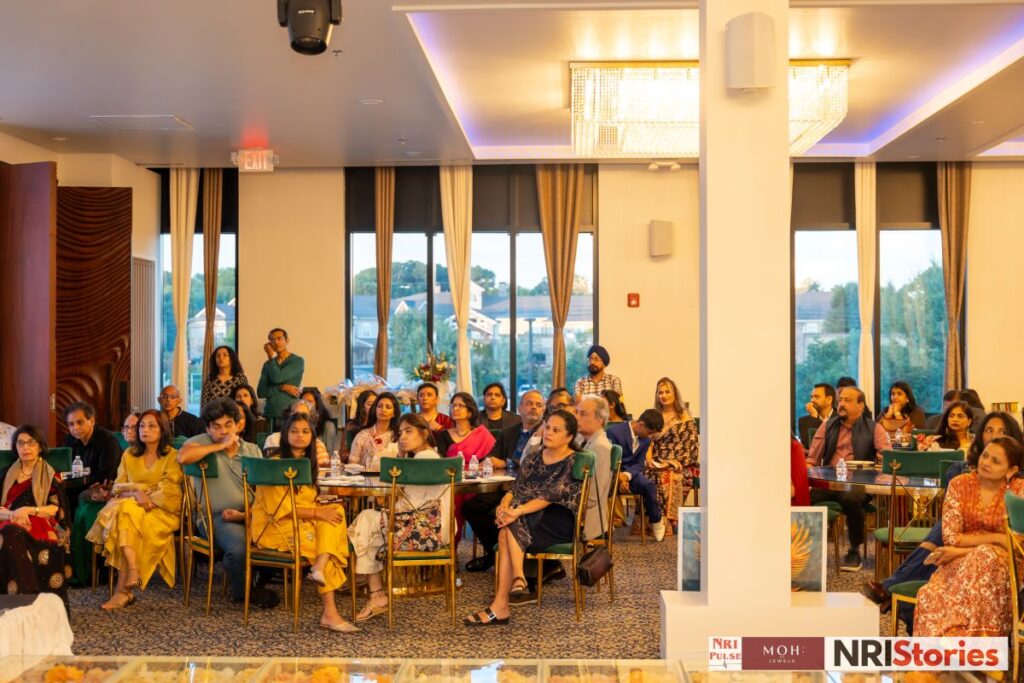
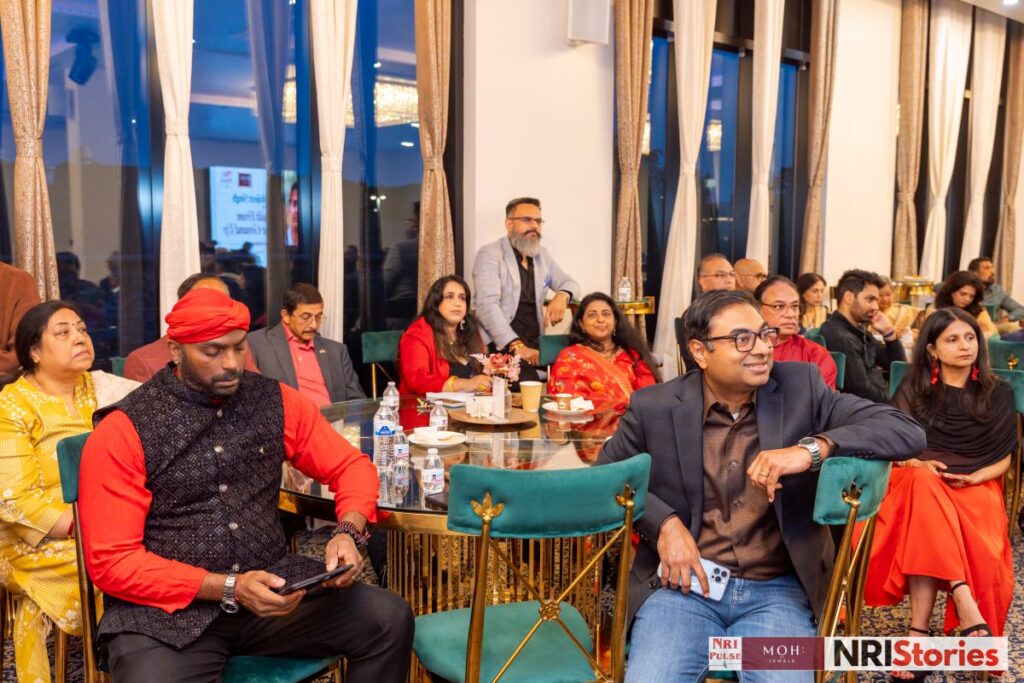
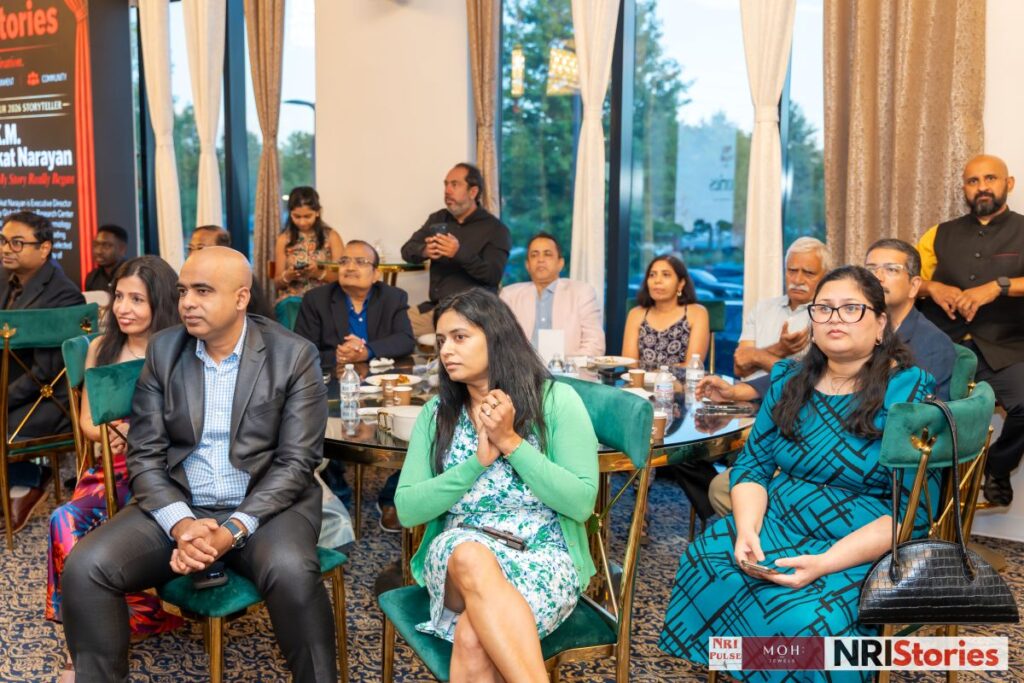
On September 26, 2026, seven people stood before a packed room at Bliss Events & Banquet Hall in Suwanee and told those stories.
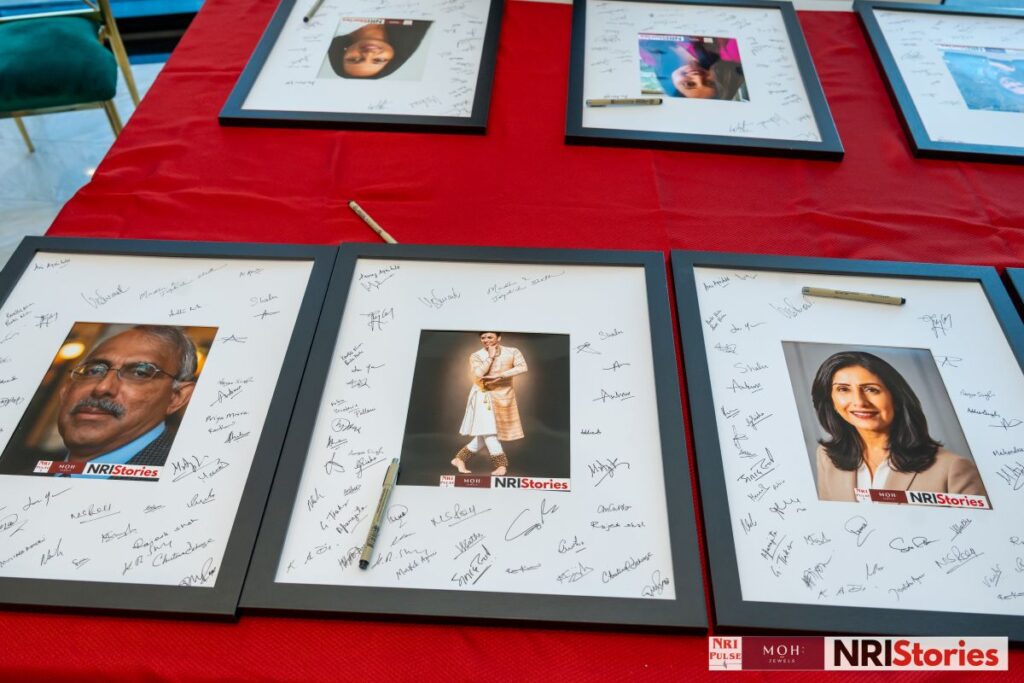
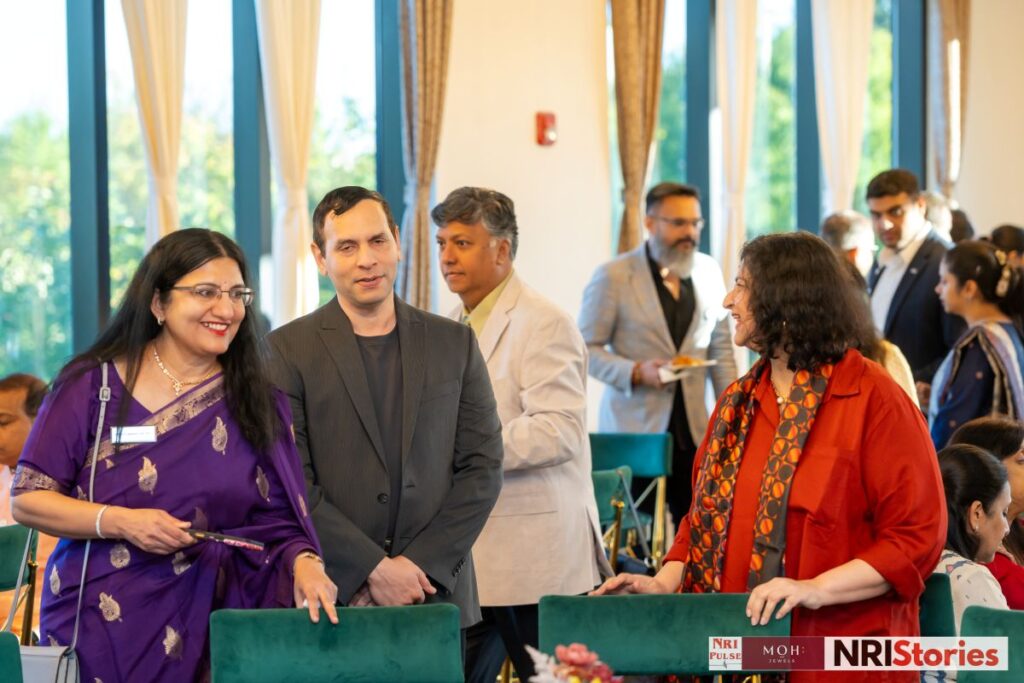
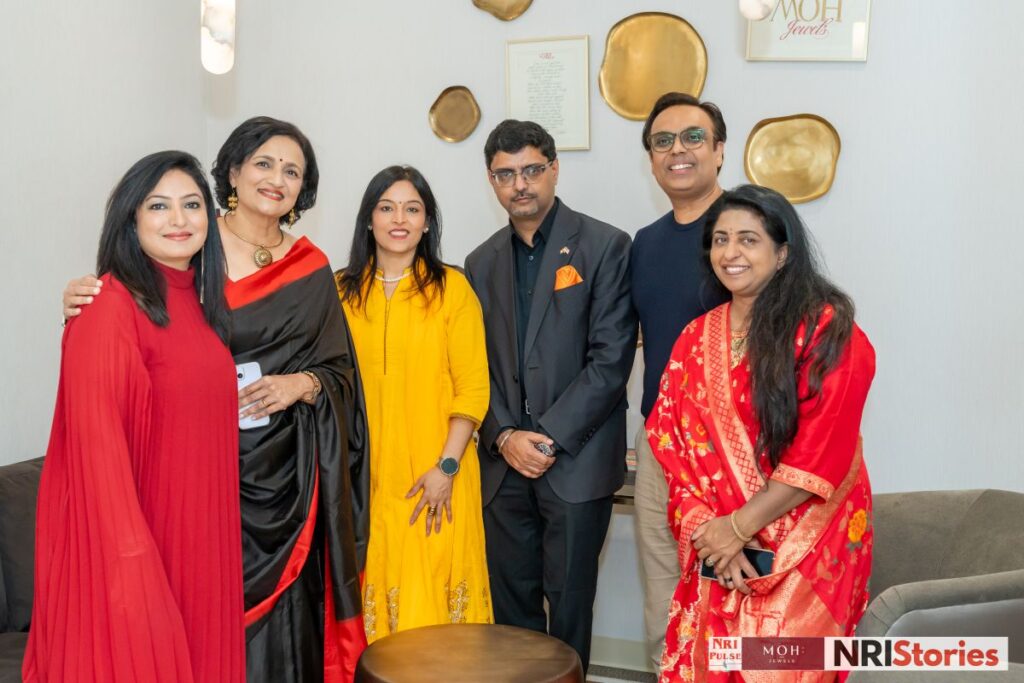
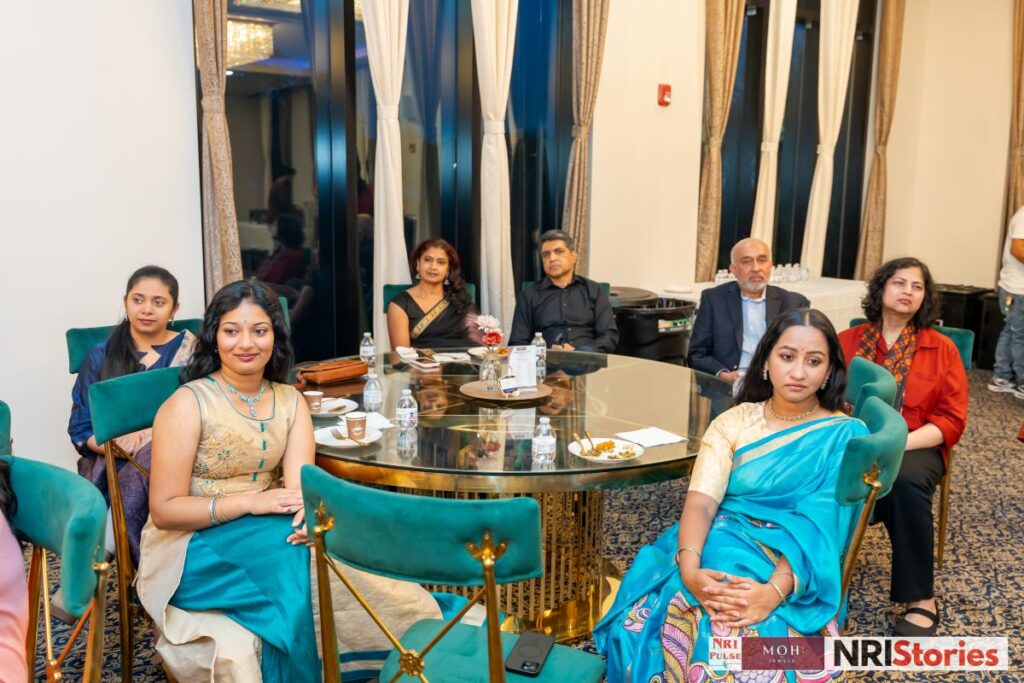
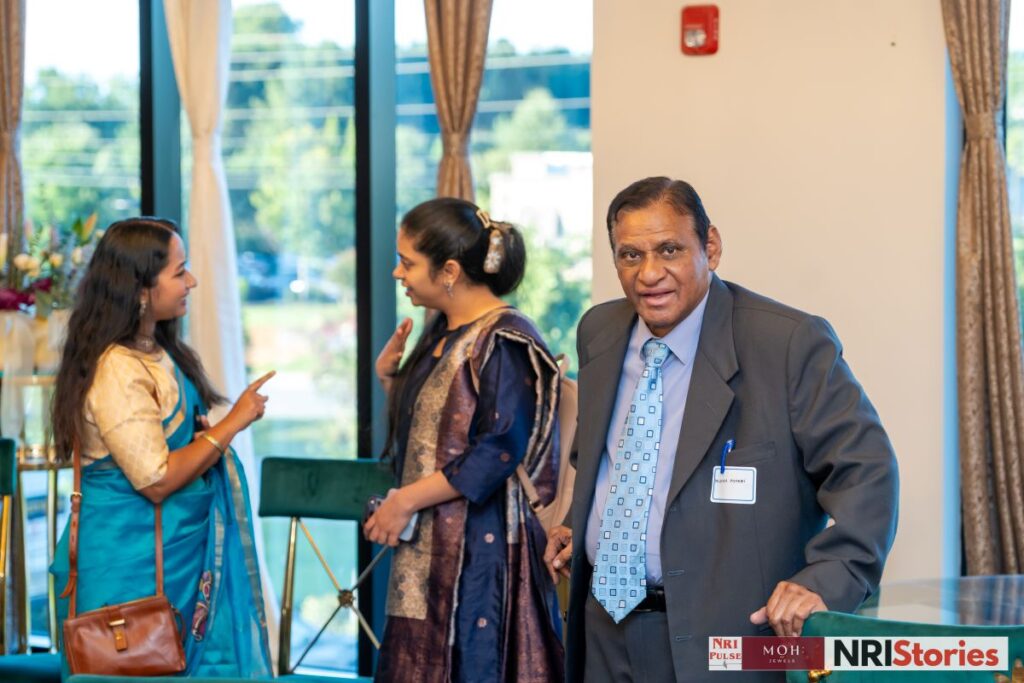
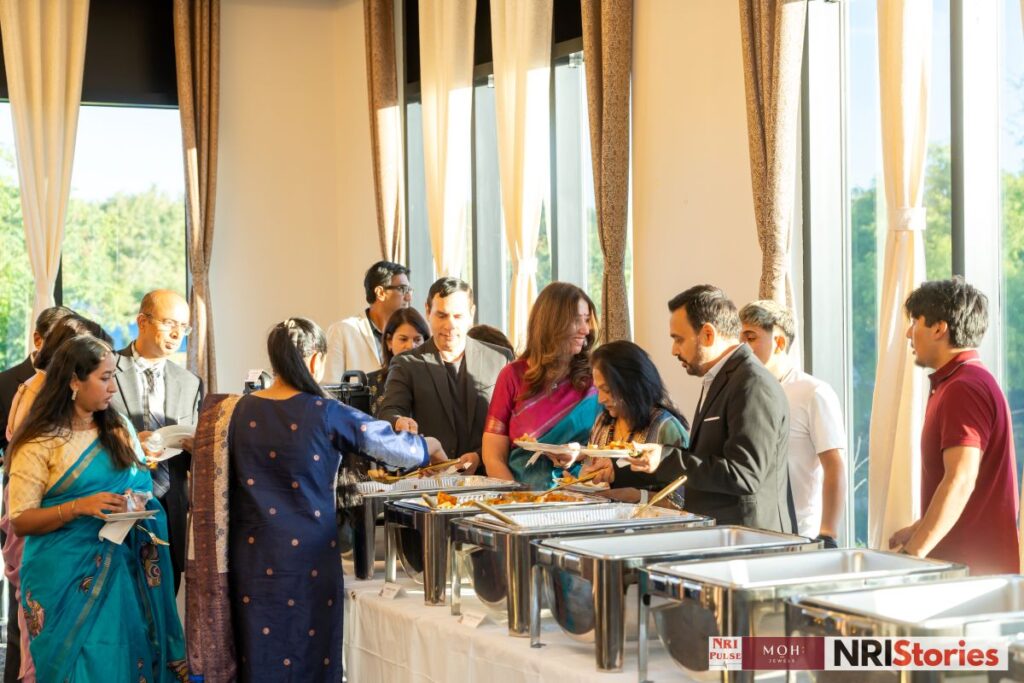
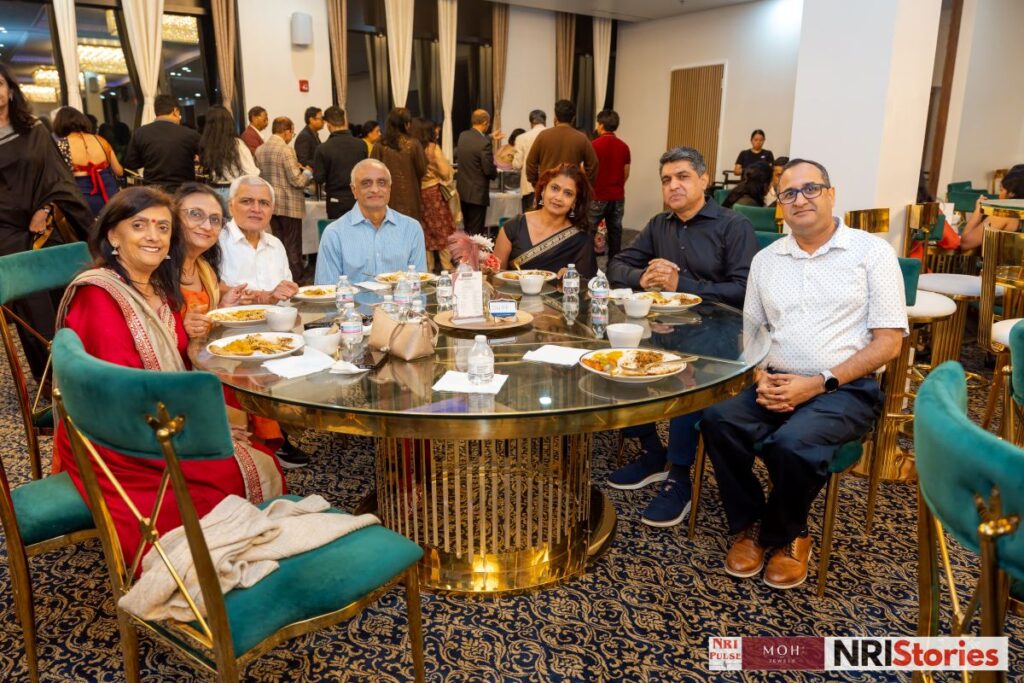
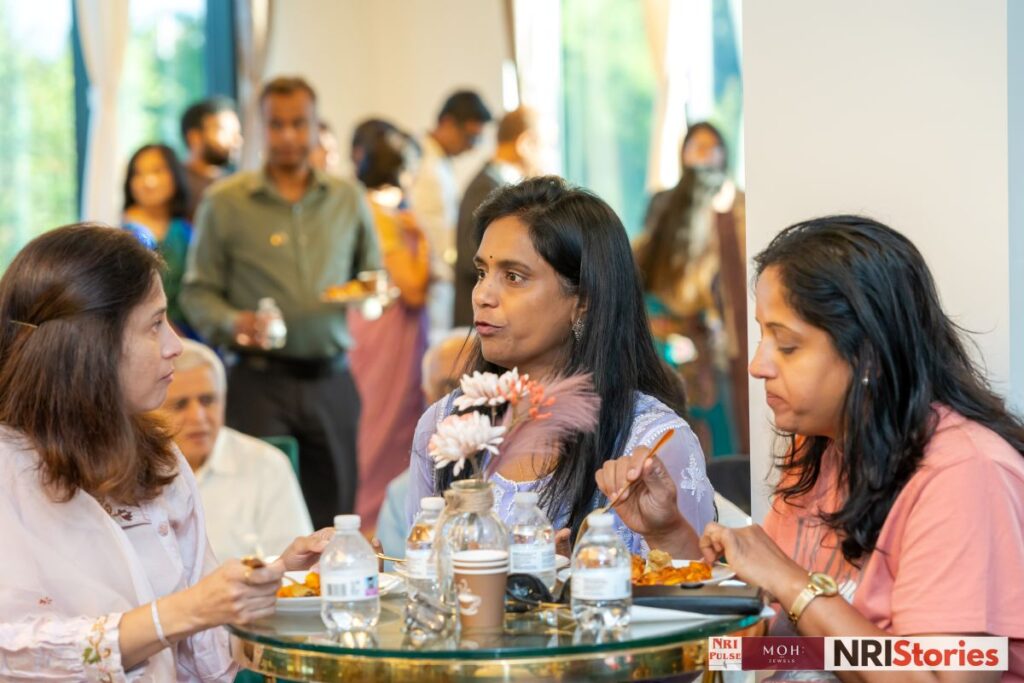
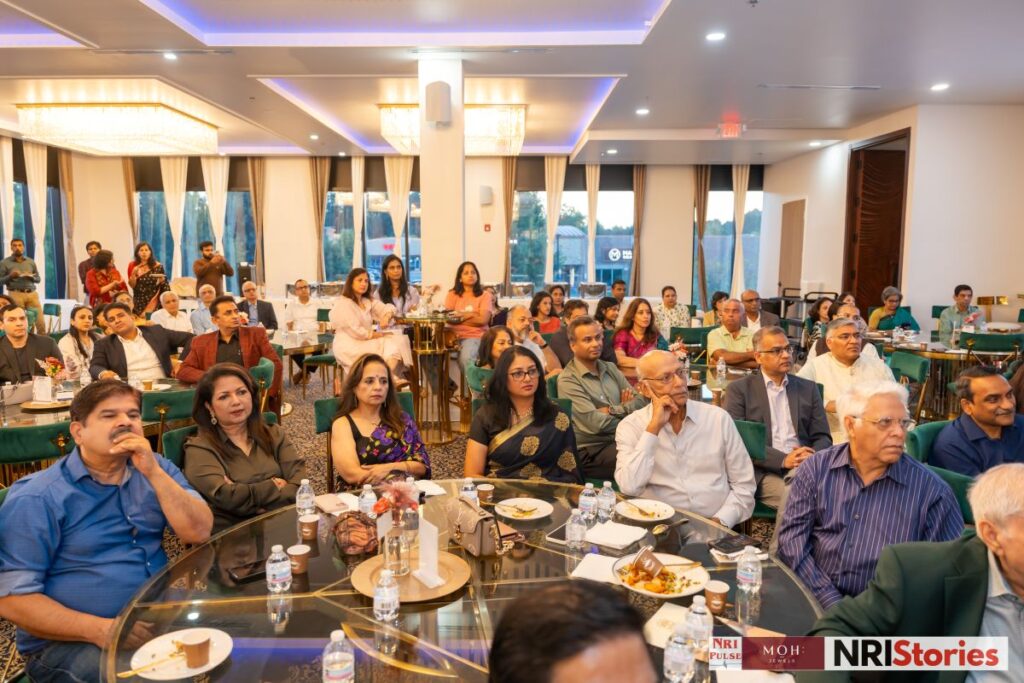
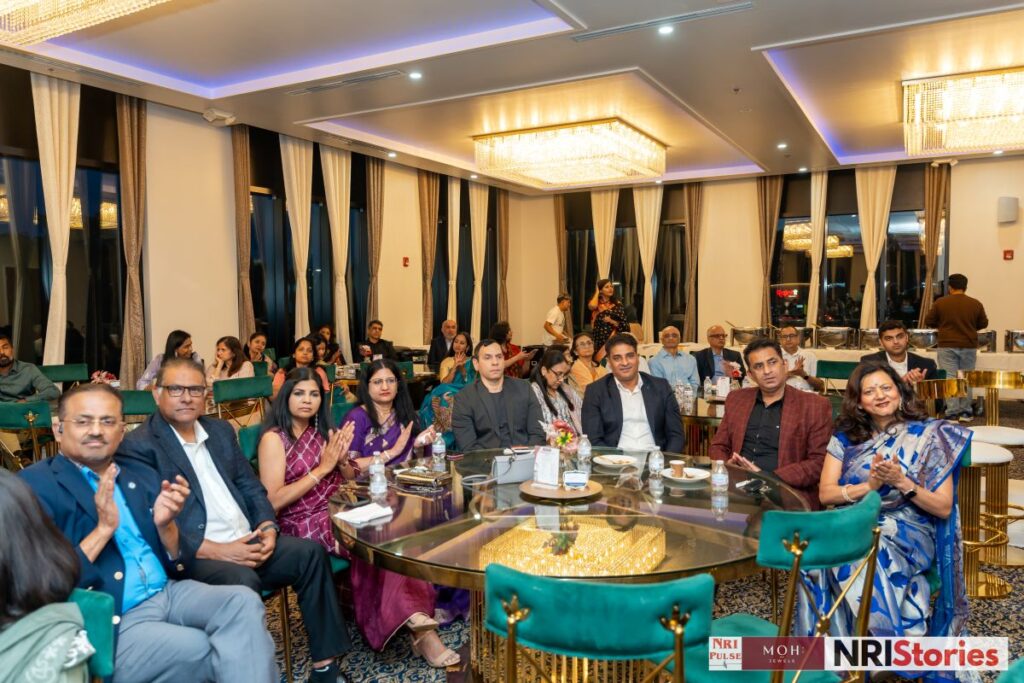
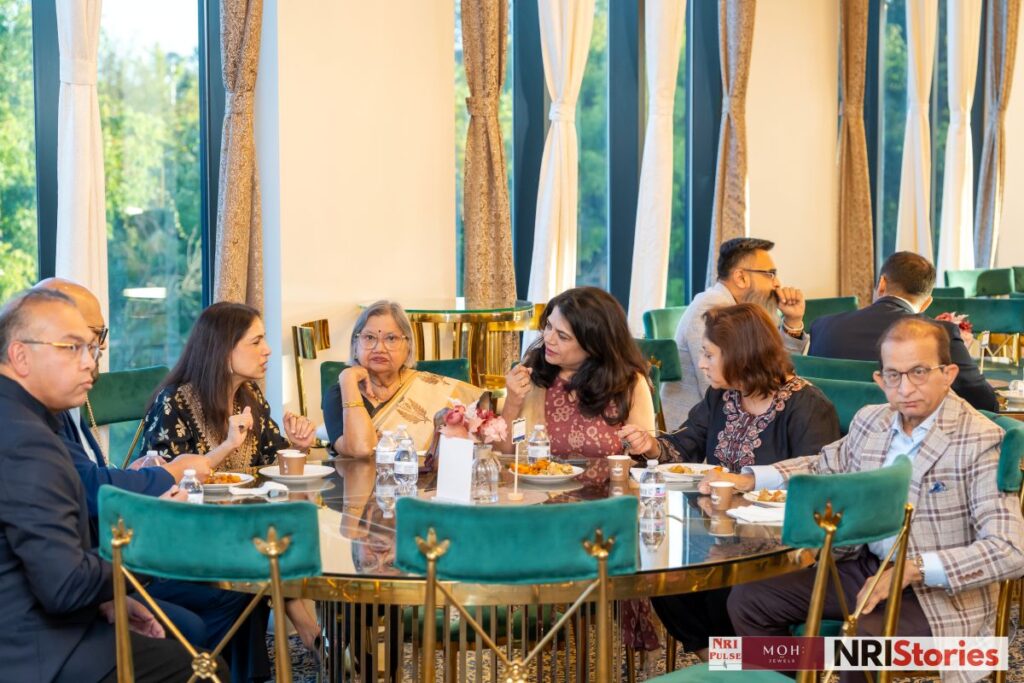
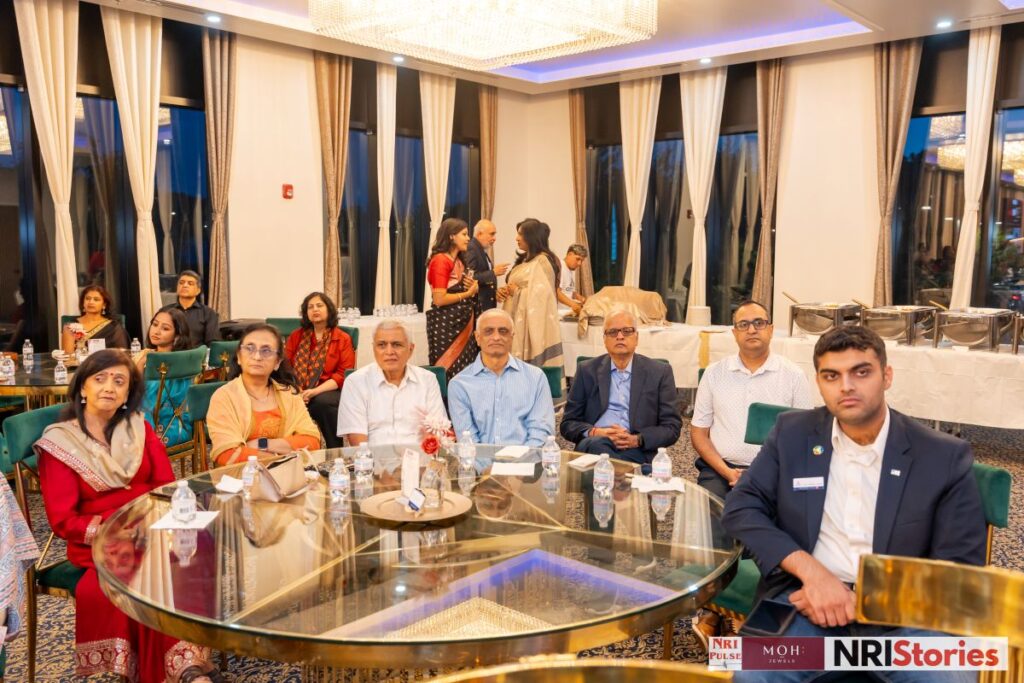
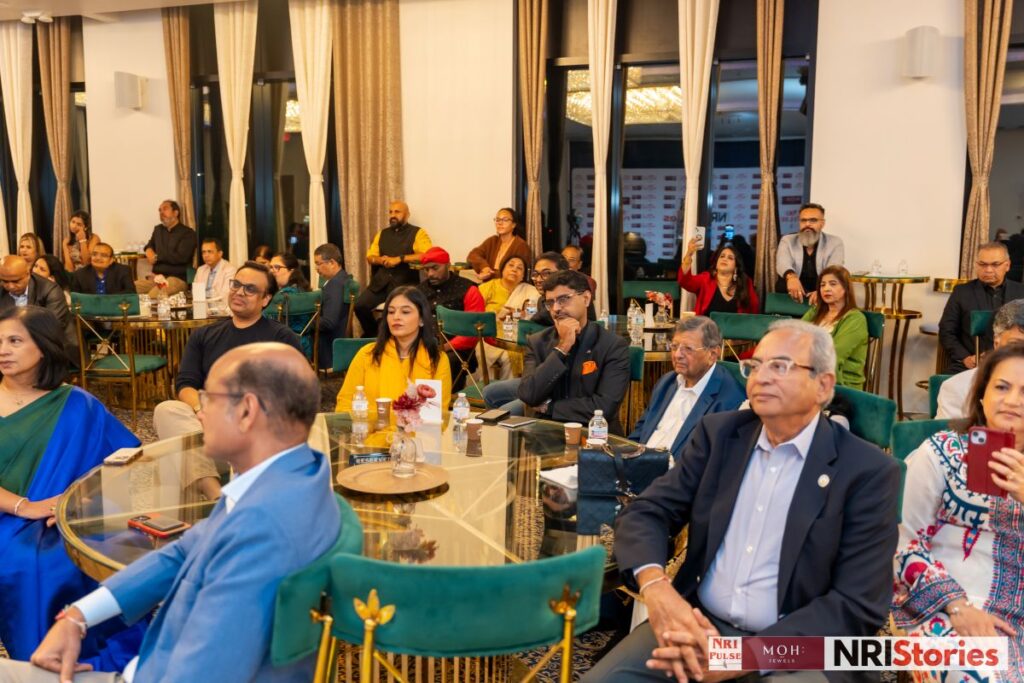
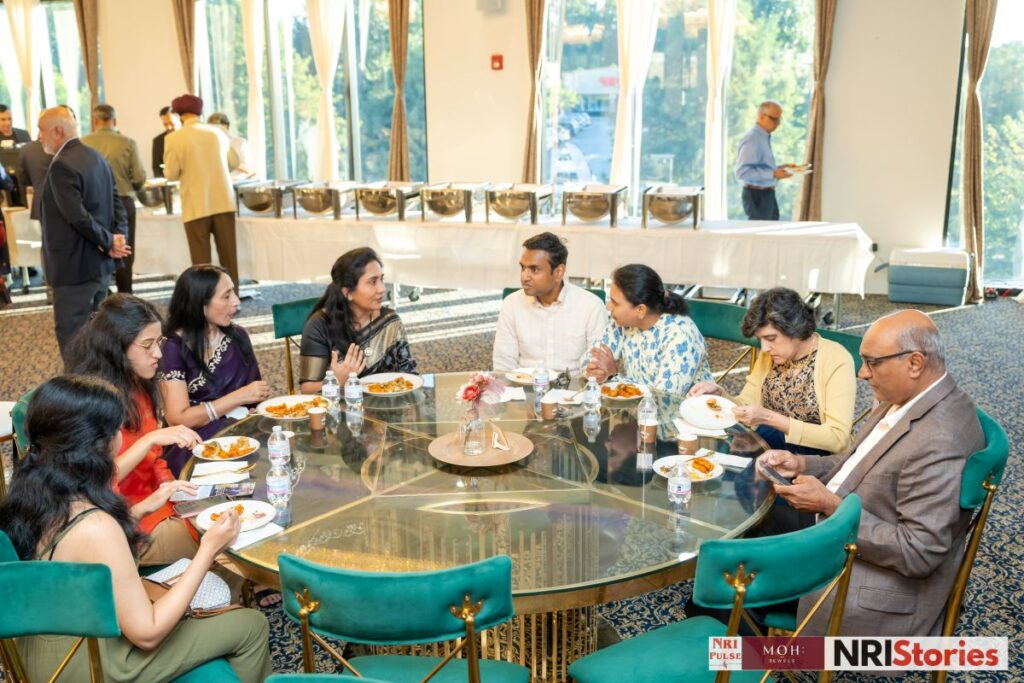
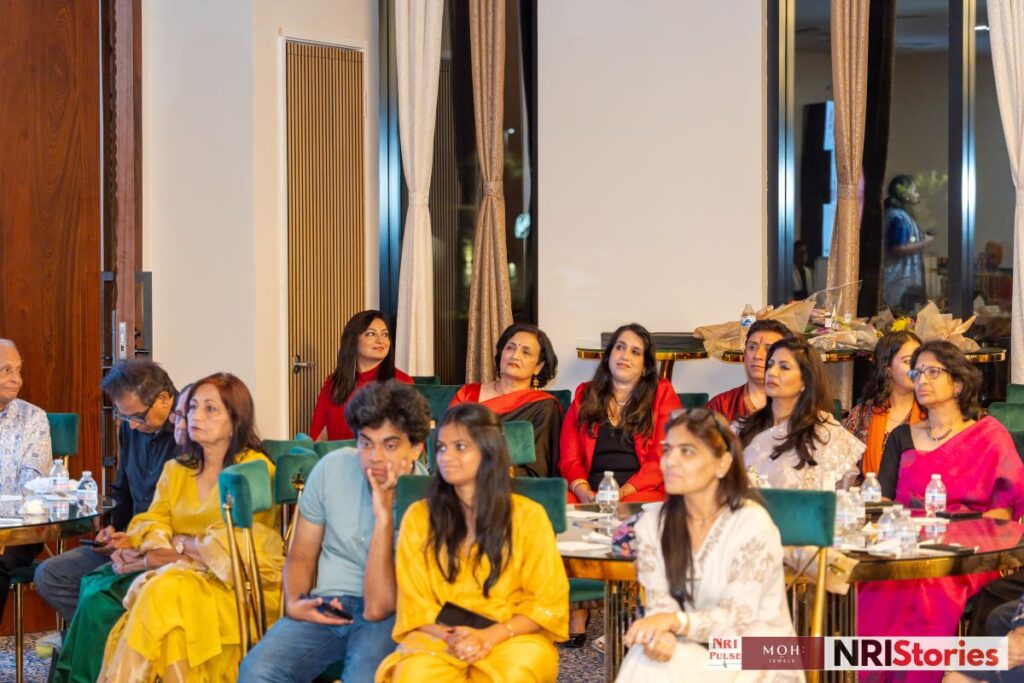
Moh Jewels NRIStories 2026, presented by NRI Pulse, brought together stories of loss and survival, immigration and identity, reinvention and purpose. Woven through the evening were music, recognition, dinner and moments of both laughter and silence, all centered around: “True Stories. Real Inspiration.”
NRI Pulse launched NRIStories in 2024 as part of its 20th anniversary celebrations. Now in its third year, the event has grown into an annual gathering centered on the lived experiences of the Indian American community.
The Girl Who Found Her Voice
For Veena Rao, founding editor of NRI Pulse and creator of NRIStories, that purpose has personal roots.
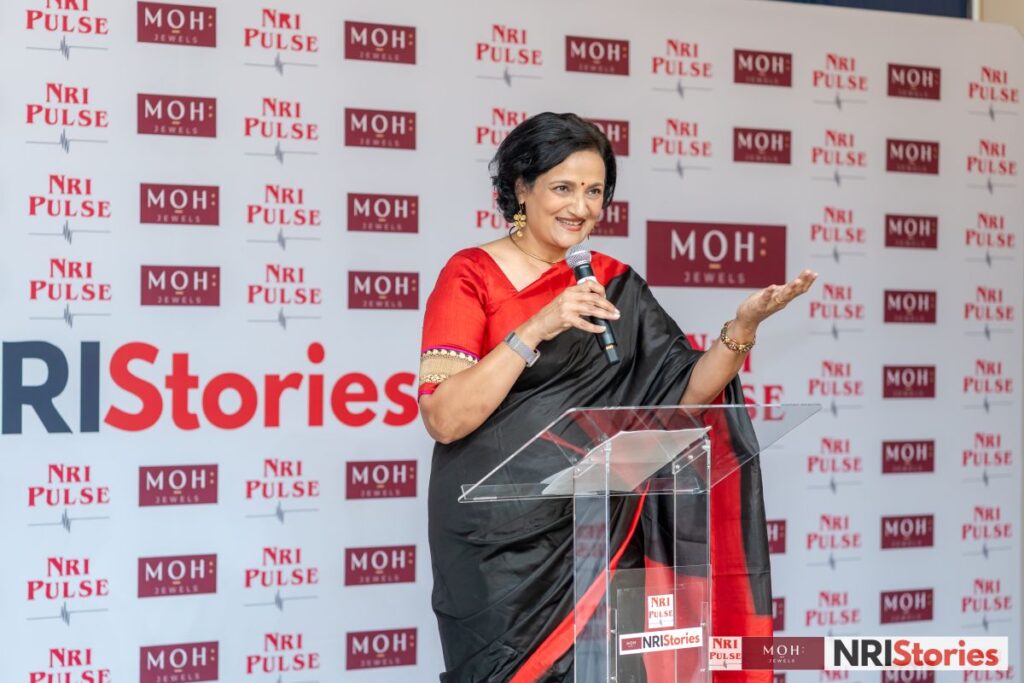
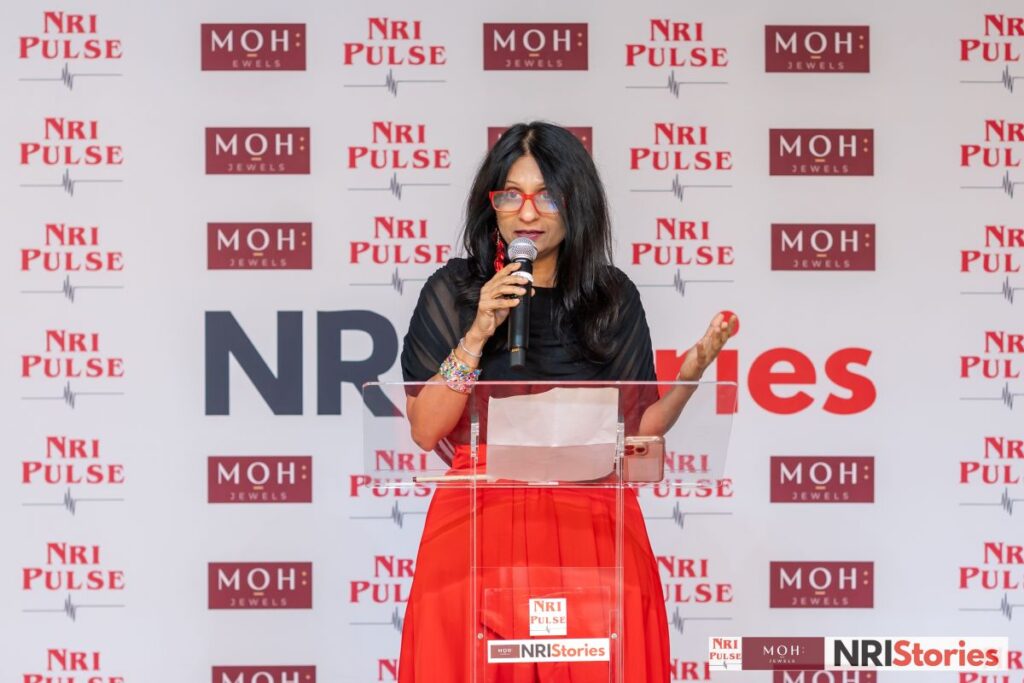
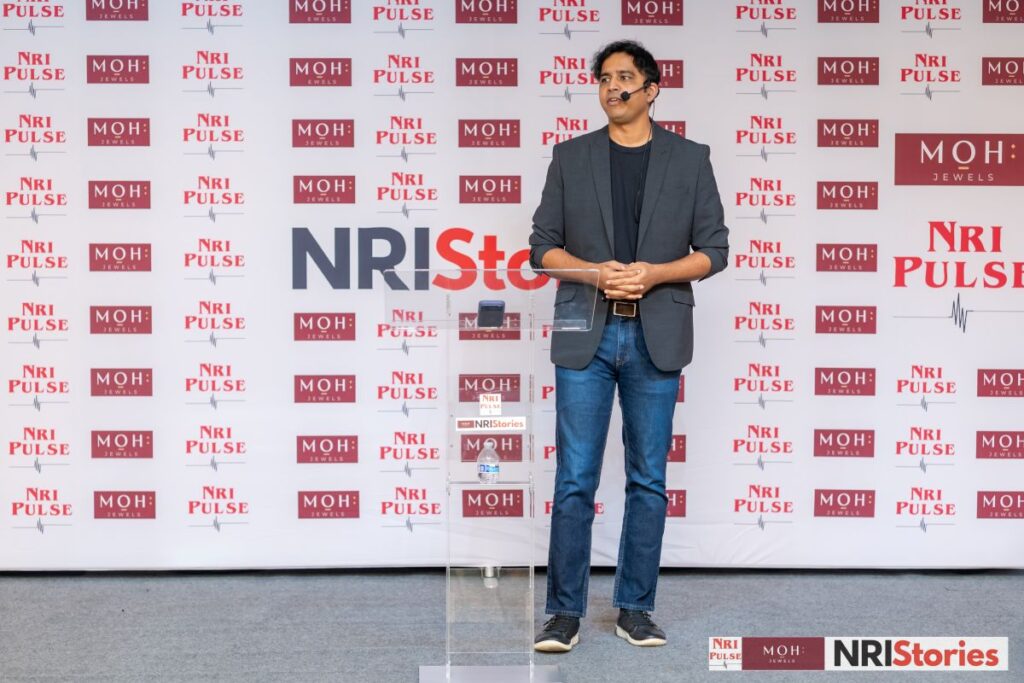
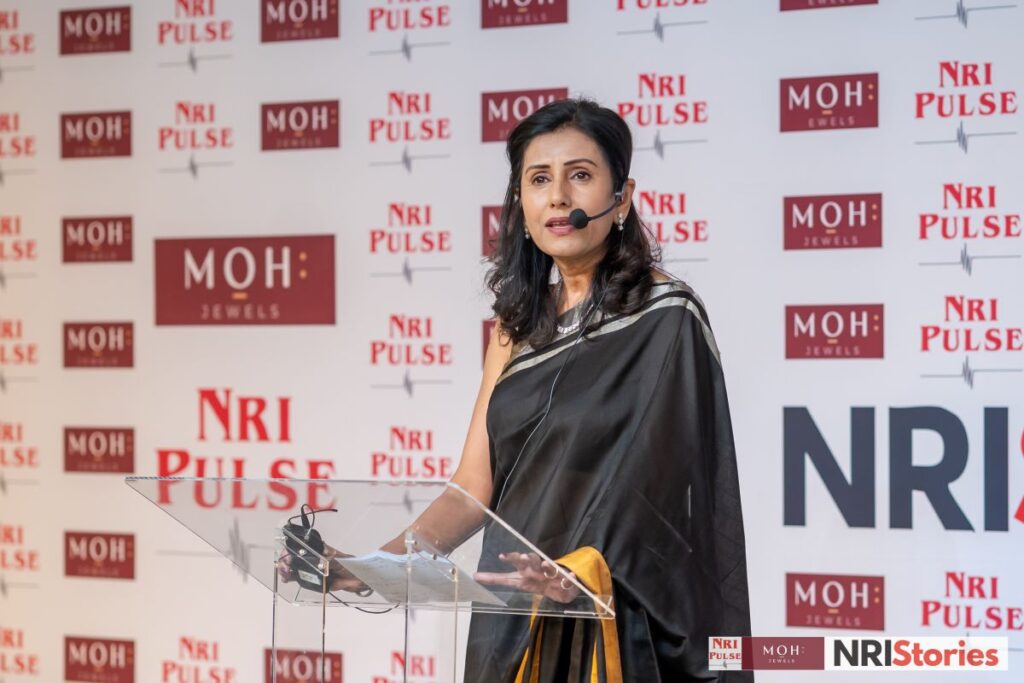
In her opening address, Rao recalled growing up in coastal Mangalore as a tall girl with wild, curly hair who disappeared into the background. Afraid to speak because her tongue struggled to form words, she became a listener. In that quiet space, stories took shape.
When she wrote them down, her schoolmates read them during lunch breaks. The girl who rarely spoke became known for her flair with words.
“Years later, I realized that storytelling had done more than make me visible,” she said. “It had given me the power to make other people visible, too.”
That discovery connected her childhood to more than 35 years in journalism, the founding of NRI Pulse 22 years ago, and the publication of her first novel in 2020. She acknowledged colleagues Jyothsna, Namita and Shikha for helping bring metro Atlanta’s celebrations, struggles and concerns to readers.
Through recorded talks archived on the NRI Pulse YouTube channel, NRIStories is also building an oral history of the community. For Rao, it represents a full circle moment: the girl once afraid to speak now creates a stage where others can use their voices.
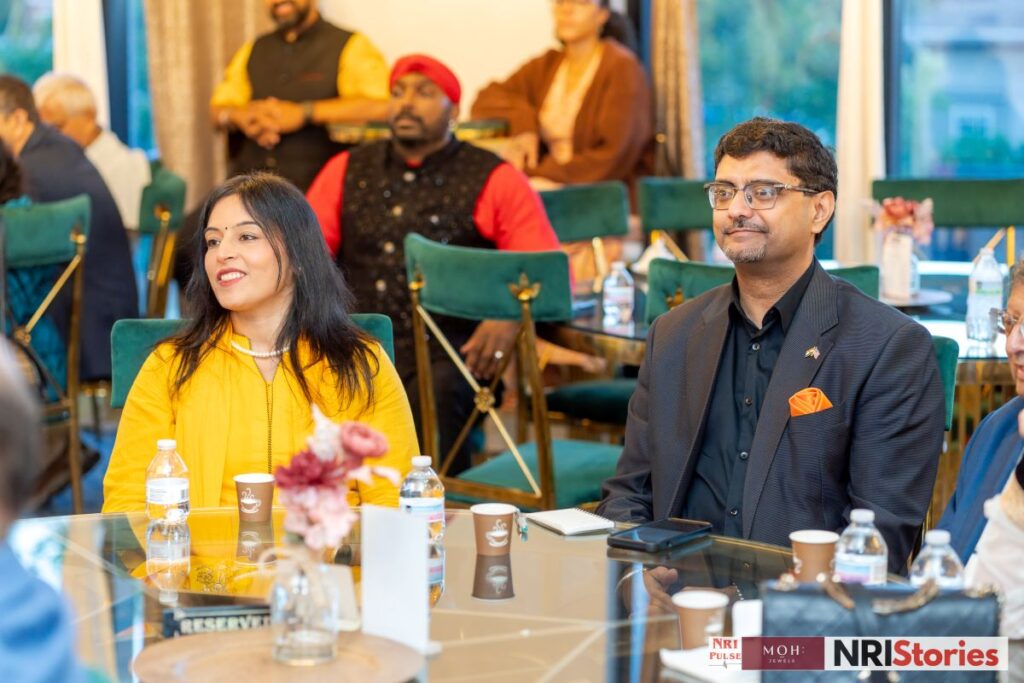
A New Innings in Atlanta
For Guest of Honor Hon. Dr. Sumit Seth, Consul General of India in Atlanta, the evening marked a meaningful anniversary. Exactly one month earlier, on August 26, he had arrived to begin his assignment.
Drawing on cricket, Dr. Seth described the welcoming environment as a promising batting track for his new innings. He invited the community to support the work ahead and help make his tenure meaningful.
His own journey began in medicine. A specialist in forensic medicine and medical jurisprudence and author of Review of Forensic Medicine, he joined the Indian Foreign Service in 2005. His assignments included Madrid, Bogotá, Geneva and Yangon, followed by service as India’s ambassador to Panama, with concurrent accreditation to Costa Rica and Nicaragua.
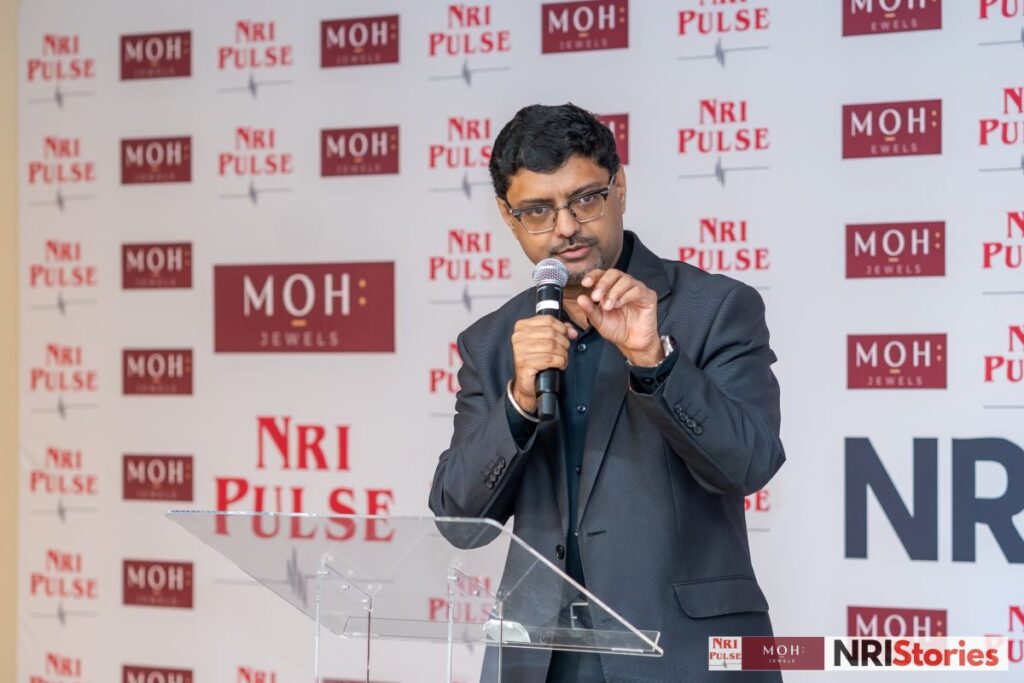
Dr. Seth outlined his five Ts: Traditions, Trade, Technology, Tourism and Talent, encompassing cultural understanding, commerce, innovation, travel and educational exchange. In an earlier NRI Pulse interview, he explained that these priorities ultimately lead toward a sixth T: touching lives, ensuring that diplomacy improves people’s everyday experiences.
Accompanied by his wife, Dimple, Dr. Seth thanked the gathering and encouraged continued engagement through social media. His message was an invitation to build the next chapter together.
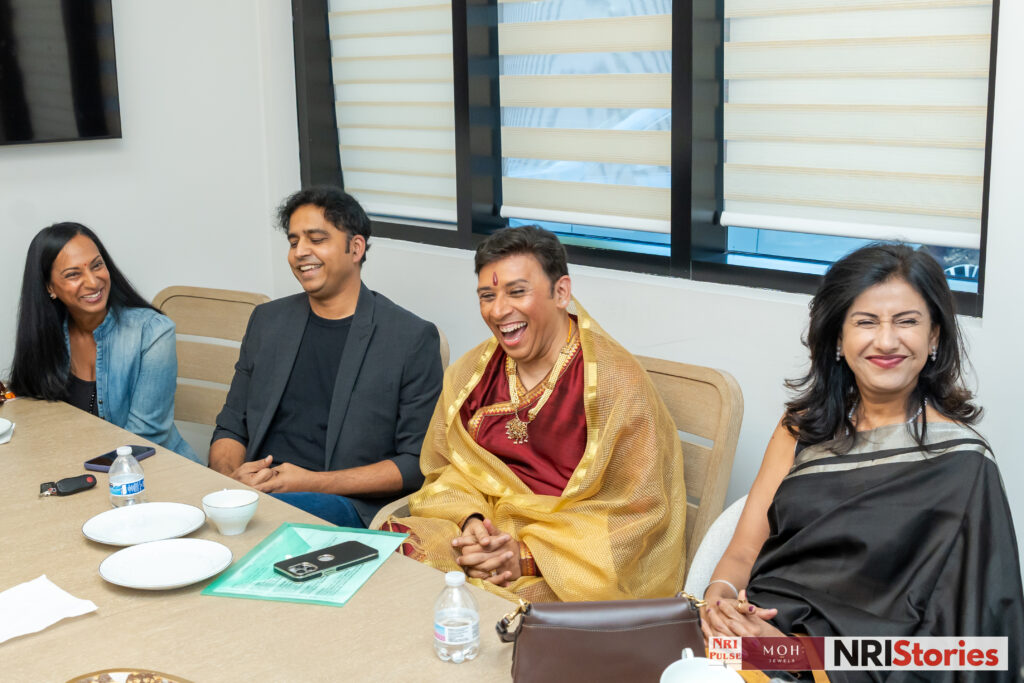
Seven Voices, Seven Journeys
The featured storytellers brought perspectives from public health, technology, law, dance and personal journeys of identity and resilience.
They included Dr. K. M. Venkat Narayan, Executive Director of the Emory Global Diabetes Research Center and Ruth and O. C. Hubert Chair of Global Health at Emory University; Abhijeet Singh, Founder, President and CEO of TechSera; Stephanie Fraser, “Roots Hunter”; Bhavya Jha Chaudhary, immigration attorney and Founder and Managing Attorney of Bhavya Chaudhary and Associates; Anurag Sharma, Kathak dancer, choreographer, educator, and Founder and Artistic Director of KalashramUSA; Malika Jiwani, Legal assistant; and Aastha Shastri, Founder of Aastha’s Dance Academy.
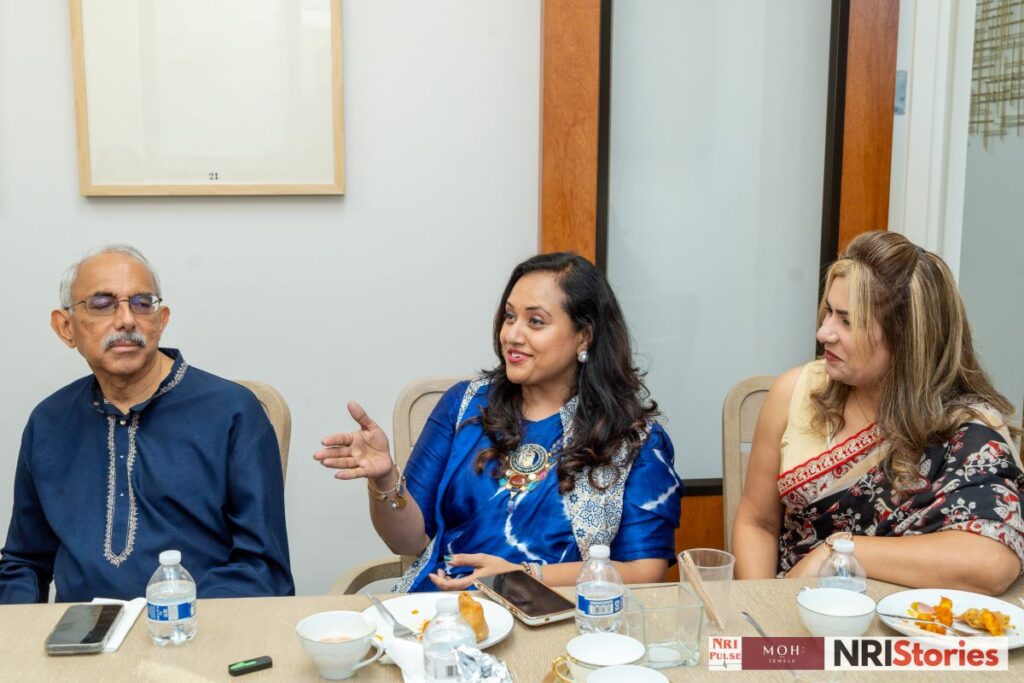
Their individual accounts form the heart of these stories, inviting listeners to discover the person beyond the name.
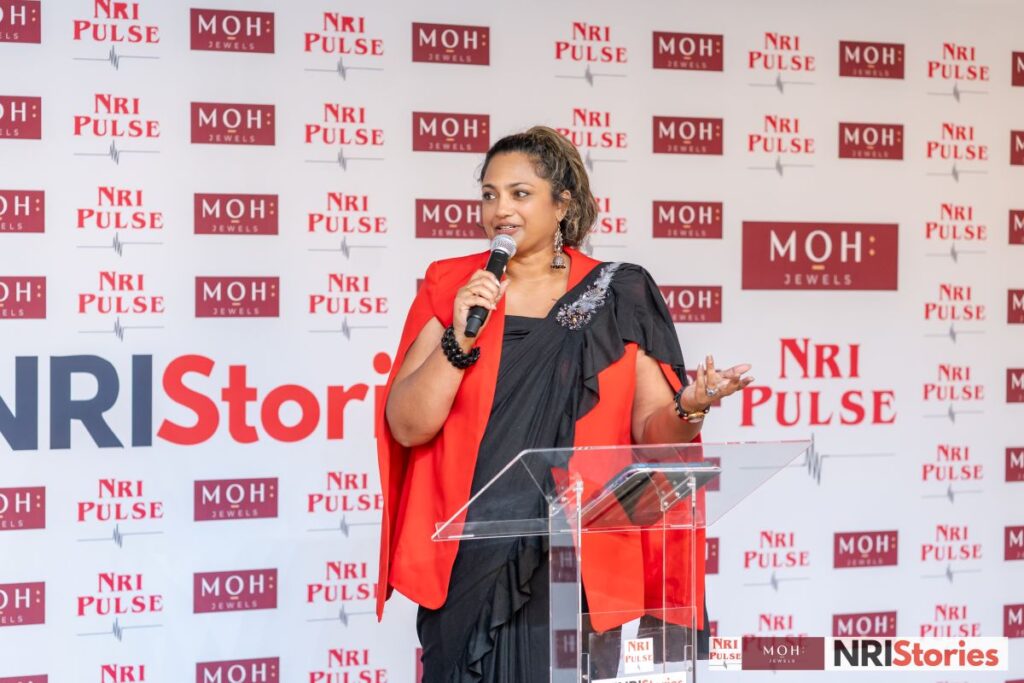
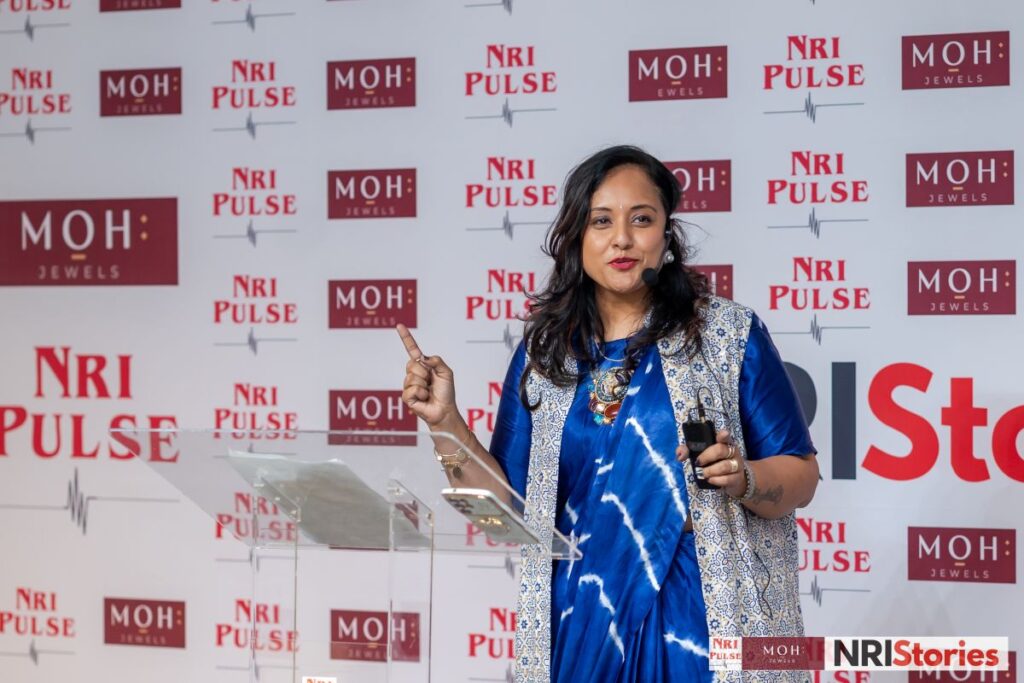
Emcee Sreeratna Kancherla, Chief Innovation Officer at HeneKom Group and a podcast host, guided the program. Neha Negandhi of Storytellers Table devoted her time to coaching the speakers, helping shape their experiences into narratives for a live audience.
A Phoenix and a Song
The evening returned to Sonny Bharadia’s journey, shared on the NRIStories stage the previous year. Rao described the challenges he continued to face after nearly 23 years incarcerated for a crime he did not commit. Freedom had brought the difficult work of confronting trauma and finding his place in a changed world.
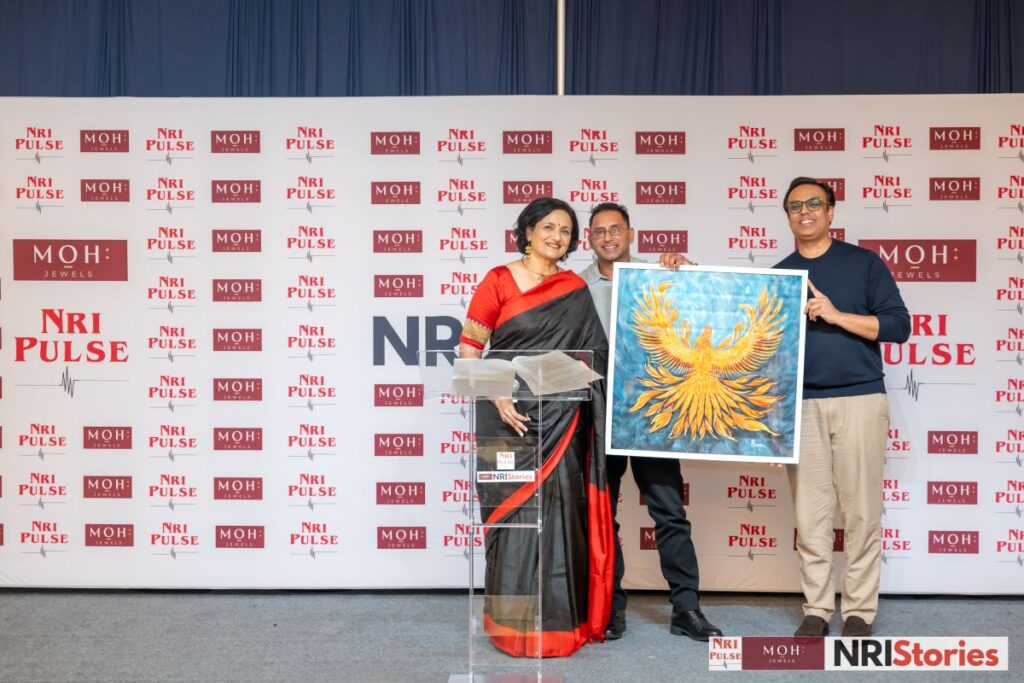
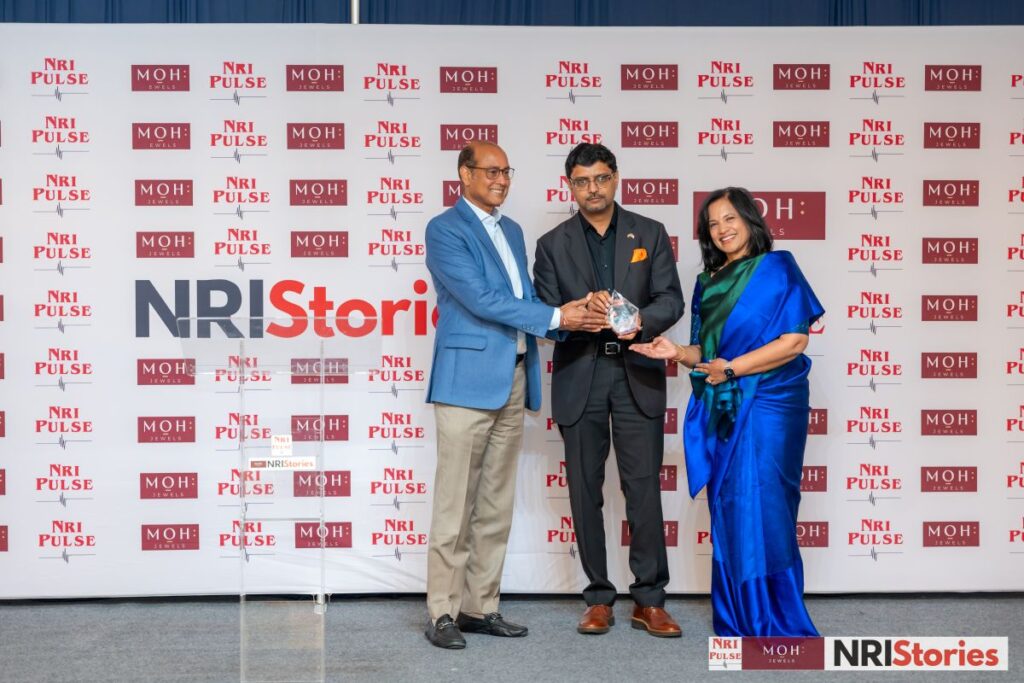
Bharadia received a painting of a phoenix rising from the ashes, created by Rao’s sister, Dubai-based artist Reena Bekal, and presented by Ashish Doshi of Moh Jewels. Its imagery honored survival and renewal.
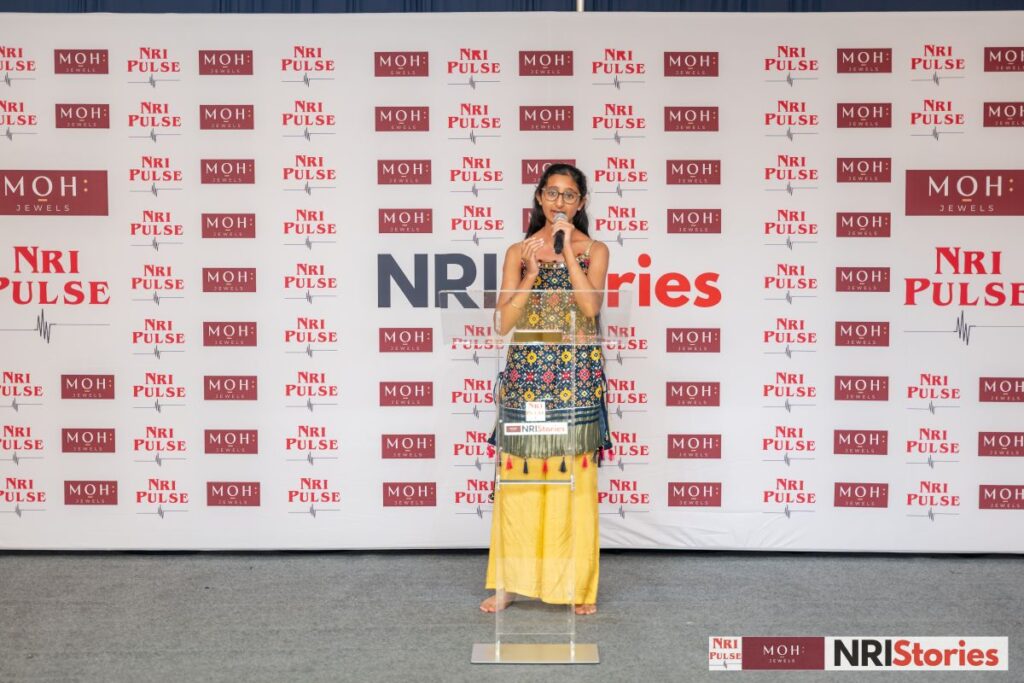
Young singer Amrit gave musical expression to the evening’s themes through “Bekhauff” from Satyamev Jayate and Rachel Platten’s “Fight Song.”
A Life Devoted to Learning
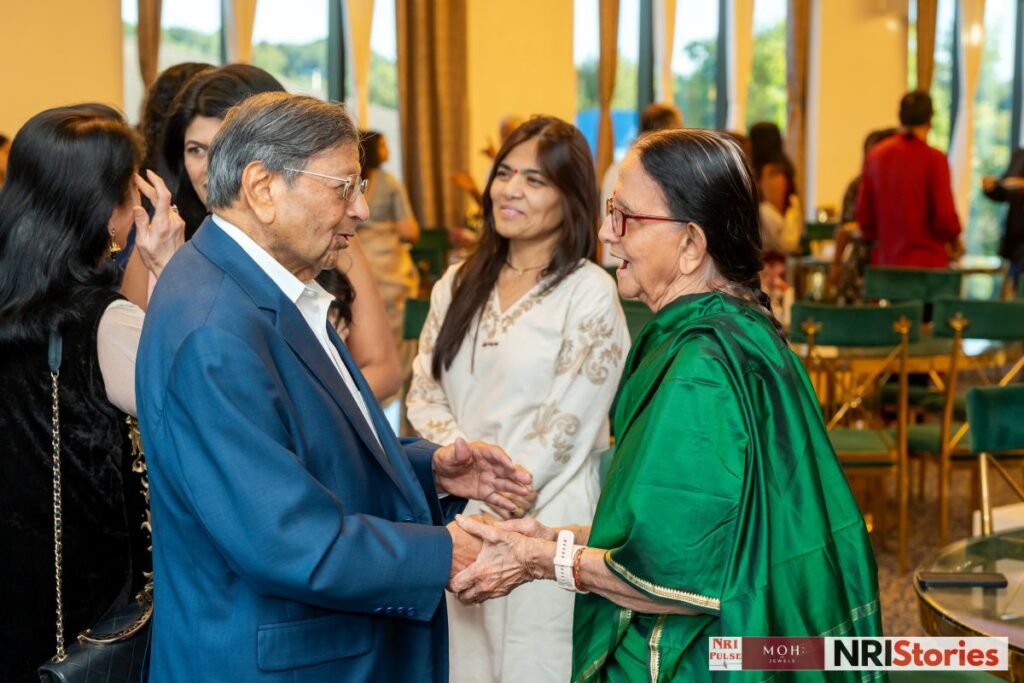
The NRI Pulse Lifetime Achievement Award honored author, scholar and educator Dr. Uma Majmudar, whose love of learning has enriched both academic and community life.
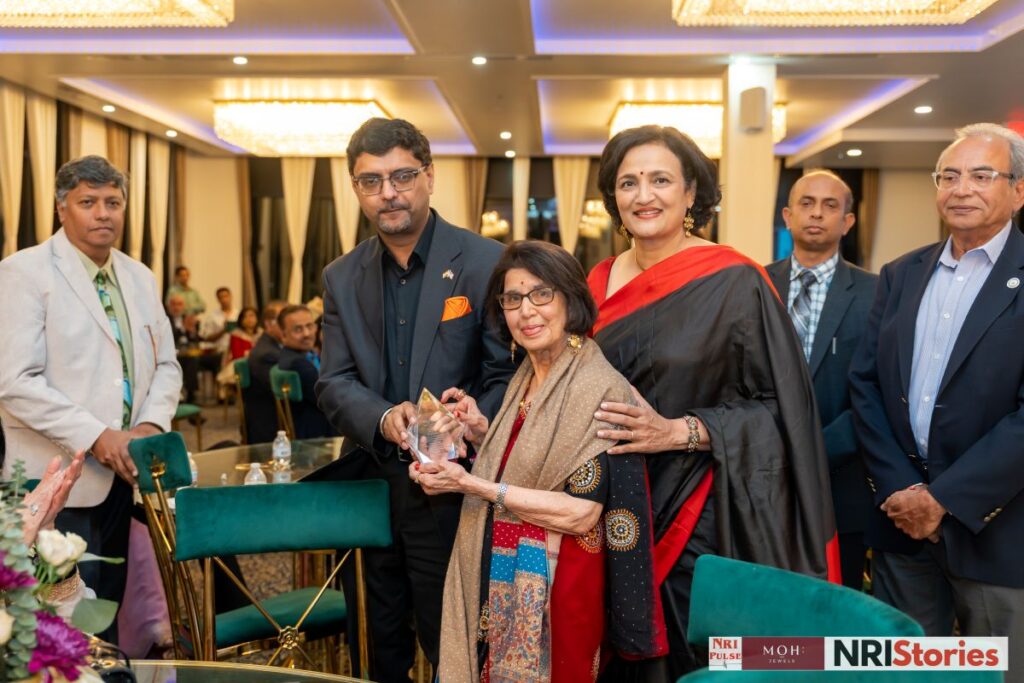
After earning a master’s degree in English and teaching literature in Ahmedabad, Majmudar arrived in the United States in 1967 and moved to Atlanta in 1971. Here, she founded and edited Voice of India, the India American Cultural Association’s quarterly publication.
Her exploration of Gandhi’s spiritual development led to a Ph.D. from Emory University in 1996 and the book Gandhi’s Pilgrimage of Faith: From Darkness to Light, published in 2005. Through teaching at Emory and Spelman College, community classes, plays and interfaith engagement, she made knowledge something to share. Her induction into Morehouse College’s Martin Luther King Jr. Collegium of Scholars in 2006 further recognized that contribution.
The award celebrated a life spent helping others understand their heritage and the wider world.
Gratitude Takes the Stage
The evening closed with a vote of thanks from this writer and co-organizer, Jyothsna Hegde, whose journey from a master’s degree in computer science and academic teaching to journalism and community leadership echoed the program’s recognition of lives beyond professional labels.
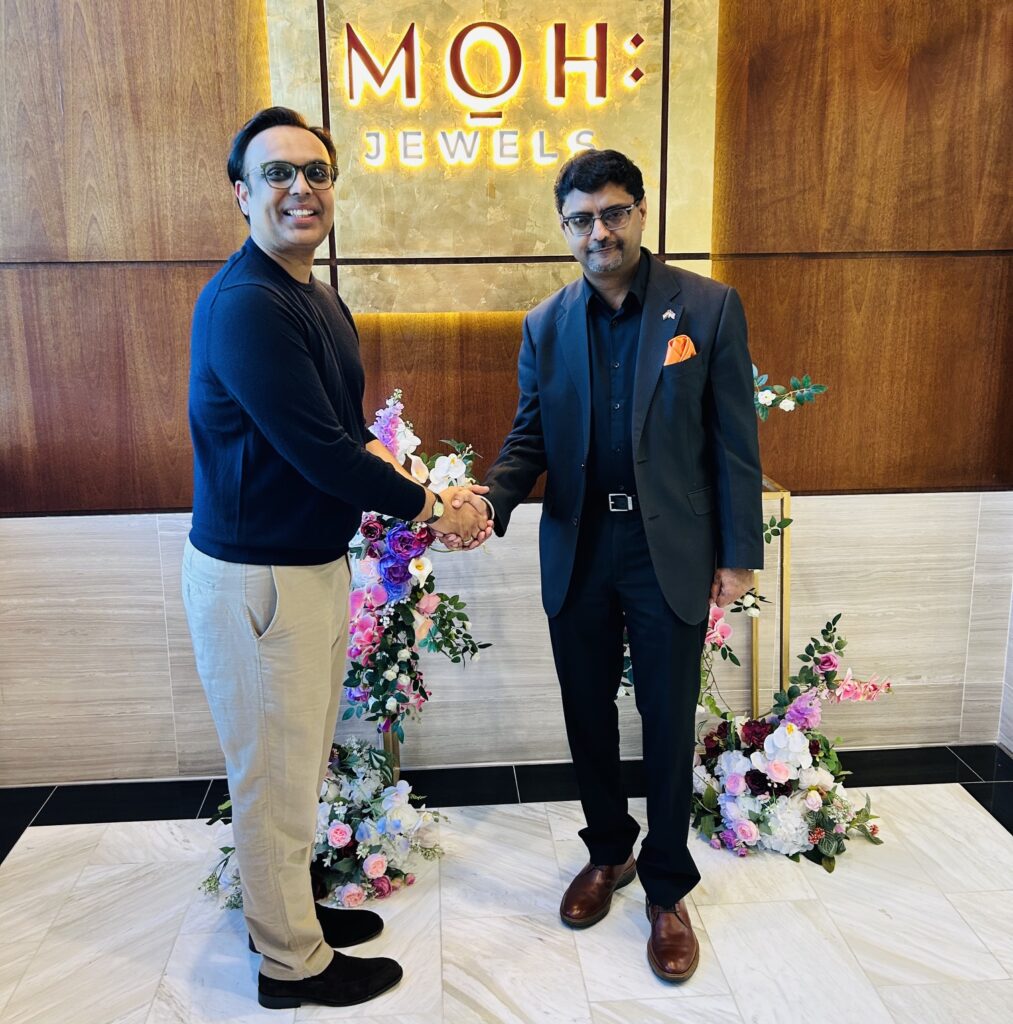
Hegde thanked Dr. Seth and his wife, Dimple, for joining the gathering, and Ashish Doshi of Moh Jewels for his continued commitment as returning title sponsor. She recognized the seven storytellers for sharing their lives so openly, Sreeratna Kancherla for guiding the evening, and Neha Negandhi of Storytellers Table for the time and care she devoted to coaching the speakers.
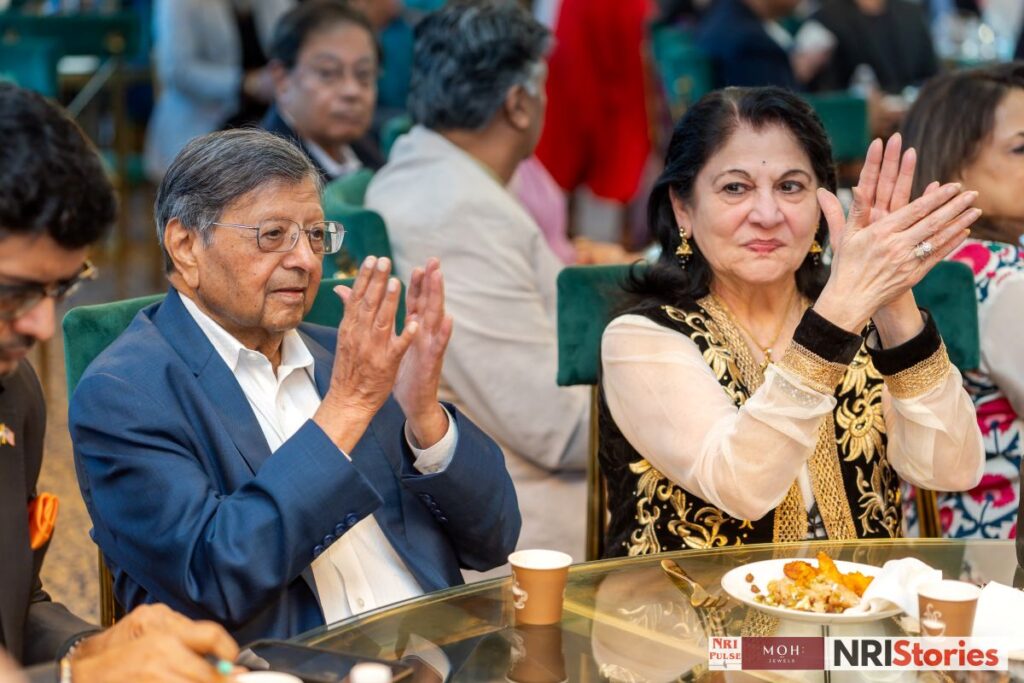
She acknowledged gold sponsors Dr. Jag Sheth and Madhu Sheth of the Sheth Family Foundation, and Murli and Bindu Reddy of Charter Global; silver sponsor Dr. Narasimhulu Neelagaru, bronze sponsors the Subra, Anu and Kiran Bhat Foundation and TechSera; and Madras Catering & Co. The community’s support extended through table sponsors, including the India American Cultural Association, Georgia Indo-American Chamber of Commerce, Georgia Association of Physicians of Indian Heritage, Heartfulness, One World One Family Foundation and Sankara Nethralaya.
Hegde also thanked volunteers Jyoti, Nethra and Mira, Shikha and Meghana including spouses Sathya, Ram and Rajat for the support that helped bring the evening together. Her acknowledgments included media friends Praveen Puram, Mustafa Ajmeri and Sonal Parekh; Jogy of Divinity AV; Niranjan Jullapelly of Niru Clicks; young singer Amrit; and Jagadeesh of Bliss Events.
The closing remarks recognized the shared effort behind NRIStories, from the voices on stage to the people who helped those voices be heard.
The evening may have ended with gratitude, but its stories remained, each one a window into a life transformed by courage, circumstance and choice.
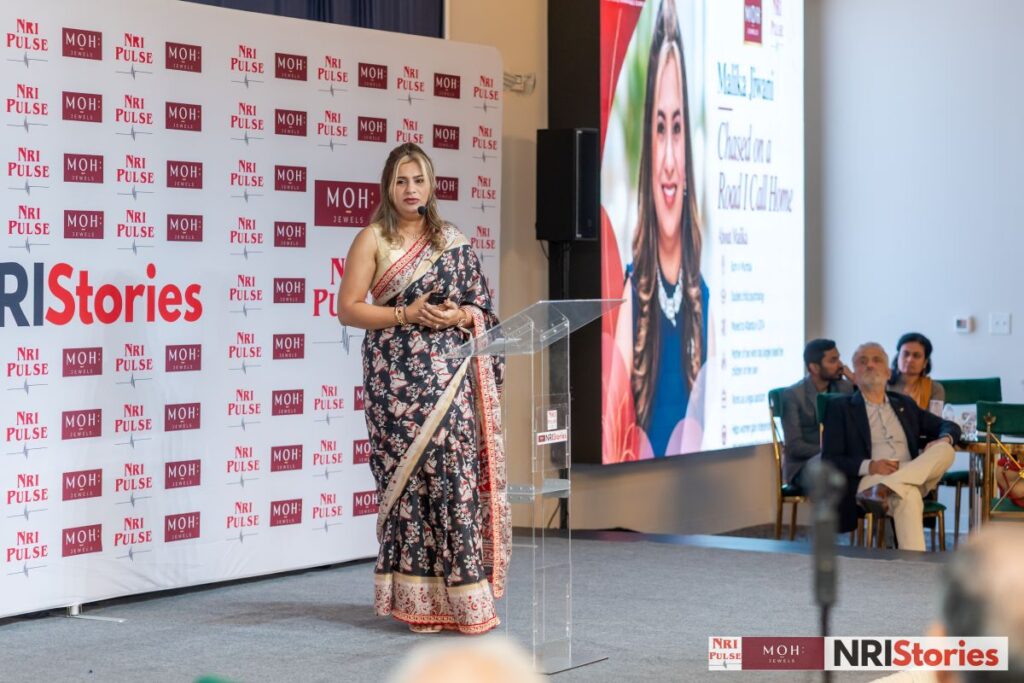
The Road She Refused to Surrender – Malika’s Story
For years, Malika Jiwani sat beside women learning to drive and told them not to be afraid of the road. Many were immigrants beginning again. Their hands tightened around steering wheels. Malika understood what driving could mean for them. A steering wheel could carry a woman to work, bring her children home and loosen the invisible threads of dependence that tighten around someone beginning again. “This road belongs to you just as much as anyone else,” she would tell them.
Then one afternoon, with her own daughter in the back seat, Malika found herself trying to escape a road she had taught other women to claim.
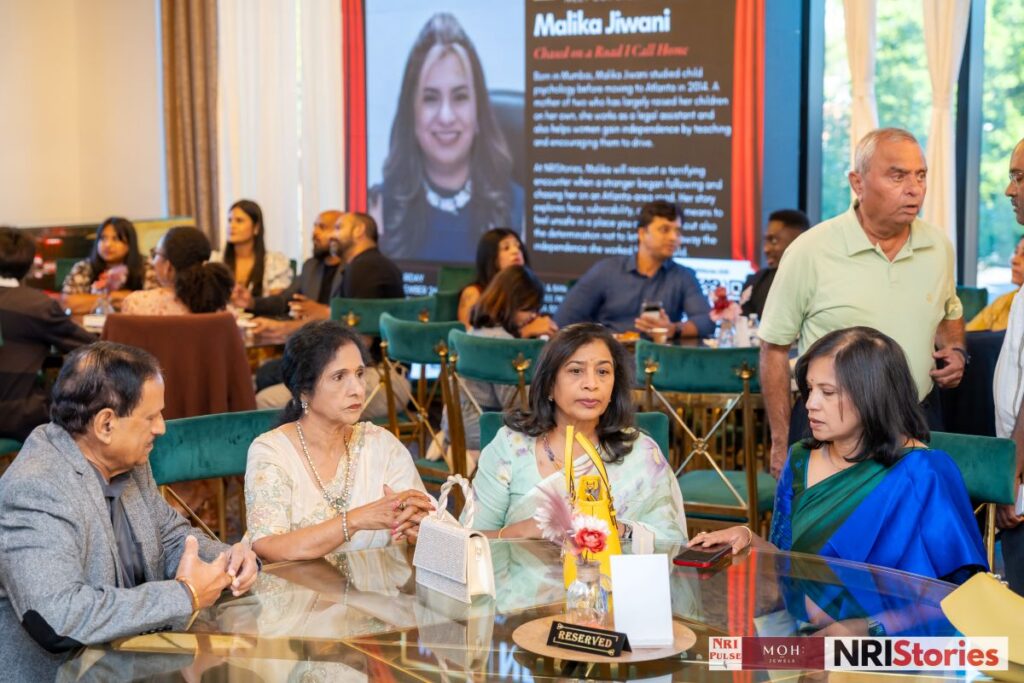
At NRIStories, the legal assistant, henna artist, entrepreneur, and single mother of two traced the journey that had brought her there. Twelve years earlier, she had arrived in metro Atlanta hoping to build a safer future. At an attorney’s office, she helped people navigate the legal system. As a henna artist, she entered homes alive with celebration. Beside immigrant women learning to drive, she taught confidence one intersection at a time.
The afternoon began with an ordinary courtesy. Driving along State Bridge Road, Malika slowed to let a white Nissan Sentra merge ahead. Her 12-year-old daughter sat behind her. The other driver, Malika recalled, made a gesture suggesting a gun. When she tried to move away, he repeatedly blocked her path. At a red light, surrounded by traffic, he stepped from his vehicle and shouted at her to “go back to India.”
Malika recalled people watching, but no one intervening. She remained still, afraid that any response might escalate the confrontation. Her daughter cried. When traffic moved, the driver followed them through several intersections. Malika changed course, trying not to lead him toward her destination. He drove away only after seeing her make a phone call, apparently assuming she was contacting 911.
The road fell quiet again. Malika did not. Fear can linger after danger disappears, like an alarm ringing after the fire has gone out. She said she waited about 45 minutes for help. Attempts to report the incident brought another layer of distress. Malika described being directed between police departments and feeling that the seriousness of the threat was minimized because no physical injury had occurred. For someone who helped others seek protection through the law, the experience cut deeply.
Support arrived through people willing to listen. After Malika shared her account on Facebook, NRI Pulse’s Veena Rao called, encouraged her to pursue a complaint and connected her with Rajeev Menon. He helped reconstruct the route and accompanied her to the police department. Their support made the experience easier to carry.
Her strongest reason for refusing silence, however, was her daughter. If Malika accepted the idea that another person’s anger could push them outside the boundaries of belonging, what lesson would her child carry from that road? “This is my place. This is our place,” she declared.
Her appeal stretched beyond one afternoon. She called for communities that notice when someone is vulnerable and step forward instead of looking away. For years, Malika had helped women find freedom behind the wheel. Now she understood that sometimes a road must be claimed more than once.
Malika’s answer was to keep driving, not away from the life she had built, but deeper into it.
The Name Beneath the Badge – Abhijeet’s Story
When the email congratulating Abhijeet Singh on his move to America arrived, he thought someone had made a mistake. There had been one position and two candidates: Abhijeet and his friend Shivaz Sekhon. Believing Shivaz needed the opportunity more, Abhijeet had asked management to give it to him and let Abhijeet wait for the next opening.
Confused, he called Shivaz, certain the immigration attorney had mixed up their names. “No Mamu,” his friend replied. “I got mine last week.” Management had created a second position. Both men were going to America. For Abhijeet, it felt as if one of his mother’s lessons from childhood in Varanasi had suddenly stepped into the real world: “Do the good, and the good will follow you.”
America offered opportunity, but also the need to prove himself again. Abhijeet worked, learned and built relationships until a satisfying career took shape around him. Then he decided to leave. People warned him that much of the respect he commanded belonged to the large corporation whose badge he wore. Remove the badge, they suggested, and perhaps the shine would disappear with it.
Another lesson from his mother answered that fear: “Build a name. Don’t chase the shine.” Soon customers began calling him. His former boss later described telling New Balance that if they wanted another Abhijeet, he simply did not have one. Abhijeet had feared that leaving the company meant leaving his identity behind. Instead, he realized the badge had only been the frame. “Maybe I didn’t lose the badge,” he reflected. “Maybe I finally built a name.”
That name became TechSera. Building the company meant untangling technological problems that often resembled knotted thread. Customers joked that Abhijeet could “make pancakes out of anything,” turning difficult situations into something that worked. Over ten years, he said, TechSera never lost a customer. Not because every project was flawless, but because his team kept showing up when things went wrong. Trust, he learned, was built less by avoiding storms than by staying on deck when they arrived.
The harder cost was often paid at home. Years passed through airports, hotel rooms and calls across time zones. Birthdays, dinners and ordinary family evenings became part of the invisible price of entrepreneurship. “You don’t get to give everything to your company without taking something away from somewhere else,” he acknowledged.
Then came the pandemic and a loss no professional skill could prepare him for. His mother suffered a stroke and died. Travel restrictions kept him from reaching her. On that same day, a prospective customer’s introductory call remained on his calendar. His sister-in-law explained the loss and postponed it. Weeks later, that conversation became the beginning of a relationship that would grow into a backbone of TechSera’s business during COVID.
Looking back, Abhijeet no longer measures success only in contracts, titles or company growth. He remembers the employee who stayed late, the customer who recommended him when he was not in the room, and the family who believed in him when the outcome was uncertain. A badge can open a door. A name is built by what remains after you walk through it.
His hope is simpler now: that someone whose life touched his might someday say, “My life is a little better because our paths crossed.”
The Birthday That Wasn’t Hers – Stephanie’s Story
The date in the orphanage record looked familiar. It was Stephanie Fraser’s birthday, except it was not. Standing in Patna, Stephanie discovered that the date she had celebrated every year marked the day she entered the orphanage. She had returned to India looking for answers. Instead, another certainty dissolved.
In 1973, a man brought a sick infant to the orphanage. The nuns estimated she was between three and six months old. Was he her father, a relative or a stranger? Stephanie still does not know. Her original name, birthplace and birth parents remain mysteries. At about two, she was transferred to Delhi. At three, she was adopted by a white American Catholic family on Long Island.
Her parents raised nine children, three biological and six adopted. The other adoptees came from South Korea. Stephanie alone came from India. Yet India remained a country she belonged to without knowing how to belong to it.
Then, at 15, India moved down the street. An Indian family settled nearby, and their daughter, Shalini, became Stephanie’s doorway into a culture that felt both foreign and familiar. They watched Bollywood movies, dressed in Indian clothes and jewelry, and practiced dance. Chicken tikka masala astonished a girl raised on salt and black pepper. There were pujas, Holi, Diwali and even a Lata Mangeshkar concert. Beneath all the color was something quieter. For once, Stephanie did not feel conspicuous. Years later, she understood what she had treasured most: “The feeling of not standing out.”
At 27, she returned to India with her fiancé. Delhi overwhelmed her with its noise and beauty, like stepping into a parallel life. At the orphanage, two teenage girls led her past rows of babies. Neither had been adopted. Their lives could easily have been hers. But the nuns had no answers. The head nun advised her, “Go live your best life, forget this place, don’t look backwards.”
Stephanie kept looking. Patna yielded the truth about her birthday but little else. Back in Delhi, her fiancé surprised her with an Indian wedding, turning her joke about crashing one into reality.
Motherhood reopened old questions. When her son was born, Stephanie held her first known biological relative. Her daughter followed two years later. When her husband later gave her a DNA test, Stephanie had a phrase ready: “I am my own tree: no roots, just two small branches.”
Years later, after her children left for college, she searched again. Second and third cousins appeared. Chromosomes became breadcrumbs, and family trees stretched across screens like half-erased maps. Eventually, she connected with eight DNA relatives. Their stories pointed toward Malayalee roots in Kerala and possibly a Catholic birth family.
At NRIStories, Stephanie spoke not from the end of her journey, but from its middle. Her film project, MaiDen India, would carry the search through Kerala, Patna and Delhi with two fellow adoptees. She hoped to find her birth parents, while knowing she might not.
For years, Stephanie thought identity required certainty. Now she understood that belonging could also live inside the search itself. “All trees need roots to grow upwards,” she said. “Join me as I search for mine.”
Destiny Had a Rhythm – Anurag’s Story
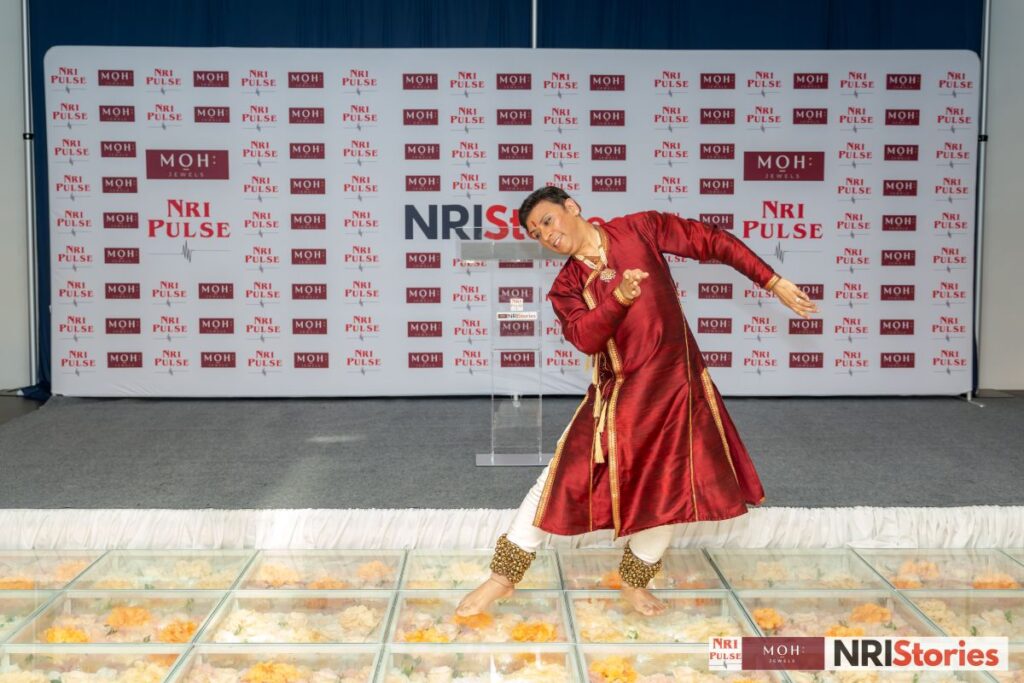
Anurag Sharma had been asked to play a king. He had no idea he was stepping into the rest of his life. It was 2003 in Minneapolis, and Katha Dance Theatre needed someone to portray Dashrath in its Ramayana. A friend suggested Anurag. “Are you kidding me? I don’t know Kathak,” he replied. They assured him he did not need to be a dancer, so he agreed. Somewhere between rehearsals and rhythmic footwork, something unfamiliar began to feel strangely his own. Kathak entered his life like a guest invited briefly into the house who quietly turned out to belong there.
Anurag was 32. Raised in a traditional Punjabi family in Delhi, he understood adulthood as a sequence of sensible milestones. He and his wife, Anu, moved to the United States in 1998, and by the time Kathak found him, he was working in Information Technology while they raised a four-year-old son and two-year-old daughter.
Then his first guru, Rita Mustaphi, whom he calls Rita Didi, told him, “You have something. You should learn.” Anurag hesitated over his age, responsibilities and assumptions surrounding men in classical dance. Anu saw none of those as reasons to stop. With her encouragement, evenings that belonged to routine became hours of training. His body began learning a vocabulary his mind had never imagined needing. Anu still tells him, “This must be unfinished business from your previous lifetime.”
In 2004, Rita Didi urged him to attend an international Kathak festival in Chicago. Watching male dancers move with strength, grace and precision, Anurag felt old assumptions begin to fall away. There he also encountered Pandit Birju Maharaj Ji, whose quiet presence seemed to gather a room around him. Anurag returned to Minneapolis knowing Kathak had begun asking something deeper of him.
For almost ten years, he trained alongside work and family life. He listened, repeated, stumbled, corrected himself and returned. Kathak demanded more than technique. It asked him to leave his ego at the door. Slowly, practice became Sadhana, a discipline sustained by devotion. Later came six months of intensive study with Maharaj Ji in the Guru Shishya Parampara. Traveling beside his guru, Anurag saw how ordinary life could become art and learned that knowledge received carries a responsibility to be passed on.
That responsibility found a destination in 2019. During a family vacation in Switzerland, after Maharaj Ji called, Anurag’s Atlanta cousins urged him to start a school. He would not establish one in Minneapolis out of respect for Rita Didi. “Why not Atlanta?” they asked. With Maharaj Ji’s blessing and permission to use the name Kalashram, Anurag began flying to Atlanta every weekend to teach, returning to his IT desk each Monday.
In October 2020, they moved to Atlanta. Kalashram grew to include children, adults and students in their seventies. Retirement from IT earlier this year finally gave Anurag time to follow that calling fully.
At NRIStories, he looked back at the teachers, choices and sacrifices that had brought him there. He had once believed he was learning Kathak. In truth, Kathak had been quietly teaching him. He thought he was training his feet to tell stories, only to discover that rhythm had been writing one through him all along.
“I did not realize,” he said, “that Kathak was quietly shaping and telling my own.”
The Road That Kept Beginning – Bhavya’s Story
The judge’s words seemed to travel toward Bhavya Jha Chaudhary from a great distance. “Counsel, you have made a compelling case. I am granting him relief. He is free to go.” It was 2009, inside an immigration court at a detention center in Lumpkin, Georgia. Bhavya answered professionally, “Thank you, Your Honor,” but inside, disbelief bloomed. Her client had spent months in detention. Now he would walk out. Near ten that night, while arranging transportation for him, another thought surfaced: How had she arrived here?
The road had begun in Ranchi. She studied law at the University of Delhi and imagined becoming a barrister. Then marriage took her to England in January 1995. She had barely begun planning that future when her husband was offered a job in America and needed to report within two weeks. By September, her carefully drawn map had crossed another ocean.
While her husband went to work each morning, Bhavya searched for a path back to law. Before Google, that meant Yellow Pages, telephone calls and admissions packages arriving by mail. Lawyers discouraged her. Others suggested computer programming, so she learned it, found work and discovered how miserable the sensible alternative could make her. Sometimes discovering what one is meant to do begins with discovering what one cannot bear not to do.
With her sister’s help, Bhavya secured admission to the University of Georgia’s law school, but circumstances prevented her from attending. Motherhood followed, alongside work as a legal consultant and paralegal. Then, in 1998, a debilitating, potentially life-threatening illness brought everything to a halt. Treatment and recovery took almost two years. As strength returned, so did the dream.
In December 2002, Bhavya traveled alone to Northwestern University for an interview. Flying home, she felt the exhilaration of a life moving forward again. That evening, she recognized an ominous feeling. Tests confirmed it. The illness had returned.
More treatment followed, and Bhavya reached the place perseverance stories often hurry past, where trying again simply feels exhausting. Her sister-in-law offered words sturdy enough to hold: “Don’t give up. You will manage.”
Bhavya entered Emory while recovering, having lost weight and hair. During her second semester, treatment complications threatened another postponement. She cried, then asked, “Tell me what I need to do to finish.” Accommodations made it possible. She worked at a law firm, studied through treatment and graduated on time in 2004. A year of legal work in Romania followed, then further surgeries and recovery.
When the bar results arrived, Bhavya could not look. Her husband called her at work: “You passed.” She fell to the floor and wept for every hospital room, delay and restart that moment contained.
Years later, the girl who had chased the law across continents stood in that courtroom in Lumpkin and heard a judge say, “Counsel, you have made a compelling case.” The words mattered because someone would walk free, but hidden inside them was another verdict. Bhavya had arrived.
At NRIStories, she looked back at a road that had never unfolded as planned. Again and again, it seemed to end, and again and again, another one began. “You don’t have to know exactly how you’re going to get there,” she said. “You just cannot give up on getting there.”
The Question That Led Him Home – Venkat’s Story
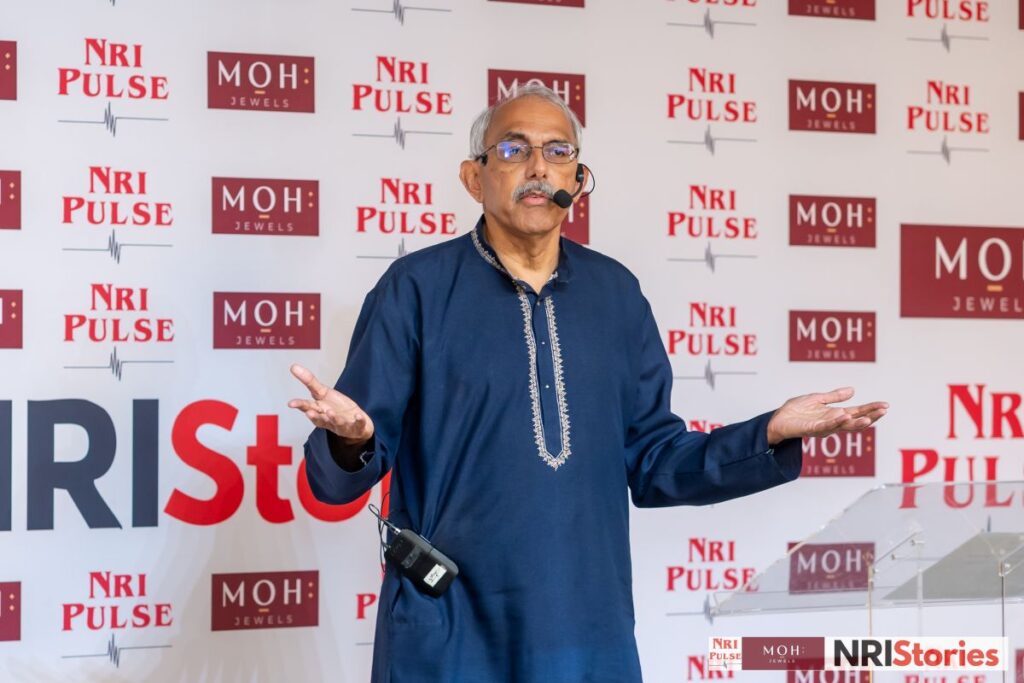
At four in the morning in November 1985, Dr. K. M. Venkat Narayan wandered into the library at Dryburn Hospital in Durham, England, carrying a question medicine had never managed to silence: How do we know what we know? On a shelf sat a green book, Clinical Epidemiology, by Fletcher and Fletcher. Venkat opened it. Within three hours, something that had eluded him for years began to reveal itself.
The story of that night, however, began long before the library. It began with his mother, Jayakka, who married her first cousin at 15. Before she was 19, she was pregnant with Venkat and widowed. The traditional Brahmin world around her had a script ready for young widows: withdraw, become invisible, accept what fate had written. Jayakka refused the part. She trained as a nurse, supported their extended family and eventually became a senior administrator responsible for hundreds of nurses. At four feet ten inches, she was physically small, but her personality filled every room she entered.
Venkat grew up in Bangalore in an unusual constellation of family, surrounded by three other mother figures and seven girls who were sisters. So completely was Jayakka woven into this extended household that, for a long time, young Venkat thought she was his sister rather than his mother. He still calls her Jaya-akka, literally “Sister Jaya.” What might seem confusing from the outside gave him something profound: the understanding that affection was not a vessel with limited capacity. Loving one mother figure did not diminish another. Love, he learned early, could expand to fit everyone it held.
At eighteen months, polio weakened his right leg. Venkat adapted with characteristic humor. Long trousers concealed what shorts might reveal, and if sports placed him on the sidelines, he discovered that the sidelines offered an excellent seat from which to comment on the game.
His grandparents gave him prayers, epics, rituals and tradition. He treasured them, but questions soon grew alongside faith. Why were widows treated differently? Why should caste determine worth? Why should ritual outweigh fairness? He explored religious orthodoxy before rejecting dogma, without surrendering his capacity for wonder.
Medicine initially seemed too narrow for such a restless mind. He entered medical school largely because family expectations pointed him there and found memorization where he wanted investigation. He argued with professors, skipped classes and led a strike. Later, he lost a lucrative job in the United Arab Emirates after defending workers’ rights. By the time he reached Britain, colleagues imagined him becoming a gastroenterologist. Venkat was still wondering whether medicine was truly his home.
Then came the green book. It began with something familiar, chest pain, but asked the question beneath the knowledge: How had doctors established what they believed to be true? Venkat remembered asking something similar years earlier, only to be directed back to textbooks. Now someone was examining the foundations beneath the textbook itself.
He read all 252 pages in roughly three hours. Clinical epidemiology brought together the physician, skeptic, philosopher and questioner within him. Nothing outside him changed that night, but medicine suddenly became spacious enough to contain him.
His path later led through Scotland, the NIH and CDC to Emory, where he explored diabetes care and questioned prevailing explanations for the disease among lean people and South Asians. The boy who questioned received wisdom had found a profession where questioning could itself become service.
At NRIStories, Venkat acknowledged Jayakka’s courage, his family’s embrace of paradox and his wife Asha’s patience. Recalling Bill Foege’s advice to write your obituary and edit it every day, he offered an epitaph shaped by a lifetime of inquiry:
He wandered but was never lost.
He was unafraid to walk alone.
He questioned what the world believed,
And answered with the life he lived.
She Promised She Would Dance Again – Aastha’s Story
In the child’s drawing, Miss Aastha had both her legs. There she was on paper, whole and smiling, exactly as her young student remembered her. The boy knew Aastha Shastry as his dance teacher, the woman who had spent more than a decade teaching children in Birmingham, Alabama, how to find rhythm with their feet. He did not know that her right leg was in danger. Looking at the picture, Aastha made herself a promise: “Miss Aastha will definitely be back like this.”
Months earlier, on November 22, 2015, Aastha, her husband Mrugesh and their six-year-old son, Vyom, were exploring Mexico City on a family vacation. Around 5:30 that evening, a wrong turn changed the map of their lives forever. When Aastha regained consciousness in a Mexican hospital, she learned that Mrugesh had died. Vyom was less seriously injured, but even a bruise on her little boy’s head hurt more than her own wounds. Immobilized in intensive care, she could not even see her husband one final time. “I never had closure,” she recalled.
Airlifted to Birmingham, Aastha faced 19 injuries, surgeries, therapy and pain that stretched across nearly a year. Yet she wanted rehabilitation to begin immediately. “I wanted to see my son grow every minute,” she said. Later, living alone and managing life in a wheelchair, even a shower could take three hours. Ordinary tasks rose before her like small mountains, and the question “Why me?” returned often.
Then came the drawing. It was only paper and crayons, yet hope sometimes arrives disguised as something ordinary. The child had drawn not her injuries, but the teacher he expected to see again. At her next appointment, after waiting three hours on a stretcher, Aastha told her surgeon about a recital. She wanted him to come watch her dance with her 150 students. In 2017, he did. Aastha danced, and a piece she performed with Vyom became his favorite. The promise whispered over a child’s drawing had stepped off the page and onto a stage.
Healing, however, was not a straight road. Aastha later took Vyom back to Mexico on a cruise because she refused to let her fears become his inheritance. Still, grief had its own tides. At 30, she had been left to raise their son and learn how to live after the life she knew had vanished.
In 2020, she started a support group for young widows, eventually helping more than 50 women around the world. When another woman survived an accident and lost her husband, Aastha called her every morning. She offered comfort, then cried for herself. The next morning, she called again.
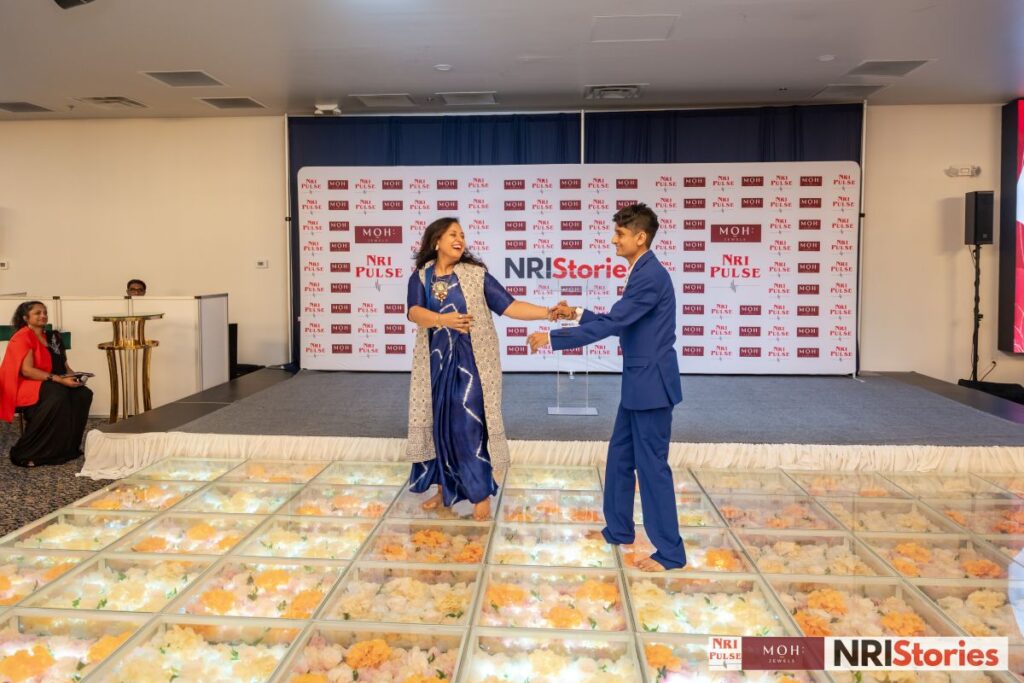
Eleven years later, at NRIStories, Aastha stood beside Vyom, ready to share the dance they had created for her motivational recital. He had named them #OriginalMomsonduo. Once, a child had drawn the woman he believed his teacher could become again. Now her son stood beside that woman. Aastha had learned that healing does not always mean leaving pain behind. Sometimes it means carrying it differently, until the wound becomes a doorway for someone else.
“When I am healing others,” she said, “I am getting healed.”