




BY SHIKHA DAS SHANKAR
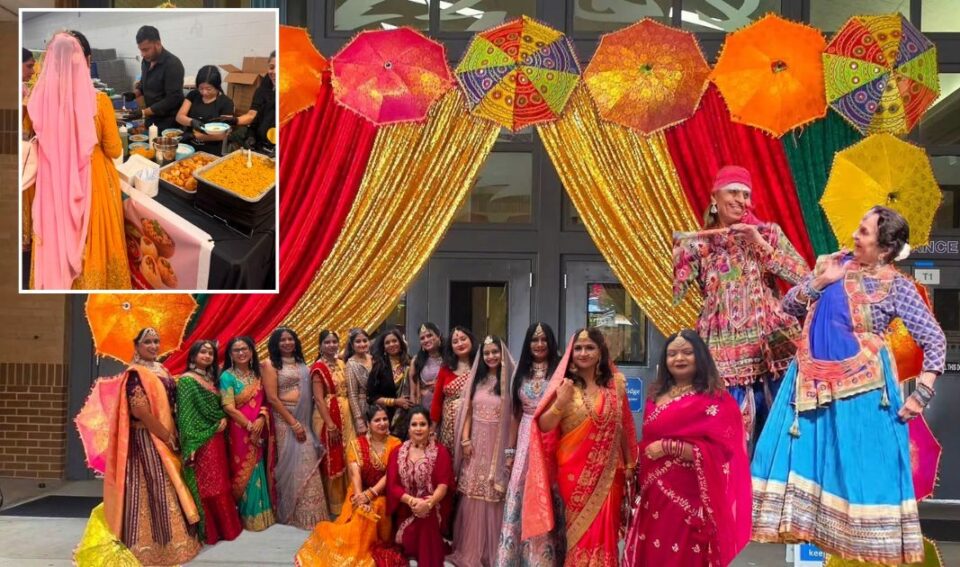
Atlanta, GA, July 15, 2026: A canopy of Rajasthani umbrellas, gold and pink and marigold-orange, arched over the entrance to Peachtree Ridge High School, was the perfect photo-op for families streaming in wearing kurtas, lehengas, and sneakers. Past the entrance, rows of people funneled toward the unmistakable smell of frying samosas, dosas, and vada pavs, while others browsed rows of sarees and jhumkas from small business owners.
On Saturday, July 11, thousands filed through Suwanee for the Delhi Dil Walo Ki Atlanta Cultural Festival, and by noon, the school cafeteria didn’t look like a cafeteria anymore. It looked like a chowk right out of the streets of Delhi. Every table was full, the theater where cultural performances were held saw a packed audience, and teenagers in “Delhi Dil Walo Ki” volunteer tees worked nonstop selling food tokens to the hordes of people lining up.
For once, a festival banner wasn’t exaggerating. Billed as the biggest mela in Atlanta, the event had free entry, all food items under six dollars, cultural performances showcasing India’s diversity, and a felicitation ceremony honoring some renowned names from the Indian-American community.
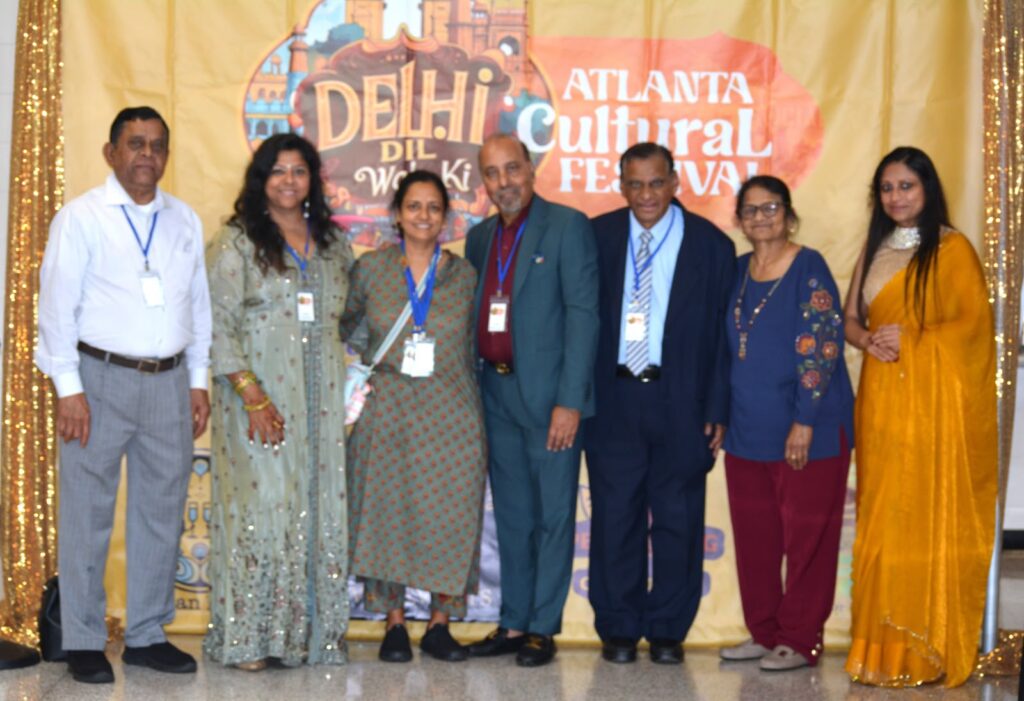
The vision of bringing the streets of Delhi to Metro Atlanta was brought to life for a second year by Mustafa Ajmeri of Global Entertainment & Media Services, along with Krishan Goyal of Jashan Events. Their wives, Kheruben Ajmeri and Isha Goyal, dedicated their time and effort to making the event a success as well. Veena Potla joined the team this year as director of event marketing, and Ritambhara Mittal oversaw cultural programming. Volunteers ranging from working professionals to teenagers ensured the event ran smoothly.
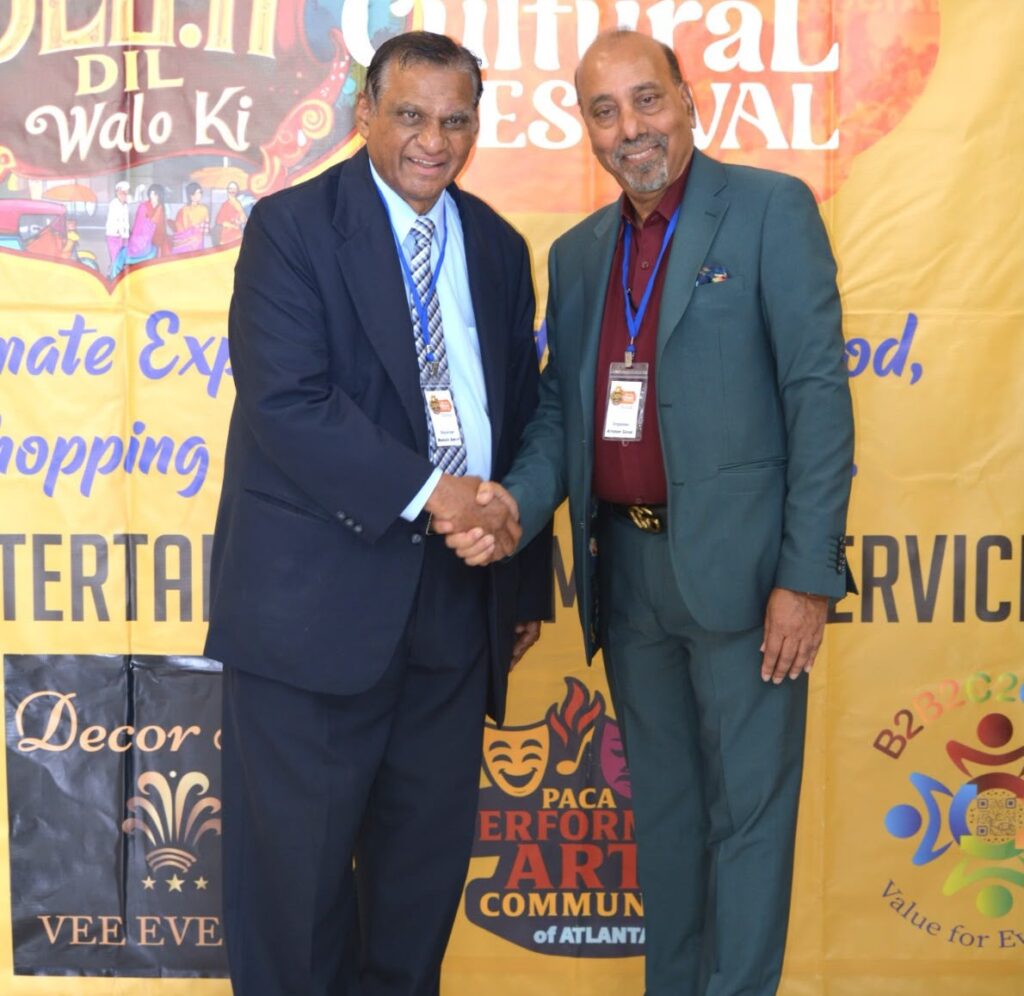
Mustafa Ajmeri says he plans to make the event bigger every year, partnering with more vendors and cultural organizations to reach even more people. “This was like a mela, a celebration where I wanted the whole family to have fun,” he said.
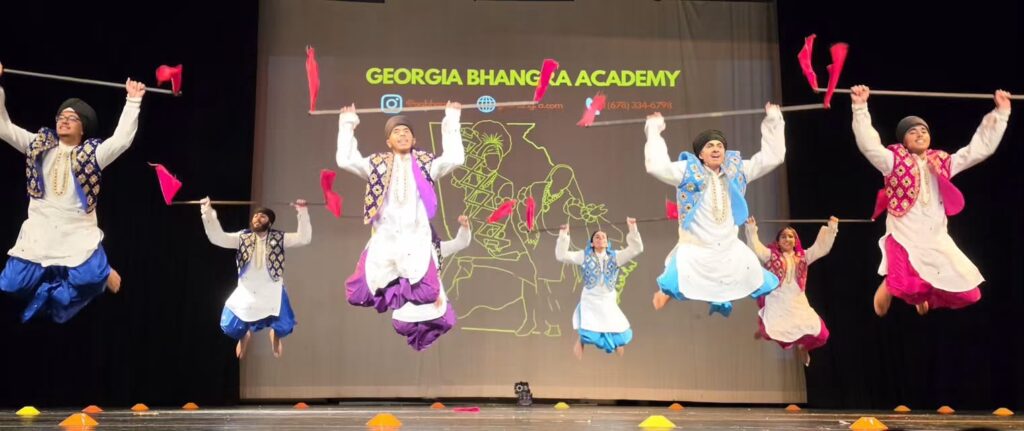
The festival draws its name and spirit from Delhi, but its real subject is Atlanta itself, and a community that traces its roots here back to the early 1980s. Organizers Global Entertainment & Media Services and Jashan Events had billed the day as a full sweep of Indian performing arts, from Garba and Bhangra to Gidda, Lavani, Kathak, and Bharatanatyam, alongside comedy and a fashion show. What was on stage lived up to the range that was promised, performers moving from classical technique to grooving to pure Bollywood energy, keeping the audience entertained throughout.
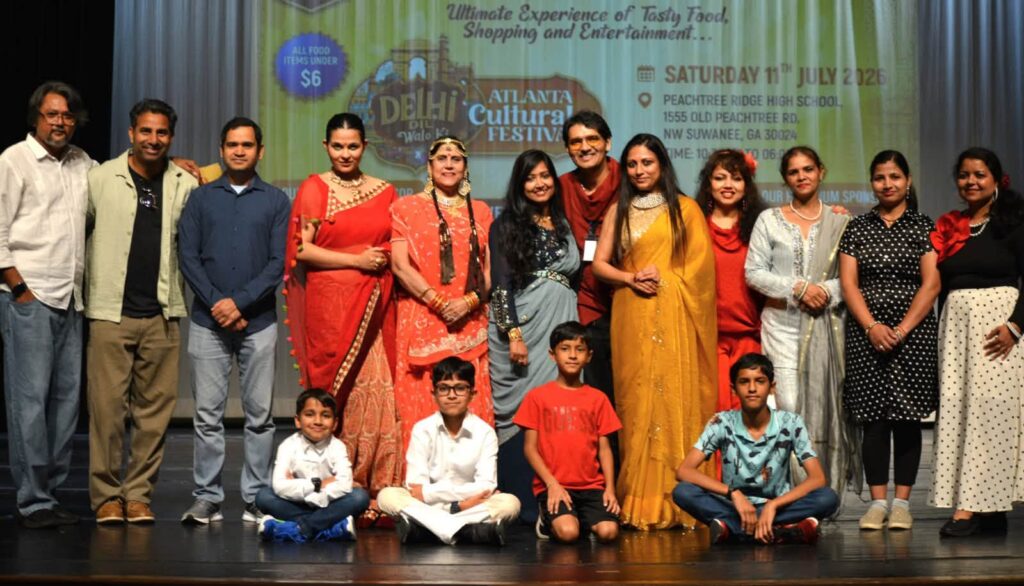
Amid the music and the shopping, the moments on stage inside the school’s theater became the festival’s heartbeat. Ten members of Atlanta’s Indian-American community were felicitated for decades of cumulative impact. Dr. Sham Navathe, the Georgia Tech professor who founded the Indian Classical Music Society of Greater Atlanta in 1993, stood alongside Dr. Jagdish Bhandari, honored for five decades in public health and pharmaceutical quality. Restaurateur Narendra Patel, whose Madras Chettinaad and Madras Mantra helped shape Atlanta’s South Indian food scene, was recognized next to Bala Reddy Indurti, president of Sankara Nethralaya USA. Dr. Subash Razdan, who marched with the Indian contingent at the 1996 Atlanta Olympics opening ceremony, received his honor alongside NRI Pulse founding editor Veena Rao, cited for her journalism, her acclaimed novel Purple Lotus, and her place in the Limca Book of Records as the first Indian woman to found and edit a publication outside India.
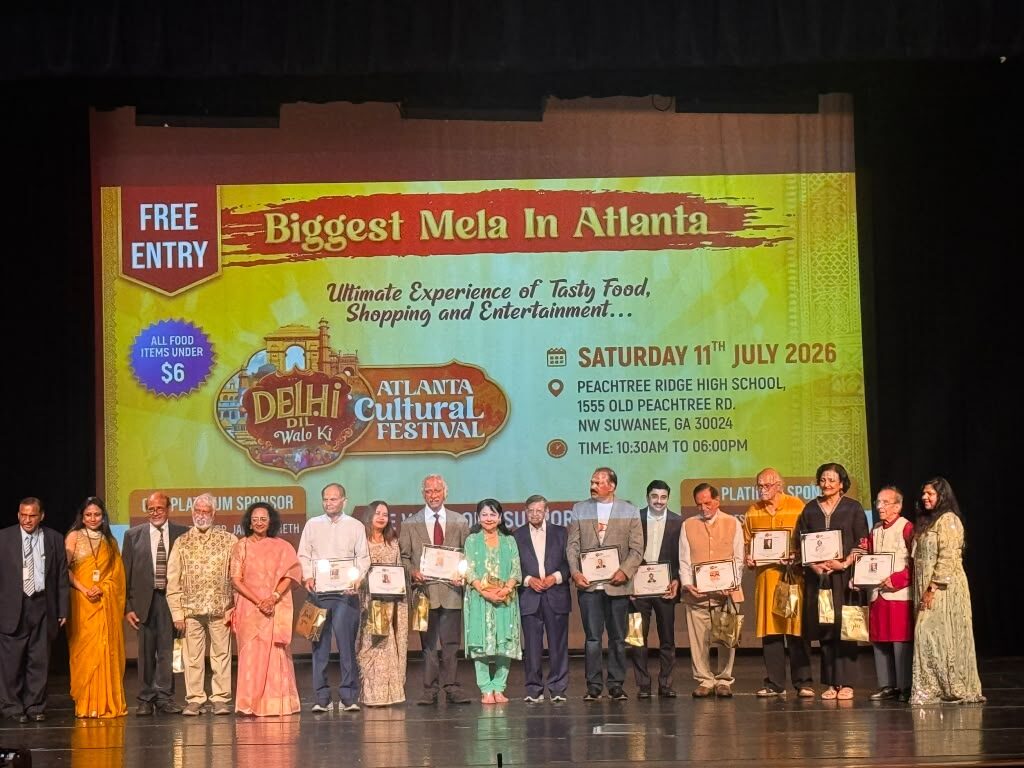
Rounding out the honorees were community leader Ashok J Patel, Leuva Patidar Samaj founder Ratilal Patel, Dhoop Chaoon Theater co-founder Anil Bhagat, and social entrepreneur Swati Agarwal, founder of Sprinkling Smiles. One by one, each walked up to accept a certificate and a gift bag, the audience rising in applause for names that don’t often make headlines but hold the community together in the ways that matter most.
The festival itself came together with the support of its platinum sponsors: Padmabhushan Dr. Jagdish and Madhuben Sheth of the Sheth Family Foundation, Ricky and Simi Walia of Walia Hospitality Group, Dr. Naresh and Dr. Asha Parikh of Georgia Clinic PC, and Chandler B. Sharma and Dr. Paddy Sharma of Sharma Law Firm.
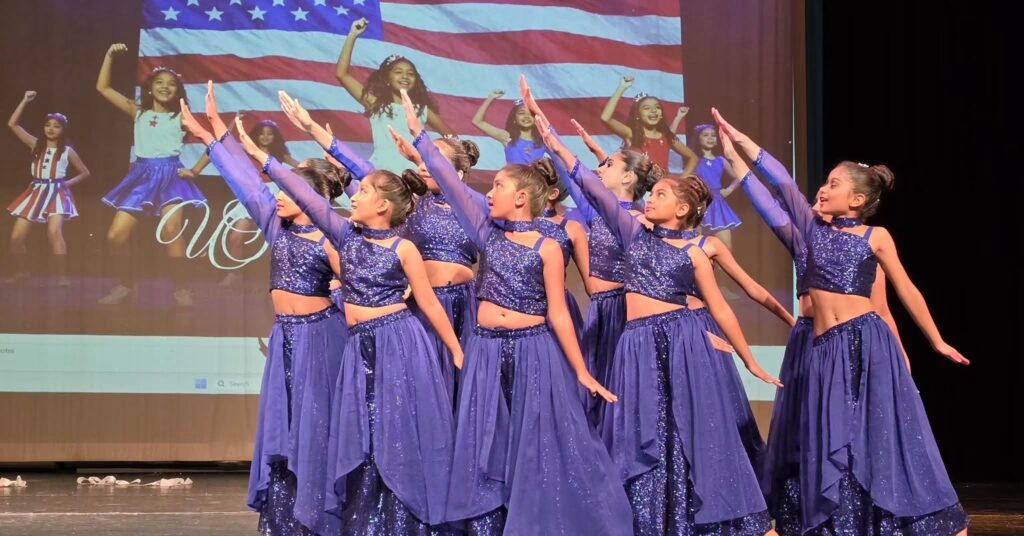
The stage program was just as diverse and vibrant as the food stalls. From start to finish, there was something for everyone. Performers ranged from grade-schoolers barely tall enough to see over the front row to seniors who’d been dancing together for decades, and every one of them brought the same enthusiasm to the stage. The Atlanta Seniors Garba Team, led by Pallavi Patel, opened with the kind of unhurried energy only decades of dancing together can produce. Sri Dutt Raga Dance Academy, a national award-winning school founded by Geetha Aparna Turaga and running for 23 years, brought Kuchipudi and fusion choreography to the stage, while Umang Dance School’s Sweta Pande showcased Kathak.
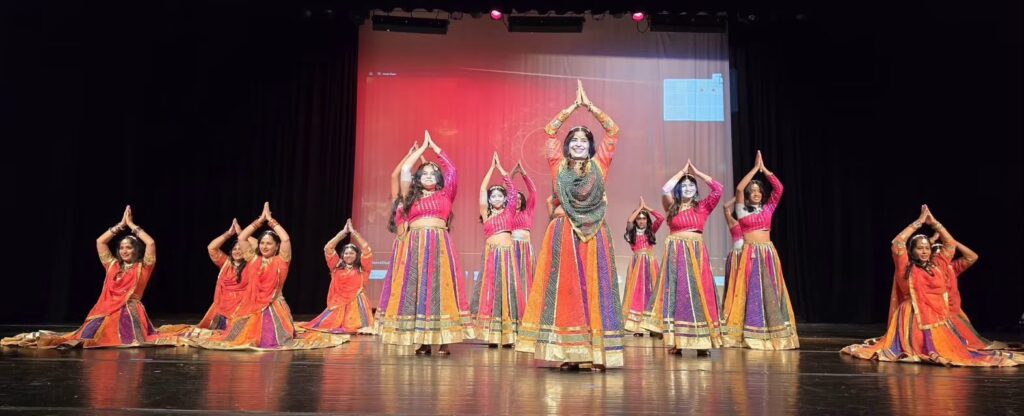
The range of styles alone was a showcase in itself—Bollywood numbers giving way to classical Bharatanatyam, then to the thump and swagger of bhangra courtesy of Atlanta Bhangra Academy’s Pavleen Chaddha and Georgia Bhangra Academy’s Kashika Singh, each performed with a kind of full-bodied enthusiasm that pulled the audience in. Garima Dance Academy, led by Garima Agrawal, brought a team with over 1,000 students trained and 250-plus events performed under its belt. Dhoop Chaoon Hindi Theater, founded by Sandhya Saxena Bhagat in 2007, staged its signature blend of everyday stories told in Hindi, a deliberate effort, organizers said, to keep the language alive for a diaspora audience. Balli Dance Studio’s Baljeet Kaur and NNKB Academy’s Kumud Savla, a Kathak teacher of 37 years trained under gurus Pandit Kundanlal ji, Pandit Durgalal ji, and Rajendra Kumar Gangani ji, rounded out a lineup that moved fluidly between classical tradition and Bollywood-fusion energy.
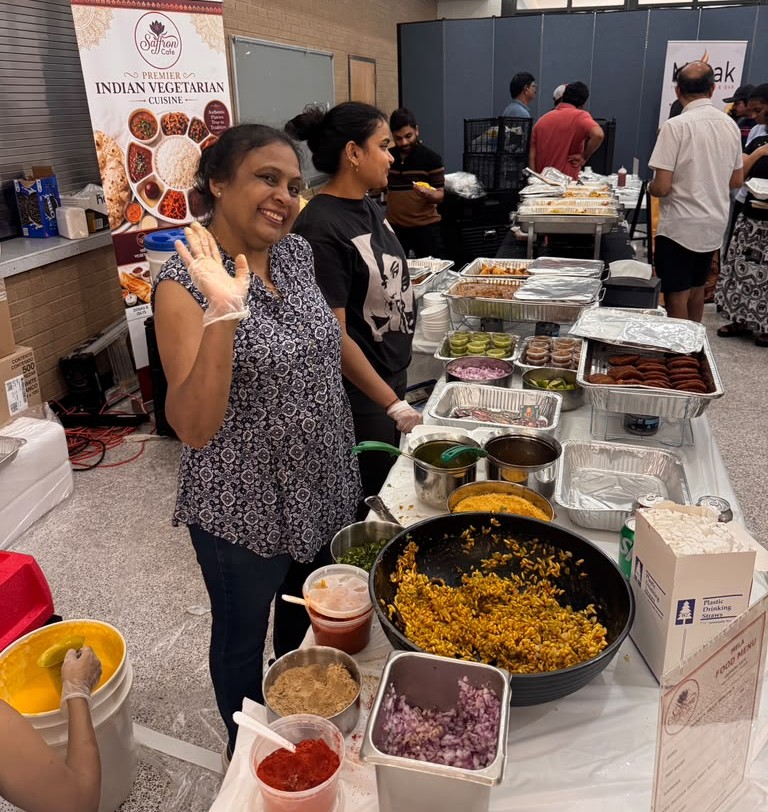
Food was a major attraction with vendors after vendors lining the halls and outdoors. It wasn’t one region’s food or one generation’s nostalgia. It was India’s extensive food heritage showcased into a single afternoon for everyone to enjoy.
The presence of some of Atlanta’s more recognizable Indian food names could be spotted throughout the food court too, Saffron Cafe’s spread of vegetarian staples sat a few tables from Meraki Indian Kitchen, each running their own steady line of orders through the afternoon. Nathu’s sat a few tables from Hocco. A dosa counter turned out fresh, paper-thin crepes to order, pani puri stalls drew the longest lines of the day, Chaat came in every direction, plates of chole-bhature and vada pav were being passed hand to hand. Sugarcane juice got pressed fresh on the spot, and coconut water was cracked open and handed over with a straw, the closest thing the parking lot had to shade on a July afternoon. From Rajula’s Kitchen not Nathu’s to Madras Catering & Co. Amul, Hocco, and Nathu’s rounded out a lineup that read like a greatest-hits list of Indian food brands, just to name a few.
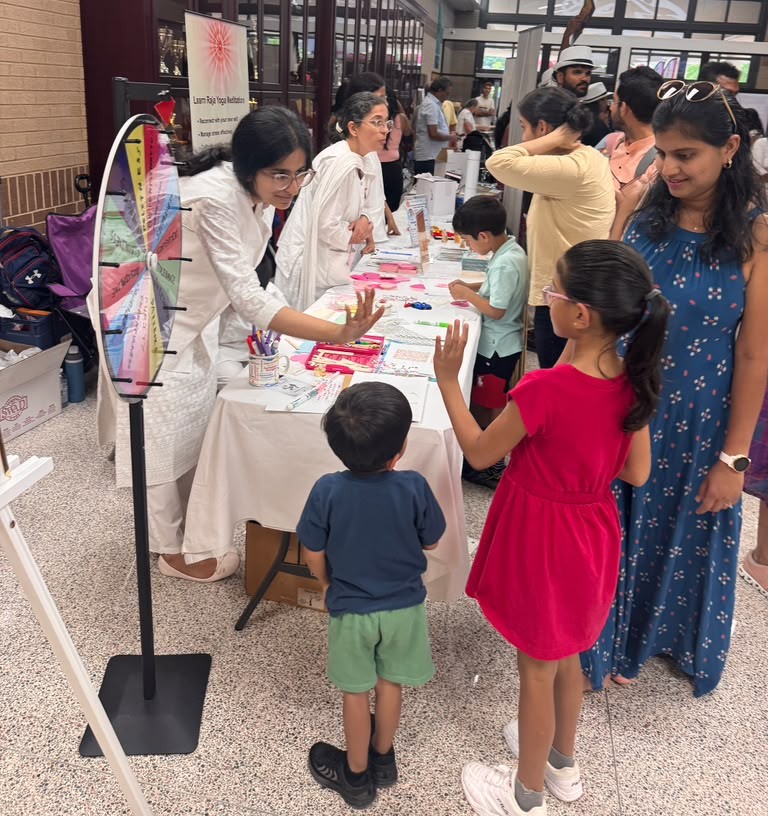
The hallways doubled as a bazaar. Racks of lehengas and kurtas lined one corridor, while tables of gold-toned jewelry, bangles, and bindis drew a steady crowd of browsers and buyers. Tucked between the clothing racks were smaller, more specialized booths — Ayurveda practitioners, travel and tourism agencies, and spiritual organizations like the Brahma Kumaris, each offering something unique but no less part of the day.
A blood donation drive, conducted in partnership with LifeSouth, was organized by Dr. Kapil Bhandari and the Sant Nirankari Mission team.
The beautiful decor was by Veena Pothula’s Vee Events.
Behind the stage, Jairaj Kamal worked as technical director and Pankaj Dixit as technical coordinator, while Ritambhara Mittal directed the cultural program and hosted it herself. A coordinator team, Ragini Tripathi, Asha Gupta, Prafulkumar Panchal, Priyanka Dixit, Vishnu Tripathi, Arti Jain, along with Vasudha Avadhani, Sumana Goswami, Bhushan Niru Mehta, and Atul Shrivastava, kept every performance cued and every changeover seamless.
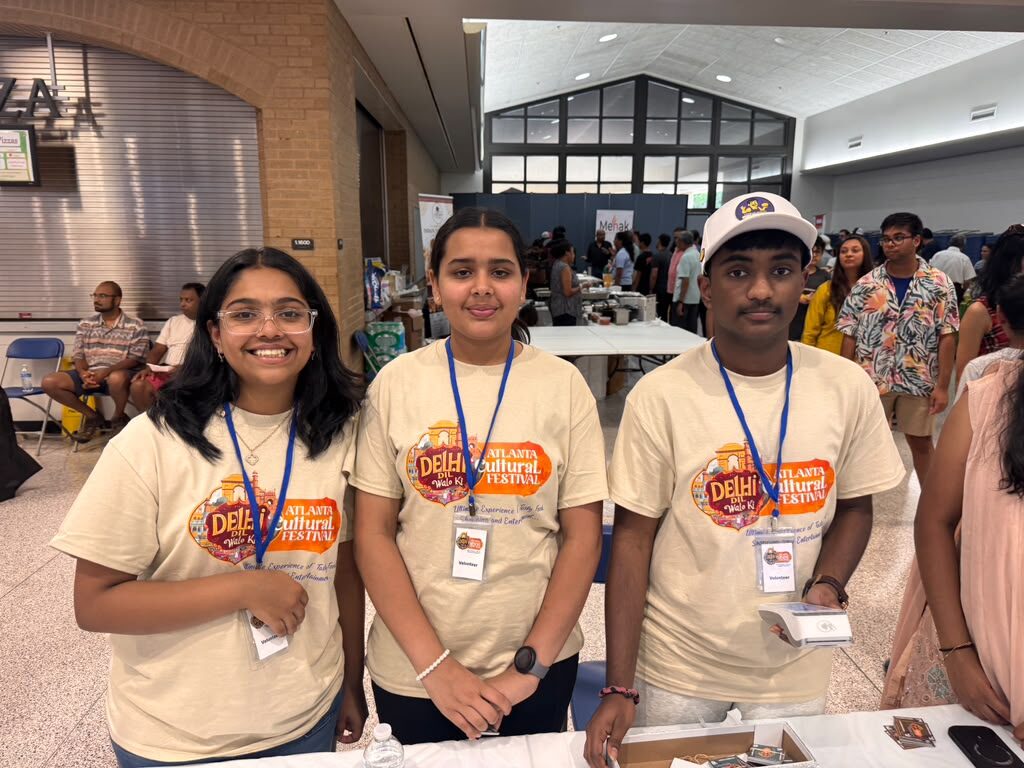
A dedicated team of people had a vision of making this event a celebration of Indian heritage and community spirit, and the community showed up in full to be a part of it. Whatever the Georgia humidity outside was doing, the crowd enjoying the food and fanfare didn’t seem to care. Between the dhol beats drifting from the stage and the smell of frying bhaturas, the day had the unmistakable feel of a summer afternoon in Delhi that had made its way to Suwanee.
