





BY VEENA RAO*
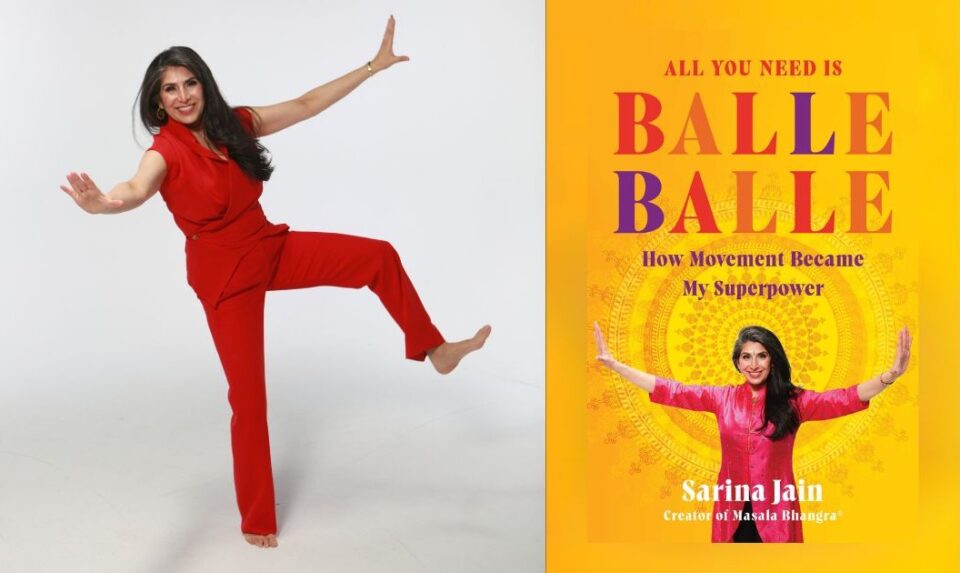
Sarina Jain brought the infectious energy of Bhangra into American fitness studios and turned it into a global phenomenon. With her signature Masala Bhangra workouts, she introduced Indian dance and music to American and global audiences, earning national television appearances and the title of “Indian Jane Fonda.”
But behind the music, movement, and success is a deeply personal story of a woman finding her place between two cultures, carving out an unconventional career, and learning to live life on her own terms.
Growing up as the daughter of Indian immigrants, Jain wondered whether “Indian Sarina” and “American Sarina” could coexist. Along the way, she navigated the loss of her father, criticism from within her own community, the pressures of marriage, and the challenges of success. Through it all, she discovered that the very things that made her different could also be her greatest strengths.
In her memoir, All You Need Is Balle Balle: How Movement Became My Superpower, Jain shares the story behind her success and asks a question that resonates far beyond her own life: How do we move from the back of the room to center stage in our own lives?
In a conversation with NRI Pulse, Jain reflects on her life, success, and the legacy she hopes to leave for her daughters.
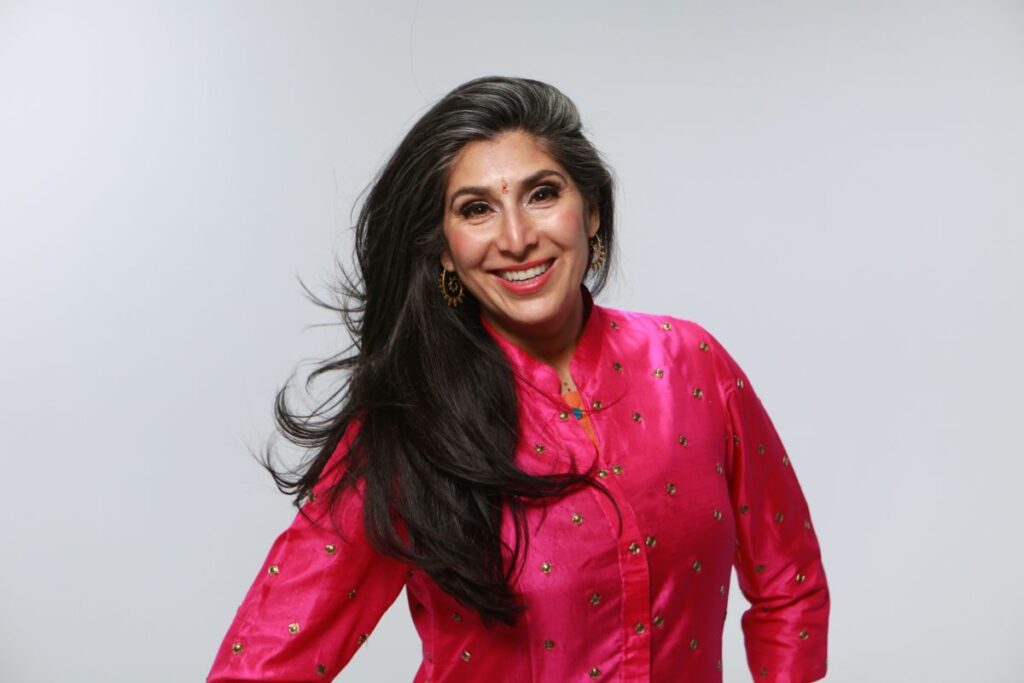
How do we move from the back of the room to center stage in our own lives? When did you realize you had finally done that?
As the daughter of Indian immigrants, I learned to be respectful, to work hard, and not to make too much noise. But at some point, I realized that if I kept waiting for permission, I was going to spend my whole life standing in the back of the room.
I think I really moved to center stage when I stopped asking, “Is this what people expect me to do?” and started asking, “Is this what I’m meant to do?”
Creating Masala Bhangra was a huge part of that. I didn’t know if it would work. I didn’t have a blueprint. I just knew there was something inside me that I had to bring to life.
And honestly, I still move myself to center stage every day. It isn’t a one-time decision. It’s choosing to show up, be seen, and take up space, even when you’re uncomfortable.
Growing up as the daughter of Indian immigrants, you wondered whether “Indian Sarina” and “American Sarina” could coexist. Was there a point when you stopped feeling you had to choose?
Yes. And I think creating Masala Bhangra was the turning point.
When I was younger, I thought I had to separate the two parts of myself. There was the Indian Sarina at home, with the food, culture, expectations, and traditions, and then there was American Sarina outside the house.
But eventually, I realized I didn’t have to choose. In fact, the thing that made me different could become the thing that made me powerful.
Masala Bhangra was really the first time I put those two worlds together. I took something deeply connected to my Indian heritage and brought it into the American fitness industry. And people loved it.
That taught me something very important: you don’t have to dilute who you are to belong. Sometimes your greatest strength is the very thing you thought you had to hide.
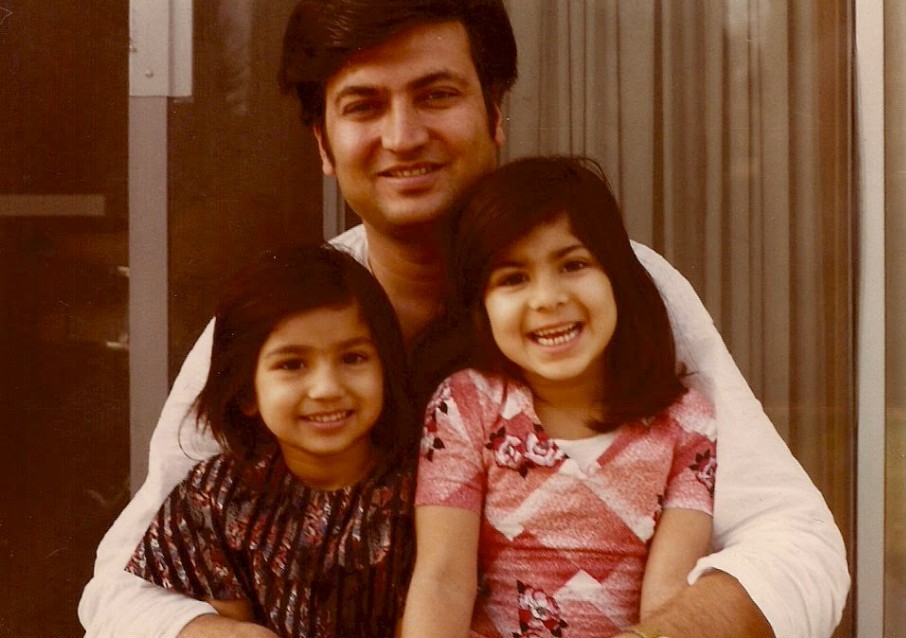
Your father died in 1994, before your success, yet he remains a strong presence in your story. How has your relationship with him continued after his death?
My father died very suddenly when I was young, and I never got to share the life I built with him. He never saw Masala Bhangra. He never saw me on The Today Show. He never got to meet my girls or my husband. He never saw the book.
That is probably one of the hardest parts. In some ways, I’ve kept talking to him, telling him what’s been happening and asking for his guidance. When I was grieving, movement became my way of surviving. I didn’t have the language for it then, but I know now that movement helped me process something I couldn’t put into words.
So, in a strange way, his death became part of the beginning of my life’s work.
And I wish he could see it. I also carry so much of him in me: his work ethic, his determination, his belief in doing something well. So while I lost him physically, my relationship with him didn’t end. It just changed.
Your VHS tapes were created primarily for Indians, but they became a hit with mainstream Americans. Were you surprised by who embraced Masala Bhangra, and what did that teach you about your audience?
I was absolutely surprised.
When I first created the videos, I thought my audience was going to be primarily South Asian people. I thought they would be excited to see their culture represented in a fitness format.
But then mainstream Americans started buying the tapes. People who had never heard of Bhangra were doing Bhangra in their living rooms.
That was a huge lesson for me. I realized that people don’t necessarily have to understand your culture before they can connect with it. They can feel it. They didn’t need to know every word or understand every cultural reference. They just needed to feel the energy, the joy, the music, and the movement.
That taught me that culture can be a bridge. You can introduce people to something unfamiliar and, instead of creating distance, create connection.
You were appearing on The Today Show and getting national attention, while some Indians were telling you that you had no business teaching Bhangra because you weren’t Punjabi. How did you deal with being embraced by mainstream America while having your authenticity questioned by people from your own community?
That was difficult.
I was being embraced by mainstream America for bringing Indian culture into fitness, while some people within the Indian community were saying, “Who are you to do this?”
And there were moments when that hurt more than anything coming from outside the community.
But I had to remind myself of something: I wasn’t claiming to be Punjabi. I wasn’t claiming to represent every Indian person or every form of Bhangra. I was creating a fitness format rooted in Bhangra and Bollywood dance, and I was very clear about what Masala Bhangra was.
Over time, I realized that you can respect a culture without allowing other people to determine whether you have permission to create something inspired by it.
And ultimately, the work speaks for itself.
I’ve spent 25 years bringing Indian dance and culture into spaces where it wasn’t traditionally represented. I’m proud of the way I’ve done that, with respect, with love, and with a genuine desire to share.
You had aunties telling you that you were wasting your time, needed a “real job,” and should get married. Looking back, what did those experiences teach you about following your heart?
It makes me smile now because I remember how serious those conversations felt at the time.
People weren’t necessarily trying to hurt me. They were looking at my life through the lens they understood. To them, success meant a stable job, marriage, children, a certain kind of life.
But I knew there was something inside me that I had to pursue.
Following your heart doesn’t mean you know exactly where you’re going. I certainly didn’t. There were plenty of moments when I questioned myself.
But I kept showing up.
And that’s probably the biggest message I would give someone: you don’t need to have the entire path figured out. You just need to take the next step toward the vision you want.
The life you’re meant to build may not make sense to everyone around you, and that’s okay.
In your 30s, while your career was thriving, you were single in New York and feeling enormous pressure to marry. Why did the pressure around marriage get to you in a way career pressure didn’t?
Because career was the one area where I trusted myself.
I could work hard. I could teach. I could create. I could build something. I knew that if I put in the effort, I could influence the outcome.
Marriage felt completely different.
I couldn’t control when the right person would come into my life. And culturally, there was a very strong message that if I didn’t get married by a certain age, something was wrong with me.
So I started questioning myself in ways I never questioned myself professionally. I went to astrologers, I fasted, I wore an emerald, and I even considered moving to Mumbai.
Looking back, I can laugh at some of it, but I also have compassion for that version of myself.
I think so many women experience this: feeling incredibly successful in one part of their lives but somehow feeling like they’re failing in another.
Eventually, I had to realize that my worth wasn’t determined by my marital status. I hope other women can realize this as well.
After your daughters were born, you began observing the 10-day Jain fast that you had watched your mother practice. What do you hope your daughters take from that tradition?
I hope they understand that traditions aren’t just things we do because our parents did them. They can become something meaningful that we choose for ourselves.
I watched my mother fast for years. When COVID hit, I decided to follow in her footsteps. I started with three days, then I did five days, and I was blown away by what the mind can do. After that, for the past four years, I have been fasting for 10 days around our Das Lakshan time. For me, the fast is about discipline, reflection, gratitude, and learning that we are capable of more than we think we are.
I don’t expect my daughters to practice everything exactly as I do. What I want them to take away is the idea that it’s important to know where you come from and to understand that your traditions can be a source of strength. I want them to be proud of being Indian, proud of being American, and never feel that those identities are in conflict.
You’ve spent your career bringing something distinctly Indian into mainstream American fitness. What, in your view, is your legacy?
I hope my legacy is bigger than Masala Bhangra.
Of course, I’m incredibly proud that Masala Bhangra has been around for 25 years and has reached people around the world. But what I’m most proud of is what it represented.
I was a young Indian American woman who didn’t see many people who looked like me in the fitness industry. So I created my own lane.
I hope I showed people that culture belongs everywhere, not just in cultural spaces.
And I hope I gave other people permission to bring their whole selves into the room.
If someone sees me and thinks, “Maybe I can do that too. Maybe I can take this part of my culture and make something with it,” then that’s a legacy I’m proud of.
But ultimately, I want people to remember the message behind all of it: move your body, take care of yourself, be proud of who you are, and don’t wait for someone else to give you permission to live your life.
What was it like turning your own life into a book? Was there anything surprisingly difficult to put on the page?
Writing this book was much harder emotionally than I expected.
I’ve spent my entire career on stages, in front of cameras, and teaching thousands of people. I’m very comfortable being seen physically.
Writing about my father was difficult. Writing about grief was difficult. Writing about the moments when I questioned myself was difficult. Writing about my setbacks was hard. And writing about the pressure I felt around marriage was especially vulnerable because those were things I didn’t necessarily want people to know about me.
But that’s also why I wanted to write the book.
I didn’t want to write a book that simply said, “Look at everything I’ve accomplished.” I wanted to show the messy parts too: the doubt, the grief, the cultural expectations, the failures, and the moments when I didn’t know what I was doing.
Because that’s real life.
And if someone reads this book and sees a little bit of themselves in my story and feels less alone, or feels brave enough to take their own next step, then sharing those vulnerable parts was worth it.
*Veena Rao is the founding editor of NRI Pulse and the author of Purple Lotus.
