



BY VEENA RAO
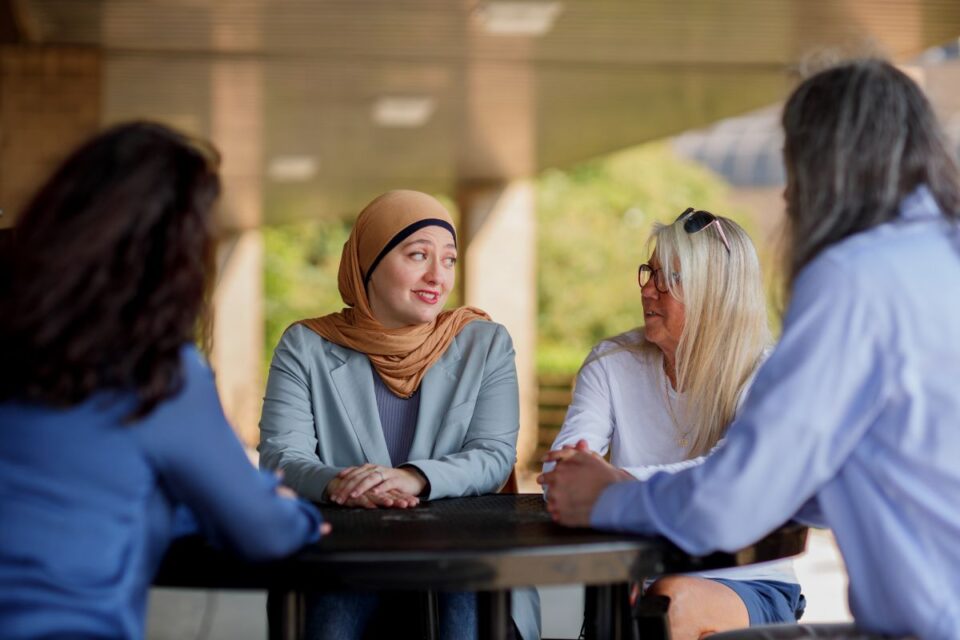
Atlanta, GA, October 5, 2026: Georgia State Rep. Ruwa Romman, who made history in 2023 as the first Muslim woman elected to the Georgia House and the first Palestinian American elected to public office in the state, is now running for Georgia State Senate District 7.
In a wide-ranging interview with NRI Pulse, Romman spoke about the issues at the center of her campaign, including affordability, rising housing and utility costs, corporate ownership of homes, data centers and public education. She also discussed mental health resources in schools, immigration enforcement, and what she believes the state can realistically do on these issues.
The conversation also turned to the rise in anti-Muslim and anti-South Asian hate, her progressive political identity, and her involvement in political races beyond Georgia.
Here are excerpts from the conversation, edited for length and clarity.
You’ve been in the Georgia legislature since 2023. What are you most proud of getting done?
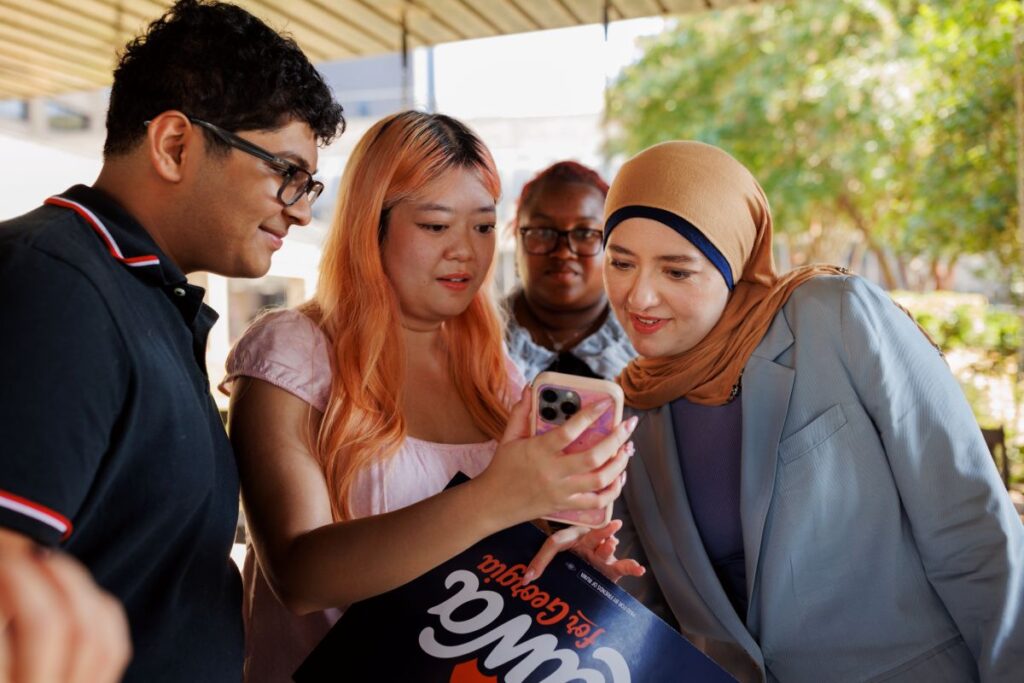
I think I’m most proud of the fact that we mobilized people who had never been involved in political work before. In fact, 40% of the people who volunteered for our campaign were first-time political volunteers.
We also made history. I became the first Muslim woman in the Georgia State House and the first Palestinian elected to any public office in the state of Georgia. It really was a moment of people power and making history all at the same time.
When you talk to people in your district, what are they most worried about right now?
We often hear “affordability” as a buzzword, but we are very specific about what we are hearing from our neighbors.
Housing costs are rising astronomically, whether that is property taxes or rent, but that also includes things like utilities and insurance rates. Everything keeps going up, but the services they’re receiving are not improving. They’re not getting more for their money. In fact, they’re getting less.
What we often hear at the doors are questions like: Why are we continuing to give tax breaks to corporations while I struggle? Why is there less accountability for corporations while my insurance rates are still going up?
We keep hearing from our constituents: What are you going to do about it?
So what are you going to do about it?
We try to keep our platform consistent, but also simple. In terms of lowering utility rates, there are two very important components. First, pressing pause on data centers, because the secondary and tertiary costs will continue to be passed on to us as utility rates go up.
Secondly, we are working on creating transparency around how utility rates are created because right now, we have basically legalized monopolies in Georgia when it comes to electric bills. We need to increase oversight and transparency and make sure prices don’t keep going up.
We also firmly believe that in order to reduce housing costs, we need to take homes back from corporate landlords.
This happened to me personally. When we bought our home, we almost got outbid by a corporation that was going to buy it in cash. It was only because they scared the family, they were just too aggressive, that the family chose us instead, even though we were at a lower rate.
We want to increase tenant protections so these corporations can’t just keep taking up homes without consequences and then sometimes leaving them to deteriorate.
When we talk about property taxes, one of the things we are proposing is making sure that properties owned by corporations are assessed in a different category from properties owned by individuals. Corporations are now selling homes to other corporations and driving up costs. Property taxes are going up, but my home is still the same.
You have also talked about protecting communities from ICE. What can realistically be done at the state level?
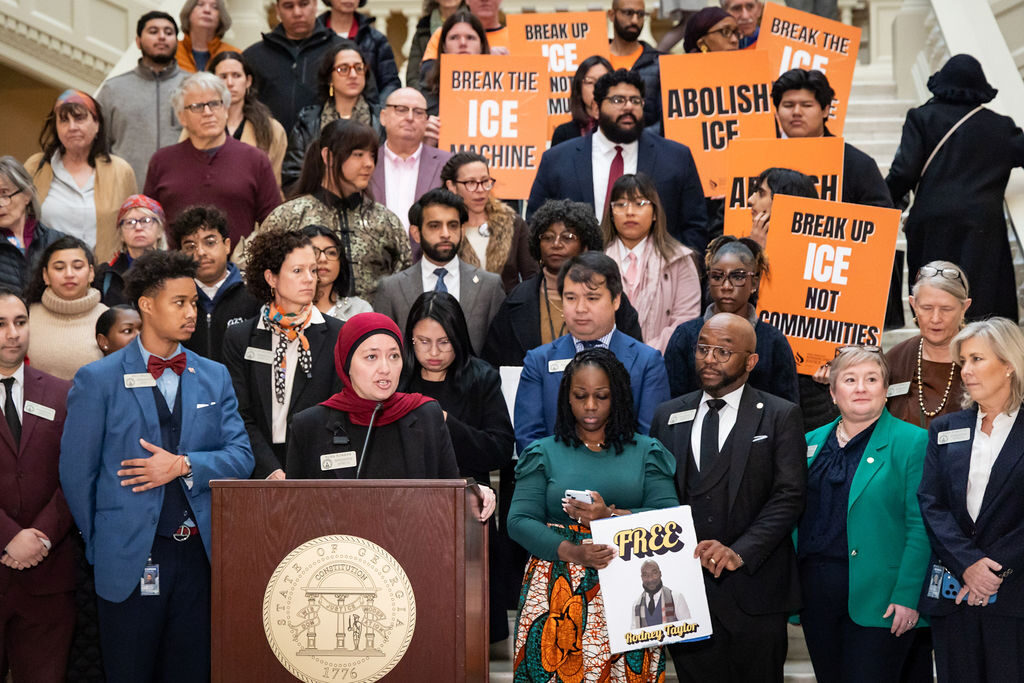
Obviously, we can’t change how ICE exists because we’re not federal. But these are pieces of legislation I’ve helped co-sponsor, supported and will reintroduce.
First and foremost, making sure ICE agents identify themselves, so somebody can’t pretend to be an ICE agent and commit crimes. As a state, we can require ICE to clearly identify themselves and not wear masks.
Two, we can ban ICE from sensitive areas, particularly hospitals, schools, voting locations, and houses of worship. And we can increase what’s called civil liability, meaning that if an ICE agent hurts a Georgian or works outside the law, a Georgian can sue that ICE agent under Georgia law, even if federally they’re not going to do anything.
We are seeing rising hate directed at Indian Americans and South Asians. What can we do to counter it?
I grew up a Muslim, a very visibly Muslim woman in Georgia, so unfortunately, it is something I’m very, very familiar with.
What I have learned over time is that combating hate requires multiple approaches all at once. First and foremost, educating the public. That means creating spaces of understanding, whether that’s interfaith dialogue, interfaith cooperation or working together on shared projects. To me, that’s one very important pillar.
The second is making sure we are enforcing our laws, so if somebody commits a hate crime, they are held accountable just like everybody else. Unfortunately, oftentimes the law is not equally applied, and it’s very important that we ensure our laws are equally applied, especially when it comes to hate crimes directed at our communities.
And last, our communities need to continue investing in organizations that provide legal work and protection. A great example for Muslims is the Council on American-Islamic Relations, Georgia chapter, CAIR Georgia. They provide legal support for people who have experienced discrimination as well as those who have experienced hate crimes.
I continue to encourage communities to invest in these civil society organizations that work to protect us. To me, they’re just as important as any other investment.
Your Republican opponent, Aizaz Shaikh, describes himself as a moderate conservative. How do you describe yourself to voters?
I describe myself as a progressive and an optimist, and I’m somebody who believes that hope is a discipline.
We do live in a Republican state. This is a Republican legislature, although I firmly believe we can still flip the State House and the governor’s mansion this year.
I deeply believe that if somebody wants to take leadership, they must be willing to fight for a vision and not just maintain the status quo.
Oftentimes people want to put labels on us. I’ll take the label progressive. I’m on the left. I don’t deny any of these things. People know that about me.
I firmly believe that our constituents actually agree on way more than they disagree. When I talk to them about whether they want to hold corporations accountable, they’ll say yes.
If you were to ask my opponent about data centers, he doesn’t have an articulated message on that. When my voters ask me, for example, about Dolezal making anti-Muslim comments, again, my opponent is Muslim, but he has not said a word about that. I personally went up to Senator Dolezal and confronted him directly about his words.
I am somebody who is very honest. If I am not willing to say it to your face, I will not say it behind your back.
It’s great to put words like moderate conservative, progressive or left-wing on somebody, but to me, it’s actually: What are your actions?
Your opponent has argued that voters want their representatives focused less on national political battles and more on what’s happening here in Georgia. Do you think there’s some truth to that?
My response to people who say that is: We need both right now.
To give a specific example, I went to Michigan to help Abdul El-Sayed during his primary because he was facing $80 million worth of spending against him.
It was important for me to go because, first, we’re not in session. We’re a part-time legislature. It was summertime, before campaigning started for the general election here in Georgia.
And the lessons we learned there are extremely important to be able to implement in fighting back against somebody like Rick Jackson, who has made his wealth off Georgians needing healthcare and is now spending about the same amount against Keisha Lance Bottoms, who is running for governor as a Democrat.
Why would I not take that opportunity, if it was presented to me, to figure out: How are they winning? What did they do to fight back against this big money? And then come back and take those lessons and continue to build on the program we are building, both in Gwinnett and all around the state.
I think it’s very important for anybody wanting to run for political office to be able to articulate both things: How are you helping constituents locally and are you showing up? But also, do you have the capability to respond to concerns they have that are coming from that national perspective?
We can’t put our heads in the sand.
Your opponent told NRI Pulse that you voted against giving the county the option of raising sales taxes in exchange for lower property taxes. How do you respond?
Republicans kept bringing up the same bill over and over and over again. They wanted to reduce property taxes, but by a rate that, frankly, most people would have barely saved $50 to $100 a month. To be clear, that is a lot for many families, but that’s assuming they have large homes and their property values are that high to begin with.
In exchange, they wanted to raise sales taxes, meaning everything you buy, whether you own a home or not, was going to get more expensive.
I think adding a tax during an affordability crisis is extremely irresponsible.
I don’t think it’s fair that just because I’m fortunate enough to have a home, somebody who does not own a home must now pay more in taxes so I can have an easier time paying my tax bills.
I think there are better ways to reduce our tax burdens where we are not letting a corporation that is taking up a home and making it more expensive pay the same amount of taxes as I do as an individual homeowner.
If you’re a corporation and you’re able to pay more, you should pay more. If you’re an individual, anytime we can help you, we will.
But replacing that burden and making everybody else pay for it during an affordability crisis is extremely irresponsible. I was proud to vote no on that bill.
Let’s talk about Georgia’s public schools. What are you hearing from parents and teachers? And what about mental health issues among students?
I am a product of Georgia public schools, and my teachers were instrumental in who I ended up becoming. I was very lucky to have an amazing educational opportunity. I graduated from South Forsyth High School, infamously also the same high school Marjorie Taylor Greene graduated from.
What we are seeing in our education system right now is multiple crises all at once.
First and foremost, we have what’s called the QBE formula that has not been updated in decades. We’re not accounting for the new cost of technology, even the new cost of transportation, the most basic fundamental things, never mind teacher salaries and everything else that goes with it. We need to update our QBE formula.
Secondly, we’ve provided a lot of waivers to schools allowing classroom sizes to increase, and teachers are already overworked and overburdened.
Teachers are leaving, and it’s creating this awful feedback loop where, as more teachers leave, classroom sizes get bigger, students get less support, and more students fall behind.
We need to remove the waivers on classroom-size caps and reduce classroom sizes as quickly as possible.
How do you do that?
First and foremost, you increase teacher retention by increasing teacher pay, but also increasing support for someone pursuing becoming a teacher.
We also do everything based on test scores. If a teacher has five different sets of classes, four are excelling and one is not doing as well, instead of immediately saying, “Let’s fire that teacher,” maybe the question should be why.
Maybe an aide who was promised was never provided. Maybe that classroom was way too large while another class was much smaller.
It’s about treating teachers like the professionals they are and working with them to problem-solve instead of immediately considering them failures.
On mental health, I supported the cell phone ban from bell to bell because I truly believe we need to protect students from that. But that’s not going to be enough.
We also need to increase mental health resources in schools. We provide a lot of funding for security officers. We provide funding for various new vendors that keep coming in and getting millions of dollars in contracts from the state. I would love to see some of that investment in actual counselors and mental health experts.
To me, it’s about a holistic approach. It is the teacher, it is the student, and it is the environment as a whole. If a student is struggling at home because of issues outside the classroom, they will struggle inside the classroom.
We should also be providing free breakfast and lunch for students. It is a $6 million expense, which is a lot of money for your average person. But for a state with a $52 billion budget, it is cents on the dollar.
What do you think people misunderstand about you?
First and foremost, I’m very visibly Muslim, and unfortunately there have been a lot of people who have bought into racist and prejudiced conversations about Muslims.
They are often surprised to hear about the things I care about and the issues I fight for. I’ve heard people say things like, “Oh, you’re a communist, Islamist,” whatever.
And then they come and meet me and go, “Oh, you’re just a normal person who is trying to fight for a better life for everybody.”
My hope is that the more we deliver for our constituents, the more people see that and realize that a lot of these lies that keep spreading are designed to keep us apart and prevent us from finding solutions that will make all of our lives better.
I remember in 2024, for example, the governor spent a quarter-million dollars against me in the general election, and they were putting out flyers basically calling me a terrorist supporter.
I think it actually backfired because I had already been in office, and we had so actively delivered to constituents that they knew those were lies. Even people who normally wouldn’t have voted for me actually voted for me because they were so offended.
There are real differences that we might have, like tax policy. But they know I’m somebody who believes in protecting every human life, caring for everybody, caring for our neighbors and using the awesome might of government to deliver for as many people as possible.
Obviously, me being Palestinian as well, I think that will continue to be a misunderstanding. But continuing to deliver for Georgians, I think, has been the best antidote to that.
Finally, why should people vote for you?
I am asking Georgians for their vote because I believe that we deserve leaders who are responsive to us and who put us before special interests. And I am that candidate.
We have rejected corporate PAC money. We are funded by people. We are a people-powered campaign, and I’m a deep believer that how somebody campaigns is how they will govern.
My hope is that as they continue to see how we are campaigning and the issues we are talking about, they will vote for me because I’m a candidate who is committed to a Georgia that we can all afford and where we all belong.
