





NRI PULSE STAFF REPORT
ATLANTA, GA, August 22, 2026: Indian-American technology entrepreneur, academic and longtime immigration researcher Vivek Wadhwa has called for the United States to abolish the H-1B visa program and replace it with a new skilled-immigration system, arguing that a program that once strengthened American innovation has become too compromised by abuse, labor arbitrage and decades-long green card backlogs to be repaired.
“It is time to declare the end of the H-1B era,” Wadhwa wrote in a lengthy post on X, in one of his strongest calls yet for an overhaul of the system.
Wadhwa, who has spent years researching skilled immigration and its impact on American competitiveness, acknowledged the historic contribution of the H-1B program.
“These visas played a very important role in making America the world leader in technology and innovation,” he wrote. “But the system became badly corrupted.”
He blamed what he described as unethical staffing or “body shop” companies for learning to game the visa system, while also pointing to employment-based green card backlogs that can leave skilled immigrants waiting years or even decades for permanent residency.
Those delays, Wadhwa argued, have left many immigrants in prolonged uncertainty and dependent on their employers because changing jobs can complicate their immigration status and green card process.
Wadhwa has researched the issue for years. His earlier work documented the role immigrant entrepreneurs played in building American technology companies while warning that lengthy waits for permanent residency could push highly skilled workers to leave the United States. His biography says his research found that a flawed immigration system had created a backlog affecting more than a million skilled immigrants and their families and risked weakening U.S. competitiveness.
But in his latest comments, Wadhwa went beyond advocating reforms to the existing program.
“At some point, a system becomes so broken that patching it no longer makes sense,” he wrote. “Congress should end H-1B and design a new skilled-immigration system for the future.”
Under the system he envisions, the United States would continue to aggressively recruit exceptional scientists, engineers, researchers, entrepreneurs and other highly skilled immigrants who strengthen American innovation and competitiveness, while preventing companies from using immigration programs primarily to obtain cheaper labor.
Wadhwa also acknowledged one of the central criticisms made by H-1B opponents — that some American workers have been hurt by the program.
“Yes, many Americans were disadvantaged by the H-1B and we must admit this,” he wrote, adding that he has long described H-1B as a flawed visa that needed to be rethought.
The U.S. Department of Labor maintains a list of employers debarred or disqualified from the H-1B program for violations. Its current list, effective August 1, includes employers designated as willful violators, underscoring that enforcement mechanisms already exist for abuses of the program.
Wadhwa also pushed back against portraying the increasingly heated H-1B debate simply as hostility toward Indians or immigrants.
“Americans don’t hate Indians and they are not racists; they rightfully hate the abuse by unethical Indians of a system that was meant to uplift America,” he wrote.
His comments come amid an increasingly contentious national debate over skilled immigration, particularly the role of Indian technology workers and staffing companies in the H-1B system. Wadhwa has separately alleged that fraudulent résumés and credentials are used by some applicants and staffing operations, telling journalist Mark Halperin that he believes a significant share of H-1B cases involve such abuse. That estimate is Wadhwa’s own assertion and is not an official government finding.
At the same time, Wadhwa argued that the United States should not retreat from the global competition for talent.
“America should undoubtedly compete aggressively for the world’s best talent, but give that talent freedom and dignity rather than decades of uncertainty,” he wrote.
The emphasis, he said, should be on attracting people who increase American competitiveness and create employment rather than displacing older American workers.
As part of that overhaul, Wadhwa called for the creation of a genuine startup visa that would allow immigrant entrepreneurs who establish job-creating businesses to come to the United States.
“This is why we must have a real startup visa that allows employment-generating companies to come to America,” he wrote. “Everyone will support this if it isn’t subject to corruption and abuse.”
Wadhwa said ending the current H-1B system could also produce an unexpected beneficiary: India.
If fewer highly skilled Indians moved to the United States through H-1B visas, he argued, more could remain in India, launch businesses, create employment and strengthen the country’s innovation ecosystem.
“There would be an unexpected winner from such a reset: countries such as India,” Wadhwa wrote. “More of their best and brightest would remain home, build companies, create jobs, and strengthen their own innovation ecosystems.”
The position represents a striking conclusion from a longtime advocate for attracting skilled immigrants to the United States. Wadhwa, an author and entrepreneur who has held academic appointments at institutions including Carnegie Mellon, Harvard, Duke, Stanford and Emory, has extensively studied immigrant entrepreneurship and the contribution of foreign-born talent to the U.S. technology sector.
His 2012 book, The Immigrant Exodus: Why America Is Losing the Global Race to Capture Entrepreneurial Talent, warned that America’s immigration policies could drive highly skilled immigrants elsewhere.
More than a decade later, Wadhwa is now arguing that preserving America’s ability to attract that talent requires abandoning the H-1B framework itself.
“The H-1B program served America well for decades,” he concluded, “but it really is time to move on.”
It is time to declare the end of the H-1B era.
— Vivek Wadhwa (@wadhwa) August 22, 2026
These visas played a very important role in making America the world leader in technology and innovation. But the system became badly corrupted. Unethical body shops learned to game it. Green-card backlogs stretched from years into… https://t.co/YWKnXt1bzY
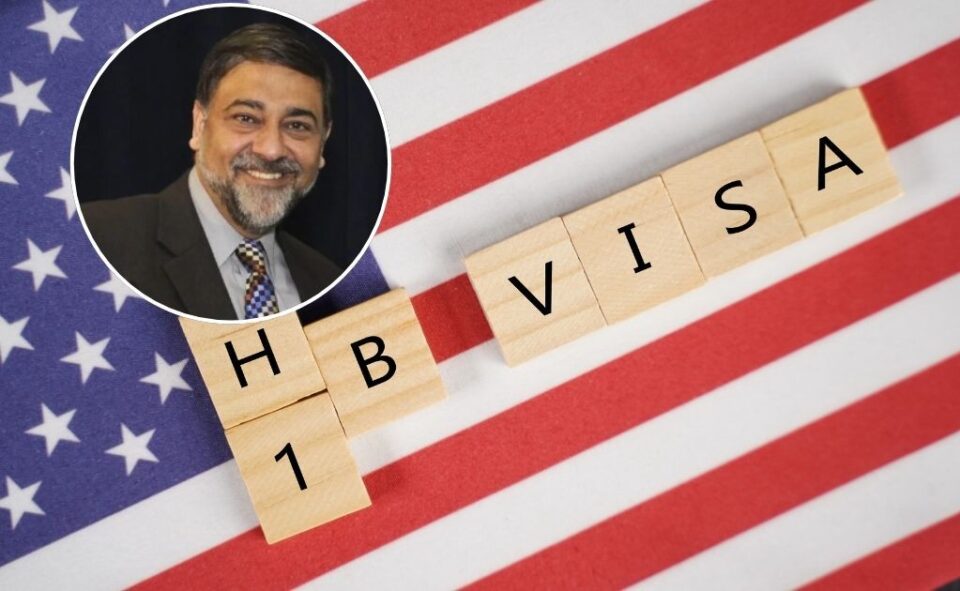
Cover photo of Vivek Wadhwa courtesy of Wadhwa.com.
