





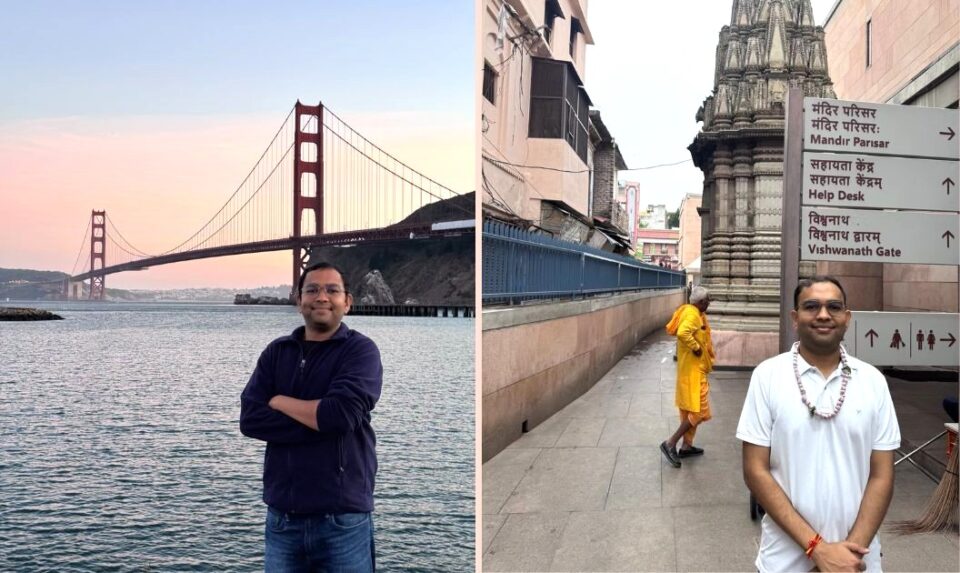
BY VINAY MAHESHWARI*
Everyone talks about going. Nobody talks about coming back.
I’m from Indore, and I’d always had the study abroad dream. Study hard, go abroad, make your parents proud. So that’s what I did. Left at 18 for Philadelphia, didn’t know a single person there, and ended up staying eight years. College, first job, first apartment, first everything.
It worked for a while. Degree, job, H-1B. I was travelling everywhere for work, West Coast, Midwest, even Europe. Working round the clock too, late-night calls with clients in Asia and early-morning ones with Europe.
Then came the meeting.
The strange part was that I still had work assigned to me that morning. I was booking hotels for an upcoming client trip. Flights had already been confirmed. So even while I was waiting for that four o’clock call, part of me kept thinking, if they’re letting me go, why am I still planning next month?
The call started. My manager looked tired. He asked if I’d managed to get some rest. I said I hoped he had too.
Then came the sentence. “We can’t continue. We have to make some tough decisions, and unfortunately we’re letting you go.”
That was it. More than two years of work, gone in about ten seconds.
The strangest thing about a layoff is how normal the conversation sounds. Your whole world is coming apart in real time, and the other person sounds like they’re moving a meeting.
I asked if I could get a little more time. Another month. A few weeks. Anything. The answer was no. That’s the part that stayed with me. I wasn’t even angry. Just empty.
Then it got surreal. Within minutes my access started disappearing. Teams stopped working. Outlook signed me out. Files I’d worked on for years were suddenly gone. One by one, everything logged me out on its own. It felt like watching yourself get deleted.
After the call ended, I just sat there. I couldn’t believe it. I had plans that night, and I cancelled them and stayed in my room instead. My head was doing calculations that wouldn’t stop. The lease. The visa. The 60 days. The apartment I’d just furnished. Eight years of a life I’d built, and I was suddenly doing math on how much of it I could keep.
Because that’s the part people outside this don’t know. On a work visa, a layoff isn’t just losing a job. You get 60 days. Find someone to sponsor you or leave the country.
Those two months were the most uncertain and stressful of my life. Every single day felt like sitting next to a ticking time bomb. I applied everywhere. Hundreds of places. Recruiters would be interested, then they’d ask about work authorization, and after that, nothing. Not even a rejection. Just silence.
Money ran out faster than I expected. I applied for a B1/B2 visitor visa so I could stay a little longer. And I ended up doing a work trade at a hostel in Asheville, North Carolina, cleaning floors and making beds in exchange for a place to stay. A few months earlier my company had me staying in Marriotts. How times had changed.
Funny thing is, those turned out to be some of the better months I’ve had. The people at that hostel had no idea what an H-1B was. Nobody asked about my work authorization or my notice period. They asked where I was from and what India was like. Travellers passing through, people who’d quit their jobs, people figuring things out. For the first time in a long time, I wasn’t a visa status with a countdown attached to me.
But I still had to leave. Not because the days ran out, but because I couldn’t carry the countdown anymore.
I told my parents about the layoff a few days after it happened. I’d been dreading it. My father just said, “Beta, there’s enough work here at home also. Just come back if things don’t work out.”
I still think about that sentence.
What scared me more was everyone else. Arre beta, you’re back? What happened? Why didn’t it work out? I could hear the questions before anyone asked them.
Then I got on the flight home, and something unexpected happened. I felt free.
After months of living on a clock, it was over. Nothing left to refresh, no more waiting for an email that wasn’t coming. I was nervous about what came next, but underneath that I was excited. I hadn’t felt that in a long time.
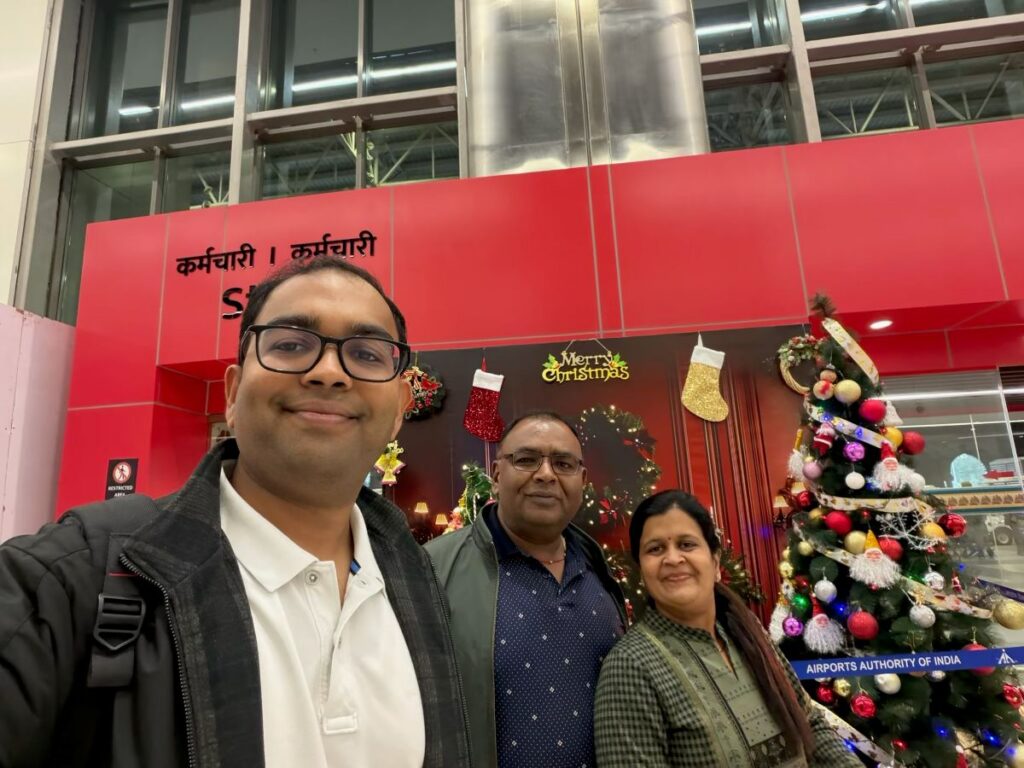
My parents were at the airport. Family and friends were happy to see me. We had plans within the week. Honestly, most of the questions I’d been dreading, I’d been asking myself.
The weeks after weren’t dramatic. They were slow, which was its own kind of adjustment after two months of panic. So I let them be slow. I stopped trying to fix everything immediately. I read a few books. I went for long walks and did some short trips.
And the thing that helped most was going out and talking to people. Staying home and thinking about it made everything worse. Sitting with a friend for two hours about nothing made it better.
Slowly, things started again. I began working on a venture. I wrote a book. I’m still settling in, honestly. I don’t want to pretend I’ve got it all figured out a year later. But I believe that whatever happens, happens for a reason. If one door closes, others open. That’s not something I say to sound wise. It’s just what I’ve watched happen.
And over the past year, I’ve realized how many people are in the same boat. Living with the same anxiety, the same clock. There are thousands of us. Every month, people who did everything right are packing up quietly and telling their families everything is fine. Nobody posts the layoff email. Nobody posts the packing.
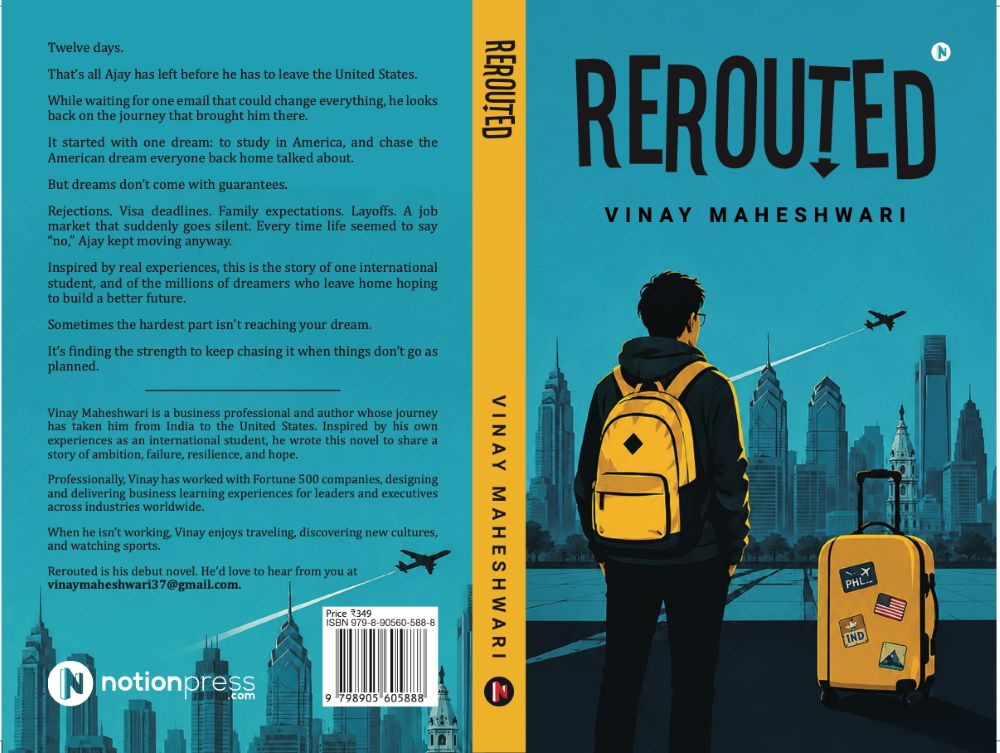
That’s why I wrote the book. It’s called Rerouted, about a guy from Indore who goes to America with a plan and loses it. Fiction, but if you’ve been through this, you’ll know which parts aren’t.
So back to where I started. Everyone talks about going. Nobody talks about coming back.
If you’re getting ready to come back, here’s what I’d tell you. Give yourself time. You’ve been running for months, maybe years, and you’re allowed to stop for a bit. Don’t sit alone at home. Go out and talk to people, even when you don’t feel like it, because that’s what actually pulls you out. Find a hobby, or two. Something with no outcome attached to it.
You didn’t fail. You went, you tried, and you came back with the whole story. Home is home.
About the Author
*Vinay Maheshwari is a writer and travel entrepreneur from Indore, India. He studied and worked in the United States for several years before returning home. His debut novel, Rerouted (Notion Press), is out now.
Amazon: Rerouted: Vinay Maheshwari: 9798905605888: Amazon.com: Books
Notion Press: https://notionpress.com/in/read/rerouted
Contact: vinaymaheshwari37@gmail.com

1 comment
Right spirit. Best wishes