





BY VEENA RAO
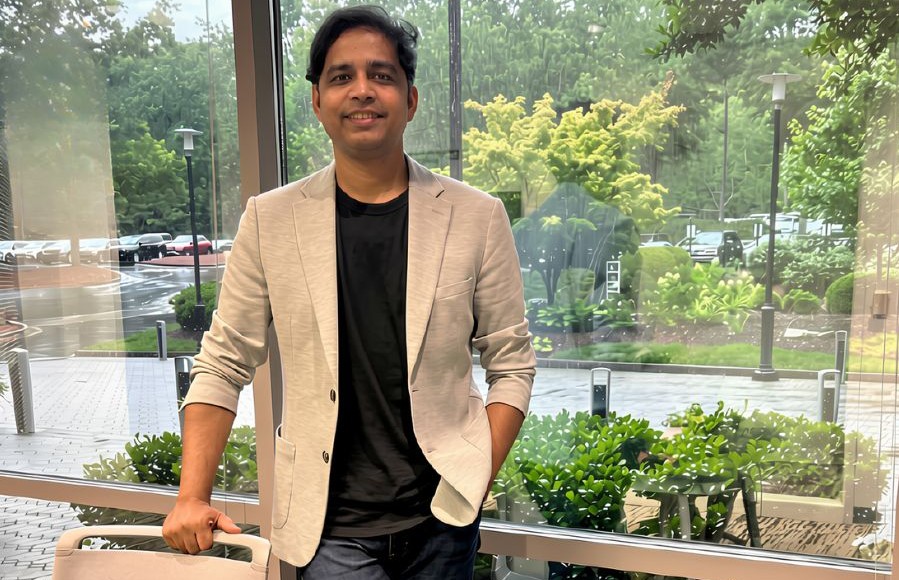
When Abhijeet Singh talks about business, he rarely begins with revenue, growth targets, or market share. Instead, he talks about people.
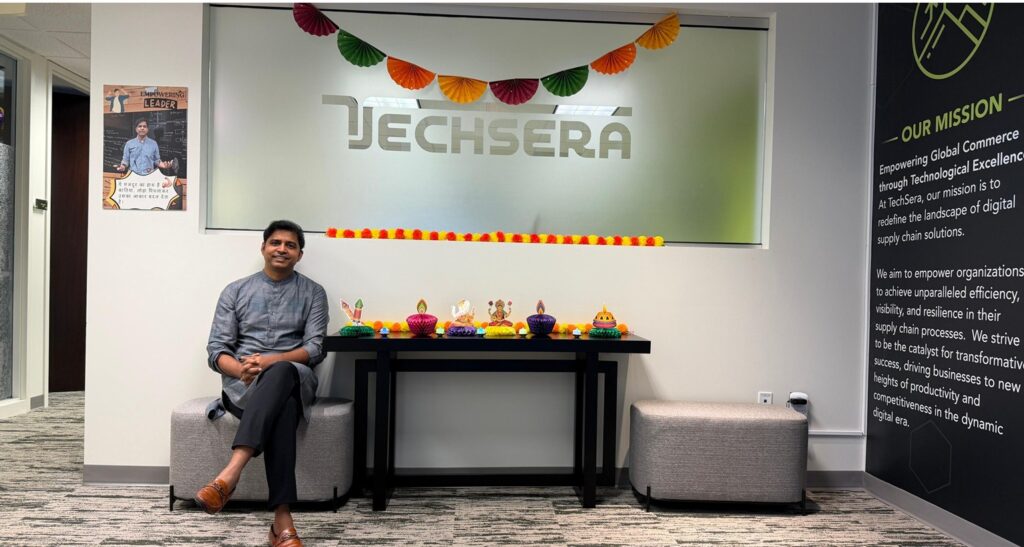
The founder and CEO of Atlanta-based TechSera, which is celebrating its 10th anniversary this year, speaks about employees the way many people speak about family members. He knows their stories, their struggles, their children’s names, and often their dreams.
That philosophy has helped transform TechSera from a small startup into a successful technology and supply chain solutions company serving clients across the United States and internationally. Yet Singh insists that profit was never the primary goal.
“Money is important for living a good life,” he says. “But if I can take care of my family and, in the same process, help ten other people grow alongside me and make an impact in their families’ lives, that always gave me a high.”
Today, TechSera provides supply chain solutions, technology services, process optimization, support and maintenance, and its own suite of innovative products. The company focuses on warehouse management, transportation, demand planning, and digital commerce solutions. Through its Technology Lab, it is offering supply chain platforms and AI-based insights and decision-making solutions that help organizations optimize operations, improve visibility, and make smarter, data-driven decisions across the supply chain ecosystem.
The company’s journey, however, began with a young engineer from Varanasi who never imagined Atlanta would become home.
From Varanasi to Atlanta
Born and raised in the ancient city of Varanasi, Singh left home in 1997 to pursue engineering studies in Maharashtra before earning further qualifications in Jodhpur. He later moved to Bangalore, where he joined Manhattan Associates, a global supply chain software company.
In 2007, Manhattan transferred him to Atlanta.
“December 2007 is when I came here,” Singh recalls. “Since then, Atlanta has been home for us.”
His years at Manhattan Associates shaped both his technical expertise and his leadership style.
“I owe my career to Manhattan,” he says. “It’s not just a corporation. It’s an institution. The exposure you get there is incredible. You work with top-tier customers and solve complex problems.”
But those experiences also planted the seeds of entrepreneurship.
Why He Walked Away From a Dream Job
By his own admission, Singh had little reason to leave. He was one of the company’s youngest directors, enjoyed strong support from leadership, and was well compensated.
“I was always everybody’s favorite child on the block,” he says with a laugh. “There was no compelling reason for me to step out.”
Yet he increasingly found himself frustrated by organizational limitations.
“I felt like my wings were clipped,” he says. “Customers would come with problems that went beyond the software. I knew how to solve them, but because of organizational boundaries, we couldn’t. I wanted to provide holistic solutions.”
Rather than compete directly with his former employer, Singh envisioned a boutique company that could fill the gaps larger firms often leave behind.
“Over the years, I observed that there are so many gaps these big organizations don’t fill,” he says. “If we can take their larger products and fill those gaps with our own solutions, that’s what creates a complete solution for customers.”
A second motivation was even more personal. As his management responsibilities grew, Singh became increasingly concerned about the people reporting to him.
“When you look at people as resources, it’s different,” he says. “But when you know they have families, dreams, and histories, it changes everything.”
He wanted to build a company where employees were more than employee numbers.
“My goal was to have a small boutique setup where I know everybody,” he says. “I know their names. I know their family backgrounds. If they are unhappy one day, I can read it on their face.”
A Company Built Around Relationships
That philosophy became the foundation of TechSera.
“A lot of people ask me what the culture of TechSera is,” Singh says. “It’s not something I can put into words. It can only be felt.”
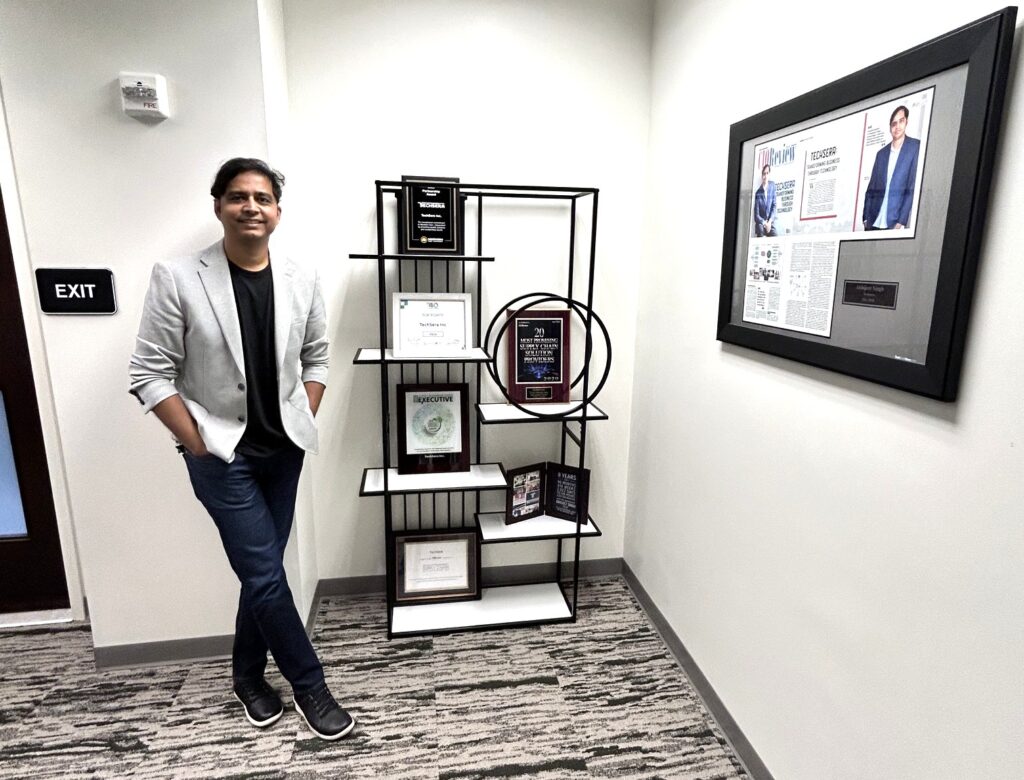
The company has enjoyed consistent profitability over the last decade, but Singh attributes its success less to strategy and more to relationships.
“We are a successful organization,” he says. “But the reason is not just technical expertise. It’s the strong connections we have with our customers and our employees.”
The loyalty that has emerged is remarkable. During recent service award ceremonies recognizing employees who completed three and five years with the company, Singh found himself repeatedly calling names.
“Three-fourths of the organization was coming up for awards,” he says. “I was joking that I’m already tired. How many more people do we have?”
For Singh, the statistic represented something more meaningful than retention.
“If these people are still putting up with somebody like me,” he jokes, “they must be happy here.”
Singh believes his ability to connect with people is both his greatest strength and the foundation of TechSera’s culture. Asked why employees and clients often become fiercely loyal, he points to a trait that dates back to his childhood.
“I feel like I can connect with people at a level where they feel connected,” he said. “It’s not a one-size-fits-all rule.”
Looking back on his school and college years, Singh said he was often the person who kept friendships together. His people often compared him to the television sitcom Everybody Loves Raymond because of his warmth, approachability, and the genuine relationships he built with those around him.
“Back in the day, I didn’t even know that. But now looking back, I was like, yeah, that’s true.” For Singh, relationships are not a business strategy but a way of life.
The Challenges
One of the defining tests of that philosophy came early in TechSera’s journey.
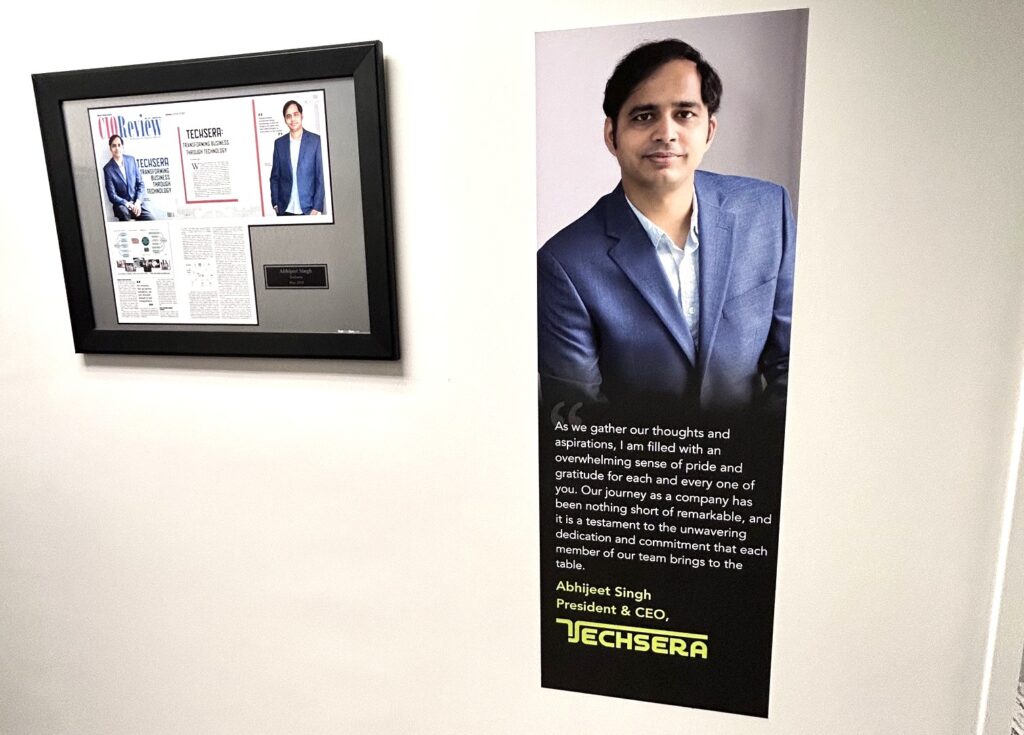
“The giants of our industry saw our existence as an inconvenience and our extinction as a certainty. Yet history has a way of favoring those who refuse to disappear.”
Those words capture the challenges Singh faced during the company’s formative years. Building a new business came with uncertainty, intense competition, and the challenge of establishing credibility in a market dominated by larger, well-established players. There were moments when the future of the company seemed uncertain, and many questioned whether continuing the journey was worth the risk.
Instead of stepping away, Singh chose to persevere. He believed that success was not determined by the size of the company, but by the strength of its vision, and the determination to keep moving forward. He often embraced the philosophy that “it’s not the size of the dog in the fight, but the size of the fight in the dog”—a belief that a smaller organization with passion, agility, and resilience could compete with and outperform much larger players.
He believed he had built something meaningful—not just a business, but an organization founded on trust, commitment, and long-term relationships.
During those difficult times, he often reflected on advice from his grandfather: “People can take everything away from you. They cannot take your education, your talent, or your degree.”
That perspective helped him remain focused through one of the most challenging chapters of his entrepreneurial journey.
The company emerged stronger. The experience reinforced the values on which TechSera had been built: resilience, integrity, and an unwavering commitment to its employees and clients.
Looking back, Singh believes those early challenges strengthened his conviction that relationships—not contracts—are a company’s greatest asset.
COVID, Loss, and Leadership
If the lawsuit tested his business resilience, the pandemic tested his personal strength.
In 2020, Singh lost his mother after she suffered a stroke during the height of COVID-19. International travel restrictions prevented him from returning to India.
“She was constantly watching U.S. news because all three of her children were here,” he says. “The anxiety got to her.”
On the very day she passed away, Singh was scheduled to meet with a prospective client, a conversation that could impact the future growth of the company. It was during the height of COVID-19, when businesses everywhere were facing unprecedented uncertainty and navigating the challenges of protecting their teams and sustaining their operations.
“I actually contemplated taking the call,” he admits. “That’s how worried I was about the company and the people depending on it.”
During the pandemic, while many companies were laying off employees, Singh made a public commitment.
“Not even a single employee will be let go for COVID-related reasons,” he announced during a company-wide meeting.
The impact surprised him. The next day, a senior employee called and shared that his parents had been listening to the meeting.
When they heard that statement, the employee shared that it deeply touched his family. His mother told him, “You can never leave Abhijeet. This is the kind of leader who stands by you”.
Singh still remembers the conversation vividly. “If there is only one piece of bread,” he says, “I will make sure everybody eats first. Whatever is left over is what I will eat.”
In the early years of the company, Abhijeet continued to invest in the business, with his compensation remaining below his prior corporate earnings.
“Let’s take care of the people first,” he says. “That was always my thinking.”
Women at the Leadership Table
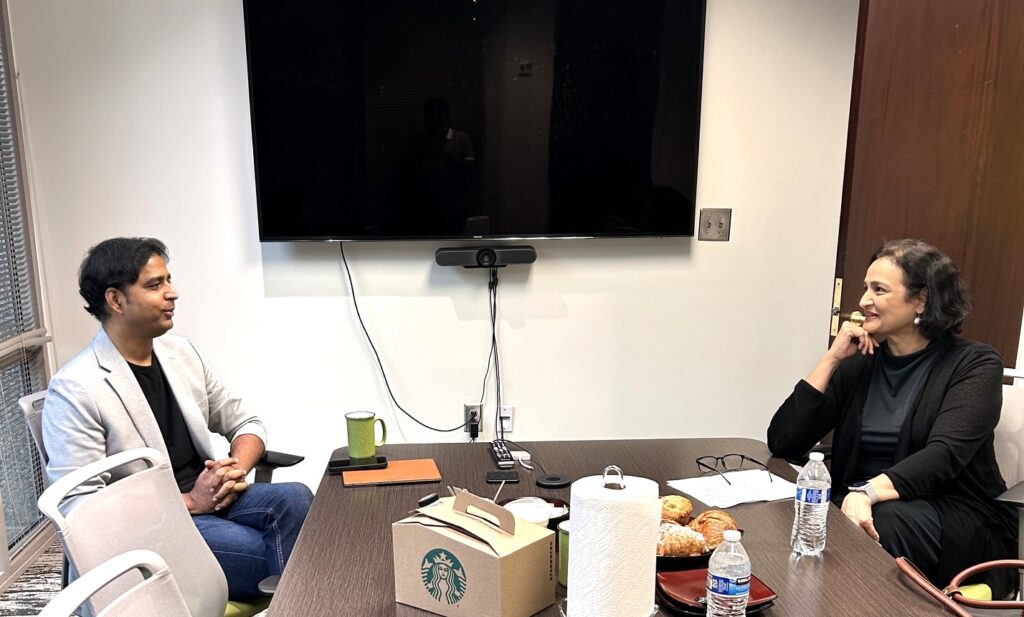
Another defining aspect of TechSera is the prominent role women play in leadership.
Growing up in India, Singh often heard that certain things were for boys and others were not for girls. Moving to the United States challenged those assumptions.
“When I came here, I realized equality wasn’t just a phrase,” he says.
As he built TechSera, he made diversity a priority—not merely in hiring but in decision-making.
“I didn’t want diversity for the sake of diversity,” he says. “I wanted women in the driving seat. I wanted them in leadership.”
He believes representation at the top is essential to eliminating disparities throughout an organization.
“I cannot be 100 percent sure policies are implemented all the way down unless women are in leadership roles,” he says.
Defining Success
Ask Singh what success means today, and he doesn’t mention revenue.
“This is success to me,” he says. “Love from everybody. Respect from everybody.”
He is also deeply committed to gratitude.
“Be grateful,” he tells employees. “To your parents, your colleagues, your mentors—anybody who gave you knowledge, opportunity, or life lessons.”
That philosophy extends to former employees as well. Some who have left TechSera for other opportunities still call him for career advice.
“There have been people who asked me whether they should take another job,” he says. “And I’ve told them, honestly, ‘Yes, you should go. It’s better for your growth.’”
For Singh, that openness is part of building a lasting culture.
“When people leave TechSera,” he says, “it’s never bitter. It’s always sweet.”
Looking Beyond TechSera
As TechSera enters its second decade, Singh is already thinking about what comes next. He dreams of giving back to the community.
“I want to go back to underprivileged children, especially girl-child education,” he says. “I want to help younger entrepreneurs. I want to give back whatever I’ve learned.”
Eventually, he hopes to step aside and let the next generation lead TechSera. Until then, he remains guided by the same principle that inspired him to launch the company a decade ago.
“Take care of people,” he says. “The business will take care of itself.”
___________________
Rapid Fire With Abhijeet Singh
What is one leadership principle you will never compromise on?
Care.
What keeps you awake at night?
My people.
What gives you hope?
My people.
What would your employees say is your biggest strength?
“That I’m always available for them.”
What would your family say is your biggest flaw?
“That I’m never available for them.”
If you could have dinner with one person, living or dead, who would it be?
“Amitabh Bachchan. Or Warren Buffett. I admire the simplicity he brings.”
Ten years from now, what do you hope people will say about TechSera?
“That it’s their organization. A people’s organization.”
