





BY SANJAY SEHGAL*
America has long celebrated itself as a melting pot, a nation where people from different cultures, faiths, and backgrounds come together to build a shared identity. It is a powerful concept rooted in unity, opportunity, and common purpose.
As America becomes more diverse, it is time to ask a more honest question:
Does belonging require people to melt into one identity, or can it grow from coexistence?
India, one of the world’s oldest living civilizations, has faced this question for a long time. Across thousands of years, countless languages, cultures, and faiths have coexisted under a shared civilizational belief: unity does not require uniformity. This wisdom is captured in the Sanskrit phrase Vasudhaiva Kutumbakam, “The world is one family.”
That idea is very relevant in America today.
Many people now feel more connected online yet more alone in daily life. Families, campuses, workplaces, and neighborhoods are at times divided by politics, identity, and mistrust. Many people feel pressure to hold on to their roots while also seeking acceptance in the larger society. The result is a painful mix of loss, fear, and suspicion.
As Indian-Americans become more visible in American life, it is worth asking:
What is India’s most meaningful contribution to America?
The answer is not Bollywood. It is not Indian cuisine. It is not even technology, despite the remarkable success of Indian-origin leaders across Silicon Valley.
India’s greatest contribution may be something quieter and more necessary: a practical way of creating inner well-being.
For centuries, Indian civilization has explored a fundamental question: How can human beings find peace within themselves?
From that search came practices such as yoga, meditation, breath regulation, self-reflection, and mindful living, all meant to calm the mind and bring greater balance into daily life.
Yoga gained worldwide acceptance because people felt its effect in their bodies, minds, and daily lives.
Meditation holds the next deeper promise.
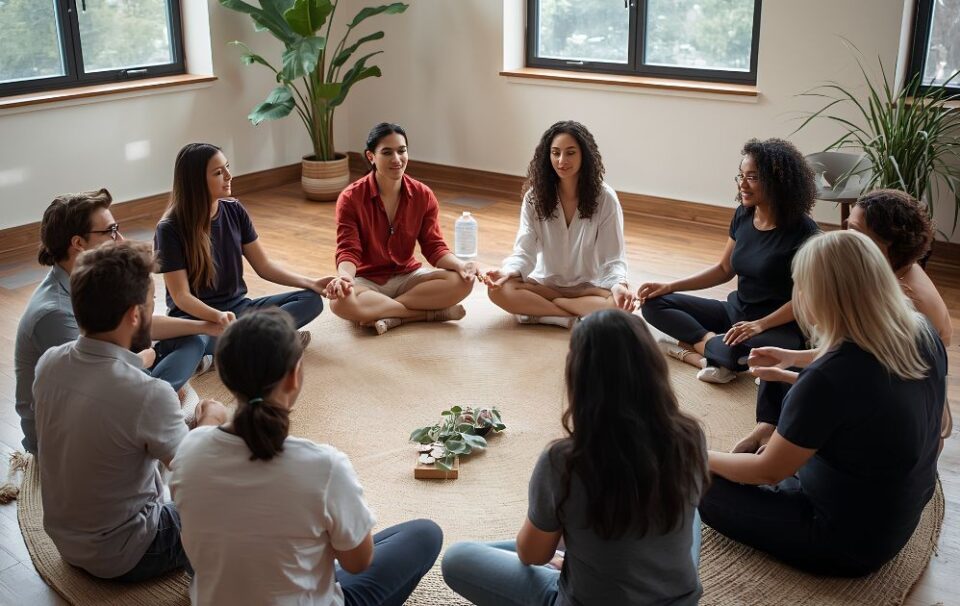
A meditation center or meditation studio does not ask what religion you follow. It welcomes people without asking them to convert or agree on theology. It welcomes everyone: Christian, Jewish, Muslim, Hindu, Buddhist, atheist, or anyone who is simply curious.
Its purpose is simple: to help people become calmer, clearer, healthier, and more compassionate.
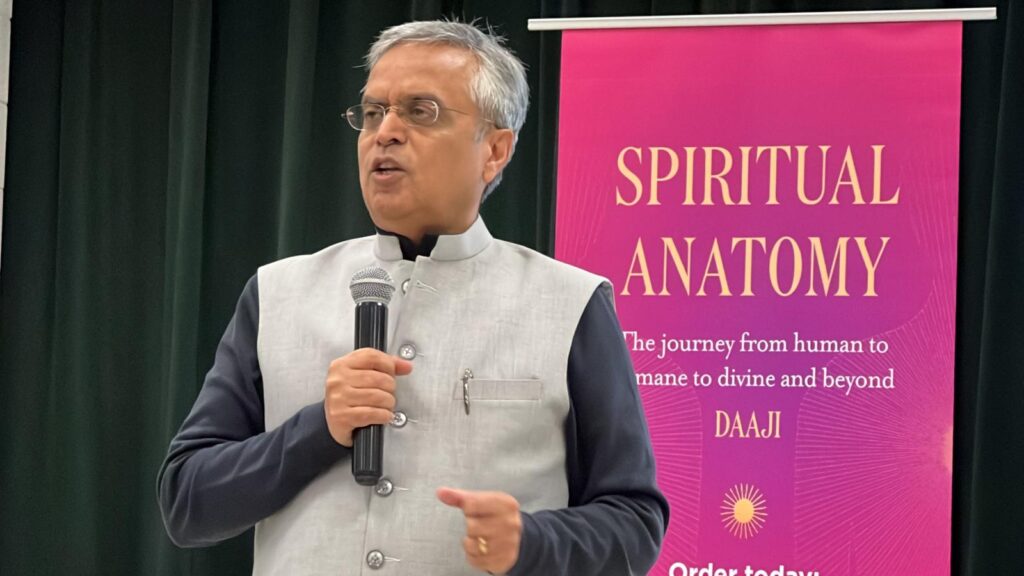
At a time when attention is fragmented and public life feels tense, meditation centers can become what Daaji, the global guide of Heartfulness, has called “centers of light.”
That distinction is important.
When immigrant communities build institutions, they preserve their traditions while also engaging the wider society. The strongest communities build bridges from their traditions.
Community centers, meditation spaces, and cultural organizations can become places where neighbors meet, schools feel welcome, first responders find support, and meaningful conversations take place.
A meditation center, for example, can host stress-relief sessions for teachers, students, healthcare workers, corporate leaders and veterans, offering a simple space to pause, breathe, reflect, and reconnect.
The communities that
thrive in America will be those rooted in their own traditions while also
opening their doors to others.
Which brings us to a
proposition that may be uncomfortable, yet worth considering.
In a diverse society, the question is not whether faith belongs in public life. It does. The question is how the idea of faith can be welcome in public life in a way that invites rather than alienates.
Faith is personal, meaningful, and worthy of respect. For many Americans, it is also tied to freedom, identity, and conscience. That is precisely why public religious expression inherently carries within it both a right and a responsibility.
When religious expression becomes less about inner conviction and more about public assertion, it can create distance in communities where people do not share the same beliefs, traditions, or cultural context.
The strength of faith is seen most clearly in the way it is lived. A mature spiritual culture allows people to live their faith openly. However, it asks us to express faith with humility, sensitivity, and respect for the spaces we share.
America has enough religious competition. It needs more opportunities where people remember that they are human first. It needs more spaces where people can sit together free from the immediate pressure of politics, race, nationality, or doctrine. It needs stillness in a culture that rewards noise.
India’s ancient wisdom traditions offer exactly that.
They offer these practices as universal human tools. They invite Americans of every background to turn inward and rediscover what is already human within them.
The future of the American melting pot depends on whether we learn to recognize our common humanity.
Perhaps that journey begins in silence: One meditation session, one conversation, and one act of understanding at a time.
*Sanjay Sehgal is the Founder and CEO of Aziro, Inc. and a member of the Forbes Business Council. A visionary technology entrepreneur, he has built and led global ventures across multiple industries. Drawing on decades of leadership experience and a deep commitment to Heartfulness meditation, he combines strategic insight with inner balance to help leaders innovate, navigate change, and create lasting value in a rapidly evolving world.
