




NRI PULSE STAFF REPORT
Frisco, TX, June 15, 2026: A speaker at a recent Frisco City Council meeting accused Indian immigrants of exploiting apartment leasing systems, dominating housing opportunities, and contributing to the displacement of local workers, marking a shift in the anti-Indian rhetoric that has increasingly surfaced during public comment sessions over the past several months.
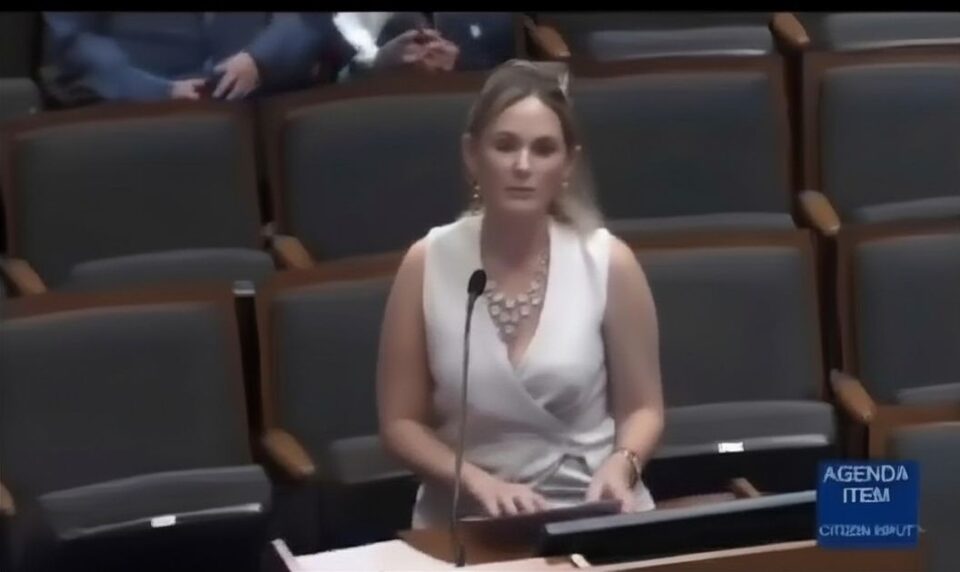
Kelly, a former Frisco resident who said she worked as an assistant property manager for apartment communities in Frisco and surrounding areas and holds a Texas real estate license, used her allotted speaking time to make a series of allegations involving apartment rentals, homeownership, and real estate practices involving Indian immigrants.
“The rapid demographic change in Frisco is the result of steering the Indian community for tax benefits at the expense of locals losing jobs and massive culture change,” Kelly told council members.
Much of her speech focused on apartment leasing practices that she claimed to have witnessed while working in property management.
“In the apartments, a person from India will come in, fill out an application, and they will get approved,” she said. “And then on move-in day, the qualifying person is nowhere to be found, but a friend will be picking up the keys.”
Kelly alleged that such arrangements allow individuals to occupy apartments without going through the same screening process required of other applicants.
She further claimed that apartment transfers often take place within the Indian community through social media networks rather than through official leasing channels.
“If they want to move out, they don’t honestly let the management company know,” she said. “They advertise it on various Indian Facebook groups and apps, and make sure they do an apartment change to another person from India. No other race or nationality has a chance.”
According to Kelly, the practice is widespread.
“It’s happening on such a large scale in Frisco and Plano that it’s impossible to police,” she said.
Kelly linked those allegations to broader concerns about employment and immigration.
“I also see people who were evicted because their job was replaced by H-1B workers,” she said, adding that some local residents were unable to recover from the financial consequences of losing their jobs.
She also claimed to have witnessed companies housing foreign workers in company-paid apartments.
“I’ve also witnessed fake technology companies hiring entry-level H-1Bs and paying for ten apartments at a time while also supplying them with all of their groceries that they need,” she said.
Kelly did not provide evidence for those claims during her remarks.
The speaker also criticized what she described as ethnic targeting within the housing market. Referring to a realtor who serves a large South Asian clientele, she argued that “boosting a real estate agent because he can bring you a high percentage of a certain nationality of buyers” could conflict with fair-housing rules.
“The same scammers in the apartments are the ones moving on to buy the houses,” she said.
At several points, Kelly portrayed Indian immigrants as receiving preferential treatment in both housing and employment.
“It seems like the Indian community is coming here living above the rules, taking jobs, and not assimilating,” she said.
Her remarks also included allegations involving background checks, government benefits, mortgage lending, professional credentials obtained in India, and public safety concerns. Many of those claims were presented without supporting evidence.
The comments represent a notable shift in the themes raised by some speakers during Frisco’s public comment sessions. Previous speeches critical of Indian immigrants have frequently focused on immigration levels, H-1B visa holders, job competition, traffic congestion, and demographic change.
Kelly’s remarks, by contrast, focused heavily on apartment rentals, homeownership, and the growing presence of Indian-Americans in the local housing market.
Frisco has experienced rapid growth over the past two decades and is home to one of the nation’s largest and fastest-growing Indian-American communities. The city has also seen rising home values and increased competition for housing, issues that have become recurring topics in local political discussions.
Public comment periods at City Council meetings allow residents to address elected officials on issues of concern. Statements made during those sessions reflect the views of individual speakers and are not independently verified by the city.
The latest remarks suggest that housing and real estate have become the newest focus of anti-Indian commentary that has repeatedly surfaced during Frisco City Council meetings in recent months, expanding the debate beyond immigration and employment into questions of housing access, homeownership, and demographic change.
Federal and state fair-housing laws prohibit discrimination in the sale, rental, and financing of housing based on race, color, religion, sex, disability, familial status, or national origin. NRI Pulse was unable to independently verify the allegations made during Kelly’s remarks. No evidence was presented during the meeting to substantiate claims of widespread housing, lending, or leasing misconduct involving Indian immigrants in Frisco or Plano.
Kelly, a Texas real estate license holder, testified at a Frisco City Council meeting about widespread housing and employment abuses tied to immigrants from India.
— Bridgett Fertig (@LightOnLiberty) June 15, 2026
She described a system where Indian applicants qualify for apartments but vanish after approval, with friends or… pic.twitter.com/7iyt6U5Sme
