




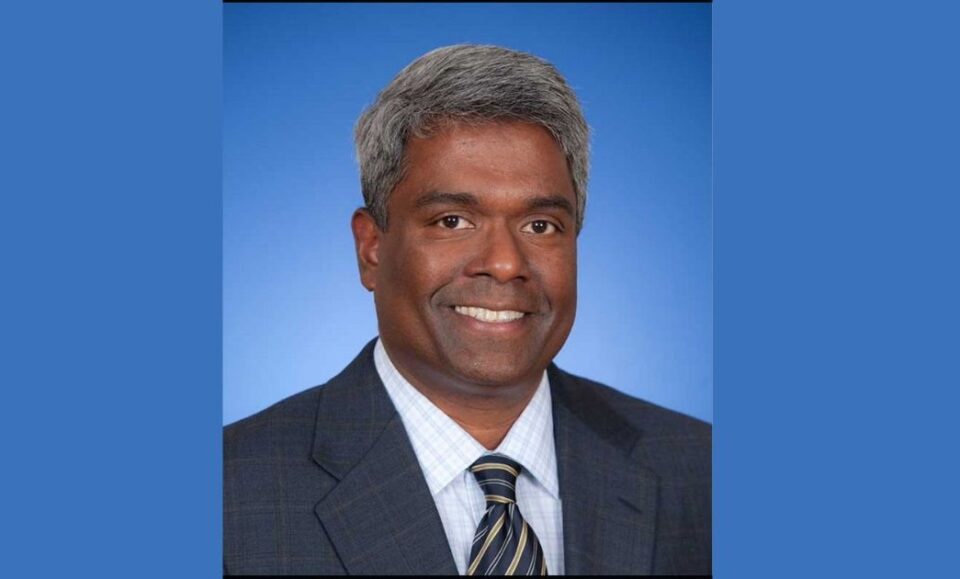
NRI PULSE STAFF REPORT
San Jose, CA, June 1, 2026 — George Kurian, the Indian American CEO of data storage and cloud computing company NetApp, has found himself at the center of a renewed national debate over immigration, offshoring, and technology-sector layoffs after viral social media posts accused him of favoring foreign workers over Americans.
The posts, which have circulated widely on social media in recent weeks, claim that Kurian laid off hundreds of American workers while continuing to employ H-1B visa holders and expand operations in India. The allegations have fueled online criticism of both NetApp and the broader H-1B visa program, which allows U.S. employers to hire highly skilled foreign workers in specialty occupations.
While NetApp has conducted several rounds of layoffs in recent years, including an 8% workforce reduction in 2023, there is no publicly available evidence that the company implemented layoffs specifically to replace American workers with Indian employees. The company attributed the reductions to changing business conditions, cloud computing market shifts, and strategic restructuring.
Nevertheless, Kurian has become a lightning rod in a debate that extends far beyond a single company.
The controversy intensified after critics highlighted NetApp’s use of H-1B workers and its growing operations in India. Some conservative commentators and immigration-restriction advocates argue that technology companies should prioritize hiring American workers, especially during periods of workforce reductions.
Kurian has publicly defended the H-1B program. In interviews, he has argued that access to global talent remains essential for U.S. technology companies and warned that restrictions on skilled-worker visas could encourage companies to expand hiring outside the United States.
Supporters of the visa program contend that American technology firms compete globally for highly specialized talent and that many H-1B workers fill positions for which qualified candidates are difficult to find. Critics counter that the program can be used to suppress wages and displace domestic workers.
The debate has gained renewed prominence under the Trump administration, which has pursued a more restrictive approach to immigration while simultaneously seeking to maintain America’s competitiveness in advanced technology sectors.
Kurian’s background has made him a particularly visible figure in the discussion. Born in India, he earned degrees from Princeton University and Stanford University before holding leadership roles at Cisco Systems, Oracle, and Akamai Technologies. He became CEO of NetApp in 2015 and has overseen the company’s transformation from a traditional data-storage company into a cloud-focused technology firm.
For many observers, the controversy surrounding Kurian reflects broader tensions within the American technology industry: how to balance domestic workforce concerns with the global competition for talent.
As debates over immigration and employment continue to shape political discourse, executives like Kurian are increasingly finding themselves at the intersection of economic policy, workforce development, and national identity.
Whether viewed as a defender of global talent mobility or as a symbol of corporate reliance on foreign labor, Kurian’s experience illustrates how the H-1B debate has evolved from a policy discussion into a cultural and political flashpoint.
NETAPP CEO GEORGE KURIAN CUTS 700 AMERICAN JOBS WHILE SPONSORING H1B VISAS AND KEEPING FEDERAL CONTRACTS 🔻
— @XTexasGirlX (@XtexasgirlX) May 21, 2026
NetApp just laid off around 700 workers in April 2025. That is about 6 percent of their total workforce. Many of those jobs belonged to American employees here in the… pic.twitter.com/dIpqnyUJ09
