





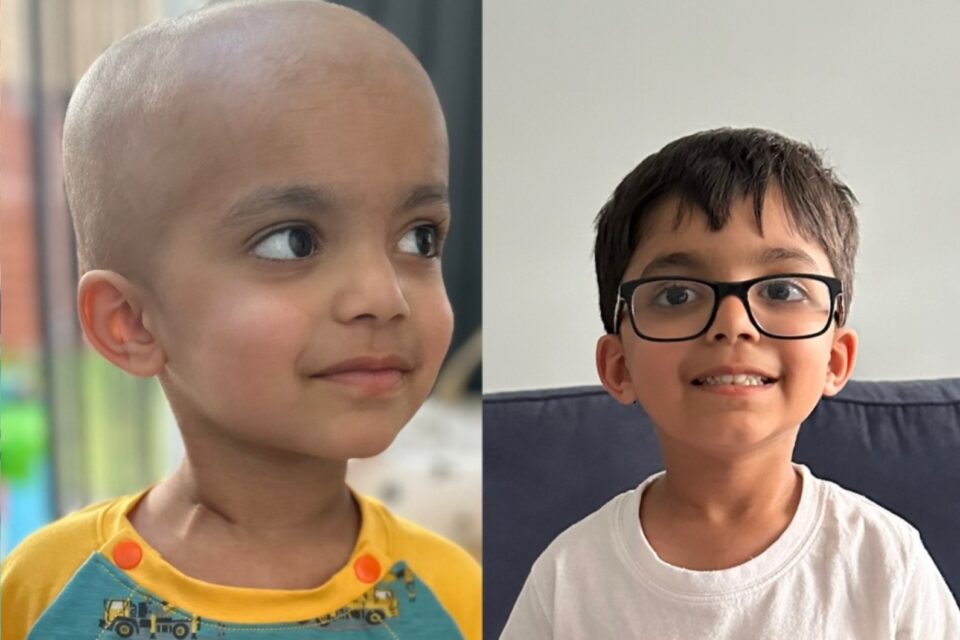
When three-year-old Manraj Singh Hans began experiencing recurring fevers, fatigue and cold-like symptoms, his parents assumed he was picking up seasonal infections at preschool. Several visits to doctors and a course of antibiotics did little to improve his condition. What appeared to be ordinary winter illnesses eventually turned out to be acute lymphoblastic leukemia (ALL), the most common form of childhood leukemia.
Now seven and in remission, Manraj, who lives in Biggleswade, Bedfordshire, England, is helping raise awareness about childhood cancer while raising thousands of dollars for research. His story, reported by British and American media outlets this week, offers an important reminder for parents as winter approaches.
Manraj’s parents, Narinder Hans, 47, and Parm, 42, said their son’s symptoms would temporarily subside before returning. He also began complaining of pain in his legs.
The couple sought medical attention several times, but doctors initially suspected a urinary tract infection or other common infections.
It was only after Narinder discovered a small spot of blood in his son’s diaper that the family received an urgent referral to a hospital. By then, Manraj had also developed a limp.
Blood tests at Bedford Hospital revealed that the little boy had leukemia. In February 2023, he was transferred to Addenbrooke’s Hospital in Cambridge for specialized treatment.
The diagnosis came as a devastating shock to the family, who had gone to the emergency department expecting to return home shortly afterward.
Manraj underwent two years of treatment involving intensive chemotherapy, steroids and lumbar punctures. The treatment left him physically weakened, affected his appetite and caused complications, including a medication-related seizure.
Despite the challenges, Manraj found a way to help other children battling cancer.
In September 2024, while still undergoing treatment, the then-five-year-old began selling charity pin badges to raise money for CCLG, the Children & Young People’s Cancer Association. With support from his family, he has since raised £7,000, or approximately $9,300.
His father told the charity that the family wanted to support research into treatments that would be more effective and less physically debilitating for children.
Manraj has been in remission since March 2025 and is gradually returning to the activities he enjoyed before his diagnosis, including swimming and playing soccer. Although he still struggles with walking long distances, he continues to participate in sports.
“He’s not quite at the same pace as everyone else, but he never gives up,” his father told SWNS.
While Manraj’s story unfolded in the United Kingdom, childhood leukemia remains a significant health concern in the United States.
According to the National Cancer Institute (NCI), approximately 3,100 Americans under the age of 20 are diagnosed with acute lymphoblastic leukemia each year. The disease accounts for about a quarter of all cancers diagnosed in children younger than 15, with the highest incidence among children between the ages of one and four.
ALL develops when immature white blood cells multiply abnormally in the bone marrow, interfering with the production of healthy blood cells. This can affect the body’s ability to fight infections and lead to anemia and bleeding problems.
The challenge in recognizing childhood leukemia is that its early symptoms can resemble those of common illnesses.
According to the Mayo Clinic, warning signs may include:
- Persistent or recurring fevers
- Unusual tiredness, weakness or paleness
- Frequent or severe infections
- Unexplained bruising or bleeding
- Bone or joint pain
- Swollen lymph nodes
- Excessive sweating, particularly at night
- Unexplained weight loss
While most children experiencing cold-like symptoms do not have cancer, parents should seek medical evaluation when symptoms persist, worsen or are accompanied by other unexplained changes in their child’s health.
There is also considerable reason for hope. Advances in childhood leukemia treatment have dramatically improved survival rates over the past five decades. According to the NCI, the five-year survival rate for children diagnosed with ALL increased from 57% in 1975 to 92.3% during the 2014–2020 period.
Meanwhile, Manraj and his family plan to continue raising funds and spreading awareness every September during Childhood Cancer Awareness Month, hoping their experience will help other families and contribute to better treatment options for young cancer patients.
Cover photo credit: https://www.justgiving.com/ Manraj Singh’s family.
