





BY DR. UMA MAJMUDAR*
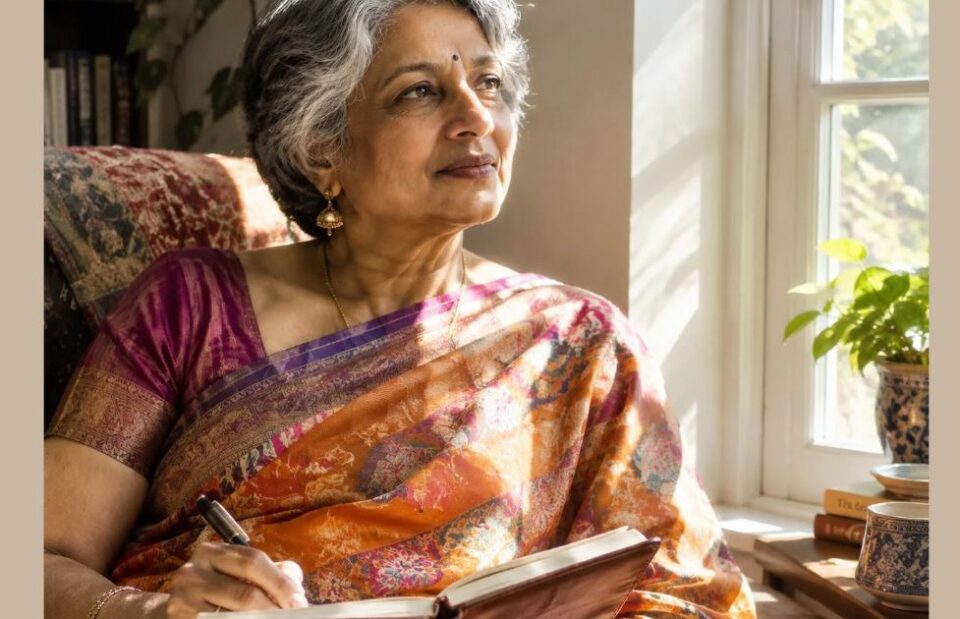
As far back as I can remember, since my primary school years, around age 10 or 12, I have had a habit—or better yet, a passion—for keeping a journal at my bedside. Just before retiring to bed every night, I would jot down whatever striking incident, idea, person, poem, or book moved me deeply or stirred my soul from within!
To give just one example, as a college student pursuing my BA degree with a major in English, I fondly recall these lines from my favorite English poet, Percy Bysshe Shelley, in his poem “To a Skylark”:
We look before and after,
And pine for what is not:
Our sincerest laughter
With some pain is fraught;
Our sweetest songs are those that tell of saddest thought.
Or these lines from another English poet, William Wordsworth, in his poem “The Solitary Reaper”:
Behold her, single in the field,
Yon solitary Highland Lass!
Reaping and singing by herself;
Stop here, or gently pass!
To my utter delight, this passion for journaling, established so early in life, continues to this day, even in the twilight years of my life! But besides this long-established habit or nostalgic passion, are there any other psycho-spiritual and practical benefits to keeping a journal?
Definitely yes, for me! Here are my reasons:
1. First, it’s such a nostalgic joy to pour your heart out onto the pages of your journal, which also serves a therapeutic purpose for most people, including me! It’s like having your own “tête-à-tête” (a French term meaning an intimate, one-on-one conversation)—in this case, with yourself. To put it in today’s computer language, it is like “downloading” your inner self onto the pages of your personal journal or private diary!
2. Since it’s your private journal, there’s no fear, no shame, no public criticism, and no restrictions. It’s only you, dialoguing with your deeper self and pouring it all out onto the pages of your journal! Here, you feel free to dream like the proverbial “Shekhchalli” or even to fly like Pinocchio to a magical wonderland!
3. Most importantly, through journaling, you not only feel psychologically relieved by expressing your innermost thoughts, but you can also revive your past memories without feeling exposed to the outside world. Above all, the most positive feature of journaling is that it protects your privacy! What you write here stays here! The secrets you disclose are strictly between you and your journal!
Here, there’s no intrusion, no public watchdog, and no need to put on a fake public persona. It’s your personal journal, your personal passion, and your personal possession! On its pages, you feel safe to empty your mind or unload your innermost thoughts—your secrets, dreams, emotional upheavals, ambitions, fears, and frustrations! Why? Because they are all given expression on paper in the privacy of your own diary or journal!
4. Besides being a private psychological outlet for expressing your day-to-day joys, sorrows, dreams, and challenges, your journal can also serve as a historical record of any earth-shaking contemporary social, political, or cultural phenomenon or event!
What could be more authentic evidence of the horrors of the Holocaust than Anne Frank’s handwritten diary?
Similarly, your own personal diary could serve as a living testament to your time and your life, for future generations to read, learn from, and cherish forever!
If you are lucky, there’s nothing like reading your own family history through the photographs and journals of your ancestors! Even a hard-to-read notebook belonging to your great-grandma or grandpa can speak volumes about how they lived and dressed, the kinds of food they ate, and how they worshiped and entertained themselves!
Not only that, but it can also reveal the trials, tribulations, and challenges they encountered, and how they never gave up. They not only survived but also thrived!
Even a handwritten recipe book belonging to your grandma or grandpa can be your best “go-to” guide for cooking up a gourmet dish! In my case, I feel so fortunate to have preserved my maternal great-grandfather’s recipe for concocting a “hot, hot Gujarati achar,” or pickle delicacy!
And here is another important suggestion, or even a recommendation: Keep a journal not only to preserve your family’s pickle recipes or other culinary treasures but also to leave behind, for future generations, your own thoughts, reflections, and experiences—good or bad, pleasant or unpleasant. Record your physical, psychological, professional, and parental trials and tribulations on the pages of your journal!
My final suggestion—also supported by psychological research—is not only to keep a journal but to write in it by hand! But why? Because, as research suggests, writing by hand involves you more directly, personally, psychologically, and emotionally in what you write!
That’s why most people of my generation, as well as some of the younger people I have spoken to, prefer to write by hand in their diaries or journals. They also prefer handwritten letters to communicate heart to heart and soul to soul with their nearest and dearest friends and family members!
Thus, journaling is a valuable psycho-spiritual outlet for expressing your feelings, emotions, experiences, conflicts, and solutions, as well as for recording social, cultural, political, national, and international events.
Your journal serves not only to record external events but also as the most intimate living testimony of the kind of person you were and the kind of life you lived!
What could be a better or more authentic guiding light for your children, grandchildren, and future generations?
I still relish reading my father’s journal and my great-grandfather’s “achar” pickle recipe!
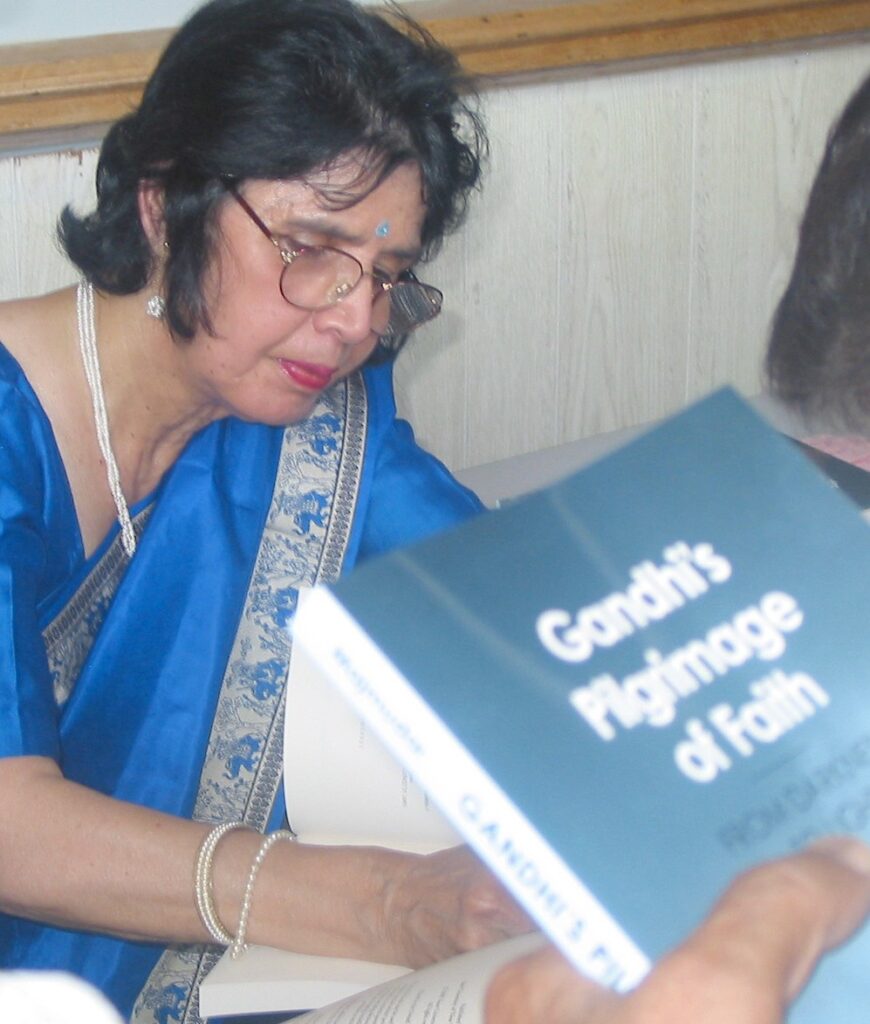
*Dr. Uma Majmudar is an Atlanta-based author, scholar, educator, and longtime contributor to the Indian-American community. She holds a Ph.D. from Emory University and has taught religion and philosophy at Emory and Spelman College. She is the author of Gandhi’s Pilgrimage of Faith: From Darkness to Light and has contributed to numerous publications in the United States and India. A former editor of Voice of India, she has been actively involved in interfaith and cultural initiatives in Atlanta. In 2006, she was inducted into the Martin Luther King Jr. Collegium of Scholars at Morehouse College.
