



NRI PULSE STAFF REPORT
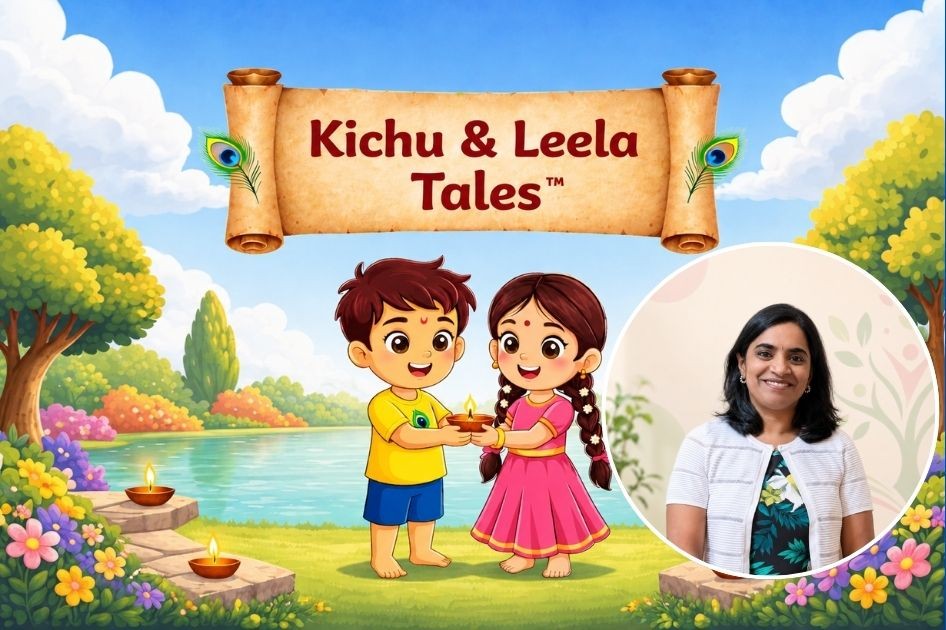
How do you teach children about Indian culture when family life is filled with school, sports, activities, and busy weekends? For Atlanta’s Bhuvaneswari Lakshmi Narayanan, the answer came through two curious children named Kichu and Leela.
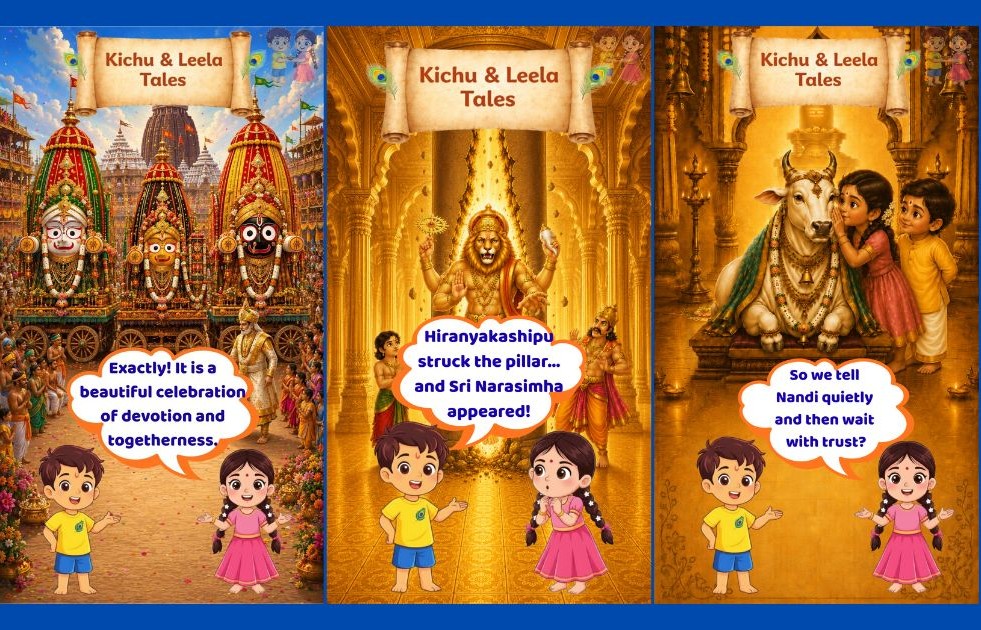
Launched in March this year, Kichu & Leela Tales is a digital initiative that introduces young children to Indian stories, festivals, slokas, temple traditions, and cultural values through short, engaging videos. In just a few months, the series has grown to more than 140 episodes, with each video focusing on one story, one tradition, one sloka, or one cultural question that children can understand in just a few minutes.
The idea grew from Bhuvaneswari’s own experience raising her two daughters in the United States.
“It was a realization that grew through many small experiences with my children,” she says.
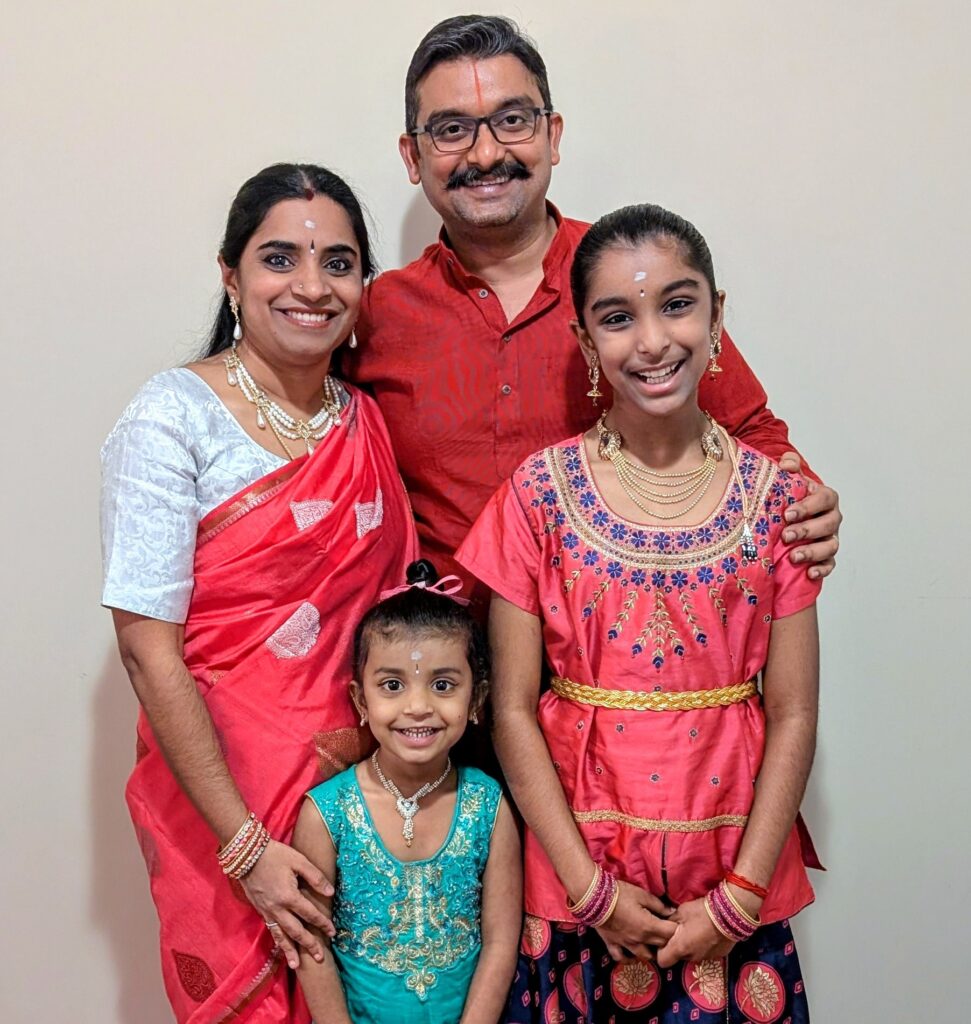
Her family has been part of a weekly Friday satsang with close friends since 2012, where adults and children recite slokas, sing bhajans, and share a meal together. At home too, Indian traditions are part of everyday life.
But she noticed something.
“What I noticed, especially with my younger daughter, was that exposure did not always connect all the dots. She was naturally curious, but if an explanation became too long, I could see her interest disappear rather quickly.”
She realized the problem was not a lack of stories or traditions.
“What was missing was not access to stories or traditions, but a short, child-friendly bridge connecting what children see at home, hear during satsang, encounter at a temple, read in books, and experience during festivals.”
Like many parents, Bhuvaneswari found that regular temple visits and community activities became harder after the pandemic, the birth of her second child, and the demands of family life.
“I wanted to create something useful, meaningful, and positive within the realities of my own life—something other families could use within theirs,” she says. “It does not replace temples, satsang, community experiences, or learning from elders. Instead, it offers children a small and consistent cultural and spiritual touchpoint between those experiences.”
The names of the two young characters also have a special meaning.
Bhuvaneswari, a devotee of Krishna, lovingly calls him “Kichu,” while “Leela” refers to Krishna’s divine play. She created the two child characters to talk about culture, faith, stories, and traditions in a friendly way that children enjoy.
“Children naturally ask questions,” she says. “Through Kichu and Leela, children hear the question before they hear the answer. The idea unfolds through a friendly conversation between two curious children. It feels less like, ‘Here is something you must know,’ and more like, ‘That is interesting—I want to know more.'”
Keeping the videos short was another deliberate choice.
“I wanted the videos to fit naturally into family life rather than require a long, separate learning session,” she says.
“The video may be short, but the conversation it begins can last much longer.”
A story about Hanuman can lead to a discussion about courage. A video about Govardhan or Chhappan Bhog can turn into a lively breakfast-table conversation.
“I am also mindful of screen time. Kichu & Leela is not designed to keep children watching for as long as possible. It is designed to offer one meaningful idea, spark curiosity, and carry that curiosity beyond the screen.”
Some of the most rewarding moments have come from watching children connect what they see in the videos with real life.
Within two weeks of launching the series, a friend sent Bhuvaneswari a video of her daughter talking about how much she loved Kichu and Leela and how she looked forward to each new episode. Her cousin’s six-year-old son eagerly completed activity packs and asked when Ramayana stories would begin.
Her biggest fan, however, may be her younger daughter, who still does not know that her mother created the series.
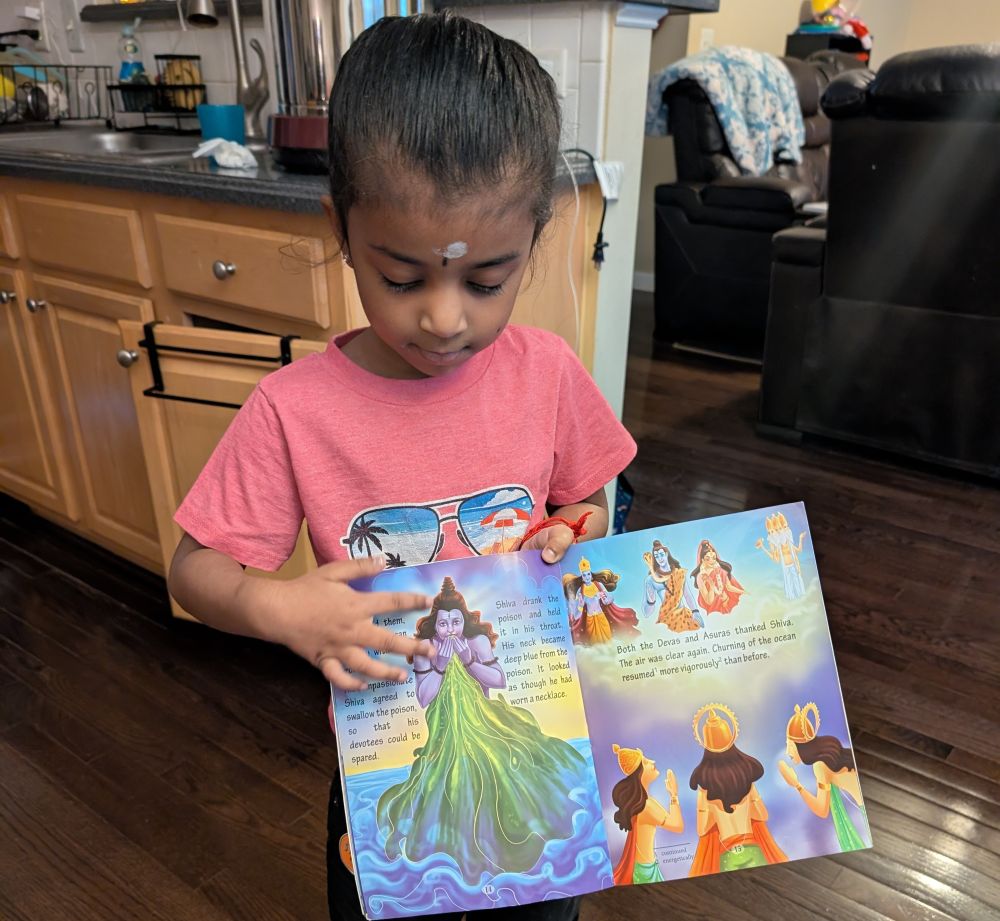
After watching an episode about Shiva as Neelkanth, she found the matching story in one of the family’s devotional books. After another episode about Narasimha, she opened the book to the page where Narasimha emerges from the pillar. At the temple, she enjoys reciting the slokas she has learned and proudly explains why people leave their footwear outside and why food should never be wasted. One of Narayanan’s favorite moments is when her daughter affectionately tells her, “Amma, you are my Annapoorni Devi.”
For Bhuvaneswari, those small moments are the true measure of success.
“These may seem like tiny moments, but they show me that the content is not simply being watched and forgotten. Children are connecting it to books, festivals, temple experiences, family practices, values, and even something personal about themselves.”
Her hope is simple.
“I do not expect children to remember every name or detail from every video. What I hope stays with them is familiarity, curiosity, belonging, and the confidence to ask questions.”
“I want Indian culture and faith to feel warm, understandable, and naturally woven into their lives—something that can quietly ground them as they grow.”
Videos
Everyday cultural curiosity — Why Do We Remove Shoes in Temples?
https://www.youtube.com/shorts/BDuiJun4fXA
God Story — Narasimha Protects Prahlada
https://www.youtube.com/shorts/IBSkoaJZLbU
Temple tradition and storytelling — The Secret We Tell Nandi
https://www.youtube.com/shorts/lKjM7cjKsms
Guided sloka learning — Saraswati Namastubhyam
https://www.youtube.com/shorts/lWUjis1BPHU
Festival-based learning — Why Is Puri Jagannath Ratha Yatra Celebrated?
https://www.youtube.com/shorts/6-kyMvyb8hU

2 comments
Beautiful presentations
Love to watch and motivate their skills and performance
Blessed family
Thank you so much for all your love and support 🙂