





BY JYOTHSNA HEGDE
Sometimes the most carefully stitched garments hide the deepest wounds.
In South Asian homes across America, conversations about success, family honor, sacrifice, and duty are commonplace. Conversations about abuse are not. Behind professional achievements, festive photographs, and carefully maintained appearances, many women continue to navigate emotional manipulation, financial control, isolation, and violence in silence.
According to the Asian Pacific Institute on Gender-Based Violence, up to 55% of Asian women in the United States report experiencing physical or sexual violence by an intimate partner during their lifetime. National data also shows that nearly one in five Asian American and Pacific Islander women report rape, physical violence, or stalking by an intimate partner.
Research focused specifically on South Asian communities paints an equally troubling picture. A 2021 study of South Asians across the United States found that 48% reported experiencing physical violence, 38% emotional abuse, 35% economic abuse, and 26% immigration-related abuse.
Those numbers are not merely statistics. They are stories. And Designed by Preeti gives one of those stories a face.
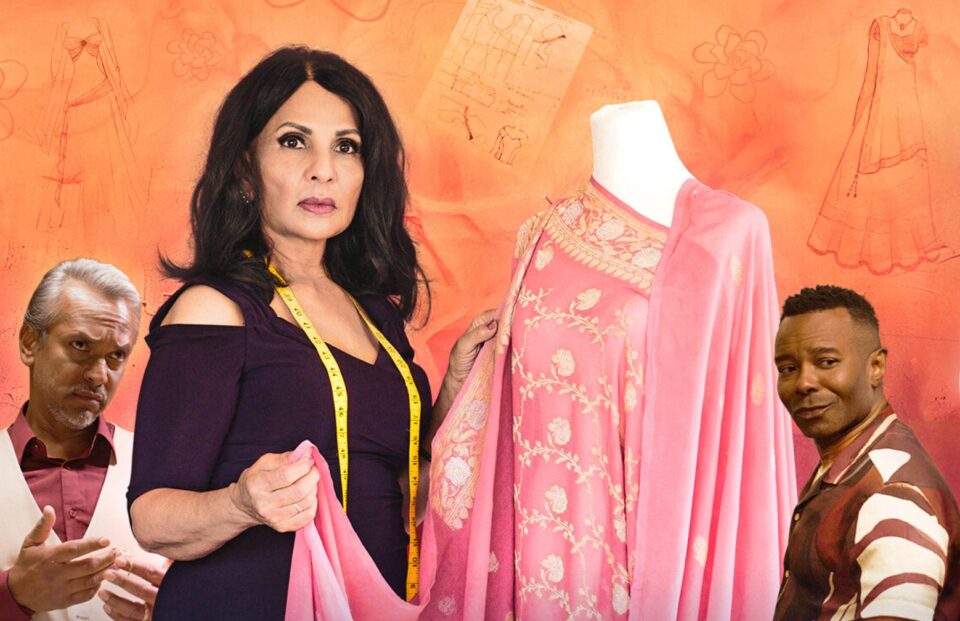
Preeti Kumar, played with remarkable authenticity by Rashmi Rustagi, is not introduced as a victim. She is introduced as a wife, mother, entrepreneur, artist, and friend. She is the woman many in our community know. The woman who keeps the family functioning, attends social gatherings with a smile, and quietly absorbs the emotional blows inflicted by those closest to her.
The brilliance of the film lies in its refusal to portray abuse as only physical. Ajay, her philandering and controlling husband, wounds through humiliation, manipulation, betrayal, and the steady erosion of self-worth. It is a portrayal that many survivors will recognize immediately. Abuse is often not a single act. It is a gradual dismantling of confidence.
Director Gayatri Bajpai and writer Rashmi Rustagi understand this intimately. Rather than relying on melodrama, they allow the audience to witness the slow suffocation of a woman’s identity. Preeti’s struggle is not merely about leaving a marriage. It is about remembering who she was before the marriage convinced her she was not enough.
What makes the film particularly relevant for South Asian audiences is the tension represented by Preeti’s two closest friends. One urges liberation and self-respect. The other counsels endurance and preservation of tradition. Their conflict mirrors a debate that continues in many immigrant households. How much should a woman sacrifice to preserve a marriage? At what point does perseverance become self-destruction?
The film never turns these questions into simplistic answers. Instead, it invites viewers to wrestle with them.
Rustagi’s performance anchors the entire narrative. She brings a vulnerability that feels lived rather than performed. There are moments when Preeti says very little, yet her eyes communicate years of disappointment, confusion, and longing. It is in those quiet moments that the film becomes most powerful.
Jay Charan delivers an equally effective performance as Ajay. His character is not a cartoon villain. He is charming when necessary, remorseful when convenient, and manipulative when challenged. That complexity is important because many abusive relationships exist within precisely those contradictions.
The supporting cast enriches the story with depth and emotional texture. Anna Khaja’s Sonia embodies fierce friendship and unwavering support, while Sangeeta Agrawal’s Revathi represents the cultural pressures that often encourage women to stay silent. Together they create the competing voices that echo in Preeti’s mind and, perhaps, in the minds of many women watching the film.
Yet Designed by Preeti is ultimately not a film about abuse.
It is a film about value.
Throughout the story, Preeti designs beautiful clothing for others while failing to recognize her own worth. The metaphor is subtle but unmistakable. How often do women spend years creating beauty, stability, and opportunity for everyone around them while neglecting themselves?
As Preeti slowly reclaims her confidence, repairs fractured relationships, pursues her passion, and opens herself to the possibility of love and happiness, the film transforms into something far more hopeful. It becomes a story of reinvention.
Some viewers may find the ending predictable. Perhaps it is. But there is something profoundly satisfying about watching a woman choose herself after spending years believing she had no choice at all.
In a world saturated with stories of cynicism and despair, Designed by Preeti dares to suggest that healing is possible. That self-worth can be rediscovered. That the chapters after heartbreak can sometimes be the most meaningful.
For South Asian audiences, the film serves as both mirror and message. It reflects realities that are often hidden behind cultural expectations and family reputation. At the same time, it offers a reminder that dignity, safety, and happiness are not luxuries. They are necessities.
The greatest achievement of Designed by Preeti is that it does not ask us to pity its protagonist. It asks us to believe in her.
And perhaps, for some viewers, to believe in themselves.
More than a film about escaping an abusive marriage, Designed by Preeti is a poignant exploration of self-worth, resilience, and the courage to become the person you were always meant to be.
