



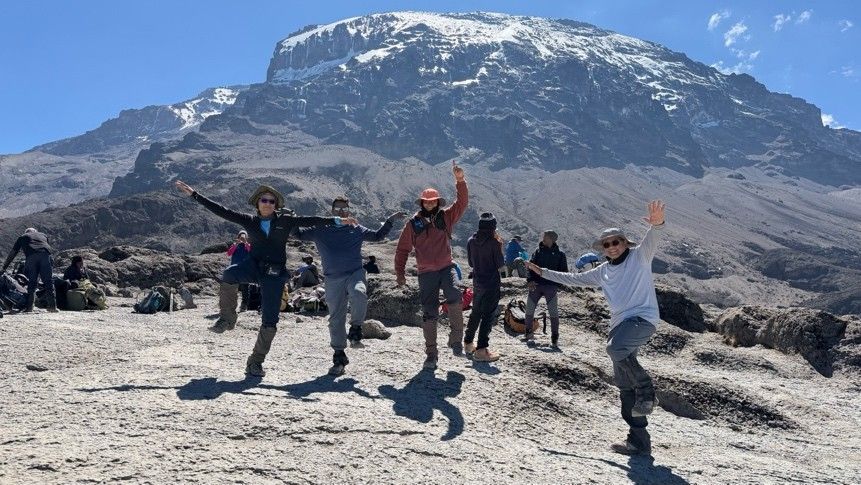
Editor’s Note: Four members of the Georgia hiking group Men of the Mountains recently set out to climb Mount Kilimanjaro in Tanzania, Africa’s highest peak at 5,895 meters (19,341 feet) and the world’s tallest free-standing mountain. Choosing the eight-day Lemosho Route—one of Kilimanjaro’s longest and most scenic approaches, favored for its gradual acclimatization and high summit success rate—the friends spent months preparing for the adventure. In this first-person account, Rangarajan Valayaputhur reflects on the physical challenges, the friendships forged, and the lessons learned on the journey to the Roof of Africa.
BY RANGARAJAN VALAYAPUTHUR
Four years ago, none of us would have imagined preparing to climb the highest mountain in Africa together. Yet four months before departure, that’s exactly what we started doing.
If you looked closely at our preparation, you’d have seen far more than gear and Merino wool. You’d have seen the early mornings — dark, cold, determined. The training sessions built around strength, endurance, and stamina. The research rabbit holes on layering systems, weather patterns, altitude, and acclimatization. The nutrition tweaks, the budgeting, the gear testing, the countdown that swung between excitement and nervousness in the same breath.
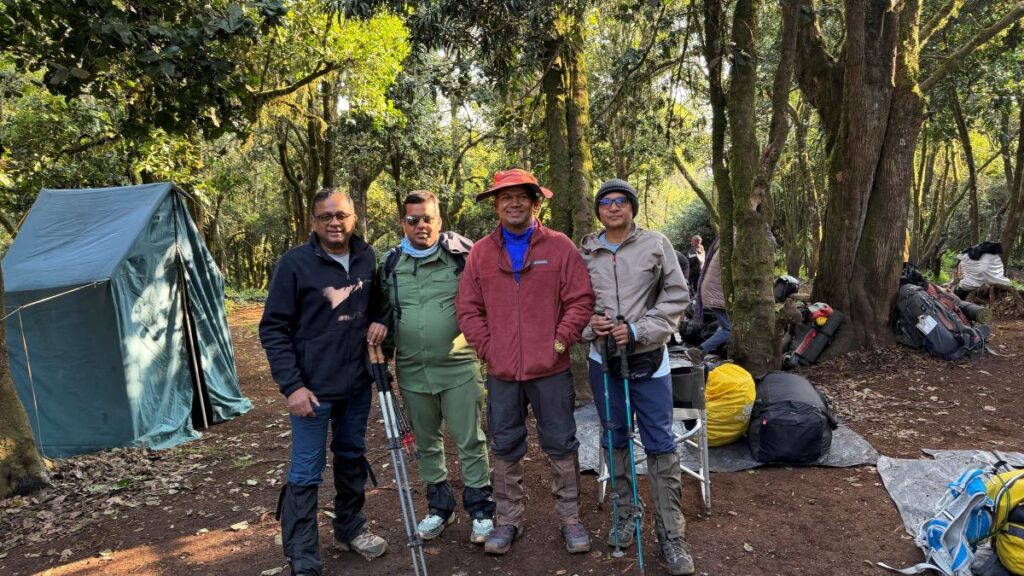
Most of all, you’d have seen Ranga, Lal, Murugan, and Anant pushing each other when motivation dipped, comparing notes on gear at odd hours, and showing up for one another in a hundred small ways. At 60, Lal and I (Ranga)—or what we like to call our 35—this adventure was never about proving something to the world. It was about discovering what’s still possible when you refuse to put an expiration date on your dreams, and realizing the journey is so much richer with the right crew beside you.
As eternal optimists, we’ve always believed age is a number, attitude is a choice, and possibility belongs to those willing to chase it relentlessly — together. The camaraderie was as much the point as the summit itself: the laughs on the trail, the gear talk, the friendly competition, the showing up for each other again and again.
We took the eight-day Lemosho Route — one of the longer, more gradual paths up the mountain, chosen deliberately for acclimatization. Along the way, Kilimanjaro takes you through five distinct climate zones: warm cultivated farmland, lush rainforest, heath and moorland dotted with giant lobelias, alpine desert, and finally the arctic zone near the summit — ice, snow, and extreme cold. Watching the landscape transform beneath our boots, from tropical green to lunar grey to white, was its own kind of education in humility.
Then came summit night: a midnight start, twelve-plus hours on our feet, temperatures between –15°C and –25°C with wind chill, oxygen at roughly half of sea level, and 45 miles on foot by the time it was over. Reaching Uhuru Peak was never really about conquering a mountain. It was about discovering what persistence, preparation, discipline, faith, and a refusal to quit can accomplish — and discovering it alongside three people who refused to let each other quit either.
None of this happened in isolation. It belongs to our wives and families, who stood beside us through every phase of the transformation. It belongs to our trainers, physicians, guides, and porters, who helped us clear one obstacle after another, and to the close friends and well-wishers who kept pushing us forward one step at a time.
The Real Challenges — And How We Got Through Them
The summit photo is the part everyone sees. This is the part most people don’t. None of it is meant to discourage anyone from climbing Kilimanjaro — quite the opposite. It’s meant to paint an honest picture of what this remarkable mountain demands, and why reaching the Roof of Africa is so deeply rewarding.
Preparation Doesn’t Guarantee Success — But It Gives You a Chance
Each of us arrived with a different story. One of us learned about the expedition only twelve weeks before departure and spent every weekend building endurance under a loaded pack — then came an early knee injury, followed by an unexpected hospitalization just four weeks out that halted training completely. Weeks of hard-earned conditioning disappeared almost overnight, and with only days left, a last-minute hike to nearly 13,000 feet in Colorado became the only chance to reacquaint his body with altitude.
Others dealt with their own injuries and disrupted training, and the same nagging uncertainty: would it be enough? We all learned the same thing — preparation doesn’t guarantee success, but without it, Kilimanjaro becomes exponentially harder.
The Mountain Wears You Down Long Before Summit Night
By the second half of the climb, the mountain had quietly begun taking its toll. Appetites disappeared. One of us lost his sense of taste entirely; another survived largely on protein bars because regular meals wouldn’t go down; a vegetarian among us fought daily just to get enough calories from what was available.
Sleep grew fragmented — altitude, cold, and the constant activity of camp made real rest nearly impossible. Each day chipped a little more off our reserves. Kilimanjaro isn’t won on summit night. It’s won, or lost, in the seven days before it, while your body is slowly being depleted one day at a time.
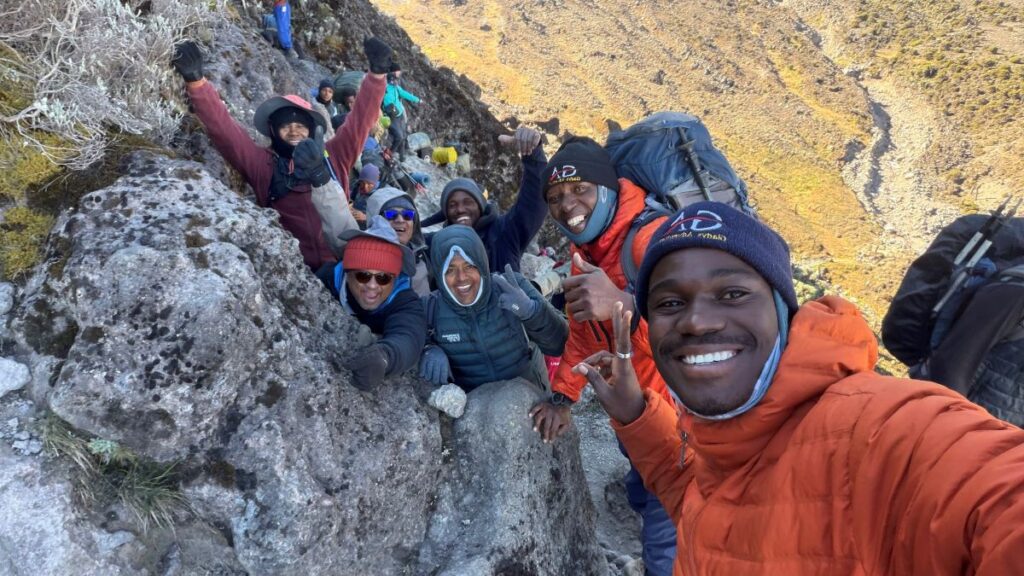
Summit Night: The Part Nobody Prepares You For
Summit night begins when your body has almost nothing left to give. You crawl into your sleeping bag around 7 or 8 p.m., only to be woken by 10 or 11 to start climbing — two hours of broken sleep, if you’re lucky. You begin the hardest day of the expedition already exhausted.
Then comes the layering problem nobody mentions: staying warm without losing mobility. Thermal layers, insulated jackets, balaclavas, hand warmers stuffed into thick gloves — one of us could barely grip his trekking poles under all of it. Opening a snack or checking a watch became a small ordeal. The weather itself turns opponent: bitter wind one moment, overheating the next as the climb continues; stop too long and the cold wins, keep every layer on and you sweat, then chill again the moment the wind returns.
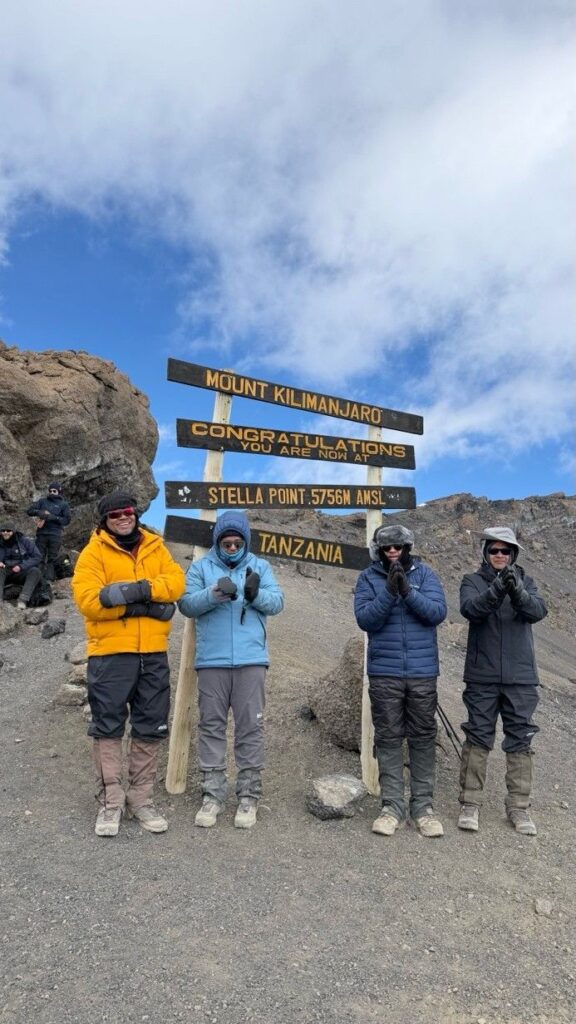
The climb itself is steep, long, and mentally exhausting — hours in total darkness, lit only by a ribbon of headlamps above you, every ridge looking like the summit until you reach it and find another one waiting. Then comes Stella Point, which guidebooks describe as the hard part being over. It isn’t. The traverse from Stella Point to Uhuru Peak — technically gentler, but at the thinnest air on the whole mountain — is, in our experience, one of the most underestimated stretches on Kilimanjaro.
There is no reserve tank left. Every breath is earned; every step is a negotiation with a mind that keeps angling to stop. One of us battled altitude-induced brain fog. Another’s ankle and calf nearly locked up entirely. One began showing subtle changes in balance that his guide noticed before he did, and quietly got a second guide at his side without ever making it feel like an alarm.
Every one of us, at some point, had a moment where quitting felt like the sensible option. Fitness helps. Preparation helps. But on summit night, humility, patience, and the willingness to take one more step matter more.
The Summit Is Only Half the Journey
Standing on Uhuru Peak is unforgettable — but it isn’t the finish, and for some of us it wasn’t even the hardest part. Within minutes of the top, we still had thousands of feet of loose volcanic scree to descend on exhausted legs, aching joints, and fading concentration. Permit logistics meant no recovery at the highest camp — we kept descending long after we’d hit our physical limit. Some of us slipped. Some fell. All of us were spent. The mountain doesn’t consider the journey over until you’re safely back down.
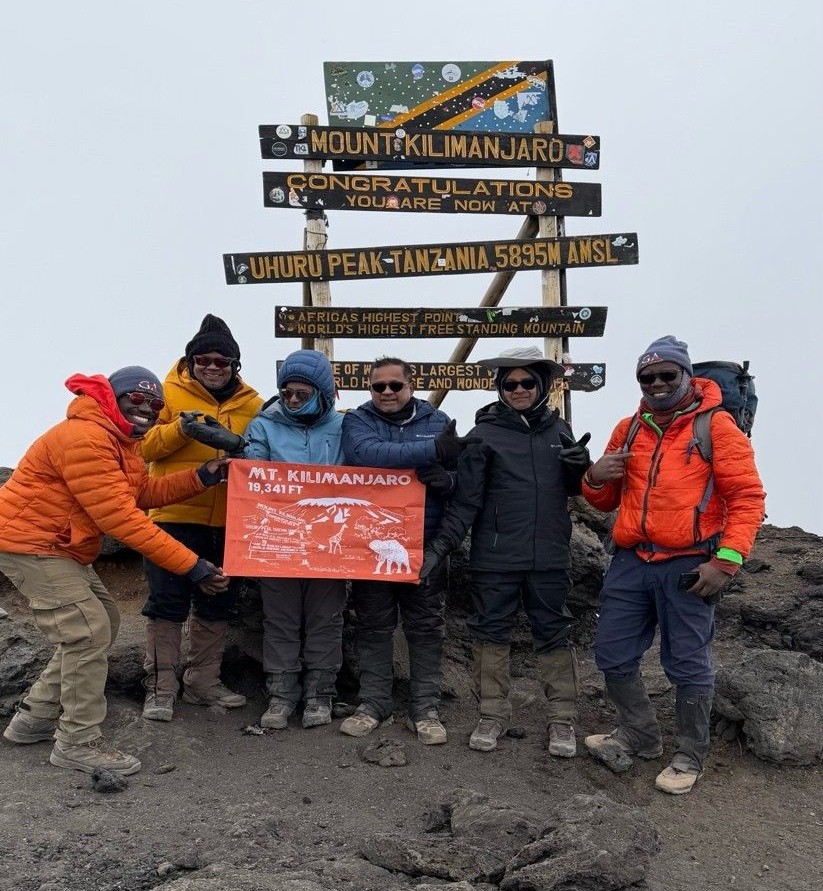
Four Individuals. One Team.
The four of us had known each other only about four months before setting foot on Kilimanjaro — different backgrounds, different professions, ages from 45 to 65, different personalities entirely. Somewhere on the trail, those differences stopped mattering. We became a team without ever discussing it: checking on each other at breaks, sharing encouragement when spirits dipped, making an unspoken commitment that this would only feel complete if all four of us summited together. No egos, no competition — just optimism, resilience, humor, and determination pooled into one shared effort.
Between the camps and the laughter, it felt at times like being back in college — careers and age forgotten for a while. By the time we stood at Uhuru Peak, we realized we’d built something that would outlast the mountain: the summit was our shared achievement, but the friendship was the gift we didn’t expect.
What Carried Us to the Roof of Africa
No single factor explains it. It was the quiet confidence of guides who’d spent decades on this mountain, and trusting them completely even when instinct wanted to rush. It was pole pole — slowly, slowly — conserving energy instead of chasing milestones. It was encouraging each other through doubt and believing we’d succeed together. Most of all, it was refusing to think about how far remained, and simply taking the next step, and then the next. The summit wasn’t won by strength alone; it was won by managing a hundred small things — sleep, food, cold, layers, fatigue, mindset — one deliberate decision at a time.
Would We Do It Again?
The real achievement was never just the few seconds in that summit photo — it was the interrupted training, the vanished appetite, the sleepless nights, the thin air, the false summits, and the punishing descent that still waited after Africa’s highest point. Those are the moments that tested us, shaped us, and changed us.
Ask any of the four of us now whether we’d do it again, and the answer comes without hesitation: absolutely. Not because it was easy — it wasn’t — but because the four people who came down that mountain were not quite the same four who started climbing it.
In Their Own Words
The summit belongs to all four of us, but each of us carried something different down the mountain — and something different up it, too.
Ranga’s Sixteen-Year “Couch to Kili” Journey – The Eternal Optimist
For me, this journey didn’t begin with Kilimanjaro. It began in 2010, on a couch, when a friend, Dr. Rangasamy Rajamanickam, cared enough to say something honest about my health and lured me into trying Couch to 5K; then another friend, Vijay Gandapodi, maybe scolded me to prioritize my health; and my buddy Radha Krishnan nudged me to try hiking. I didn’t know it then, but that was the first of thousands of steps.
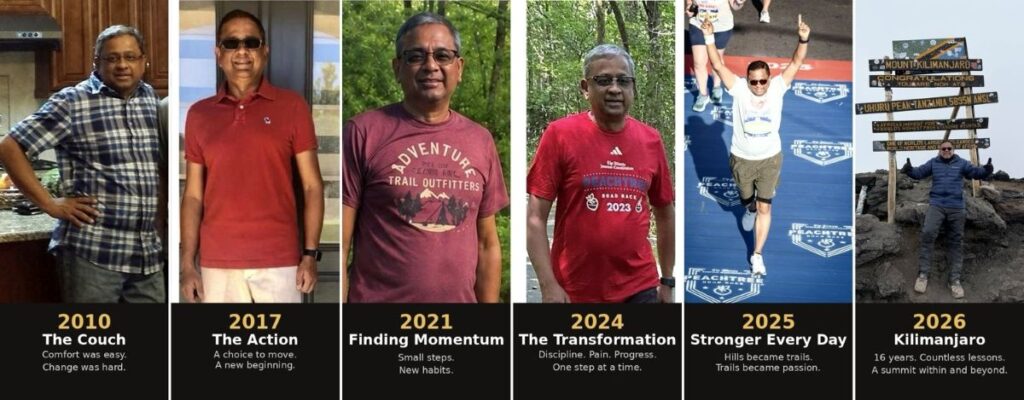
A walk became a habit. A habit became a lifestyle. A lifestyle became a passion.
None of it was smooth. Every stride forward came with two steps back — injuries, surgeries, chronic pain, self-doubt, and plenty of moments when quitting would have been easier than continuing. Somewhere along the way, Dr. Ranga started pushing me to go farther: walk more, then hike, then finish a first 10K. Neither of us imagined those early miles would eventually lead to Uhuru Peak.
That’s the part people don’t see when they look at a summit photo. They see the mountain. They don’t see the sixteen years of small, unglamorous choices that made the mountain climbable — and how much easier those choices became once I had people beside me who refused to let me quit.
Murugan – “The Relentless”
People have asked me what it felt like to climb Kilimanjaro, and I still struggle to find the right words. At times it felt almost like an out-of-body experience, as though I had left a part of myself on the mountain. The mountain has a way of humbling you without saying a word.
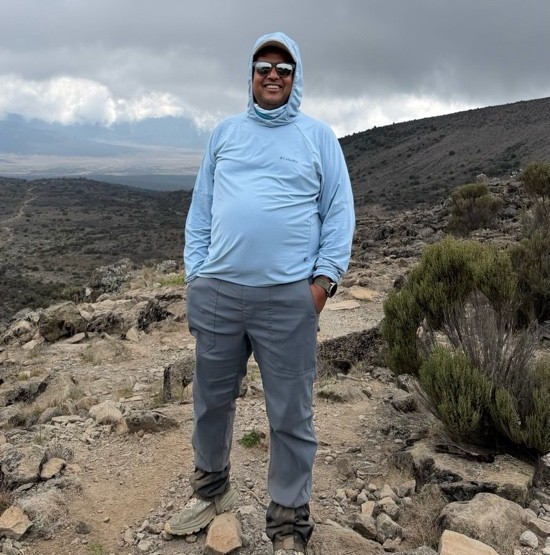
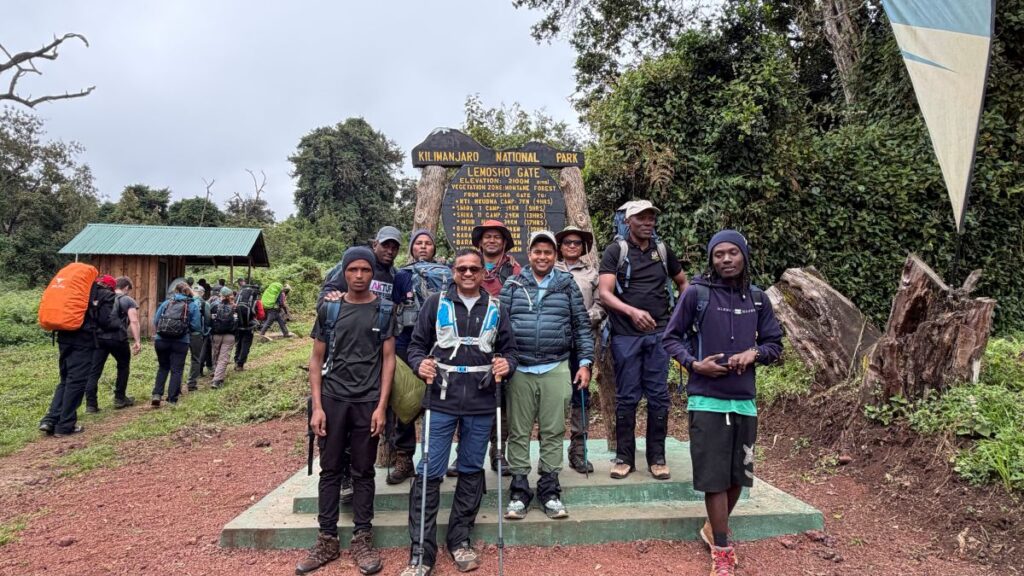
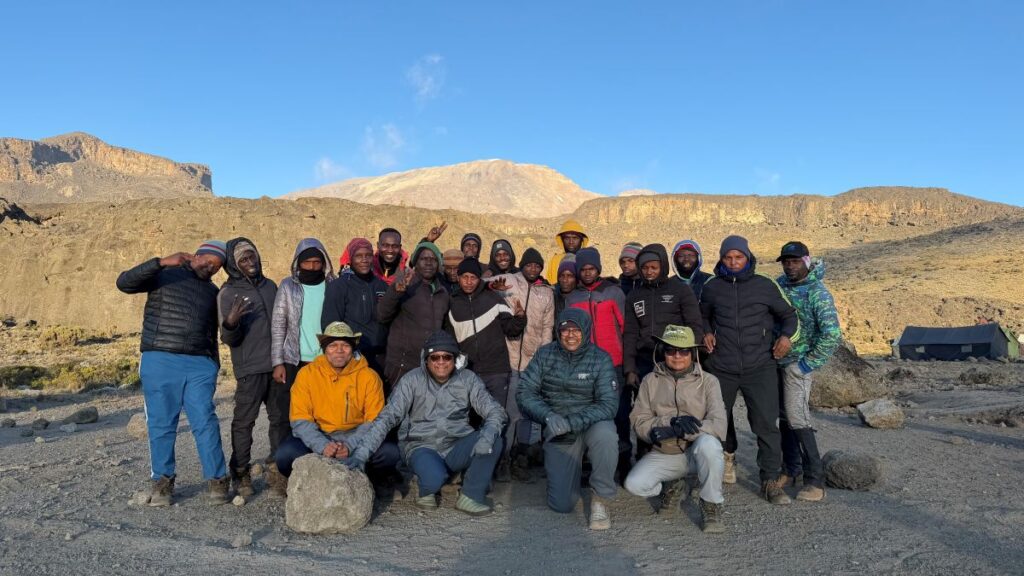
The guides, porters, and cooks were the heart of this journey. Their strength, humility, kindness, and quiet confidence were remarkable — they carried heavy loads with a smile, encouraged us when we struggled, and expected nothing in return except that we kept moving forward.
I came home with memories, but I also came home feeling like a small part of me is still on that mountain. Perhaps that’s what makes Kilimanjaro so special — not that you conquer it, but that it changes you in ways you can’t quite put into words.
Lal – “A Journey of Surrender”
For three long years, my mind occupied a space between anticipation and anxiety. Yet despite meticulous preparation, nothing could truly prepare me for the raw intimacy of standing face-to-face with nature in its most rugged, untamed form.
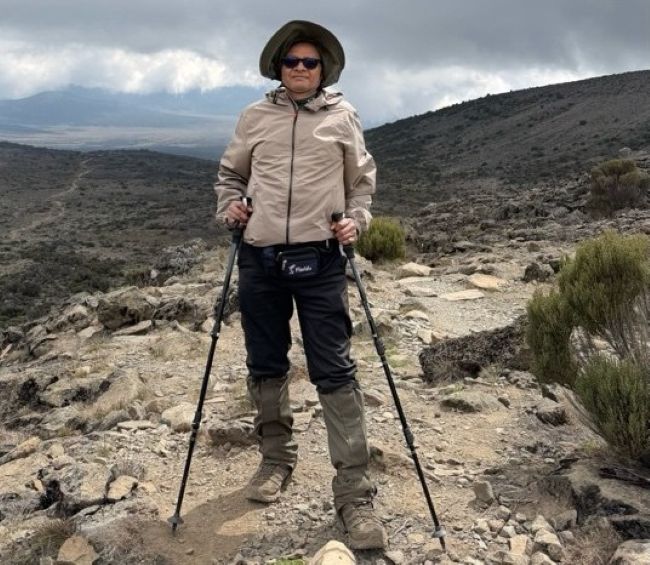
The journey was not without its trials. We were tested severely, facing immense physical and mental challenges both as individuals and as a collective unit. Yet overcoming those obstacles is precisely why I can now call this the greatest adventure of my lifetime.
I always leave my family and friends with one vital piece of advice: prepare with everything you have, but when you step onto that mountain, leave your ego behind. Kilimanjaro teaches you not to approach it as a conqueror, but to surrender to its serenity, allowing its humbling majesty to embrace you.
Anant – “The Cool Team Player”
I won’t pretend I walked into it fearless. Could I actually do this? Was I ready for eight days on a mountain I’d only ever seen in photographs?
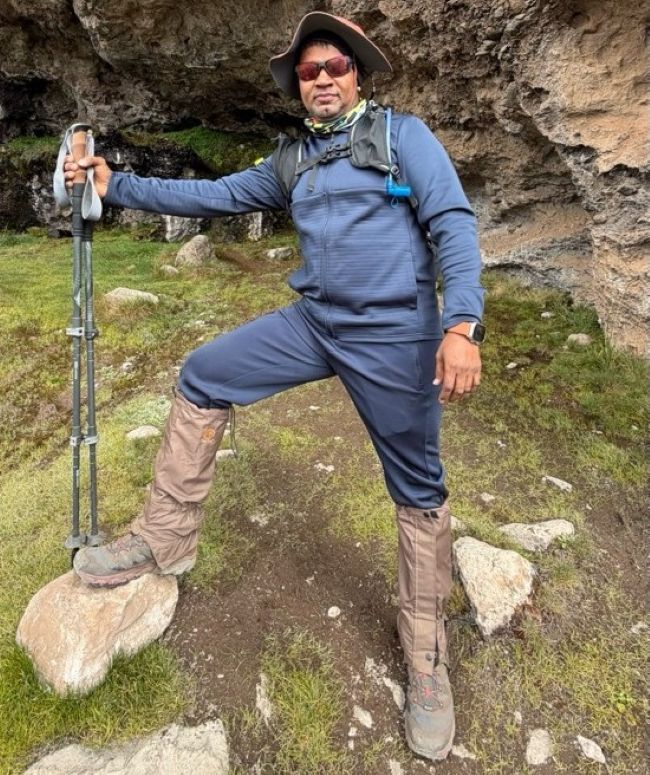
The answer came faster than I expected. By the end of day one on the trail, something shifted. The doubts that had trailed me from home to Moshi to the Lemosho Gate began to quiet, replaced by something steadier — confidence, earned one footstep at a time. The mountain has a way of doing that. It doesn’t ask you to be fearless. It only asks you to keep walking.
Somewhere on that trail, I made a quiet promise: I wanted our whole group to summit together — not just reach the top individually but stand there as one team. So I took on a role I hadn’t planned for, part hiker, part hype man — cracking jokes when legs got heavy, pumping energy into the group when the air thinned out, checking in on my teammates whenever the trail went a little too quiet.
As the famous quote says, you are not conquering the mountain, you are conquering yourself — and that’s a hundred percent true.
What They Don’t Tell You
The parts of a Kilimanjaro climb that don’t make it into the brochure.
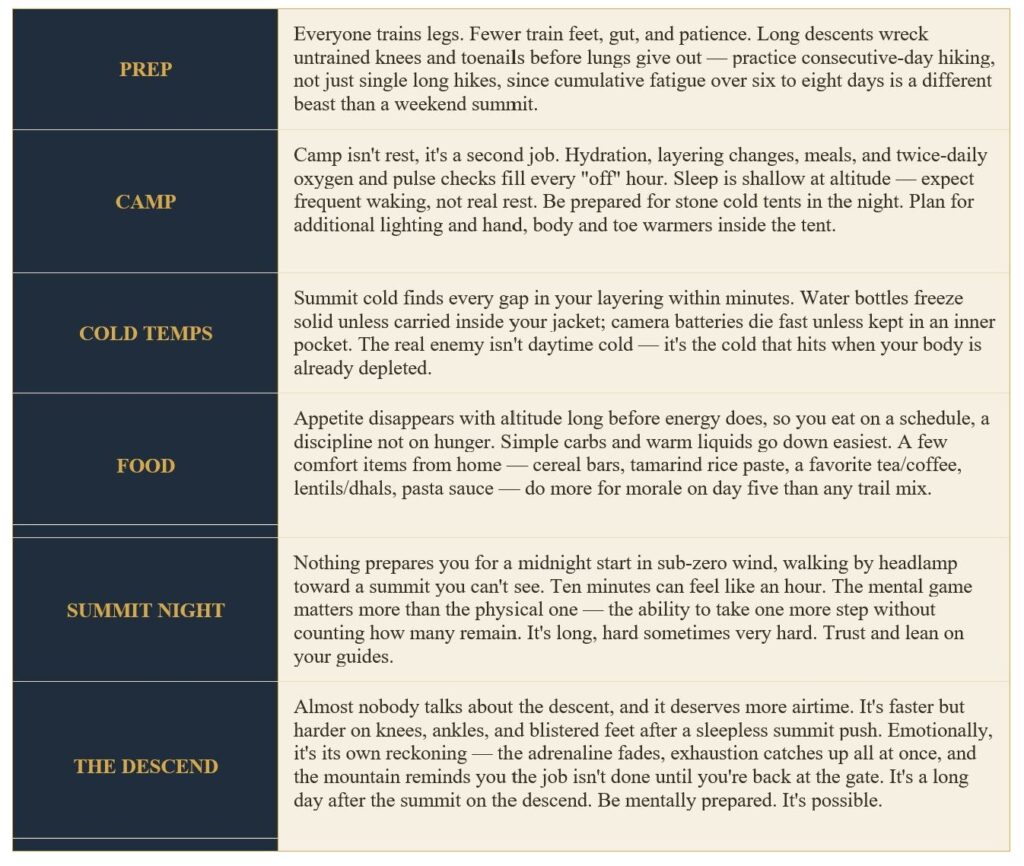
The Encouraging Truth
None of this is meant to scare anyone off — quite the opposite. Every one of these challenges is manageable with the right preparation, the right pace, and the right people beside you. Over 30,000 people attempt Kilimanjaro each year, and the vast majority are ordinary people, not elite athletes — students, grandparents, first-time trekkers, people well past 60. It is not technically hard. It is achievable for most people who train, go slowly, and take it seriously.
If a couch, a decade of setbacks, and four regular guys in their late 50s and 60s could get there pole pole, so can you. Dream boldly. Prepare diligently. Respect the mountain, respect your body, respect the process — and then take the first step. The mountain will still be there. And when the time is right, so will you.
