




BY MIRA THAKKAR*
Cellphones have infiltrated every part of human life, and this change has been seen especially in younger generations who have grown up with technology constantly accessible. Especially after virtual school during the pandemic, many schools and teachers have raised concerns about this dependency on technology and how it can pose a distraction to learning.
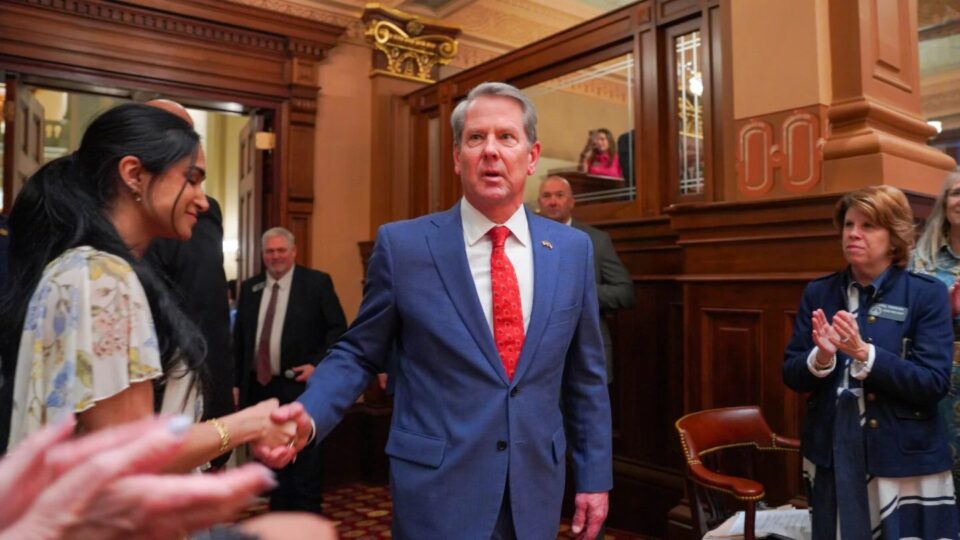
Last year, the state passed the Distraction Free Education Act, which banned cellphone use in grades K-8. This year, both the Georgia House and Senate passed House Bill 1009, which aims to extend this act to high school levels. The bill would limit cellphone usage during instructional time and try to limit usage even during non-instructional time. Currently, the bill is waiting to be approved by Governor Kemp.
Some counties, such as Forsyth and Fulton, already have similar policies, and teachers have seen benefits. AP Calculus teacher Dr. Roopa Yadavalli is pleased with the results of it academically so far and hopes to see the bill implemented at the state level.
“It is making students concentrate more and be less distracted, but now students are always so eager to use their phones, so it’s still in the back of their minds,” Yadavalli explained. “I would recommend that we keep this policy, but we need to make sure that they can’t bring their phones to the classroom at all.”
While limited technology may be benefiting students academically, according to educators, parents and Georgia House members have raised safety concerns about being able to reach their child in case of emergencies. Yadavalli mentions that instead, landlines should be considered as better forms of communication.
“We have landlines in every building, in every teacher’s classroom,” Yadavalli said. “If there’s an emergency, [parents] could always call the school or the particular teacher, and even students can call their parents from the school.”
While this may address safety concerns for some families, students raise other concerns about not having their phones in school anymore, especially for future purposes. A current in-state University of Georgia student, Krisha Patel, mentions how having her phone in high school helped her learn self-management and how to stay on track in college.
“I think having my phone on me helped me create that balance for myself of when I should use my phone versus when I shouldn’t use my phone,” Patel mentioned.
Current Georgia high school student Anya Gupta agrees that it may limit students’ readiness for college and the workforce, but also finds that it helps students’ ability to focus in the moment.
As a senior, she has attended school both before and after Forsyth County enforced its current phone policy and says she has felt more productive this year.
“I actually lock in more, and I think if I had my phone, I’d be more distracted,” Gupta said. “I think it personally made me more interested to learn about the material as well.”
The bill now awaits the governor’s signature and is widely expected to become law next year. As schools shift toward greater use of digital learning platforms and online testing, it will be interesting to see how removing personal technology, even as educational technology expands, will affect learning.
*Mira Thakkar is an intern at NRI Pulse.
