



BY JYOTHSNA HEGDE*
Somewhere in India, there is a woman who may still wonder about the baby she once held for only a moment before letting her go. Somewhere across oceans and decades, there is a daughter who has spent a lifetime unknowingly carrying the ache of that separation inside her. Between them lies silence. No photographs. No letters. No shared language of memory. Only absence, questions, and a longing that refused to disappear.
For most of her life, Stephanie Fraser tried not to look directly at that emptiness. Adopted from India as a baby and raised in a White Catholic family in America, she learned how to belong everywhere except within her own unanswered story. She celebrated American holidays, built a beautiful family, became a mother herself, and spent decades trying to fit seamlessly into the world around her. But buried beneath that carefully lived life was an invisible thread pulling her quietly back toward the unknown woman who gave her life.
Now, in her fifties, Stephanie is walking back toward the beginning. Armed with DNA tests, fragments of records, the support of fellow adoptees, and an unshakable determination to uncover the truth, she has embarked on an emotional search for the birth mother she has never met. What began as a deeply personal journey has evolved into something far greater: a search for identity, belonging, healing, and the courage to confront the unanswered questions that shape so many adoptees across the world.
Her story is not simply about adoption. It is about motherhood, loss, sacrifice, cultural displacement, and the quiet resilience of a woman determined to reclaim the pieces of herself left behind decades ago in an orphanage in Delhi.
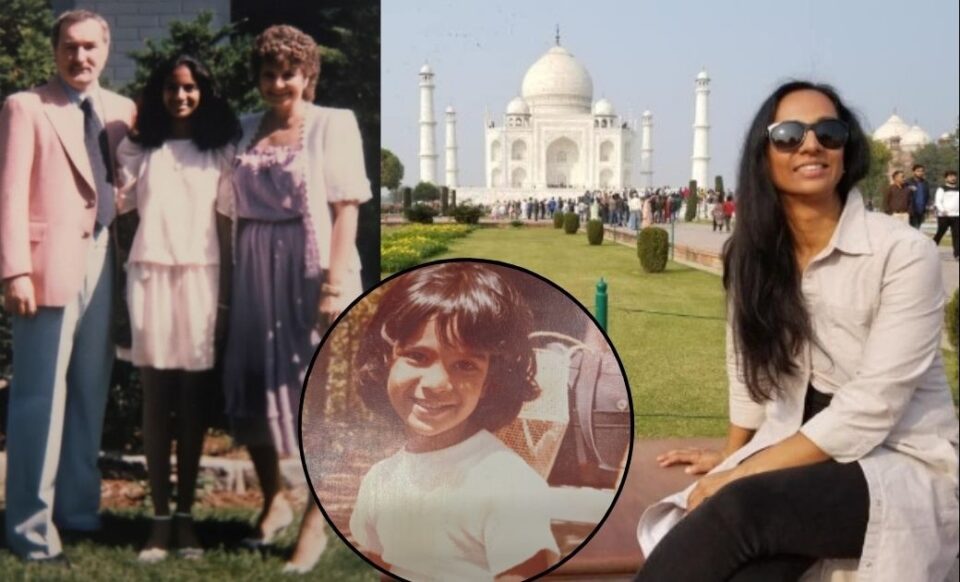
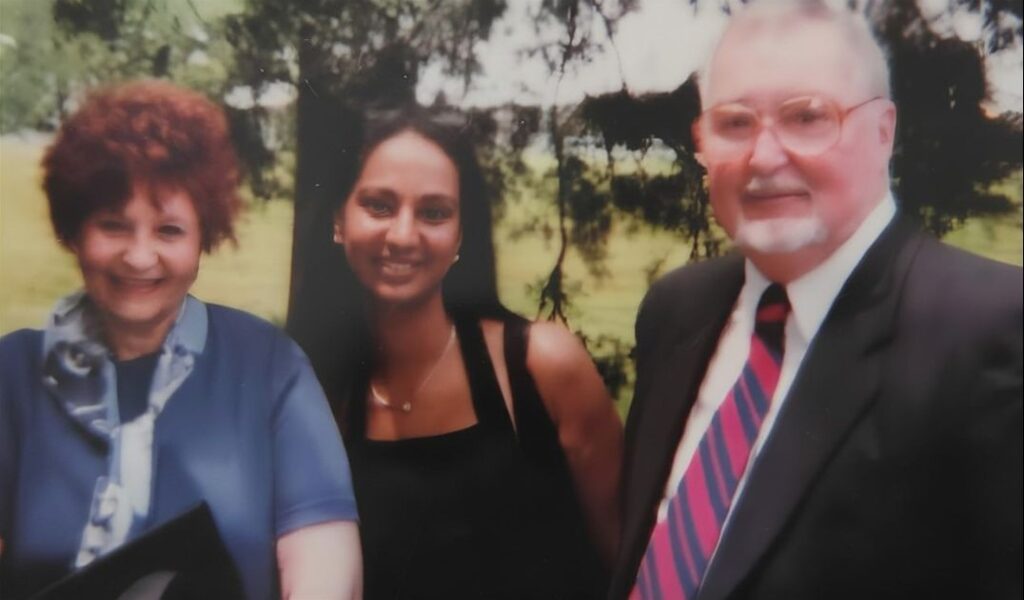
“As a child, India, my heritage, and my birth mother were completely foreign concepts to me,” Stephanie says. Raised in a deeply traditional American Catholic household during the 1980s, she grew up surrounded by Easter celebrations, Christmas traditions, and Fourth of July gatherings, while India remained entirely absent from her world. There were no Indian meals at the dinner table, no Hindi songs playing softly in the background, no conversations about ancestry or roots or even adoption. “I took on my adoptive family’s identity, especially since I had no memories of the orphanage or my birthplace.”
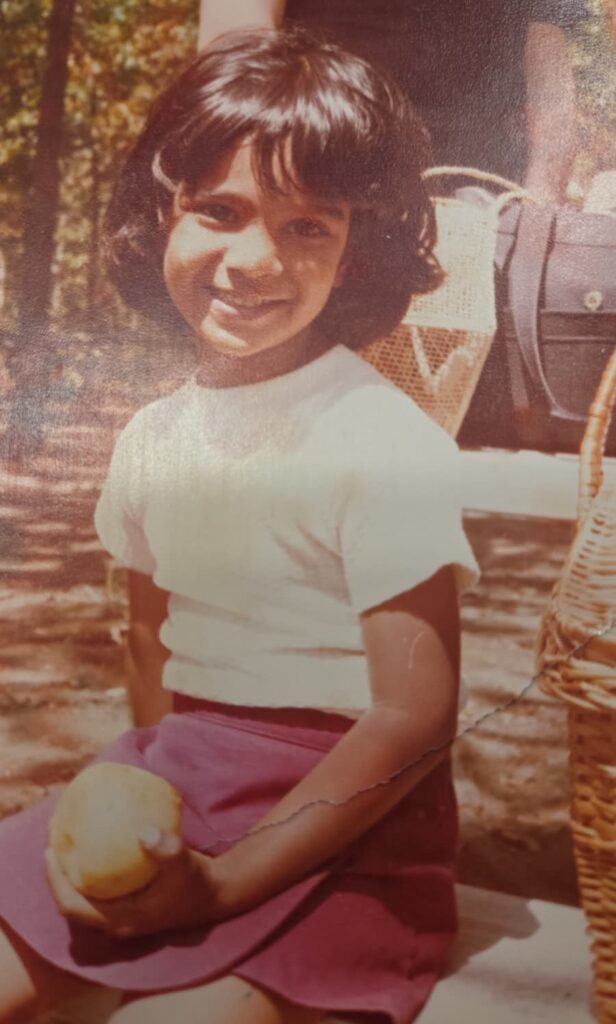
One memory still lingers vividly in her mind. During an elementary school family tree project, Stephanie carefully filled in the names and birth countries of her adoptive grandparents and great-grandparents. “This wasn’t my family tree, but my parents’. I just wanted what all my classmates wanted, to fit in, even though my reflection told a different story.” Around the same time, a relative gifted her a red silk Indian sari. It remained untouched in its plastic wrapping for years. “It felt so foreign to me,” she recalls. Her adoptive mother was the only mother she knew, and her birth mother existed only as a distant shadow she never imagined searching for.
That began to change when she was eighteen and met her first Indian friend. The friendship awakened something inside her that had long remained dormant. “Meeting her felt like opening my eyes to an entirely new dimension,” Stephanie says. Through this friend, she was introduced to homemade Indian food, temple visits, Indian music, and family gatherings that felt both unfamiliar and strangely comforting. She remembers hearing Indian music for the first time and unexpectedly crying. “It moved me deeply even though I couldn’t understand a single word.” Then came another revelation: Chicken Tikka Masala with naan. “Before that moment, food was just sustenance. That meal was the first time I truly enjoyed food.” Her friend later took her to New York to watch the legendary Lata Mangeshkar perform live in concert. Sitting among thousands of Indians, Stephanie felt suspended between two worlds. “Everything felt entirely foreign, yet absolutely magical.”
Yet the emotional need to search for her birth mother did not fully emerge until years later, during her own pregnancy. Suddenly, questions she had never allowed herself to ask came rushing to the surface. “I wondered how old she was when she carried me. Was she alone? Was she healthy? Did she give birth in a house or hospital?” Stephanie became consumed by imagining the unknown woman who had once carried her. Though her pregnancy was medically normal, emotionally it became overwhelming. “I became depressed, struggled to sleep, and could barely eat because I was so consumed with imagining what she may have gone through.” But when her son was born, her emotions shifted again. “The fear, discomfort, and anxiety of pregnancy disappeared, and instead I found myself asking: how could any woman give up her child?” Over time, however, that question softened into empathy and compassion.
The actual search began four years ago when her husband gave her a DNA test as a Mother’s Day gift. Since then, Stephanie has carried both hope and urgency in equal measure. “There is a clock ticking inside me,” she says. “I hope I’m not too late.” She hopes her birth mother is alive, healthy, and free from the shame society may have placed upon her. She reads reunion stories from fellow Indian adoptees obsessively, searching for details that resemble her own life. “When the details feel close to mine, it gives me hope.” Yet she knows reunions do not always end beautifully. “I know there may not be the ending I dream about. But I have reached a point where I can no longer not search.”
Along that uncertain journey, Stephanie found something she never expected: sisterhood. Two years ago, she connected through Facebook with fellow Indian adoptees scattered across America. Among them, she and three other women formed an especially close bond. All had been adopted into White families. All were mothers themselves. All had daughters and were entering midlife and the empty nest phase. Most remarkably, they all came from the same orphanage in Delhi, the Missionaries of Charity orphanage founded by Mother Teresa. “Despite growing up in different parts of the country, it felt like we had lived parallel lives,” Stephanie says. For decades, they had each struggled quietly with identity, belonging, and cultural displacement. Now, for the first time, Stephanie feels fully understood. “This has been such an amazing experience. For the first time in my life, I truly feel heard, seen, and connected.” She describes the women as an adoptee sisterhood formed not through blood, but through shared emotional truths. “We support one another through the highs and lows, through searching, grieving, questioning, and healing.”
Years before the DNA search began, Stephanie had returned to the orphanage in Delhi at age twenty-eight, a visit that left her emotionally shattered. Walking through the nursery, toddler rooms, offices, and gardens, she found herself unable to stop crying. “In every picture of me, my face is covered in tears.” But what impacted her most deeply was learning that many of the workers caring for the children were themselves former orphans who had never been adopted. “That realization shook me deeply. I felt physically sick thinking that this could have been my life, and that their lives could have been mine.” The fragile line between chance and destiny suddenly became painfully clear.
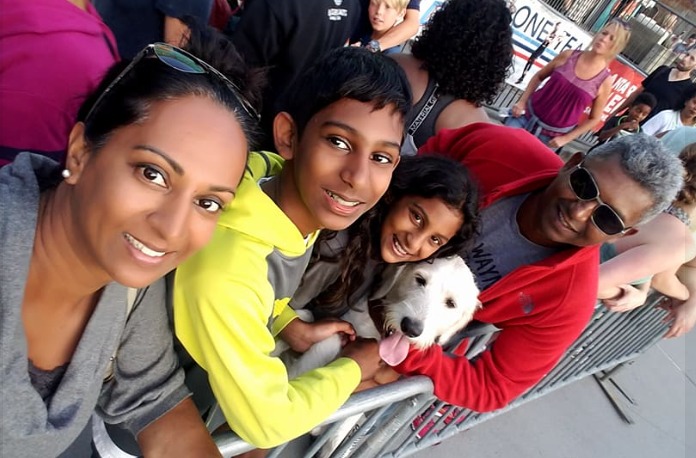
Motherhood transformed Stephanie’s understanding of sacrifice and belonging. “Motherhood is built on sacrifice,” she says. “Every decision involves some form of give and take.” Today, she speaks about her birth mother not with anger, but reverence. “I have the utmost respect for what it means to carry a child and give birth.” Every Mother’s Day, she quietly dedicates part of the day to the woman she has never met. “I want her to know that I am okay, that I am healthy, loved, and that I built a beautiful family of my own.” This year marks her twenty-fifth wedding anniversary. Somewhere in India, if her birth mother is still alive, there is also a son-in-law and two adult grandchildren she has never known. “I hope she would believe me when I say that I am not mad at her. More than anything, I pray she would be proud of the person I became.”
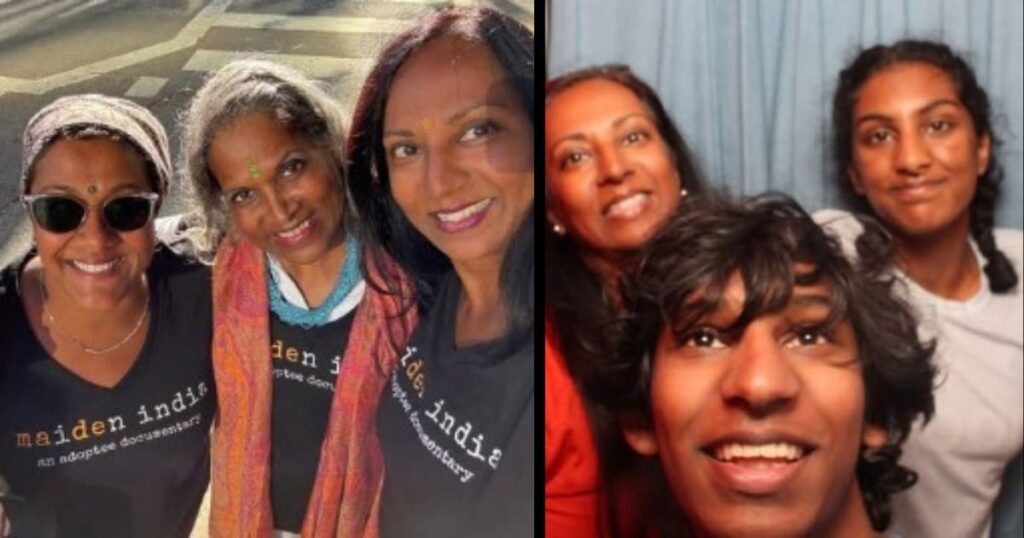
What began as a deeply personal search has now evolved into a documentary film (Maiden India) project exploring identity, adoption, shame, and systemic barriers faced by adoptees searching for family in India. “Our beginnings are rarely our choice, but our legacy is,” Stephanie says. Through the film, she hopes to challenge the stigma surrounding unwed mothers and advocate for greater access to global DNA testing in India. She also hopes the story inspires others to pursue difficult truths despite uncertainty. “I want this film to be proof that it is always worth risking the unknown to build a life of purpose. I want my daughter to be proud of her mother.”
The search remains extraordinarily difficult. Records from the 1970s are often incomplete or nonexistent. Some people refuse to help, while others unexpectedly open doors. DNA testing has revealed new fragments of identity, including the discovery that Stephanie is a Malayalee. “It is truly an emotional roller coaster,” she says. Still, she refuses to stop searching. She dreams of working with genealogists, investigators, data scientists, and perhaps even artificial intelligence to bridge the vast gaps in her DNA family tree. Referencing the film Lion, she reflects on the possibility that technology might someday make impossible reunions possible. “I can’t help but wonder if, with the help of AI and better tools, it might one day be possible for me to find my own birth family as well.”
Alongside the documentary, Stephanie has become a mentor to fellow adoptees and is working on a collaborative book project amplifying the voices of Indian adoptees around the world. Soon, carrying only a backpack, she plans to travel solo across India along what she believes may have been the same path she traveled as an infant, beginning in Kerala, continuing through Patna, and ending in Delhi. But this time, she will travel not as a lost child carried by strangers, but as a woman searching consciously for meaning, history, healing, and herself. “I will experience it as an adult,” she says, “searching not just for places, but for deeper understanding, connection, and pieces of myself along the way.”
Stephanie Fraser’s story lives not in certainty, but in longing, resilience, and courage. She is not entirely lost. Not entirely found. But after decades of silence, she is finally allowing herself to search for the woman whose absence shaped her life, and in doing so, she may finally be finding herself.

1 comment
Thank you for your support. Follow & join my on my journey on Instagram