


BY JYOTHSNA HEGDE
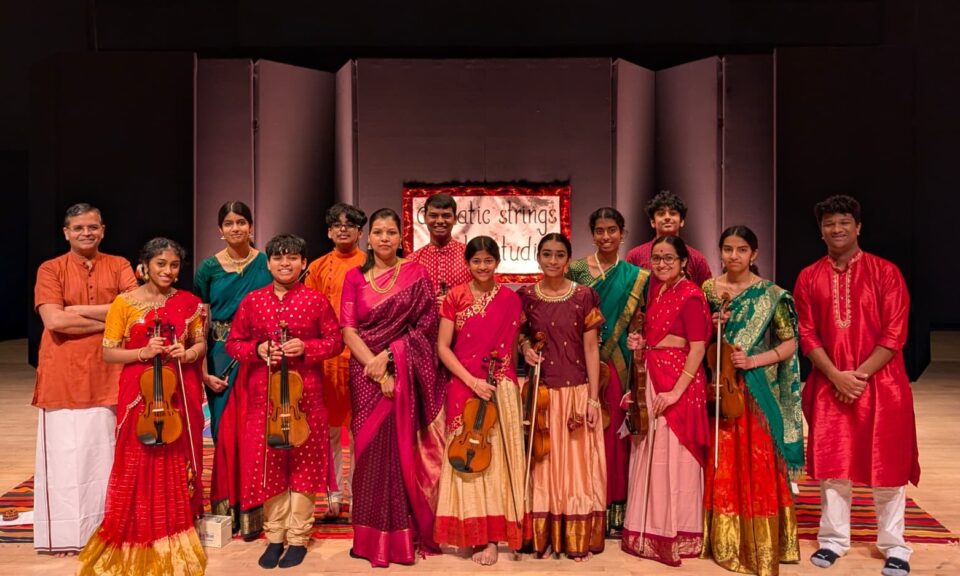
Atlanta, GA, April 2, 2026: In the bustling cultural landscape of modern Atlanta, where the digital age often dictates the pace of entertainment, a profound and rhythmic stillness took hold at the Emory Performing Arts Studio on March 29, 2026. Carnatic Strings Violin Studio’s A Celebration of Strings: Annual Violin Recital 2026 unfolded as far more than a student showcase. Under the meticulous guidance of Jassotha Balasubramaniam, the event emerged as a vibrant testament to the enduring power of South Indian classical music and its ability to adapt, heal, and connect across generations and geographies.
The afternoon opened with focused anticipation as the program’s thematic arc began with Sacred Strings: A Journey of Devotion, presented by the Junior Orchestra. Some of the youngest performers held violins nearly their own size yet approached their music with striking discipline and composure. In Carnatic tradition, the violin is a demanding melodic instrument, requiring precision in microtones and rhythmic alignment. The students navigated these complexities with sincerity and poise, offering a moving glimpse into how deeply rooted this tradition remains within the diaspora.
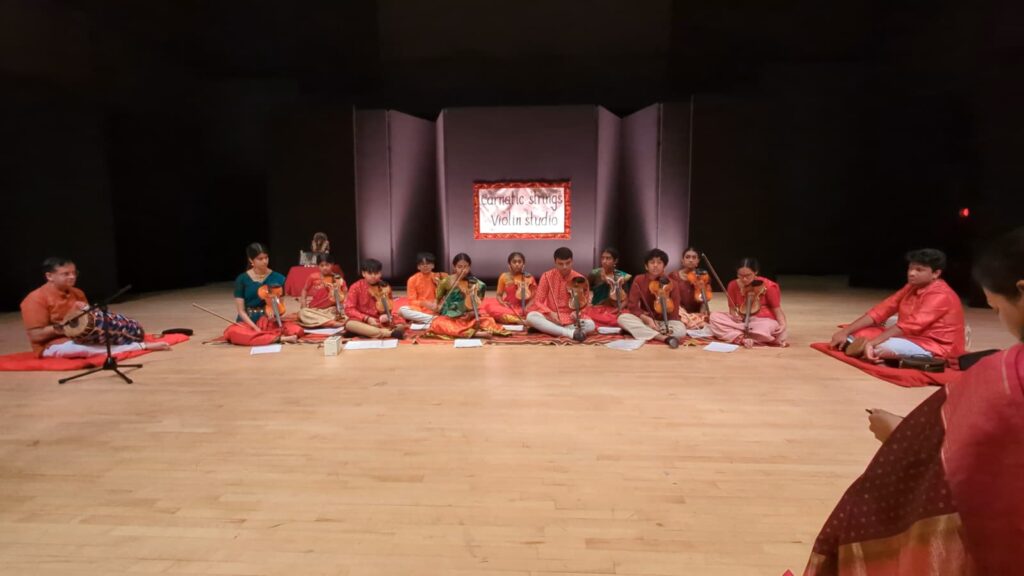
The transition into the senior orchestra’s Resonances of Our Time: An Instrumental Homage to Contemporary Carnatic Composers marked a distinct and deliberate shift. Here, the repertoire turned toward modern composers, reflecting a curatorial choice that emphasized living voices over exclusively canonical works. The performance carried both sophistication and openness, reminding listeners that Carnatic music is not static or archival, but a living, evolving form shaped by each generation that engages with it.
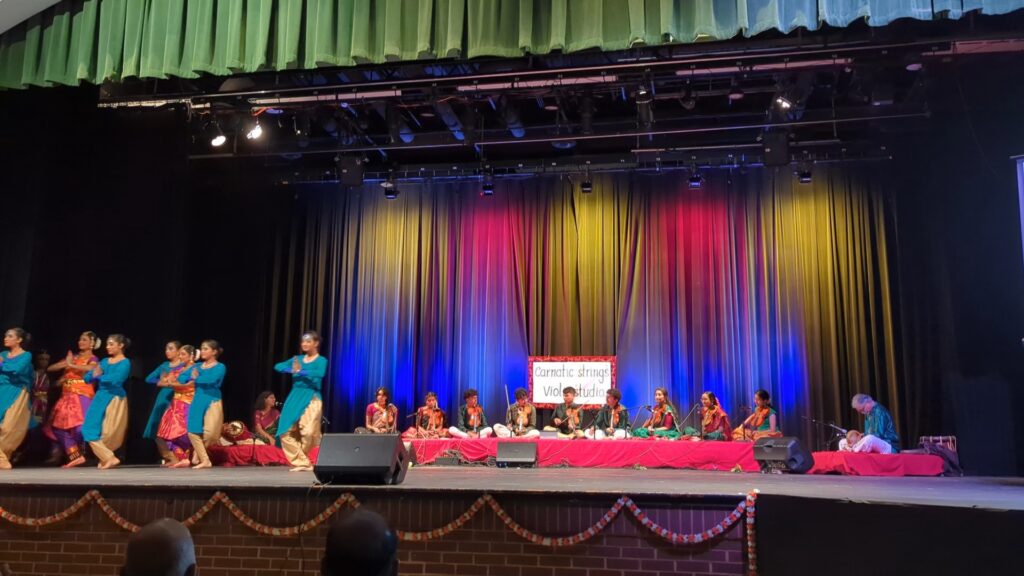
The program was interwoven with solos, duets, ensemble pieces, and vocal performances, each contributing its own texture to the afternoon. What stood out was not only technical accomplishment but an unmistakable sense of joy and ownership. The students were not merely performing compositions. They were inhabiting them.
To fully appreciate the depth of the recital, one must understand the journey of Jassotha Balasubramaniam herself. Her relationship with the violin began in Sri Lanka, where music offered comfort during a childhood shaped by civil unrest. When her family was forced to flee, they left behind not only their home, but also her instrument. Years later, after resettling in Canada in 1996, a family friend’s simple act of lending her a violin allowed her to reclaim that connection. Through migration, education, and change, music remained her constant.
After moving to Atlanta in 2001, what began as a personal passion evolved into a larger mission. Through Carnatic Strings, she has built a space that is as much about community as it is about musical training. Her journey, however, has not been without challenges. As a Sri Lankan woman teaching and performing in the United States, she has navigated cultural spaces often shaped by long-standing networks and traditions. Recognition and opportunity have not always come easily, particularly in a field where gender disparities can still influence visibility. Yet through persistence, adaptability, and unwavering commitment, she has carved out a space defined by both artistic and educational excellence.
Her philosophy extends beyond performance into lifelong learning. Even today, she continues to refine her craft through advanced training with professional violinists in India, ensuring that her teaching evolves alongside her own musicianship. Support from unexpected quarters, such as Huthmaker Fine Violins, which became a steadfast partner despite initially being unfamiliar with Carnatic music, reflects how her work has built bridges across cultures within the Atlanta arts community.
An integral dimension of her work lies in creativity and impact. Over the years, she has produced more than sixteen thematic ensemble productions that blend storytelling with classical rigor. These are not simply concerts, but immersive experiences designed to engage audiences emotionally and intellectually. One such production, Navarasam, explored the nine human emotions and served as a fundraiser, raising $50,000 for Sankara Nethralaya USA. This achievement stands as a powerful example of how classical music, when presented with vision, can mobilize community support and create tangible social impact.
That spirit of outreach continues through performances beyond traditional concert halls. The ensemble’s appearances at senior living communities across metro Atlanta, including Belmont Village Senior Living in collaboration with SEWA International, reflect a commitment to connection. Residents responding with smiles, quiet reflection, and rhythmic movement underscore a central truth that guides her work: music is not only about technical mastery, but about human experience.
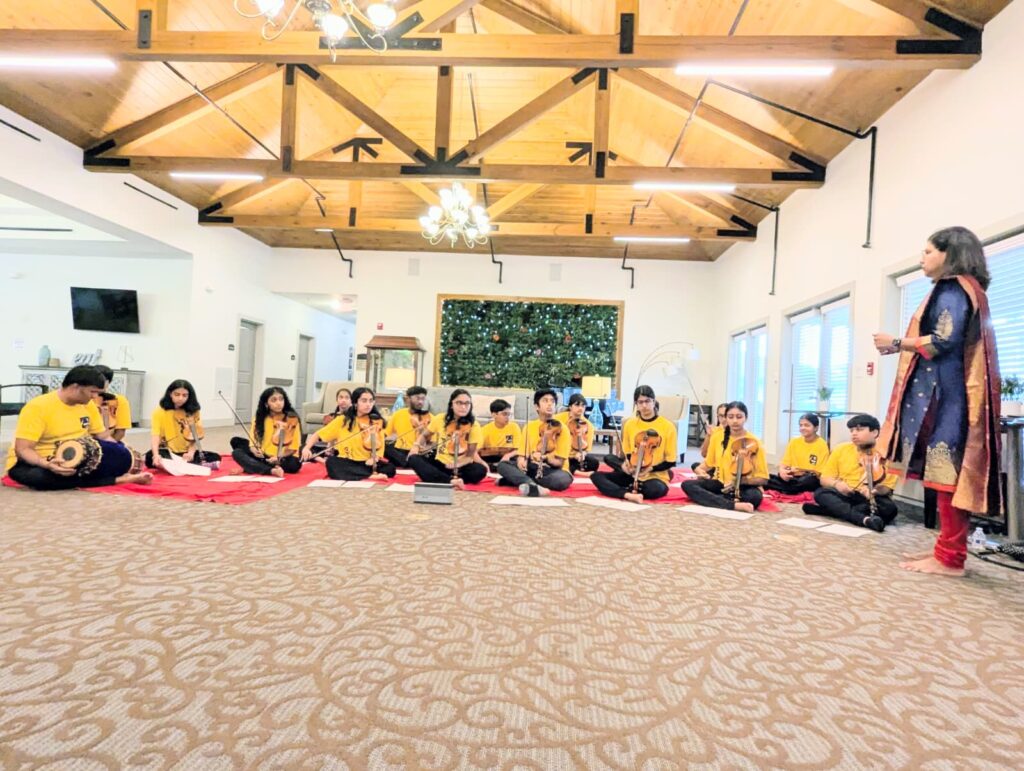
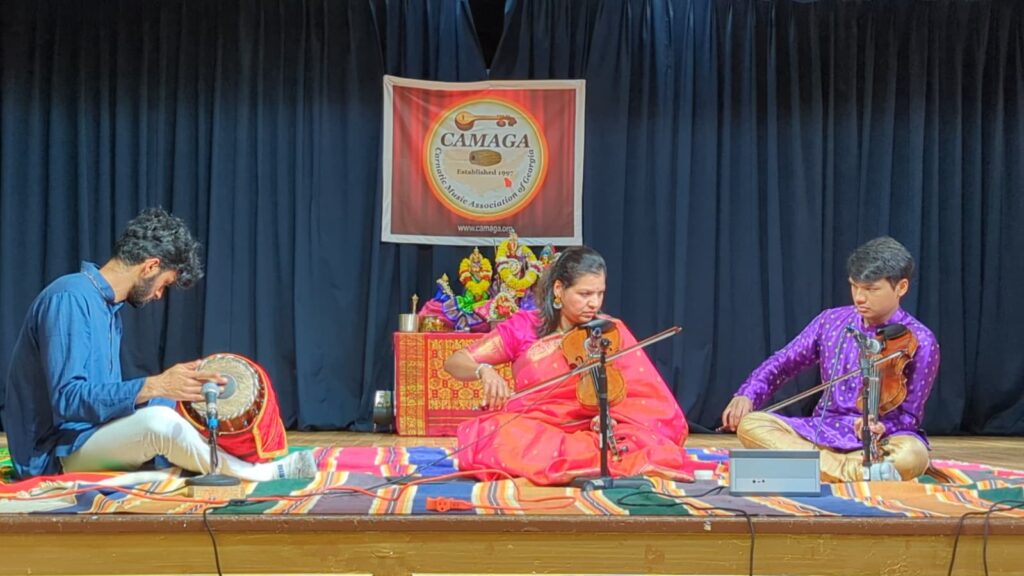
The collaborative and intergenerational nature of Carnatic Strings is further enriched by the presence of her son, Ajay. Trained in both Western and Carnatic traditions, he brings a unique harmonic sensibility to the ensemble. His understanding of chords, counterpoint, and melodic layering allows him to compose supporting musical lines that add depth and texture to traditional frameworks. The result is a sound that feels expansive and contemporary, while remaining firmly rooted in classical integrity.
Adding to the musical dialogue was the dynamic percussion support of Mridanga Gurudutt, whose mridangam playing created vibrant rhythmic exchanges with the violin ensemble. These “musical conversations” highlighted the ensemble format that defines Carnatic Strings. In a local arts landscape where violin ensembles are rare, the sight and sound of dozens of violins moving in synchrony created a powerful and immersive sonic experience.
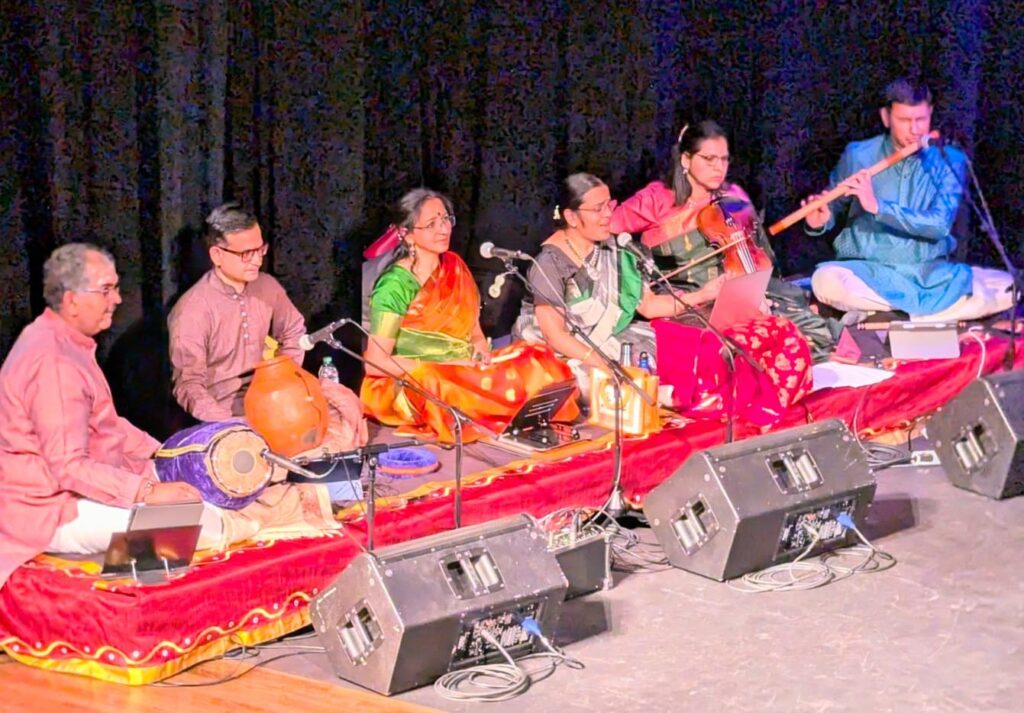
As the recital moved toward its conclusion, a grand finale brought together both junior and senior orchestras. Nearly thirty violinists performed in unison, creating a resonant and visually striking culmination. It was a moment that captured the essence of the studio’s mission: nurturing growth, fostering collaboration, and sustaining tradition across generations, including within her own family.
With over sixteen thematic productions, ongoing community outreach, and a commitment to both tradition and innovation, Balasubramaniam has established a model that is both artistically rich and socially meaningful. Her work stands out for its ability to honor the depth of Carnatic music while making it accessible and relevant to contemporary audiences.
As the audience stepped out into Atlanta evening, the lingering resonance of the violins spoke to something enduring. This was not simply a recital. It was a reflection of a journey shaped by resilience, creativity, and purpose. In every note played, one could hear not just music, but a community choosing to carry its heritage forward with renewed life and meaning.
